
Recreating the Big Bang’s Fiery Soup (Image Credits: Unsplash)
Physicists at CERN’s Large Hadron Collider provided the first direct evidence that quarks generated wakes in the quark-gluon plasma, confirming the early universe’s primordial state behaved as a dense, flowing liquid.[1][2]
Recreating the Big Bang’s Fiery Soup
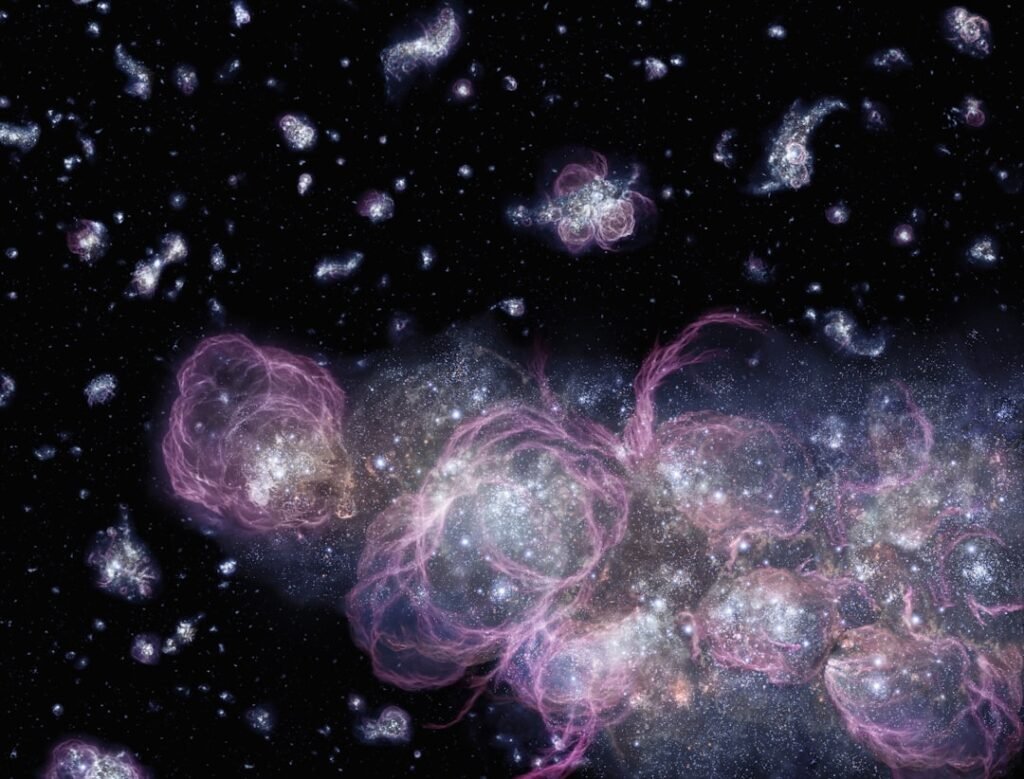
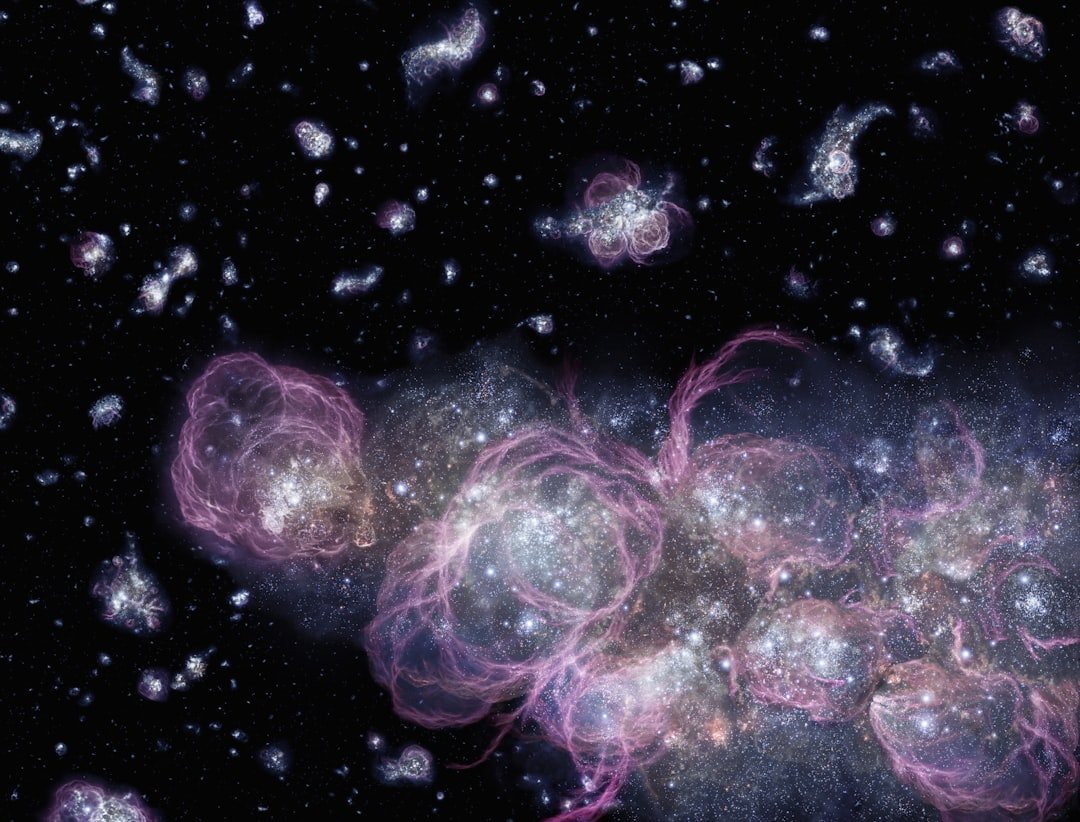
Heavy-ion collisions at the LHC smashed lead ions together at nearly the speed of light. These impacts recreated conditions from microseconds after the Big Bang, producing droplets of quark-gluon plasma hotter than trillions of degrees Celsius.[1] In this plasma, quarks and gluons roamed freely before cooling allowed them to form protons and neutrons, the building blocks of matter.
Researchers long suspected this plasma acted like a near-perfect liquid with minimal friction, but definitive proof remained elusive. Previous experiments hinted at fluid-like properties, yet debates persisted over how the medium responded to fast-moving particles.[3]
Unveiling Quark Wakes with Precision
A team led by MIT physicist Yen-Jie Lee analyzed data from the Compact Muon Solenoid (CMS) detector. They focused on rare events where collisions produced a high-energy quark alongside a Z boson.[1] The Z boson, electrically neutral and weakly interacting, passed through the plasma undisturbed, serving as a precise marker for the quark’s path.
From 13 billion lead-ion collisions, the group identified about 2,000 suitable events. Energy patterns opposite the Z boson’s direction revealed splashes and swirls – clear signatures of wakes created by the quark plowing through the plasma.[2] These observations matched predictions from a hybrid model developed by MIT’s Krishna Rajagopal.
“It has been a long debate in our field, on whether the plasma should respond to a quark,” Lee stated. “Now we see the plasma is incredibly dense, such that it is able to slow down a quark, and produces splashes and swirls like a liquid. So quark-gluon plasma really is a primordial soup.”[1]
A Smarter Way to Spot Single Quark Effects
Earlier approaches examined quark-antiquark pairs, but opposing wakes interfered with each other. The new technique isolated single quarks by pairing them with Z bosons, which left no trace in the plasma.[3]
- Lead ions collided at relativistic speeds to form plasma droplets lasting less than a quadrillionth of a second.
- Z bosons tagged events due to their characteristic energy and minimal interactions.
- Energy flow mapping showed excess particles and swirls in the quark’s wake direction.
- Wakes dissipated in patterns revealing the plasma’s low viscosity and fluid dynamics.
- Collaboration included Vanderbilt University’s Yi Chen group for data processing.
This method overcame signal noise, delivering unambiguous evidence of collective plasma response.[4]
Insights into the Cosmos’ Infant Phase
The findings affirmed quark-gluon plasma as the universe’s first liquid, influencing how matter emerged from chaos. Researchers now plan to track wake evolution – how they bounce, spread, and fade – to measure properties like viscosity and sound speed.[2]
“Studying how quark wakes bounce back and forth will give us new insights on the quark-gluon plasma’s properties,” Lee noted. “With this experiment, we are taking a snapshot of this primordial quark soup.”[1] Such data will refine models of the universe’s rapid expansion and cooling.
Key Takeaways
- Quark wakes confirm quark-gluon plasma flowed as a near-perfect, low-friction liquid.
- New Z-boson tagging isolated single-quark effects in 2,000 LHC events.
- Results align with hybrid model, enabling precise plasma property measurements.
These discoveries open doors to deeper understanding of extreme matter states and cosmic origins. What aspects of the early universe intrigue you most? Share in the comments.