
For years, a blunt metaphor has haunted neuroscience: that consciousness is nothing more than the brain’s background hum, a kind of neural snow on a dead TV channel. Now, as more precise tools probe living brains in real time, that metaphor is starting to look less like hard-headed realism and more like an outdated guess. A wave of recent studies is revealing structured, information-rich patterns that appear only when an organism is conscious and vanish when it is not. The picture that emerges is not of random static, but of finely tuned coordination unfolding across space and time. What is on the line here is not just a theory of how the brain works, but a basic story we tell ourselves about what it means to be aware at all.
From Random Static to Structured Signals
One of the strongest challenges to the “neural noise” idea comes from research comparing brain activity during wakefulness, anesthesia, deep sleep, and disorders of consciousness. If conscious experience were simply what it feels like for neurons to fire in a mostly random, noisy way, then the awake brain should look, in mathematical terms, the most chaotic. Instead, new analyses of brain signals show almost the opposite pattern: fully conscious states display a sweet spot between boredom and chaos, with activity that is neither rigidly predictable nor purely random.
Researchers measure this by looking at how complex and diverse the brain’s electrical or magnetic patterns are over time, often using tools from information theory and nonlinear dynamics. When people are awake and responsive, their brain signals show rich, multi-scale structure that collapses when they are sedated or in deep non-dreaming sleep. Rather than being a byproduct of noise, consciousness appears to sit on top of organized dynamics that encode and integrate information. The result is that what looked like static at low resolution is starting to resolve into a finely patterned picture.
Complexity as a Signature of Consciousness
A key shift in recent research has been treating consciousness less as a vague feeling and more as a measurable, testable property of brain activity. One influential approach uses complexity metrics, which try to capture how much information is packed into a neural signal and how unpredictable it is in a structured way. In practice, this often means sending controlled pulses of energy into the brain, through methods like transcranial magnetic stimulation, and then watching how the resulting waves of activity spread and interact. When those waves propagate widely and in varied, non-redundant patterns, people tend to be conscious; when the response is local and stereotyped, they tend not to be.
This line of work has practical teeth: it is being developed into bedside tools that may help doctors assess awareness in patients who cannot communicate. Clinicians have struggled for decades to distinguish between deeply sedated, minimally conscious, and unresponsive states, often relying on behavioral signs that are easy to misread. Complexity-based measures offer a window into what the brain is doing internally, independent of overt behavior, and studies have shown that some patients previously thought to be entirely unaware still generate surprisingly rich neural responses. That is very hard to square with a story in which consciousness is just the random hiss of neurons misfiring.
Brain-Wide Coordination, Not Local Sparks
The noise view of consciousness fits a kind of intuitive picture: billions of neurons firing away, some fraction of them spiking at any moment, like a vast crowd murmuring in a stadium. But high-resolution imaging and large-scale recording are revealing something quite different during conscious states. Instead of disconnected chatter, scientists see coordinated patterns sweeping across distant brain regions, synchronizing and desynchronizing in ways that seem tuned to the demands of perception and decision-making. These patterns can shift in a fraction of a second, yet still show recognizable structure over longer timescales.
One striking finding is that conscious perception involves not only activity in primary sensory areas, but rapid, recurrent loops linking frontal, parietal, and deep subcortical regions. When people report seeing a faint image, for example, the same physical stimulus can either remain subliminal or pop into awareness depending on whether this broader network engages. That suggests consciousness is less like a light bulb flicked on by localized activity and more like a whole-city power grid settling into a specific, coordinated mode. Noise is present, of course, but it is riding on top of – and sometimes exploited by – a deeply structured collaboration.
What Anesthesia and Psychedelics Reveal About the “Noise” Hypothesis
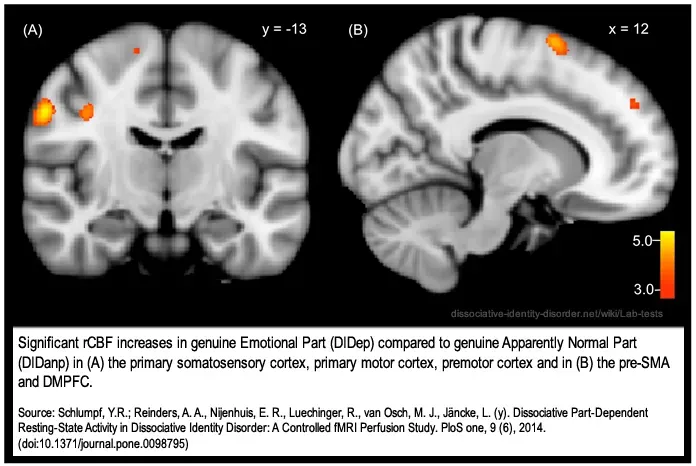
Drugs that alter consciousness have become unexpected testing grounds for theories about noise and structure in the brain. Traditional anesthetics, which reliably switch off awareness, tend to reduce the diversity and integration of neural activity, pushing the system toward more uniform, less informative dynamics. Even when overall firing rates or energy use stay high, the brain’s ability to generate flexible, differentiated patterns seems to collapse. That is a direct challenge to the idea that more neural activity automatically means more experience; what matters is how that activity is organized.
Psychedelics tell a different, more complicated story. At moderate doses, substances like psilocybin or LSD often increase certain measures of signal diversity and functional connectivity, while subjectively expanding the richness and fluidity of experience. Yet the brain does not devolve into random chaos; particular networks, such as those tied to self-referential thinking, show characteristic disruptions, while sensory and associative regions become more strongly coupled. The upshot is that consciousness can become more vivid or unusual without ever resembling raw static, suggesting that the crucial difference is not between “noise” and “no noise,” but between different types of structured dynamics.
Rethinking Background Activity: From Junk to Hidden Workspace
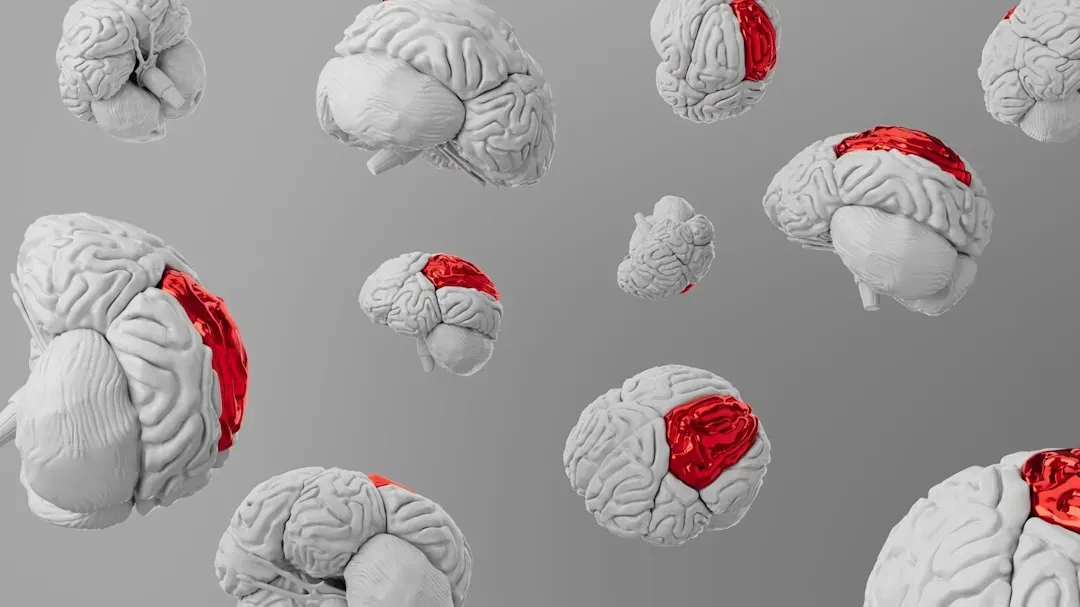
For decades, neuroscientists used the term “resting state” as if the brain were idling when a person was not focused on a task. Resting-state activity was frequently treated as baseline noise to be subtracted away when studying more specific functions. Recent research has flipped that assumption: spontaneous activity patterns present during rest turn out to closely mirror the networks engaged in attention, memory, and perception. In other words, the so-called background is already shaped by the brain’s learned models of the world, ready to be recruited at a moment’s notice.
This has huge implications for how we think about consciousness as a continuous stream rather than an on-off switch tied to external input. The awake brain is never truly blank; it is constantly predicting, rehearsing, and evaluating, even when no obvious task is at hand. Some researchers now argue that what we call conscious experience lives in the ongoing interplay between these internal models and incoming sensory evidence. If that is right, then the line between “signal” and “noise” is not fixed but depends on how well activity supports flexible interaction with the world. The more we discover about resting-state networks, the less defensible it becomes to dismiss them as mere static.
Beyond Neural Noise: The Deeper Significance of Structured Consciousness
The growing evidence for structured, information-rich brain dynamics forces a reappraisal of earlier, more reductionist pictures of the mind. Saying that consciousness is nothing but neural noise was, in a way, a rhetorical shortcut, offering the comfort of simplicity in a landscape of messy data. Now that we have tools to actually map how information flows across the brain, that shortcut looks less like tough-minded realism and more like a failure of imagination. Recognizing that conscious states correspond to particular regimes of complexity and coordination does not make the mystery vanish, but it anchors the mystery in testable patterns rather than metaphors.
Compared with traditional views that focused on single “consciousness centers” or on overall activity levels, the new perspective emphasizes network organization and temporal structure. It aligns with modern theories that treat the brain as an inference engine, constantly updating a generative model of the environment rather than passively recording it. This shift matters culturally as well as scientifically: it undercuts simplistic claims that the mind is either a supernatural ghost or meaningless static. Instead, it paints consciousness as what it feels like to be a living brain running a highly structured, evolving model of itself and its world, with all the fragility and nuance that entails.
Open Questions: Thresholds, Individual Brains, and Non-Human Minds
Even as the neural-noise picture crumbles, big questions remain about how far the new framework can be pushed. One challenge is defining clear thresholds: how much complexity and integration are required before we say a system is conscious, and does that threshold vary between individuals or species? Another is understanding why different brains, wired by different experiences, can show similar broad signatures of consciousness while differing in the fine-grained details. These puzzles matter not only for theory but for high-stakes decisions in medicine, such as when to withdraw life support or how to interpret signs of awareness in patients who cannot respond.
There is also growing interest in applying these measures to non-human animals and even to artificial systems. Studies in primates, rodents, and cephalopods suggest that diverse nervous systems can exhibit structured activity reminiscent of human conscious states, raising ethical and philosophical questions about how widely awareness might be distributed in nature. At the same time, debates over whether advanced machine-learning systems could ever become conscious now have a more concrete basis: do their internal dynamics show anything like the rich, recurrent, brain-wide coordination seen in living organisms? So far, the evidence weighs heavily in favor of biological brains being in a category of their own, but the criteria being developed today will frame those arguments for years to come.
How Readers Can Engage With a More Nuanced View of Consciousness
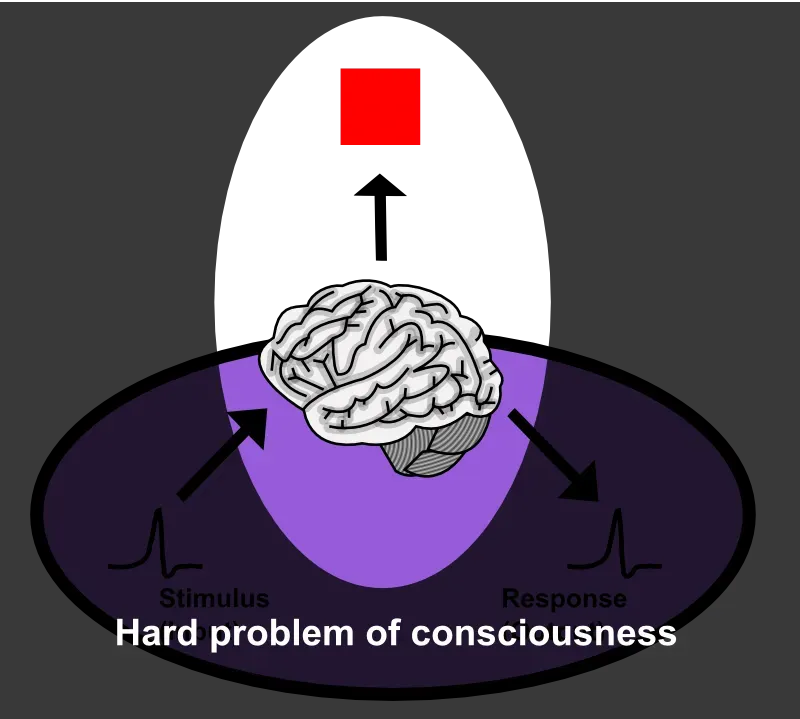
For non-specialists, it can be tempting to bounce between extremes: either treating consciousness as ineffable magic or writing it off as meaningless noise. The emerging science offers a middle path that is more demanding but also more satisfying, because it respects both the rigor of data and the depth of lived experience. One simple step is to pay closer attention to how your own consciousness shifts across the day – between focused work, daydreaming, drowsiness, and deep sleep – and to see those shifts as changes in underlying brain dynamics, not just changes in mood. That kind of curiosity can make abstract findings about complexity and coordination feel less remote and more embodied.
Readers who want to go further can explore public lectures, open-access articles, and museum exhibits that explain brain imaging, anesthesia, and sleep research without oversimplifying them. Supporting institutions that fund careful, long-term studies – rather than hyped quick fixes – also helps push the field toward more responsible conclusions. And perhaps most importantly, staying wary of slogans, whether they claim that “consciousness is just noise” or that it is forever beyond science, keeps the conversation honest. The reality, as current research shows, is more challenging and far more interesting than either of those easy answers.
Suhail Ahmed is a passionate digital professional and nature enthusiast with over 8 years of experience in content strategy, SEO, web development, and digital operations. Alongside his freelance journey, Suhail actively contributes to nature and wildlife platforms like Discover Wildlife, where he channels his curiosity for the planet into engaging, educational storytelling.
With a strong background in managing digital ecosystems — from ecommerce stores and WordPress websites to social media and automation — Suhail merges technical precision with creative insight. His content reflects a rare balance: SEO-friendly yet deeply human, data-informed yet emotionally resonant.
Driven by a love for discovery and storytelling, Suhail believes in using digital platforms to amplify causes that matter — especially those protecting Earth’s biodiversity and inspiring sustainable living. Whether he’s managing online projects or crafting wildlife content, his goal remains the same: to inform, inspire, and leave a positive digital footprint.