
A Common Cosmic Oddity Emerges (Image Credits: Unsplash)
In the frigid expanse beyond Neptune, researchers uncovered a straightforward mechanism behind the peculiar snowman forms of numerous icy planetesimals.[1][2]
A Common Cosmic Oddity Emerges
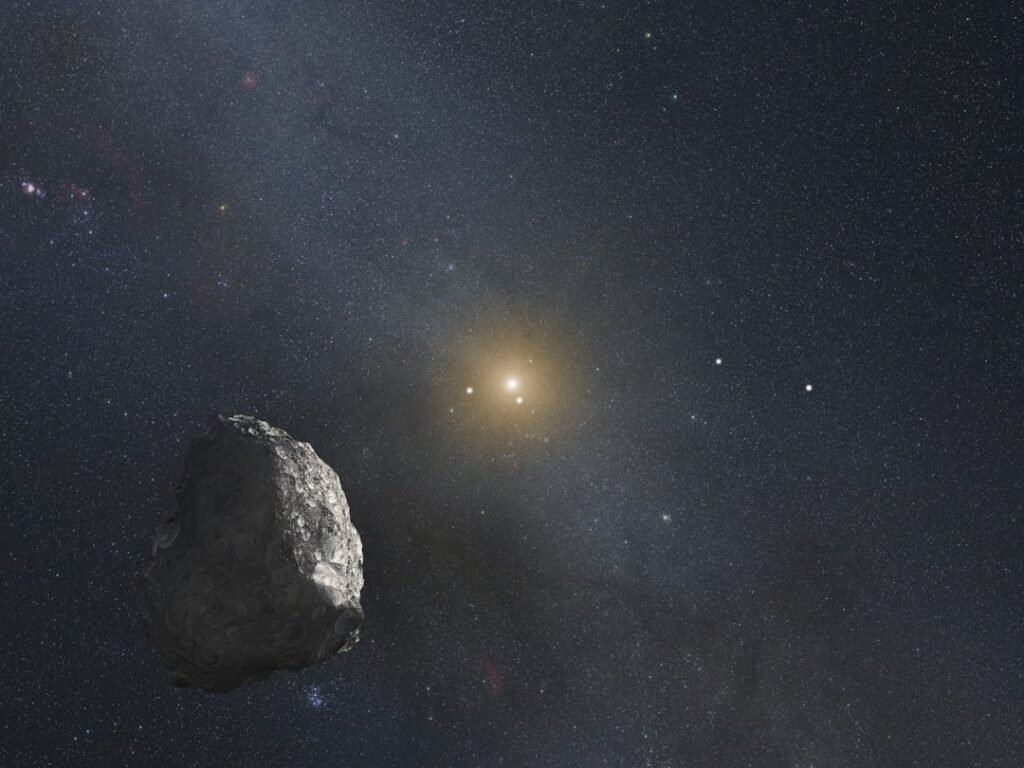
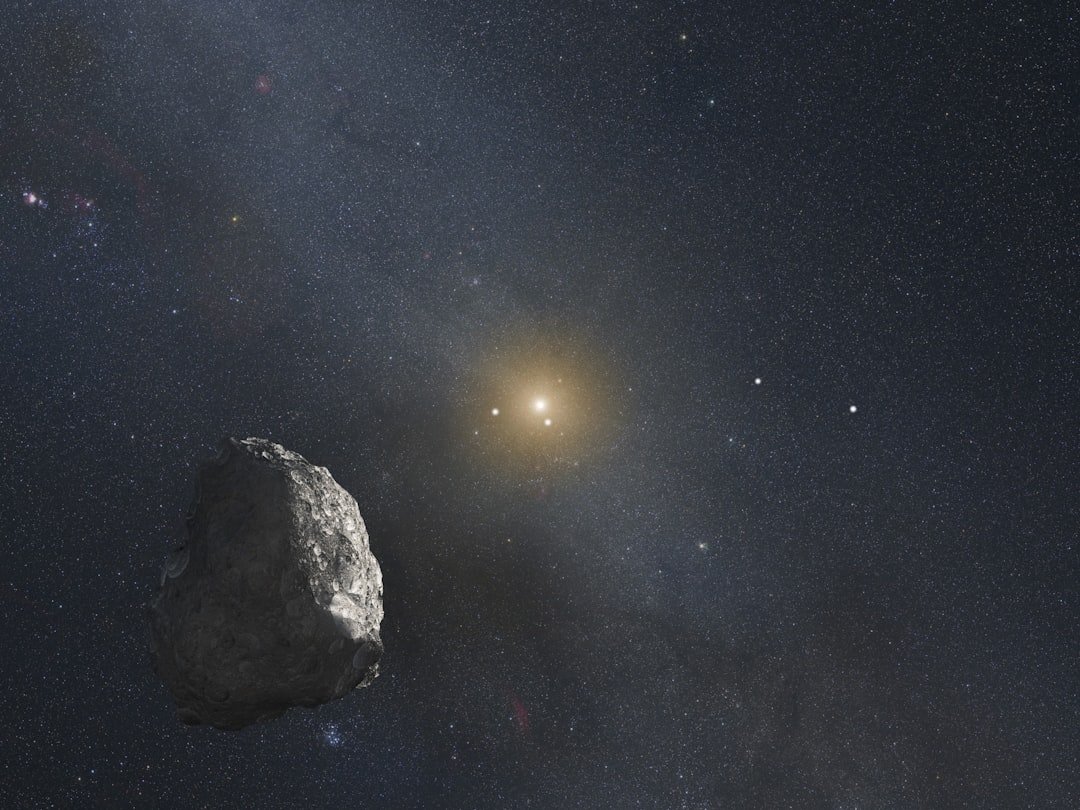
NASA’s New Horizons spacecraft revealed the first detailed image of such an object in 2019, capturing 2014 MU69 – later named Arrokoth – as two distinct lobes gently touching.[3] Astronomers soon recognized these contact binaries throughout the Kuiper Belt, where roughly one in 10 planetesimals displayed this double-sphere configuration.[1]
These ancient relics, preserved in the sparse outer solar system, offered clues to the early universe but defied easy explanation. Earlier ideas invoked rare low-speed collisions or exotic processes, yet the sheer prevalence suggested something more routine. The Kuiper Belt’s low density ensured these bodies endured billions of years with minimal disruptions, their surfaces bearing few craters.
Michigan State Team’s Game-Changing Simulations
Graduate student Jackson Barnes at Michigan State University led the development of advanced computer models that finally reproduced the shapes naturally.[2] His senior advisor, Seth Jacobson, noted the significance: “If we think 10% of planetesimal objects are contact binaries, the process that forms them can’t be rare.”[1] The team leveraged the university’s high-performance computing resources to simulate realistic particle interactions.
Barnes explained their advance: “We’re able to test this hypothesis for the first time in a legitimate way.” Unlike past efforts that modeled collisions as fluid mergers yielding smooth spheres, these simulations treated particles as solid chunks capable of stacking and resisting deformation.[3] The results appeared in the Monthly Notices of the Royal Astronomical Society.
Step-by-Step: From Pebble Cloud to Snowman
The process began with clouds of dust and pebbles in the protoplanetary disk, drawn together by gravity much like snowflakes forming a snowball. Rotation destabilized the cloud, causing it to collapse inward and fragment into two orbiting planetesimals. Their mutual gravity then shrank the orbit until gentle contact occurred.
Low-speed fusion preserved each lobe’s roundness, creating the signature snowman profile. The team outlined the key stages:
- Dust and pebbles aggregate into a rotating cloud.
- Gravitational collapse flattens and tears the cloud into orbiting pairs.
- Orbits decay slowly through interactions.
- Components touch and settle without reshaping.
- The binary endures in the stable Kuiper Belt.
Old Models Versus New Insights
Prior simulations struggled to match observations, often producing unified spheres instead of distinct lobes. The Michigan State work incorporated material strength, enabling realistic outcomes.
| Approach | Assumptions | Outcome |
|---|---|---|
| Previous Models | Fluid-like collisions | Smooth, single spheres |
| New Simulations | Solid particles with strength | Two-lobed contact binaries |
This shift not only explained Arrokoth’s form but also accounted for the 10% frequency across the region.[2]
Peering Deeper into Solar System History
These findings reshaped understanding of planetesimal formation, highlighting gravitational collapse as a dominant pathway. The Kuiper Belt, home to Pluto and myriad comets, served as a pristine archive of solar system infancy. Future missions might spot even more such binaries, while refined models could explore triple systems.
The research underscored how common physics sculpted extraordinary structures over eons.
Key Takeaways
- Contact binaries comprise about 10% of Kuiper Belt planetesimals.
- Gravitational collapse naturally produces their snowman shapes.
- Advanced simulations confirm the process without rare events.
As telescopes and probes venture farther, these cosmic snowmen remind us of gravity’s subtle artistry in building worlds. What surprises might the Kuiper Belt hold next? Share your thoughts in the comments.