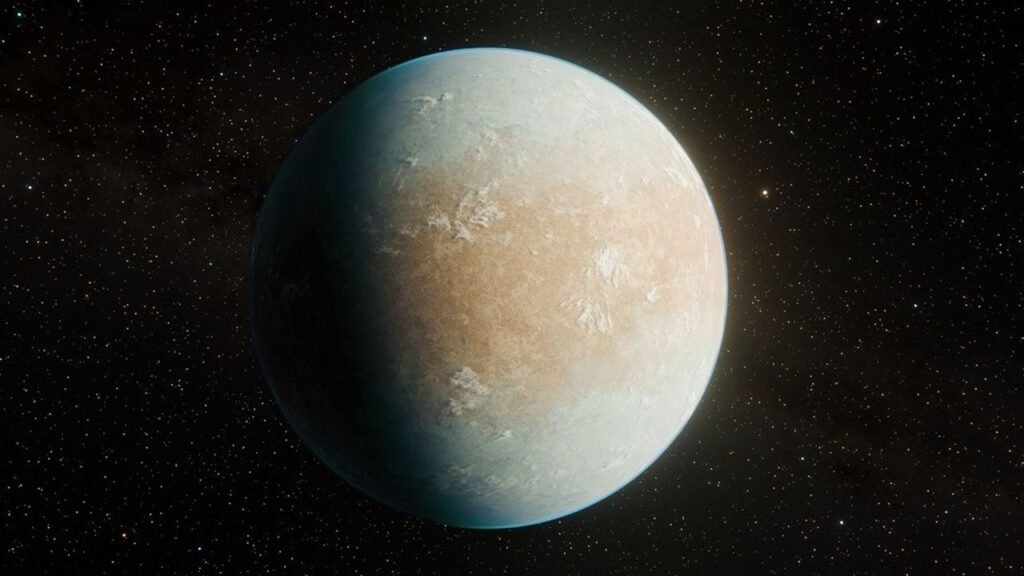

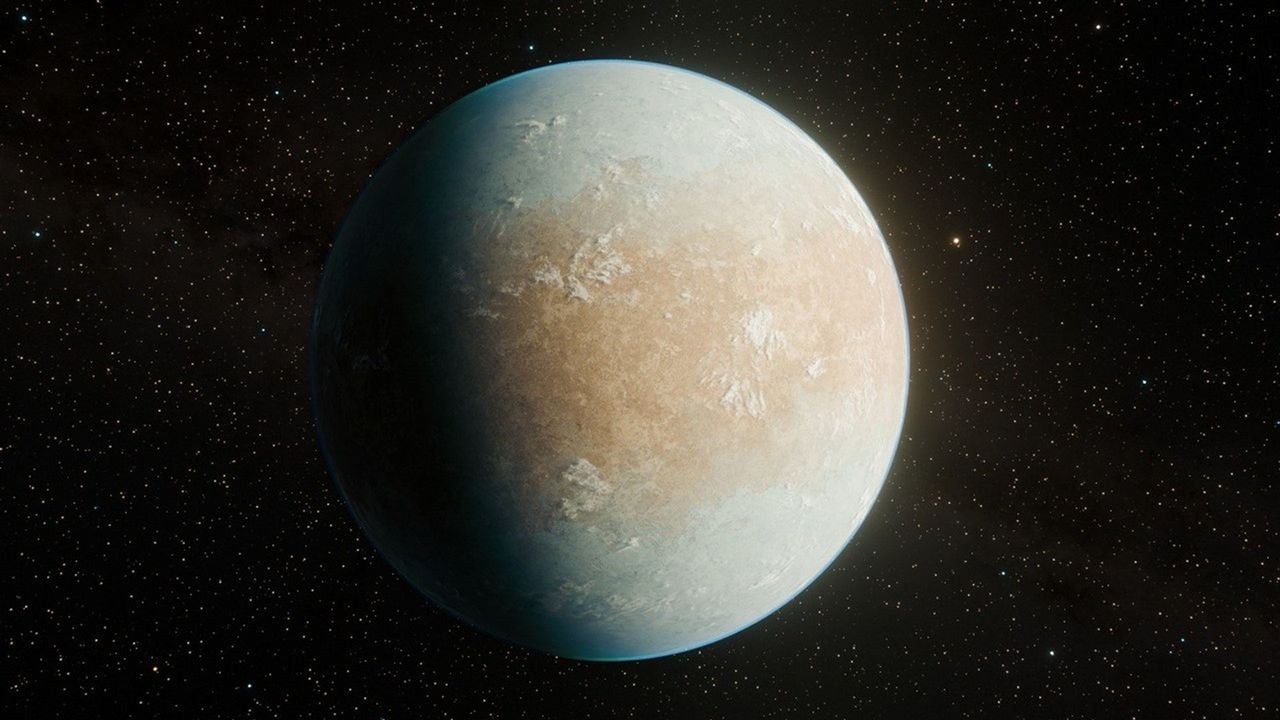
Citizen Science Unearths Hidden Transit (Image Credits: Cdn.mos.cms.futurecdn.net)
Astronomers recently pinpointed an intriguing Earth-sized exoplanet candidate circling a Sun-like star 146 light-years distant, raising questions about its potential to sustain liquid water despite frigid conditions.[1][2]
Citizen Science Unearths Hidden Transit
A single transit event captured by NASA’s Kepler Space Telescope during its K2 mission in 2017 revealed the candidate world, known as HD 137010 b.
Alexander Venner, then a high school student participating in the Planet Hunters citizen science project, flagged the signal that later formed the basis of this discovery. Years on, as lead author of the study published January 27, 2026, in The Astrophysical Journal Letters, Venner reflected on the find. “I contributed to this citizen science project called Planet Hunters back when I was in secondary school, and it was a big part of how I got into research. It was an amazing experience to go back to this work and dig up such an important discovery.”[2]
The team conducted multiple checks to validate the dimming of the host star HD 137010, confirming a textbook planetary transit. Precision measurements exceeded typical Kepler standards, yet the single detection leaves its existence unconfirmed.[1]
Earth-Like Traits Around a Cooler Star
The planet orbits HD 137010, a tenth-magnitude K-dwarf star cooler and dimmer than the Sun, delivering less than one-third the heat and light Earth receives.
HD 137010 b measures roughly 6 percent larger than Earth and likely rocky in composition. Its orbital period spans 355 days – nearly matching Earth’s year – with a transit lasting 10 hours, compared to Earth’s 13 hours.[3][2]
Key characteristics include:
- Size: Slightly larger than Earth (about 1.06 Earth radii).
- Orbital period: 355 days.
- Stellar distance: Positioned for infrequent transits, complicating observations.
- Star brightness: Bright enough for ground- and space-based follow-up.
Co-author Chelsea Huang highlighted the proximity: “What’s very exciting about this particular Earth-sized planet is that its star is only [about] 150 light-years away from our solar system. The next best planet around a sun-like star, in a habitable zone, [Kepler-186f] is about four times farther away and 20 times fainter.”[2]
Frigid Temperatures Meet Habitable Potential
Equilibrium models peg the surface temperature at no warmer than minus 90 degrees Fahrenheit (minus 68 degrees Celsius), akin to Mars’ average of minus 85 degrees Fahrenheit (minus 65 degrees Celsius).
The candidate sits at the outer fringe of the star’s habitable zone, where liquid water might exist under a thick carbon dioxide-rich atmosphere. Statistical analysis yields a 40 percent chance within the conservative habitable zone, 51 percent in the optimistic zone, and a near-even odds of residing just beyond.[1]
| Habitable Zone Scenario | Probability |
|---|---|
| Conservative | 40% |
| Optimistic | 51% |
| Beyond HZ | ~50% |
Outcomes range from a temperate world to an icy “super snowball,” but the star’s brightness positions it for detailed scrutiny.[3]
Charting the Path to Confirmation
Verification demands repeated transits, a challenge given the year-long orbit. Missions like NASA’s TESS or ESA’s CHEOPS could detect additional passages.
Huang noted the promise for advanced instruments: “The brightness and closeness of the star it orbits puts it ‘within reach of [being observed with] the next generation of telescopes’… I’m sure this will be the first target to be observed when the technology gets there.”[2]
Future telescopes may probe its atmosphere for biosignatures, transforming this candidate into a cornerstone of exoplanet research.
Key Takeaways
- HD 137010 b offers Earth-like size and orbit around a nearby Sun-like star.
- 50-50 odds place it near the habitable zone’s chilly boundary.
- Kepler’s archives continue to fuel breakthroughs via citizen science.
This “cold Earth” candidate underscores the enduring value of archival data in the hunt for habitable worlds. As confirmation efforts advance, it could redefine our cosmic neighborhood. What are your thoughts on this icy prospect? Share in the comments.