Space has a habit of humbling us. Just when astronomers think they’ve mapped out a reliable picture of how galaxies and black holes grow together, a telescope like JWST comes along and tosses that picture straight out the window. That’s essentially what’s happening right now, and it’s genuinely exciting.
Recent observations from the James Webb Space Telescope have uncovered something unexpected hiding inside dwarf galaxies – black holes that are, frankly, way too big for their hosts. Scientists are scrambling to understand what this means for some of the most foundational theories in astrophysics. Let’s dive in.
The Discovery That Caught Astronomers Off Guard
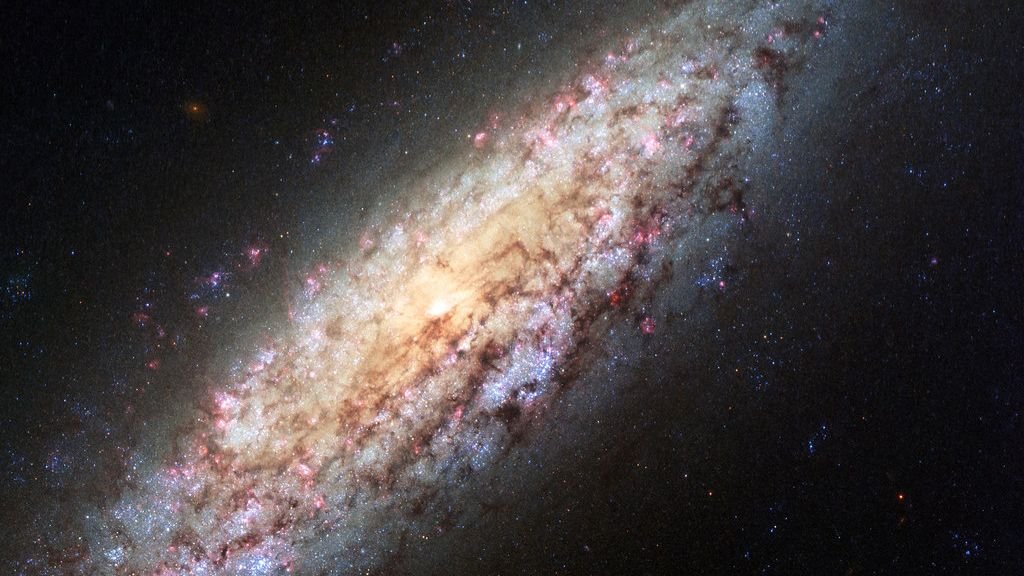
Here’s the thing about dwarf galaxies – they’re small. We’re talking about compact collections of stars, often containing only a few billion of them, which sounds like a lot until you compare it to a galaxy like the Milky Way with its hundreds of billions. They were never supposed to be hiding monsters.
JWST’s infrared capabilities allowed astronomers to peer into these tiny galactic structures with unprecedented clarity. What they found were black holes that appear to be disproportionately massive relative to the size and stellar mass of their host galaxies. In the world of astrophysics, this kind of mismatch is deeply puzzling.
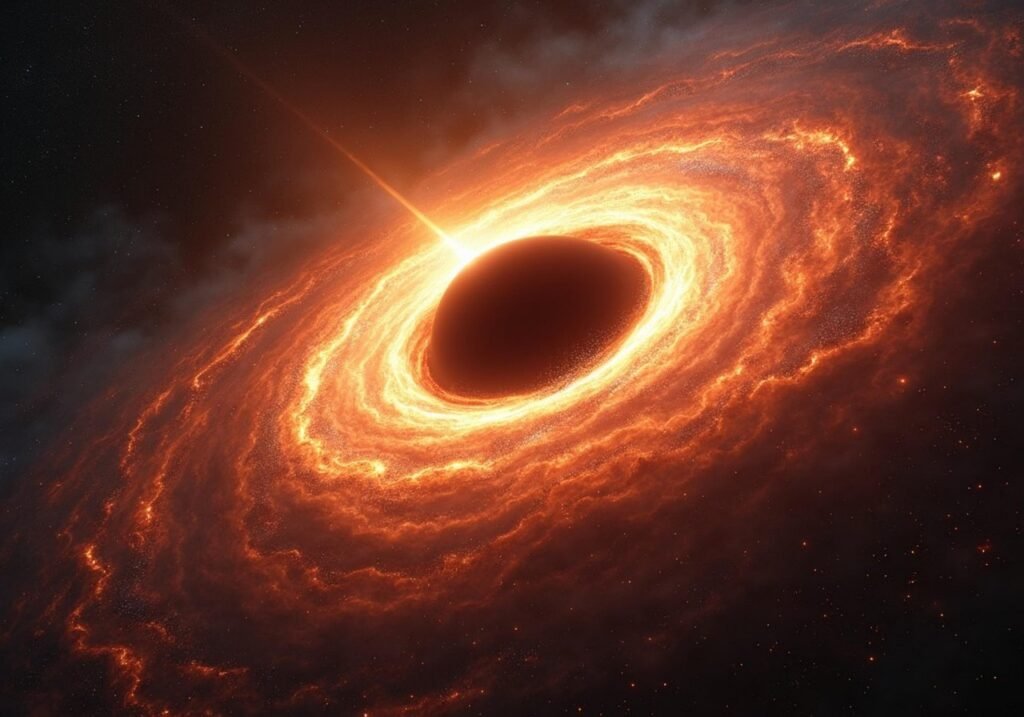
The term scientists use is “overmassive,” and it’s not just a dramatic label. These black holes are significantly larger than models predict they should be based on how much star-forming material their host galaxies contain. Honestly, it’s a bit like finding an elephant living comfortably inside a studio apartment.
Why Dwarf Galaxies Matter So Much to This Story
Dwarf galaxies are considered the building blocks of larger galaxies. Over cosmic time, they merge and accumulate to form the massive spiral and elliptical galaxies we see today. That makes them a kind of archaeological record – studying them tells us how galaxies, and the black holes inside them, grew up.
For decades, astronomers believed there was a reliable relationship between a galaxy’s size and the mass of its central black hole. Bigger galaxy, bigger black hole. It seemed almost universal. These new JWST findings are now poking serious holes in that assumption.
If even small dwarf galaxies can host enormous black holes, it suggests the relationship between black hole growth and galaxy growth may be far more complex – and far less orderly – than we thought. That’s not a small revision to our understanding. That’s a fundamental rethink.
What “Overmassive” Actually Means in Cosmic Terms
Let’s be real about scale for a moment. When astronomers say a black hole is overmassive, they don’t mean it’s slightly chubby. In some of the cases JWST is revealing, the black hole’s mass represents a startlingly large fraction of the total stellar mass of the entire galaxy surrounding it.
In a typical well-studied galaxy, the central black hole accounts for a tiny fraction of the galaxy’s overall mass – roughly a fraction of a percent. In some of these dwarf galaxies, that ratio appears dramatically higher. That imbalance is what’s driving the scientific conversation right now.
It raises a genuinely strange question: did the black hole form first, and the galaxy built up around it? Or did something accelerate the black hole’s growth early on in ways we haven’t properly accounted for? It’s hard to say for sure, but both possibilities carry enormous implications.
JWST’s Role and Why No Other Telescope Could Have Done This
The James Webb Space Telescope operates primarily in the infrared spectrum, which gives it the ability to see through cosmic dust and observe objects at extreme distances. This is crucial when studying dwarf galaxies, which are often faint and easy to overlook against the broader cosmic landscape.
Previous telescopes, including even the venerable Hubble, simply lacked the sensitivity to resolve the fine structural details of distant dwarf galaxies with enough precision to detect their central black holes. JWST changed that almost immediately after it came online. The telescope has been delivering surprises at a pace that honestly seems almost unfair to the theories it keeps overturning.
This particular finding didn’t come from a single dramatic observation but from a systematic survey approach, where researchers analyzed multiple dwarf galaxies and found a consistent pattern. That consistency is what gives these results weight. One anomaly is a curiosity. A pattern is a discovery.
How This Challenges the Standard Model of Black Hole Growth
The prevailing theory of black hole and galaxy co-evolution, sometimes called co-evolutionary feedback, suggests that as a black hole grows, it releases enormous energy that influences star formation in the surrounding galaxy. This back-and-forth feedback loop was supposed to keep things roughly in proportion.
JWST’s findings suggest that in at least some cases, this proportionality breaks down completely. The overmassive black holes in these dwarf galaxies may have grown rapidly during the early universe through processes that the current models underestimate or haven’t fully accounted for. One candidate explanation is that these black holes had unusually massive “seeds” to start with.
Another possibility involves periods of super-Eddington accretion, where black holes consumed matter at rates far exceeding what standard physics would consider their natural limit. Think of it as a cosmic binge-eating episode. If this happened frequently in the early universe, it would explain a lot – including why our existing models keep getting surprised by JWST data.
Broader Implications for Our Understanding of the Early Universe
This discovery connects to a wider pattern that JWST has been revealing since its early science runs. The telescope keeps finding galaxies and black holes in the early universe that are more massive, more mature, and more structurally complex than they should be given the age of the universe at the time. The dwarf galaxy findings add another layer to that growing puzzle.
If overmassive black holes are common in dwarf galaxies, they may have also been common in the early universe, since dwarf-like proto-galaxies were essentially what everything started as. This could mean that the universe’s first black holes grew far faster than anyone anticipated. That challenges timelines that cosmologists have spent decades refining.
There’s also a question of how many of these objects we’ve simply been missing. Dwarf galaxies are numerous – they may actually outnumber large galaxies by a significant margin. If a substantial fraction of them host overmassive black holes, the total black hole mass budget of the universe may need to be revised upward. That’s not a trivial correction.
What Comes Next for Researchers
The scientific community is now pushing to expand the sample size of these observations. A finding based on a limited number of galaxies, however compelling, always needs replication and broader confirmation. Follow-up surveys using JWST are already being planned, and researchers are hoping to identify whether the overmassive black hole phenomenon is rare or surprisingly common.
There’s also significant interest in combining JWST data with observations from other instruments, including radio telescopes and X-ray observatories, to build a more complete picture of what’s happening inside these galaxies. Each type of telescope reveals a different aspect of a black hole’s activity and environment.
I think what makes this moment genuinely thrilling is that we’re watching science do exactly what it’s supposed to do. A new tool reveals something unexpected, theories get challenged, and the entire field has to adapt. JWST was built to answer questions. What nobody quite expected was how many new questions it would generate in return – and how good those questions would turn out to be.
A Universe More Complicated Than We Imagined
It would be easy to frame findings like this as science “getting things wrong.” That’s not really the right way to look at it. Science has always worked by successive approximation – each generation of tools revealing details the last one couldn’t see.
What JWST is doing is pulling back another curtain on the early universe, and what’s behind it is consistently stranger and more interesting than the models predicted. Overmassive black holes in dwarf galaxies are not an embarrassment for astrophysics. They’re an invitation to go deeper.
The real takeaway here is that our universe is under no obligation to be simple. These black holes didn’t develop the way they did to frustrate cosmologists. They developed according to physical processes we’re still piecing together – processes that are evidently richer and more varied than even our best theories captured. That, honestly, is what makes astronomy worth following.
What do you think – does it change how you think about the universe knowing that even the smallest galaxies can hide some of its most extreme objects? Drop your thoughts in the comments.