
A Visual Symphony of Celestial Merger (Image Credits: Cdn.mos.cms.futurecdn.net)
In the vast expanse of the universe, two galaxies have locked in a dramatic embrace, their forms intertwining in a display captured by leading space observatories.
A Visual Symphony of Celestial Merger
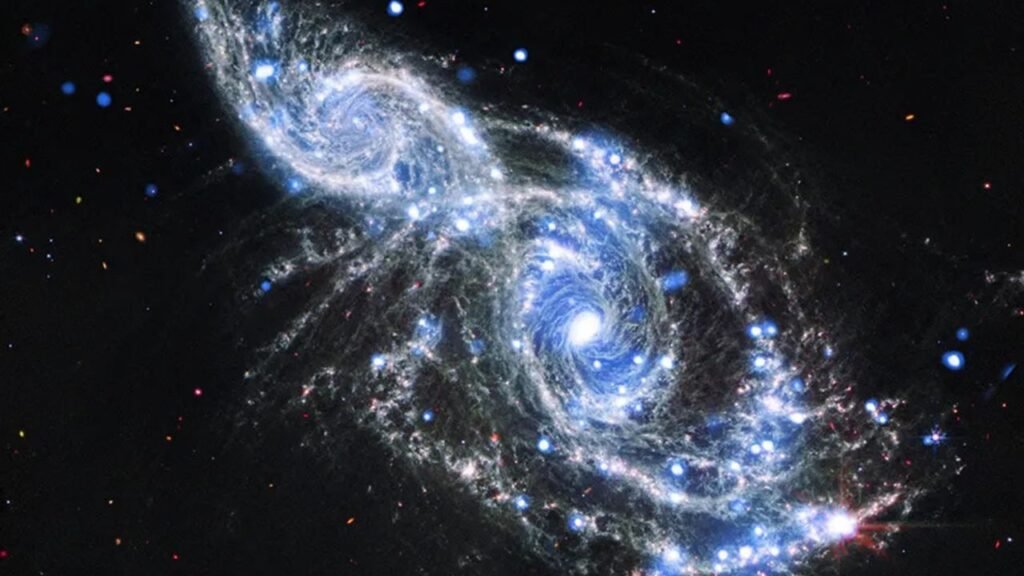
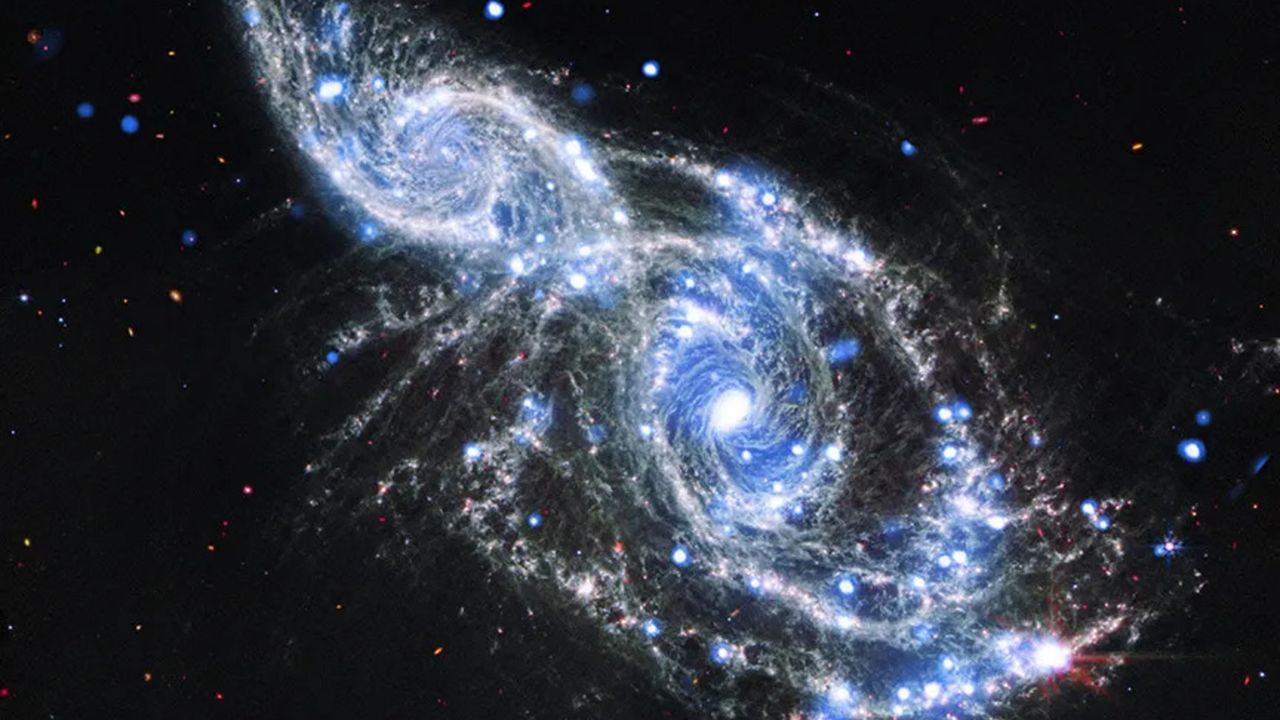
Astronomers unveiled a mesmerizing composite image on January 8, 2026, showcasing the intricate dance of two colliding galaxies. This breathtaking view combined data from the James Webb Space Telescope (JWST) and NASA’s Chandra X-ray Observatory, highlighting features invisible to the naked eye. The image revealed swirling arms of gas and dust, illuminated by the glow of newborn stars and the fierce radiation from active black holes.
The collision, occurring hundreds of millions of light-years away, offered a rare glimpse into the dynamic processes that shape cosmic structures. Scientists noted how the galaxies’ gravitational pull distorted their shapes, creating tidal tails that stretched across the frame. Such events, though gentle on cosmic timescales, trigger bursts of star formation and alter the galaxies’ futures.
The Science Behind the Galactic Hug
Galaxy mergers like this one represent key moments in the universe’s evolution. When two galaxies approach each other, their gravity causes stars, gas, and dark matter to redistribute, often leading to the birth of new stellar nurseries. In this case, the interaction fueled intense star-forming regions, visible as bright knots in the infrared wavelengths captured by JWST.
Chandra’s contribution added a layer of high-energy insight, detecting X-rays from superheated gas and supermassive black holes at the galaxies’ cores. These observations helped map the hot plasma ejected during the merger, providing clues about the black holes’ growth. Researchers emphasized that such collisions are common in the early universe, contributing to the formation of larger elliptical galaxies we see today.
Technological Marvels at Work
The collaboration between JWST and Chandra exemplified the power of multi-wavelength astronomy. JWST’s infrared capabilities pierced through cosmic dust to reveal cooler structures, while Chandra’s X-ray sensitivity uncovered the violent undercurrents of the merger. Together, they produced a composite that blended these perspectives into a cohesive narrative of the event.
This image emerged from ongoing surveys aimed at studying galaxy evolution. Astronomers processed the data over months, aligning observations to create the final product. The result not only advanced our understanding but also demonstrated how space-based telescopes complement each other in unraveling the universe’s mysteries.
Broader Implications for Astronomy
Discoveries from this merger image could refine models of how galaxies assemble over billions of years. By examining the distribution of stars and gas, scientists gained insights into dark matter’s role in holding these systems together during collisions. The event also highlighted the universe’s ongoing transformation, where isolated galaxies rarely remain so for long.
Future observations with upcoming instruments may build on this work, tracking similar mergers in real time. Such studies underscore the interconnected nature of cosmic bodies and the relentless forces driving change across the cosmos.
- The image showcases infrared views from JWST revealing star-forming regions.
- X-ray data from Chandra highlights hot gas and black hole activity.
- Tidal distortions create elongated structures spanning millions of light-years.
- Star formation rates spike due to compressed gas clouds.
- Black holes at the cores may eventually merge, emitting gravitational waves.
Key Takeaways
- Galaxy mergers drive star formation and structural evolution in the universe.
- Combined telescope data provides a fuller picture than single-wavelength views.
- This collision offers a window into processes that shaped early cosmic structures.
As this galactic hug reminds us, the universe thrives on interaction and change, painting a picture of endless transformation. What aspects of cosmic mergers intrigue you most? Share your thoughts in the comments.