
Unexpected Survivors from Cosmic Dawn (Image Credits: Cdn.mos.cms.futurecdn.net)
Astronomers recently identified 70 faint, dusty galaxies at the universe’s farthest edges, findings that bridge critical gaps in the story of cosmic evolution.
Unexpected Survivors from Cosmic Dawn
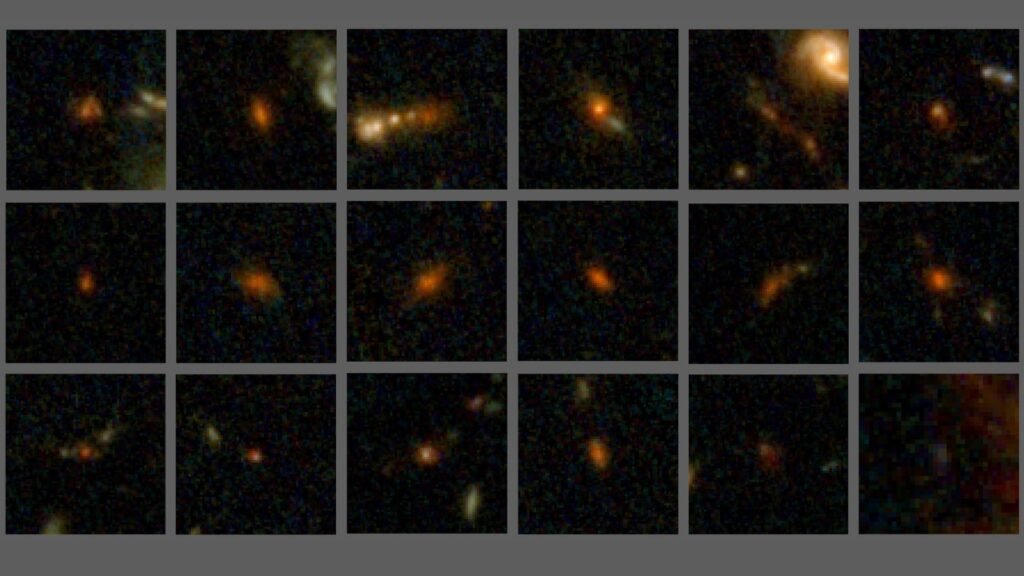
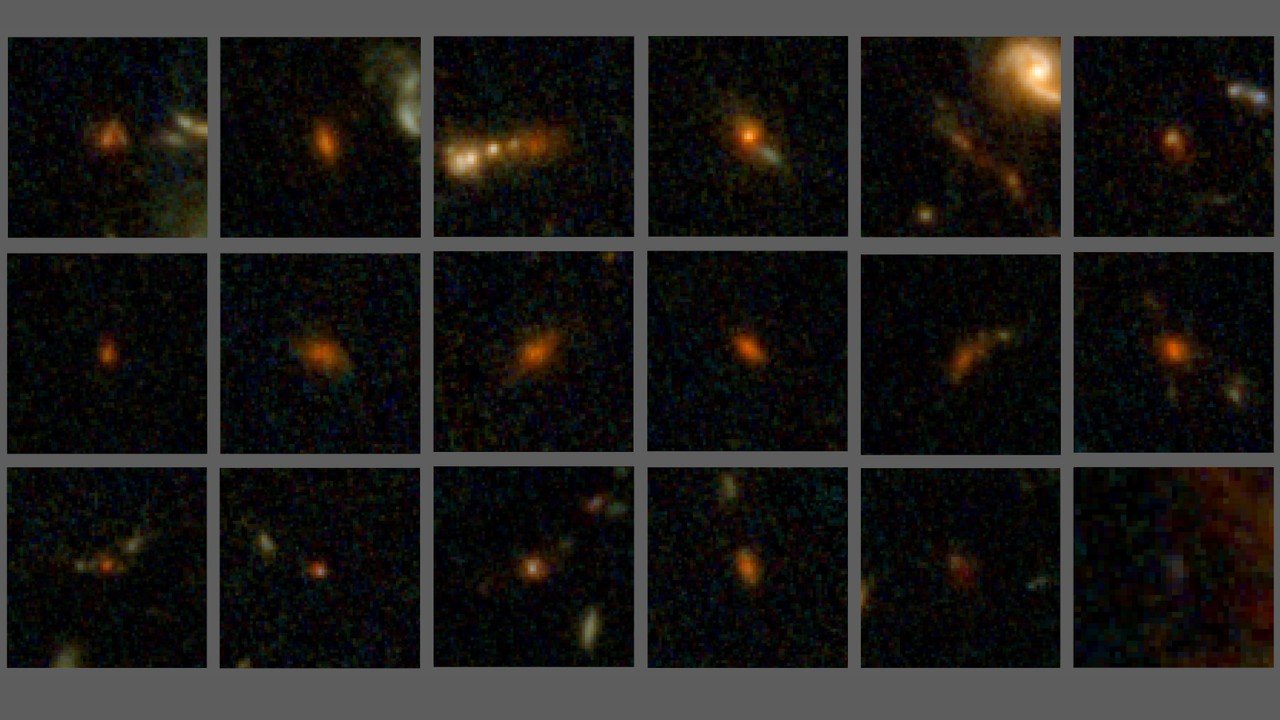
These galaxies emerged just a billion years after the Big Bang, when the universe was still in its infancy. Massive and shrouded in cosmic dust, they formed stars at rates far exceeding expectations for that era. Observations confirmed their existence through combined efforts of ground-based and space telescopes.
The discovery surprised researchers because current models predicted slower galaxy maturation in the early cosmos. Instead, these objects boasted stellar masses up to 10 billion times that of the sun and churned out new stars at 100 solar masses per year. Such vigor hinted at rapid chemical enrichment, with abundant metals heavier than hydrogen and helium.
Team Effort Spans Continents and Telescopes
A collaboration of 48 astronomers from 14 countries, led by Jorge Zavala of the University of Massachusetts Amherst, drove the breakthrough. Zavala’s expertise focused on rare, dusty star-formers first spotted in the late 1990s. The team published results in The Astrophysical Journal Letters.[1][2]
The Atacama Large Millimeter/submillimeter Array in Chile first detected about 400 bright, dusty galaxies. This array excels at capturing infrared emissions from heated dust, which absorbs ultraviolet and visible light. NASA’s James Webb Space Telescope then provided near-infrared views to isolate roughly 70 fainter candidates, most previously undetected.[3]
Unveiling the Hidden Through Stacking
Confirmation came via a technique called stacking, where the team combined multiple ALMA observations of the faint targets. This boosted signal strength and verified the galaxies’ dusty nature and extreme age – nearly 13 billion years old. Dust rendered them invisible to earlier telescopes reliant on shorter wavelengths.
Key properties emerged clearly:
- Massive structures with high stellar masses.
- Rich in metals and dust, indicating swift evolution.
- Active star formation defying timeline predictions.
- Positioned at redshifts up to z ~ 8, probing the epoch of reionization.
- Rare population linking brighter and quiescent phases.
“Dusty galaxies are massive galaxies with large amounts of metals and cosmic dust,” Zavala explained. “And these galaxies are very old, which means stars were being formed in the early universe, earlier than our current models predict.”[1]
Redefining Galaxy Life Cycles
These finds positioned the galaxies as intermediaries in evolution. Ultrabright, star-bursting ones represent youth, while early quiescent galaxies mark senescence. The new dusty cohort fits as the “young adult” stage, suggesting a smoother progression than models allowed. Implications ripple through cosmology. Star formation timelines must shift earlier, prompting revisions to formation theories. Gaps during the cosmic Dark Ages and reionization epoch now fill with evidence of complex activity.[3]
“It’s as if we now have snapshots of the life cycle of these rare galaxies,” Zavala noted. “The ultrabright ones are young galaxies, the quiescent ones are in their old age, and the ones we found are young adults.”[2]
Key Takeaways
- 70 faint dusty galaxies confirmed at ~13 billion years old via ALMA and JWST.
- Challenge models by showing early, massive star formation.
- Act as missing links between bright young and quiescent galaxies.
This revelation underscores how advanced observatories pierce the veil of dust and distance, refining our grasp of the universe’s formative years. Future surveys promise deeper insights into these elusive pioneers. What do you think about these cosmic time capsules? Share in the comments.