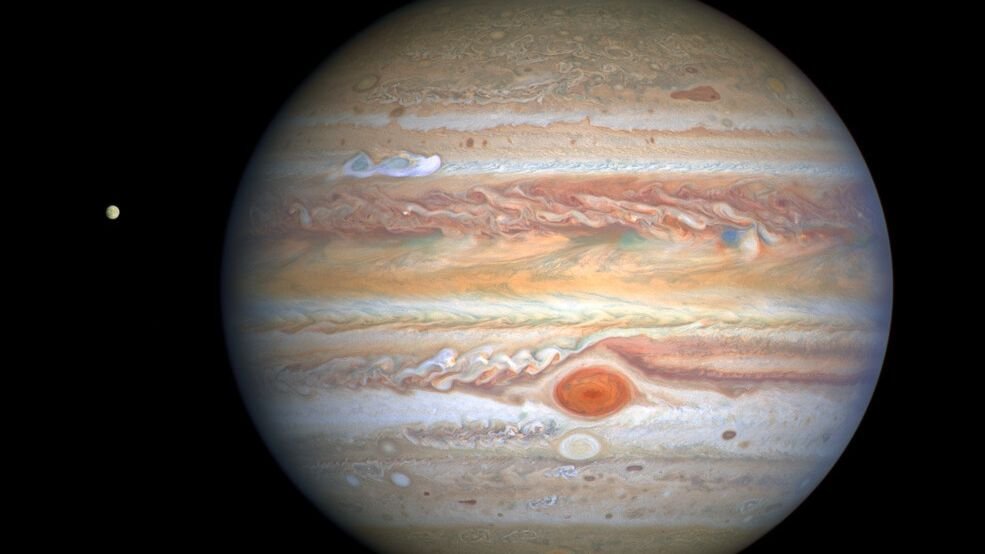

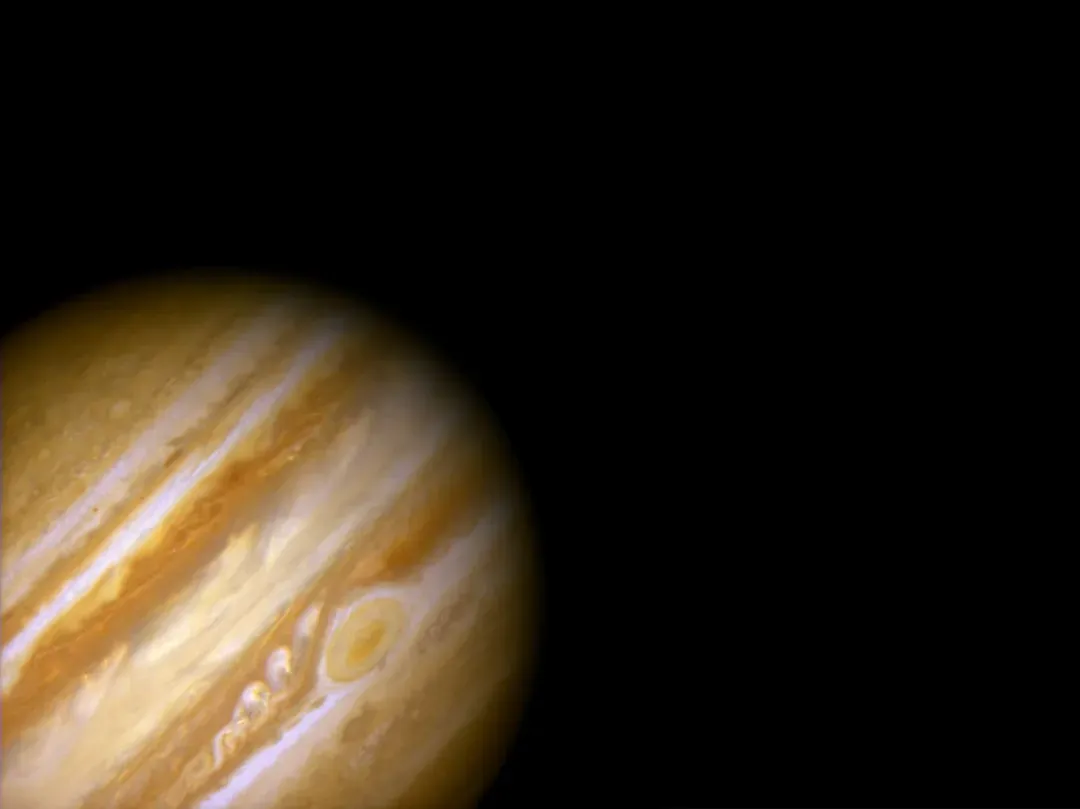
For centuries, the Great Red Spot has looked like a cosmic eye staring back at us from Jupiter’s stormy face. It’s huge, it’s violent, and it’s older than any human alive today. And yet, this legendary storm is doing something no one expected when we first pointed telescopes at it: it’s getting smaller.
A storm large enough to swallow Earth several times over is slowly tightening, like a spinning figure skater pulling in their arms. That image is both beautiful and a little unsettling. As scientists keep a nervous watch on this shrinking giant, they’re asking a question that feels almost dramatic: are we living through the last chapter of one of the Solar System’s most iconic features?
The Shocking Truth: Jupiter’s “Eternal” Storm is Fading
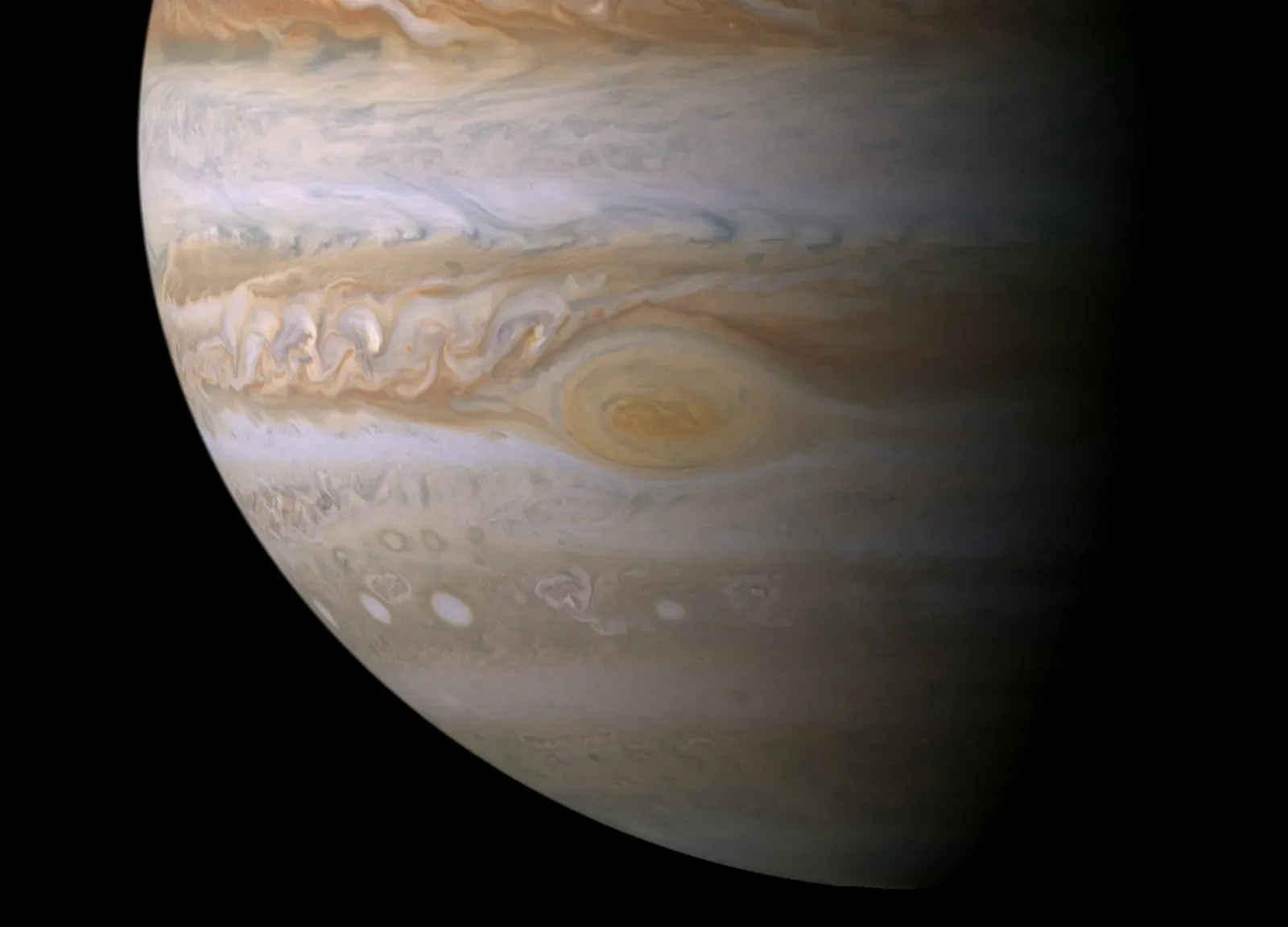
For a long time, astronomers talked about the Great Red Spot as if it were almost eternal. It was already well-known in the late eighteen hundreds, and some historical observations suggest a huge storm in roughly the same region at least a century earlier. That kind of longevity made it feel untouchable, like a permanent landmark painted onto Jupiter’s clouds rather than a storm that lives and dies.
But modern observations have shattered that comforting idea. Over the last few decades, high-resolution images from space telescopes and spacecraft have shown the storm’s width steadily decreasing. What used to be wide enough to fit roughly three Earths across has shrunk to something closer to a bit more than one Earth and a half. We’re watching, in real time, a storm that survived empires and revolutions slowly tighten and morph before our eyes.
How Fast is The Great Red Spot Actually Shrinking?
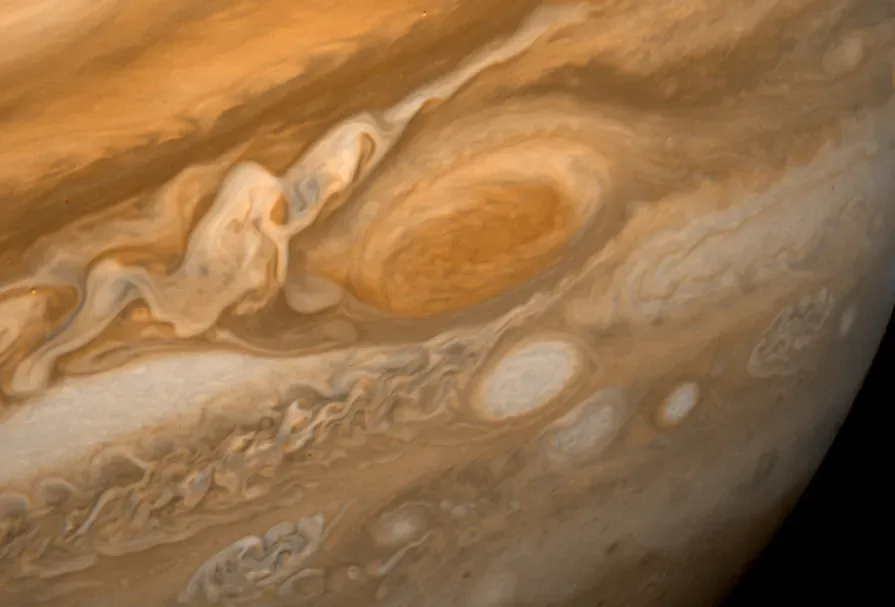
If you compare drawings from the late eighteen hundreds to early telescope photos from the nineteen seventies, and then to images from the Hubble Space Telescope and NASA’s Juno mission, the trend is impossible to miss. The Great Red Spot has lost a huge chunk of its width over about one and a half centuries. The storm is narrower, more compact, and its once-oval shape has become more circular, like a bruise being squeezed inward.
In the last few decades alone, scientists have measured its width dropping by hundreds of kilometers per year at some points. It’s not shrinking at a perfectly steady rate; sometimes the pace seems to slow, then speed up again, like a storm taking a breath. But if you zoom out and look at the big picture, the direction is clear. The Great Red Spot is not what it used to be, and the phrase “slowly dying storm” no longer sounds dramatic – it sounds descriptive.
Smaller, but Stronger: Why the Winds are Speeding Up
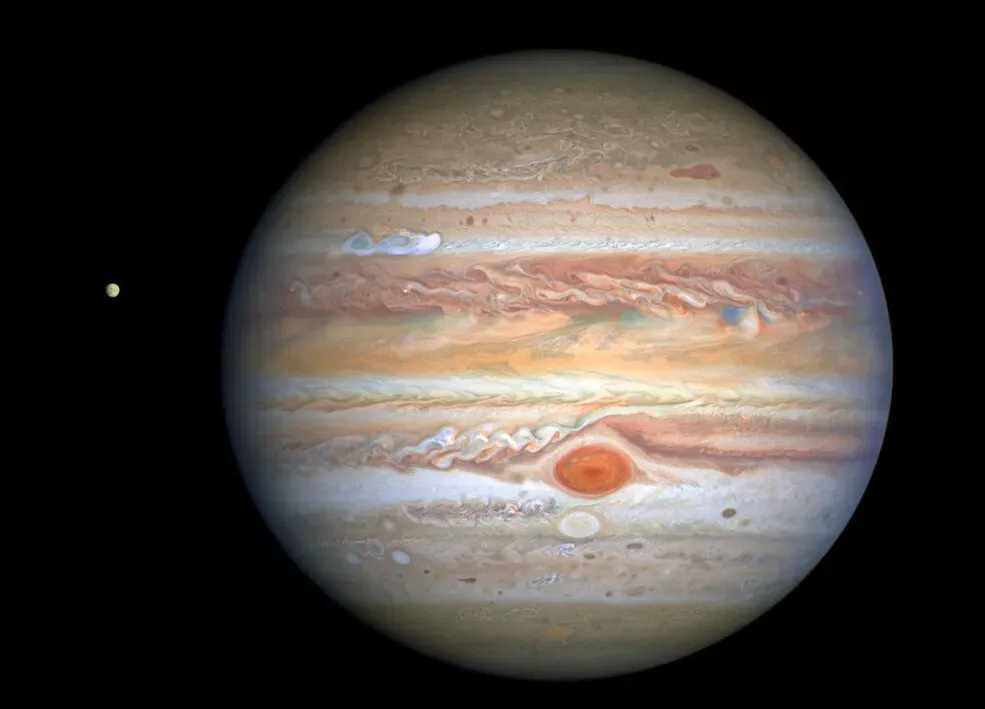
Here’s the twist that surprises most people: while the storm is shrinking in size, its winds appear to be getting faster around the edges. That sounds backward at first, but fluid dynamics on a giant, fast-spinning planet are anything but intuitive. Think about a spinning ice skater again – when they pull their arms in, they spin faster. Something similar can happen with a shrinking vortex on Jupiter.
Measurements from Hubble and Juno suggest that the outer wind speeds in the Great Red Spot have crept upward by a noticeable amount over the last decade or so. The storm is becoming more compact, and the energy is being squeezed into a tighter space. The center, interestingly, does not show the same obvious boost. So you end up with a smaller storm with sharper, faster outer winds, more like a tightened hurricane eye wall than a fading whisper.
What Might Ultimately Kill The Great Red Spot?
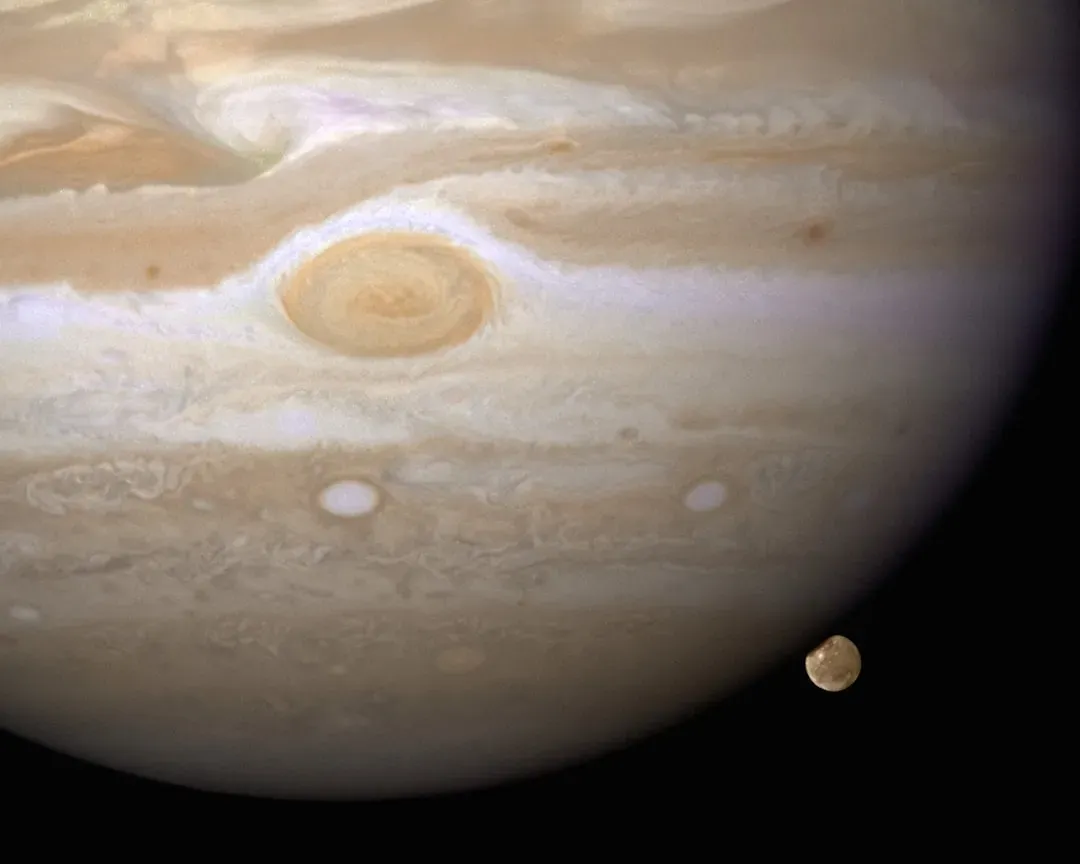
Every storm on Earth eventually runs out of fuel, and Jupiter’s no different, even if the timescales are wildly longer. The Great Red Spot is powered by complex flows of heat, jet streams, and smaller storms feeding it from below and around. As it shrinks, scientists suspect that these energy inputs might be restructuring. The storm could be losing access to some of its “food,” or being disrupted by nearby jet streams that are slowly tearing away at its edges.
There’s also the possibility that turbulence from small, surrounding vortices is nibbling at the storm, transferring energy elsewhere. Over time, the Great Red Spot might get stretched, split, or simply dissipate into the surrounding cloud belts. It probably won’t vanish in a dramatic, overnight event. More likely, it will gradually fade, get paler, perhaps fragment, until one day future astronomers realize there’s nothing left that truly deserves the old name.
Could The Great Red Spot Disappear in Our Lifetime?
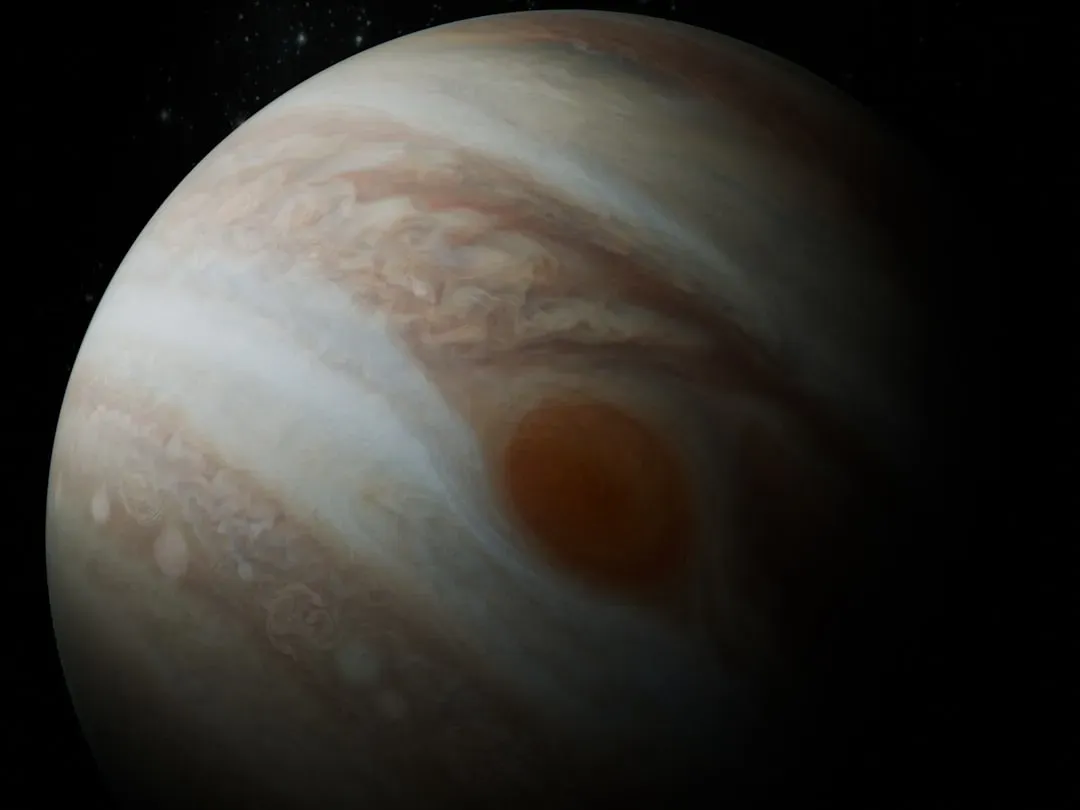
This is the question that makes the whole topic feel personal: will we actually see the Great Red Spot vanish? The honest answer is that no one can say for sure. Some scientists estimate that, if the current shrinking trend continues at a similar pace, the storm could significantly fade or lose its distinct boundaries within the next century or two. That’s a blink of an eye in planetary terms, but a long time on human calendars.
However, the storm’s behavior has never been perfectly smooth or predictable. It sometimes sheds material, then stabilizes for a while, then changes shape again. A shift in Jupiter’s deep atmospheric circulation could slow or even temporarily reverse the shrinking. So while it’s possible that children alive today could grow old in a Solar System where the classic Great Red Spot is gone or unrecognizable, it’s not guaranteed. We’re watching a long, slow drama, not a countdown clock.
What New Storms Might Replace This Iconic Feature?
Here’s something easy to overlook: Jupiter already has plenty of other storms, and new features keep appearing. Over the last few decades, astronomers have watched smaller, white ovals merge and transform, even creating a new reddish storm system in Jupiter’s southern hemisphere sometimes nicknamed a “little red spot.” The planet is not a calm world losing its only storm; it’s a restless globe where vortices constantly collide, merge, and evolve.
If the Great Red Spot fades, Jupiter will not suddenly look blank or boring. Instead, the energy locked inside that region could spawn new, smaller vortices or be redistributed into other bands and spots. We might eventually talk about a “former Great Red Spot region” that now hosts a chain of medium-sized storms instead of one giant one. In a strange way, the end of this iconic storm might just be the beginning of a new era of wild weather patterns on the giant planet’s face.
Why This Shrinking Storm Matters for Life Back on Earth
It’s fair to ask why anyone should care about a giant storm on a world we’ll never walk on. The simple reason is that Jupiter is a natural laboratory for extreme weather and fluid dynamics. By tracking how the Great Red Spot changes, scientists test models that also help us understand jet streams, hurricanes, and climate patterns on Earth. The same basic physics is at play; it’s just turned up to an almost absurd scale on Jupiter.
There’s also something more emotional at work. The Great Red Spot has been a familiar sight in space images and science books for generations, a kind of cosmic landmark. Realizing that it’s not permanent drives home a deeper point: even the most seemingly stable features in our Solar System live on borrowed time. Planets evolve, storms die, new patterns emerge. Knowing that, what else out there might be quietly changing while we’re just starting to pay attention?