
Space is full of surprises, and sometimes the best discoveries aren’t even planned. Scientists and astronomers spend years carefully designing missions, setting targets, calibrating instruments – and then, out of nowhere, the universe throws something completely unexpected into the frame.
That’s exactly what happened recently when the ESA’s JUICE spacecraft, on its carefully plotted journey through the solar system, stumbled across something nobody had penciled into the schedule. A newly discovered comet, blazing through the darkness, photobombed one of the most ambitious planetary missions of our time. Let’s dive in.
The Mission That Wasn’t Looking for Comets
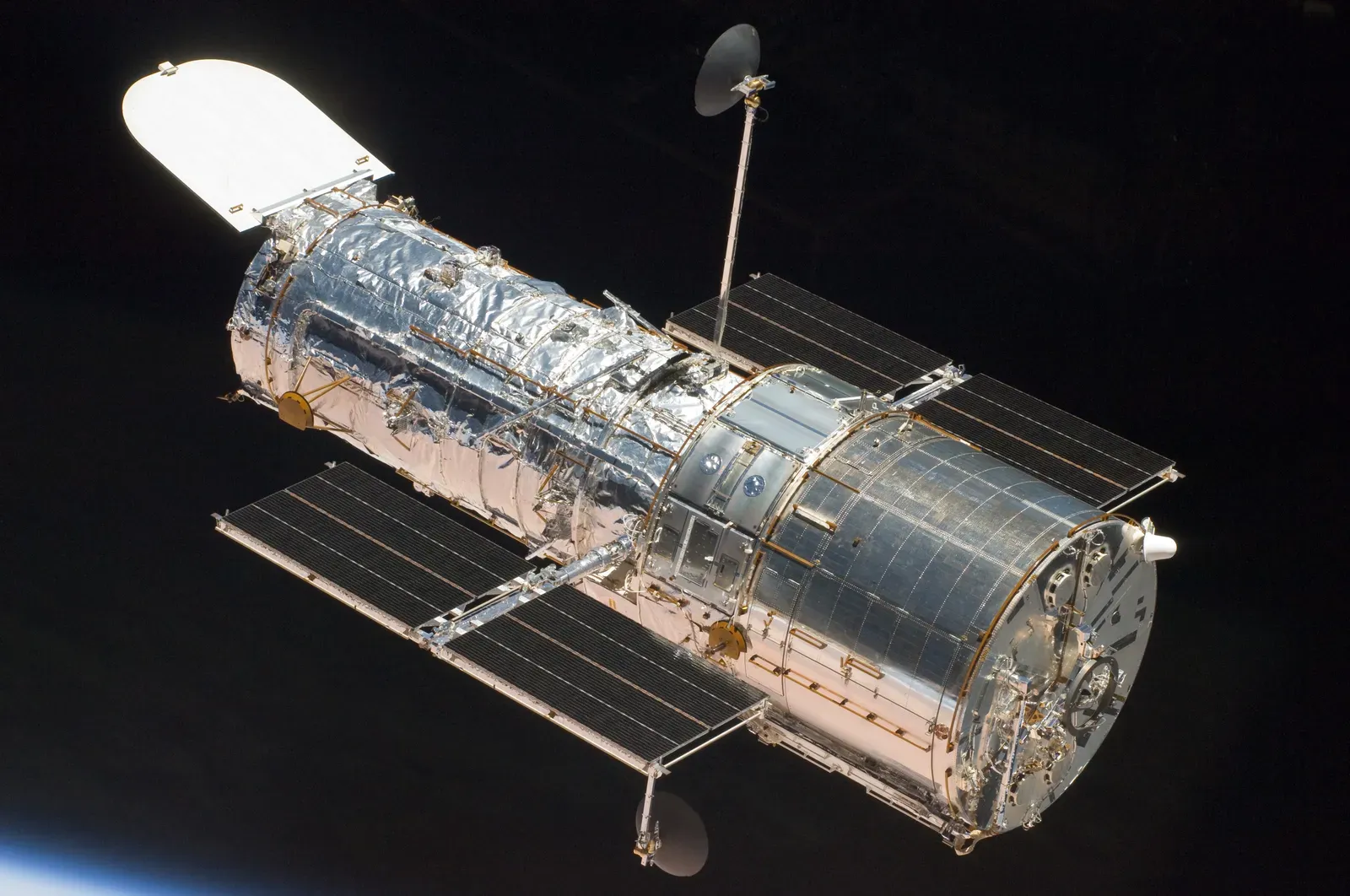
JUICE, which stands for Jupiter Icy Moons Explorer, has one very specific job. It’s heading to Jupiter to study three of its large, icy moons – Ganymede, Callisto, and Europa – places scientists genuinely believe could harbor conditions suitable for life. The mission is long, calculated, and deeply focused on the outer solar system.
So when engineers and astronomers pointed the spacecraft’s cameras for a routine calibration test, comets were not on the agenda. Not even close. The fact that one showed up anyway is the kind of thing that makes space exploration feel almost magical, like the universe is winking at you when you least expect it.
Meet Comet C/2025 A1 (ATLAS) – A Newcomer to Our Skies
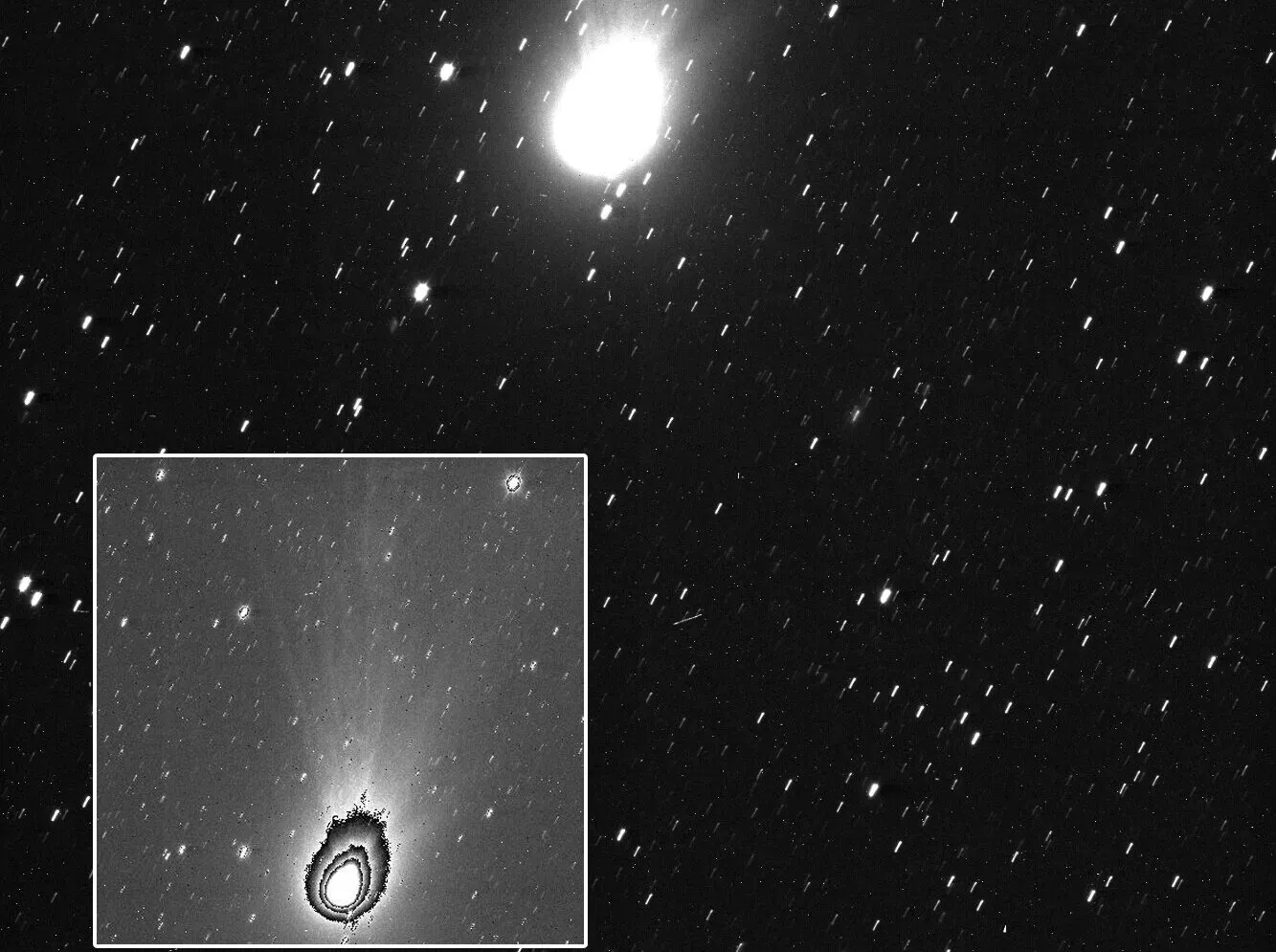
The comet in question is known as C/2025 A1, discovered by the ATLAS survey system, which is a telescope network specifically designed to detect near-Earth objects and other transient phenomena. It was a relatively fresh discovery when JUICE accidentally captured it, making the timing almost absurdly perfect.
What’s remarkable here is that this comet was still new to the astronomical community’s radar. Honestly, the fact that a deep-space probe managed to image it so soon after discovery adds a genuinely exciting chapter to both the comet’s story and JUICE’s mission history. Comet 3I/ATLAS, as it’s also referenced, has already stirred considerable interest among researchers eager to study its composition and trajectory.
How the Image Was Actually Captured
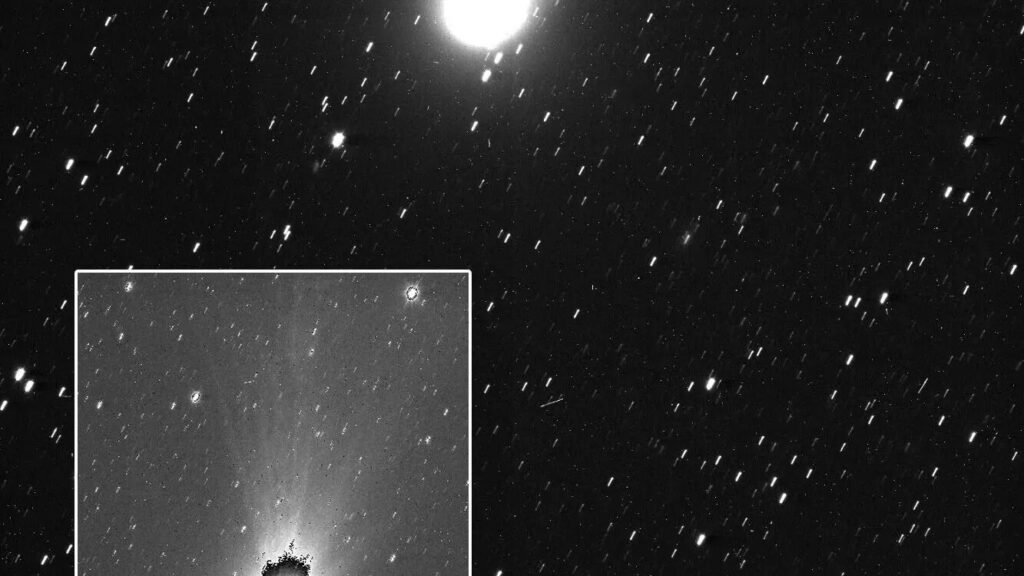
Here’s the thing – the image wasn’t the result of a dedicated comet-hunting session. JUICE’s scientific camera, called JANUS, was being tested and calibrated as part of routine instrument checks during the spacecraft’s cruise phase. These are the unglamorous, procedural moments in any mission, the kind that rarely make headlines.
During that calibration window, Comet 3I/ATLAS happened to drift through the camera’s field of view. The resulting image is not some glossy, hyper-detailed portrait. It’s a glimpse, a faint streak of light against a star-dotted background. Yet within that modest image lies something genuinely thrilling: proof that JUICE’s instruments are working beautifully, and that space still knows how to surprise us on a Tuesday afternoon.
Why This Accidental Snapshot Actually Matters
You might be thinking – okay, so a spacecraft took a blurry photo of a comet. Why does that matter? The answer is more layered than it first appears. First, it demonstrates that JUICE’s onboard instruments are in excellent shape mid-journey, which is reassuring for a mission that still has years of travel ahead before reaching Jupiter.
Second, and perhaps more interestingly, it gives scientists a rare opportunity to study a comet from a vantage point that no Earth-based telescope could ever replicate. JUICE is already far from home. Observing a comet from a completely different position in the solar system provides a different geometric perspective, which can help researchers better understand the comet’s orbit, brightness, and physical characteristics. That’s not nothing. That’s genuinely valuable science falling into scientists’ laps unexpectedly.
The Growing Significance of Comet 3I/ATLAS
Comet 3I/ATLAS has been generating buzz beyond just this single image. The “3I” designation is itself significant – it marks this object as potentially the third confirmed interstellar visitor ever detected passing through our solar system. Let that sink in for a moment. An object from beyond our solar system, drifting through, and we happened to photograph it from a spacecraft heading to Jupiter.
The scientific community is naturally excited. Interstellar objects carry with them chemical and physical information from entirely different stellar systems, possibly formed around another star entirely. Studying them, even briefly, is like receiving a postcard from a part of the galaxy we may never actually visit. The JUICE image, accidental as it was, adds another data point to an already fascinating object.
What JUICE Itself Is Doing Right Now
JUICE launched back in April 2023 and is currently in its long interplanetary cruise phase, using gravitational assists from Earth and Venus to build up enough velocity to reach Jupiter by 2031. It’s a slow burn, literally years of travel, but the science it will eventually produce is expected to be extraordinary.
During these cruise years, the spacecraft isn’t idle. Engineers conduct regular checks, calibrations, and tests on every instrument aboard. It’s during one of these check-ins that the comet encounter happened. The mission team, to their credit, recognized immediately that they had something special and made sure to highlight the observation publicly. It’s a small moment in a very long journey, but a memorable one.
What This Tells Us About Modern Space Exploration
I think what this story really illustrates is the beauty of exploration done with patience and rigor. Modern space missions are so meticulously planned that there’s almost no room for the unexpected – and yet the unexpected keeps showing up anyway. The universe, it seems, doesn’t care much for our schedules.
It’s hard to say for sure what future surprises JUICE might encounter on its remaining journey to Jupiter. It could be nothing, or it could be another jaw-dropping accidental discovery. What we do know is that science advances not just through careful planning, but through the willingness to recognize a gift when the cosmos decides to hand one over. The JUICE-comet encounter is a small but beautiful reminder that sometimes, the best science is the science you didn’t plan for.
A Happy Accident That Science Will Remember
An interstellar comet, a calibration test, and a spacecraft millions of miles from home. When you line those three things up, the result sounds less like science and more like poetry. The accidental imaging of Comet 3I/ATLAS by JUICE is one of those rare moments that reminds even the most skeptical among us why space exploration is worth every euro, every engineering hour, and every year of patient waiting.
Let’s be real – not every great discovery comes with a dramatic “eureka” moment. Sometimes it comes quietly, tucked inside a routine camera test, wearing the disguise of an ordinary Tuesday. The question worth sitting with is this: how many more surprises is the universe hiding just outside the edge of what we’re actually looking for?