
A Pioneering Test in Microgravity (Image Credits: Cdn.mos.cms.futurecdn.net)
Researchers transformed fragments of meteorites into sources of valuable metals high above Earth, proving that microorganisms can perform mining tasks in the challenging environment of space.
A Pioneering Test in Microgravity
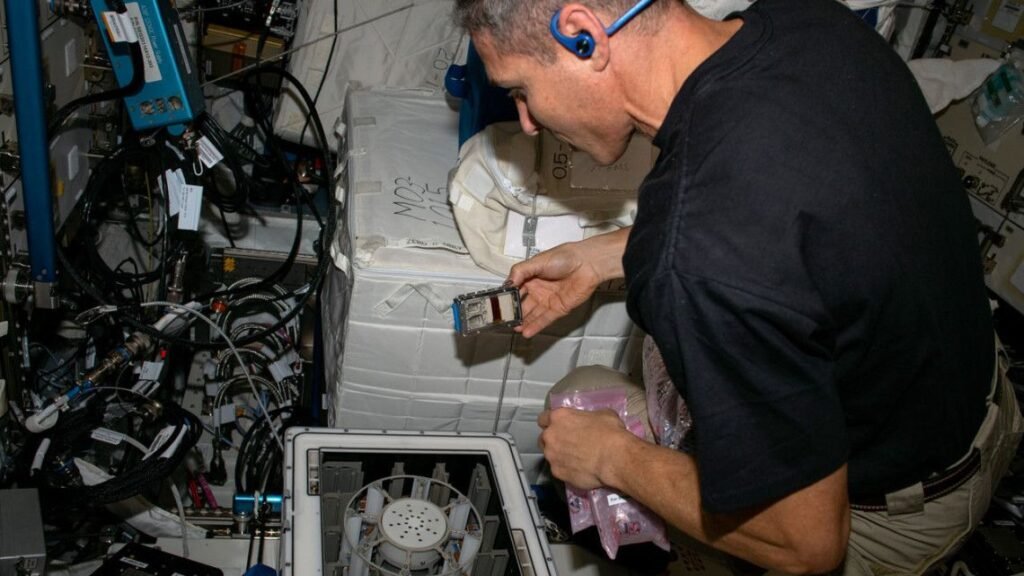
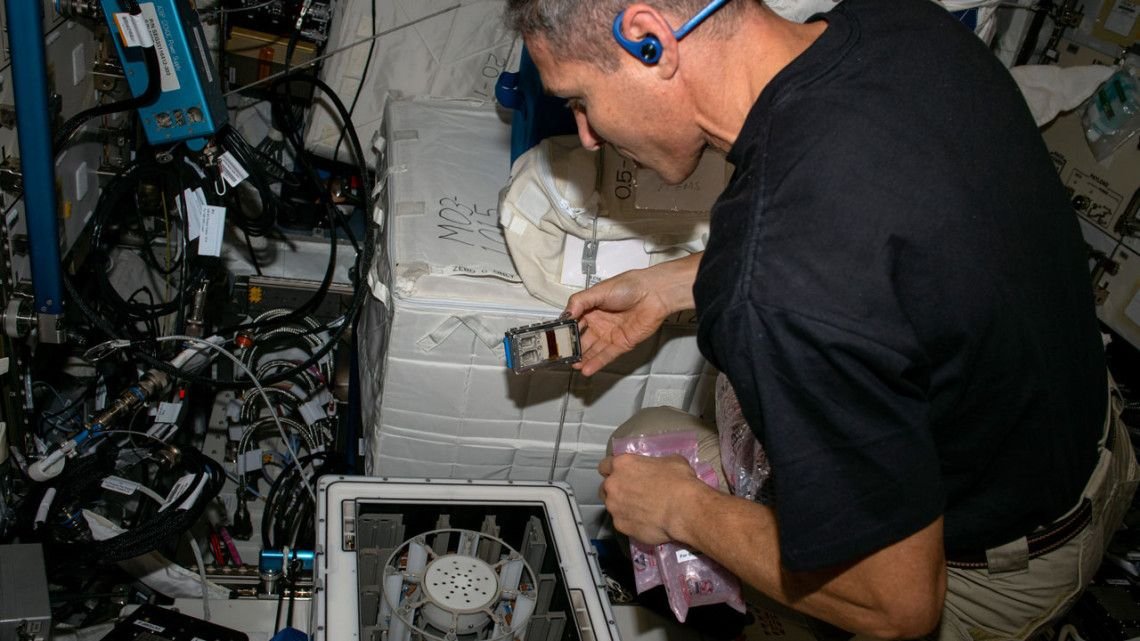
The BioAsteroid experiment marked a milestone when it launched to the International Space Station on December 6, 2020, aboard a SpaceX resupply mission.[1][2] NASA astronaut Michael Scott Hopkins activated the setup, exposing meteorite samples to bacteria and fungi under microgravity conditions. Ground-based controls ran simultaneously on Earth for comparison. This approach tested whether biological processes could yield resources without heavy equipment.
Teams from Cornell University and the University of Edinburgh led the effort. Rosa Santomartino, now at Cornell and the study’s first author, described it as “probably the first experiment of its kind on the International Space Station on meteorite.”[2] The project analyzed how space altered microbial behavior, providing data essential for future missions.
How Microbes Unlock Hidden Treasures
Biomining relies on microbes that produce carboxylic acids. These acids bind to minerals in rocks, dissolving them into a liquid solution for easy collection. The process mimics natural Earth mechanisms but adapts to extraterrestrial materials.[3]
Scientists selected two organisms: the bacterium Sphingomonas desiccabilis and the fungus Penicillium simplicissimum. Each targeted different elements from L-chondrite meteorite material, a type originating from asteroids like Northwest Africa 869. The fungus proved especially effective at releasing palladium, a platinum-group metal used in technology and worth thousands of dollars even in small quantities.[4]
Results Reveal Microgravity’s Influence
Analyses of 44 elements showed biological extraction for 18 of them. Microgravity boosted the fungus’s metabolism, ramping up carboxylic acid production and enhancing palladium and platinum release compared to non-biological leaching.[3] Non-biological processes faltered in space, yielding less effectively than on Earth for many elements. Microbes stabilized extraction rates across conditions.
Alessandro Stirpe, a Cornell researcher, noted subtle but significant variations: “We don’t see massive differences, but there are some very interesting ones.”[2] Extraction efficiency shifted based on the metal, microbe type, and gravity. Santomartino added, “The extraction rate changes a lot depending on the metal that you are considering, and also depending on the microbe and the gravity condition.”[1]
- Fungus excelled at palladium and platinum in microgravity.
- Bacterium complemented extraction for other elements.
- Combined microbes offered broader yields than either alone.
- Space upregulated fungal secondary metabolites.
- Bioleaching outperformed abiotic methods in orbit.
Opening Doors to Sustainable Space Economies
These findings suggest microbes could supply critical materials for long-duration missions, reducing reliance on Earth shipments. Asteroids rich in platinum-group elements become viable targets with this lightweight technology. On Earth, similar techniques might aid mining waste recovery or remote operations.[2]
Details appear in a study published in npj Microgravity, led by senior author Charles Cockell of the University of Edinburgh.[3] Further tests will refine microbe-rock pairings for optimal results. The complexity demands tailored strategies, as Santomartino emphasized: “Depending on the microbial species, depending on the space conditions… everything changes.”
Key Takeaways
- Microbes extracted 18 elements from meteorites, with fungi boosting palladium yields in space.
- Microgravity enhanced biological leaching while hindering non-biological methods.
- This paves the way for in-situ resource use on asteroids and beyond.
Microbial mining emerges as a practical tool for humanity’s expansion into space, turning cosmic rocks into usable assets. What potential do you see for these tiny workers in the solar system? Tell us in the comments.