
A Striking Sight from 250 Miles Up (Image Credits: Cdn.mos.cms.futurecdn.net)
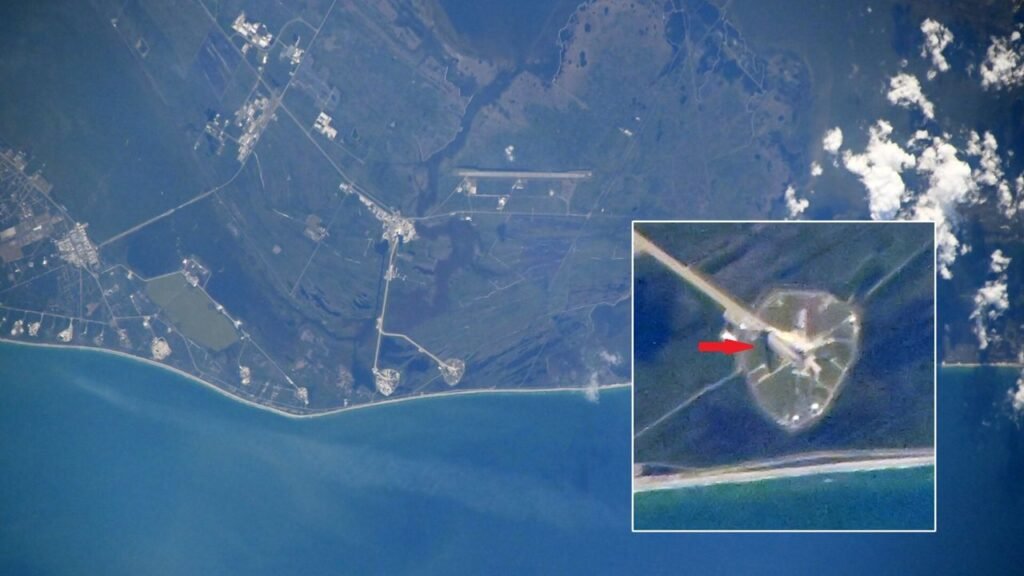
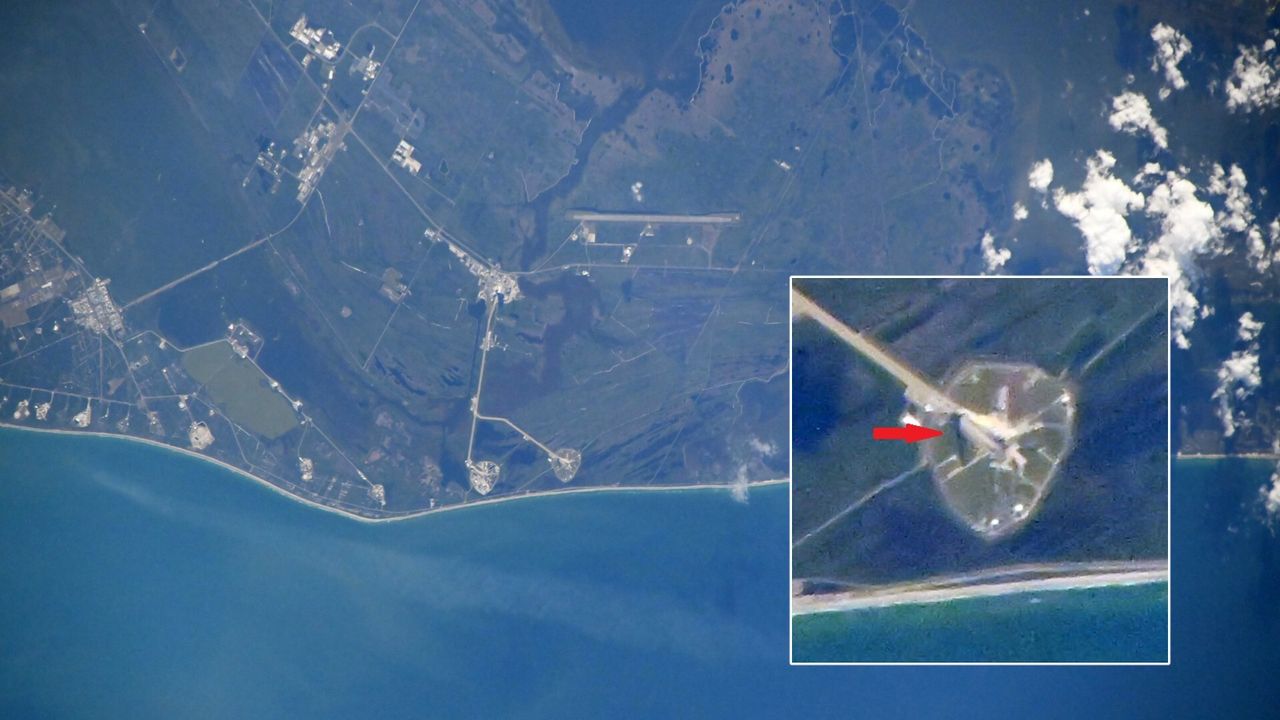
Kennedy Space Center, Florida – An astronaut aboard the International Space Station recently observed NASA’s Artemis 2 rocket standing ready on its launch pad, visible even from hundreds of miles above Earth.
A Striking Sight from 250 Miles Up
The observation highlighted the scale of modern space hardware. Crew members on the ISS routinely gaze down at Earth’s surface, but spotting a specific rocket like the Space Launch System (SLS) marked a notable moment. The station orbits at about 250 miles altitude, offering a unique vantage point over Florida’s Space Coast.
This view connected the ongoing operations in low Earth orbit with preparations for deep space exploration. NASA personnel confirmed the sighting underscored the rocket’s prominence against the landscape. Such instances remind observers of the continuity in human spaceflight endeavors.
The Artemis 2 Mission Takes Shape
Artemis 2 represents NASA’s next major step toward lunar return. Scheduled as the first crewed flight of the SLS and Orion spacecraft, the mission will send four astronauts on a flyby of the Moon. Teams at Kennedy Space Center completed key processing milestones leading up to this preparation phase.
Engineers positioned the rocket vertically on Launch Complex 39B after extensive testing. The stack includes the core stage, solid rocket boosters, and the upper stage. This configuration prepares it for final integrations and launch rehearsals.
Engineering Feats Behind the Visible Giant
The SLS stands as the most powerful rocket ever built for human spaceflight. Its core stage, powered by four RS-25 engines, generates immense thrust at liftoff. Solid rocket boosters, evolved from Space Shuttle technology, provide initial acceleration.
From orbit, the rocket’s white exterior and structural details stood out clearly. This visibility affirmed the precision of assembly processes conducted over months. Ground crews monitored environmental conditions to protect the hardware during its pad time.
Linking ISS Operations to Lunar Ambitions
The ISS continues to serve as a laboratory and waypoint for NASA programs. Astronauts there contribute data that informs Artemis development, from human health studies to technology demos. The sighting bridged these realms visually.
Future crew rotations on the station will carry forward this momentum. Meanwhile, Artemis 2 crews trained rigorously, simulating flight profiles. The programs together advance sustainable presence beyond low Earth orbit.
Key Milestones Ahead
- Final SLS fueling tests and Orion mating procedures.
- Crew arrival for dress rehearsals at the launch site.
- Target launch window in late 2025, pending certification.
- Post-mission analysis to pave way for Artemis 3 lunar landing.
- Ongoing ISS expeditions providing real-time support data.
Key Takeaways
- The ISS sighting confirmed Artemis 2 hardware readiness from space.
- SLS integrates proven Shuttle-era components with new capabilities.
- This event symbolizes NASA’s dual focus on orbit and Moon exploration.
As NASA pushes boundaries, moments like this orbital observation fuel anticipation for humanity’s next lunar chapter. The rocket’s presence on the pad signals progress toward renewed Moon missions and eventual Mars journeys. What are your thoughts on this bridge between current space station life and future deep space travel? Share in the comments below.