
Somewhere between Jupiter and the outer edge of our imagination lies a small, brilliantly white moon that has captured the attention of scientists and dreamers alike for decades. Europa, one of Jupiter’s dozens of known moons, looks calm and featureless from a distance. Smooth. Almost boring. Yet beneath that frozen shell hides what could be the most significant body of water in the entire solar system, and possibly something far more extraordinary.
The question of whether life exists on Europa isn’t fringe science or science fiction anymore. It sits at the very center of some of the most ambitious space missions ever launched. The science is complicated, often contradictory, and constantly evolving. So buckle up, because what you’re about to read might completely change the way you think about life in the universe.
A World Unlike Anything You’d Expect
Jupiter has nearly 100 known moons, yet none have captured the interest and imagination of astronomers and space scientists quite like Europa, an ice-shrouded world that is thought to possess a vast ocean of liquid salt water. That’s a staggering claim on its own, but here’s what makes it truly mind-bending: Europa’s ocean is global, and actually contains more water than all the oceans on Earth, and it is salty like Earth’s oceans.
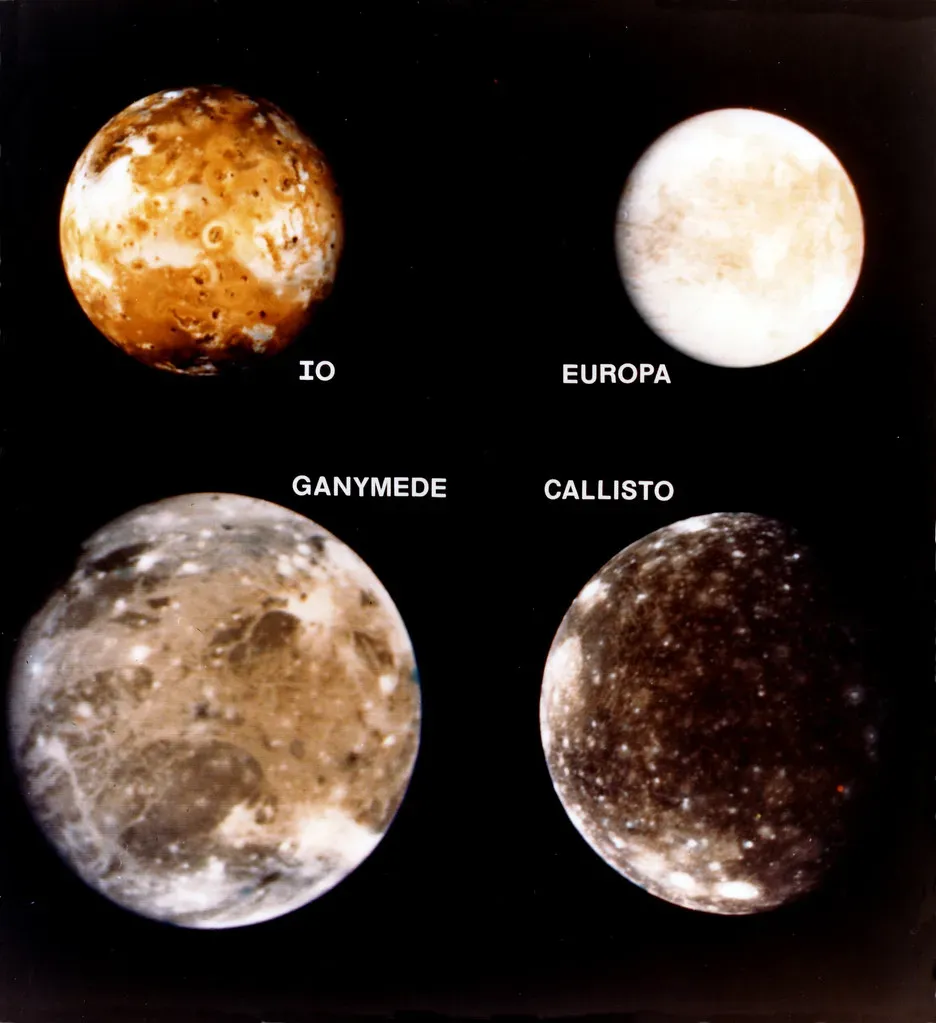
Europa was discovered in 1610 by the Italian astronomer Galileo Galilei, who spied it along with three other large Jovian moons, including Ganymede, Callisto, and Io, using a homemade telescope. For centuries it was just a dot of light. It wasn’t until the Galileo spacecraft arrived in the 1990s that things got truly exciting. In 1996, Galileo’s magnetometer picked up a strange signal emanating from Europa. As Jupiter’s magnetic field swept through the moon, it caused a secondary magnetic field to flare up. This unexpected magnetic response suggested Europa concealed an electrically conductive material, which scientists now believe is a vast, salty ocean.
The Ocean Beneath the Ice: What You’re Actually Looking At
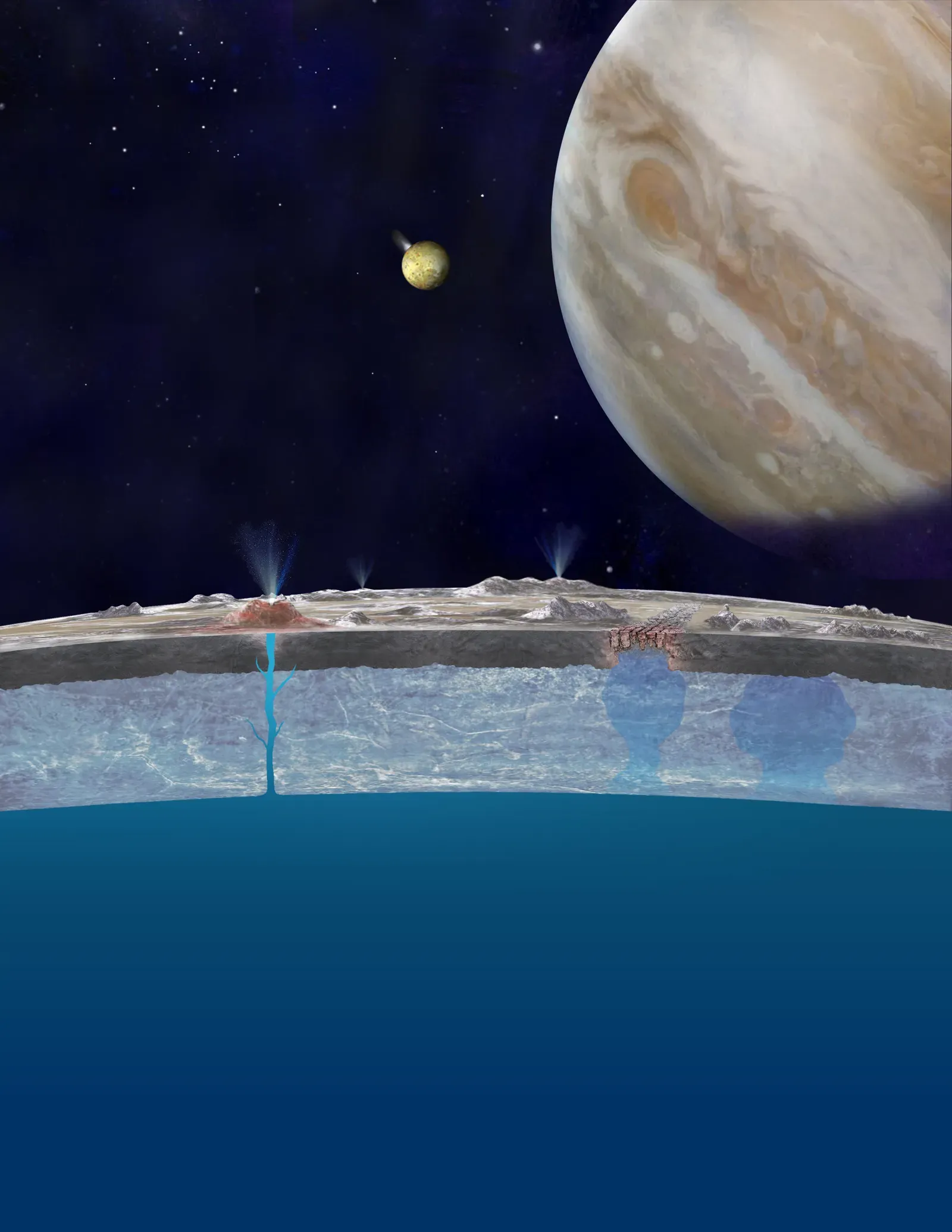
The ice shell on Europa is thought to be roughly 15 to 25 kilometers thick, and the ocean covers the entire moon to a depth of up to 100 kilometers. Even though Europa is slightly smaller than Earth’s moon, it likely holds much more water than Earth. Think about that for a moment. A moon smaller than our own moon, hiding an ocean far bigger than anything we swim in or sail across. It’s almost absurd.
Beneath that ice and water lies a rocky core analogous to Earth’s. While Earth’s core still burns hot, scientists calculated that any heat from Europa’s core would have escaped billions of years ago. This raises one of the central and most hotly debated questions in planetary science: if the core is cold, what keeps the ocean from freezing? The answer, it turns out, comes from above, not below. Much of the heat that is inside Europa would come from tidal heating, which happens as Jupiter’s powerful gravity pulls and squeezes the interior of Europa.
The Big Debate: Could Life Actually Survive Down There?
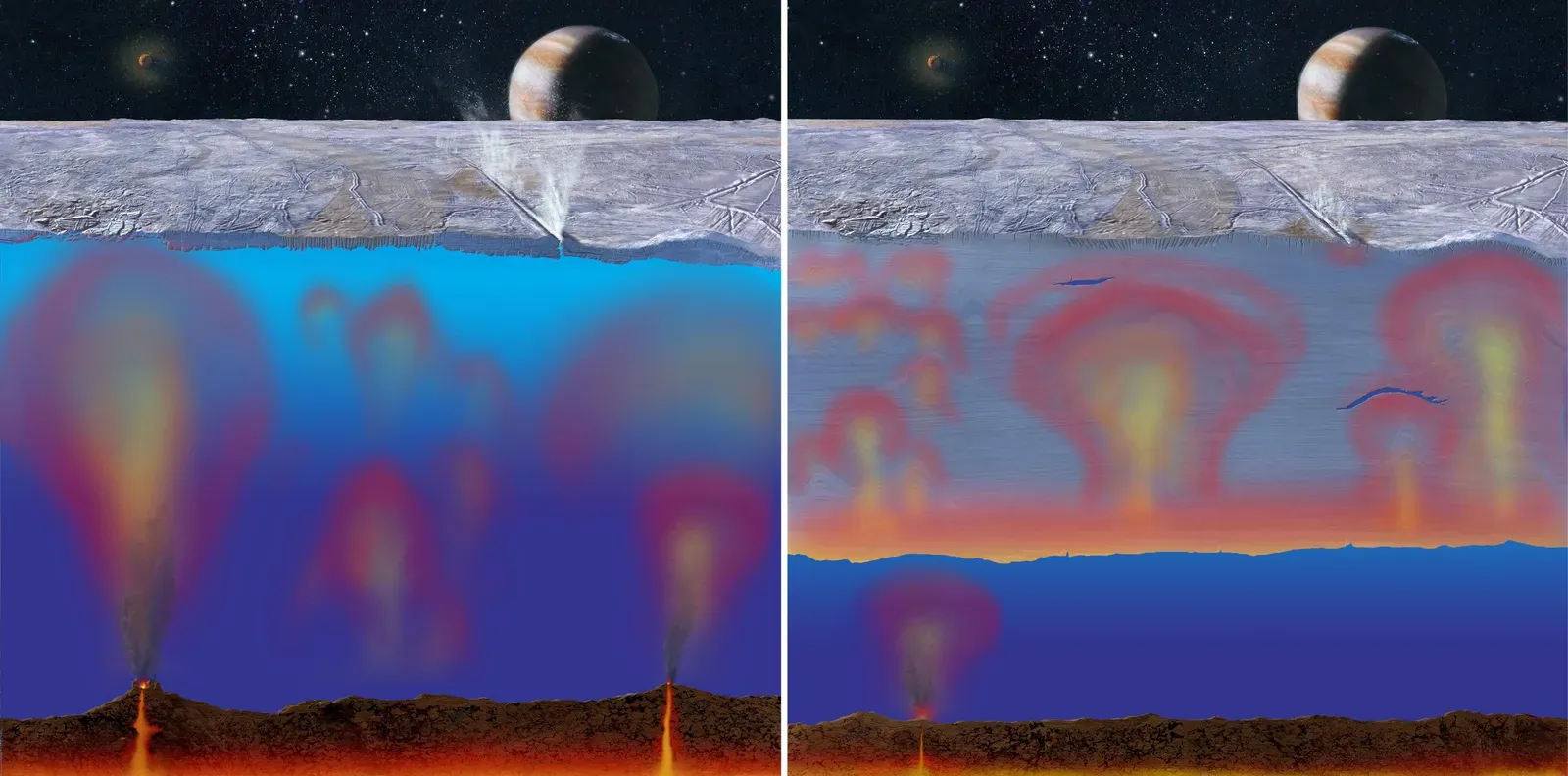
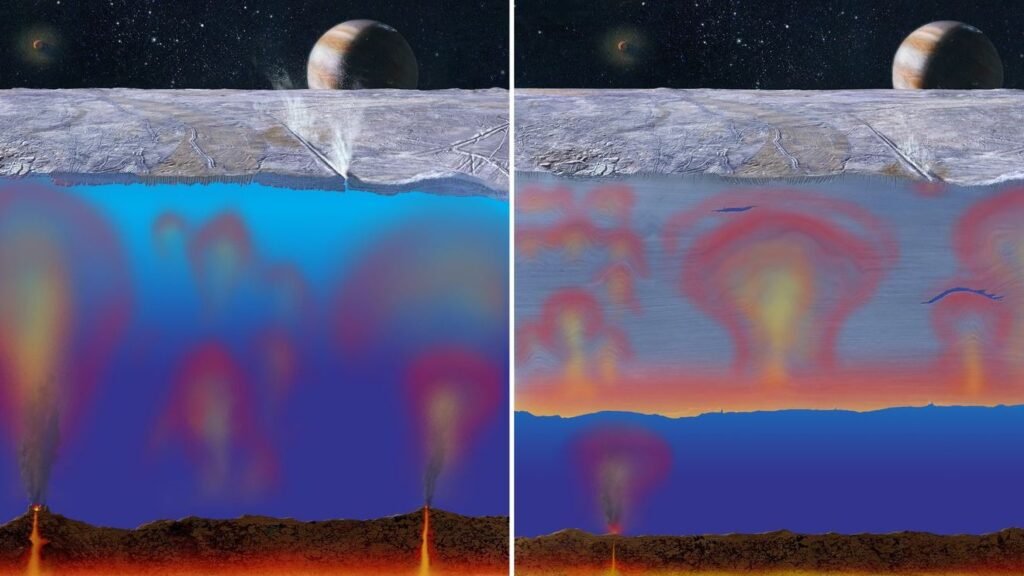
Here’s the thing. The debate over life on Europa is genuinely fierce right now. On one side, there’s real excitement about the ocean’s potential. On the other, a sobering study published in January 2026 in Nature Communications threw some cold water on the whole idea. The study, led by Paul Byrne, an associate professor at Washington University in St. Louis, concluded that Europa likely lacks the tectonic motion, warm hydrothermal vents, or any other sort of underwater geologic activity that would presumably be a prerequisite for life.
Unlike Jupiter’s volcanic moon Io, Europa experiences weaker tidal forces that fail to drive underwater geology. The ocean may exist, but it could be a very quiet place. Without active geology, there’s no churning of nutrients, no venting of chemical energy, no obvious spark for life to ignite. It’s a bit like imagining a fish tank with no filter, no food, no circulation. The water is there, but the conditions for thriving life aren’t necessarily present. A lack of hydrothermal vents or other geologic activity such as fracturing in the seafloor to expose fresh rock to seawater would mean a lack of chemical nutrients to provide food to microbial life.
A Surprising Lifeline: Nutrients From Above
Just when the pessimists seemed to be winning, a separate study from Washington State University offered a genuinely exciting counter-argument. A new study from geophysicists at Washington State University sheds light on how nutrients could travel from the surface of Europa into the moon’s hidden ocean. Europa is considered one of the most promising places in the solar system to search for extraterrestrial life. For years, scientists have struggled to explain how life-supporting materials might move from Europa’s surface down to its ocean, which is sealed beneath a thick layer of ice.
Europa is constantly bombarded by intense radiation from Jupiter. That radiation interacts with salts and other materials on Europa’s surface to form useful nutrients for oceanic microbes. The puzzle was always how to get those surface nutrients down through all that ice and into the ocean. Drawing from a process from Earth’s geology known as crustal delamination, the research team used computer modeling to show that dense, nutrient-rich ice can separate from the surrounding ice and descend into the ocean. In other words, imagine chunks of nutrient-packed ice slowly peeling away and sinking like icebergs in slow motion, carrying their chemical cargo straight into the ocean below. Honestly, it’s a remarkable idea.
Radioactive Rocks and a New Kind of Energy Source

Even the possibility that Europa’s seafloor is geologically dead hasn’t completely closed the door. Scientists are now exploring an entirely different energy source, one that doesn’t rely on heat or volcanoes at all. Researchers have proposed that rocks leaching radioactive elements into the ocean could generate plenty of energy to support primordial life. It sounds wild, but consider this: life on Earth has been found in some of the most inhospitable environments imaginable, from nuclear reactor cooling pools to pitch-black ocean floors.
In previous models of potential life on Europa, researchers focused on the bottom of the moon’s subsurface ocean, where hot water in hydrothermal vents could react with rocks to generate hydrogen ions with energetic electrons that microbes could use as fuel. The radioactive decay idea is different and arguably more exciting precisely because it doesn’t require life to exist near the seafloor at all. It opens up the entire volume of the ocean as a potential habitat. NASA’s Europa Clipper mission, which launched in 2024, might be able to detect the breakdown of some of these elements when it arrives at the moon.
Europa Clipper: Humanity’s Best Shot at Answers
If you want to know whether any of this debate gets resolved, your best hope right now is a spacecraft called Europa Clipper. Europa Clipper is a space probe developed by NASA to study Europa. It was launched on October 14, 2024, and will use a gravity assist from Earth on December 3, 2026, before arriving at Europa in April 2030. That arrival is still a few years away, but the mission is already proving its worth.
Called REASON, the radar instrument will “see” into Europa’s icy shell, which may have pockets of water inside. As it soared past Mars in March 2025, NASA’s Europa Clipper conducted a critical radar test that had been impossible to accomplish on Earth, and the results were everything scientists hoped for. Equipped with a battery of nine science instruments, Clipper will swoop past Europa in a series of nearly 50 ice-skimming flybys, remotely probing the ocean in hopes of finding a chemistry that could support life. It’s a mission built on precision, patience, and the kind of bold scientific curiosity that defines our species at its best.
What Would Discovery Actually Mean?
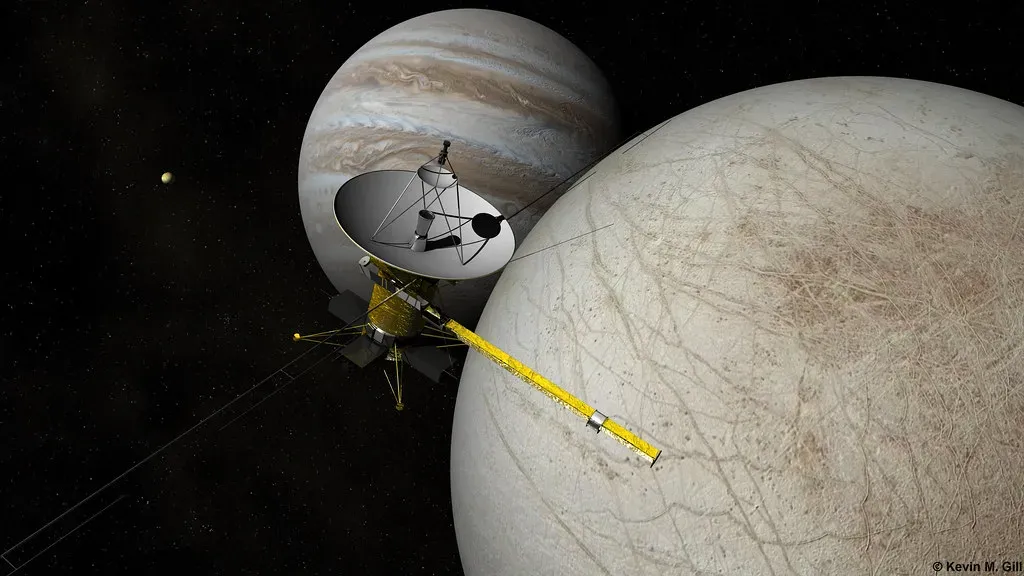
Let’s pause and really sit with this question. What would it mean if Europa Clipper found signs of microbial life beneath that ice? It would arguably be the most significant discovery in human history. Not just for science, but for philosophy, religion, and our entire sense of who we are in the cosmos. Promising Clipper discoveries would also fundamentally change the definition of a habitable zone around a star. Traditionally, it only included atmosphere-enveloped worlds close enough to the warm glow of their stars to have surface water. But if Europa’s ocean is habitable, life could exist far from a star, in the cold darkness of the outer solar system and beyond.
Europa Clipper’s main mission objectives are to study the moon’s ice crust and its surface features, confirm the presence of a subsurface ocean, and determine its chemical composition. Ultimately, this mission will further our understanding of the potential habitability of icy moons in our solar system. It’s hard to say for sure what Clipper will find. But the search itself is transformative. NASA’s Europa Clipper spacecraft will reach Europa in 2030, and will be able to study the moon’s icy crust and ocean in unprecedented detail. The data sent back to Earth will help scientists determine whether a pathway for life actually does occur, and will also provide new information about the seafloor and whether it really is as stagnant as some recent studies suggest.
Conclusion: The Ocean That Could Change Everything
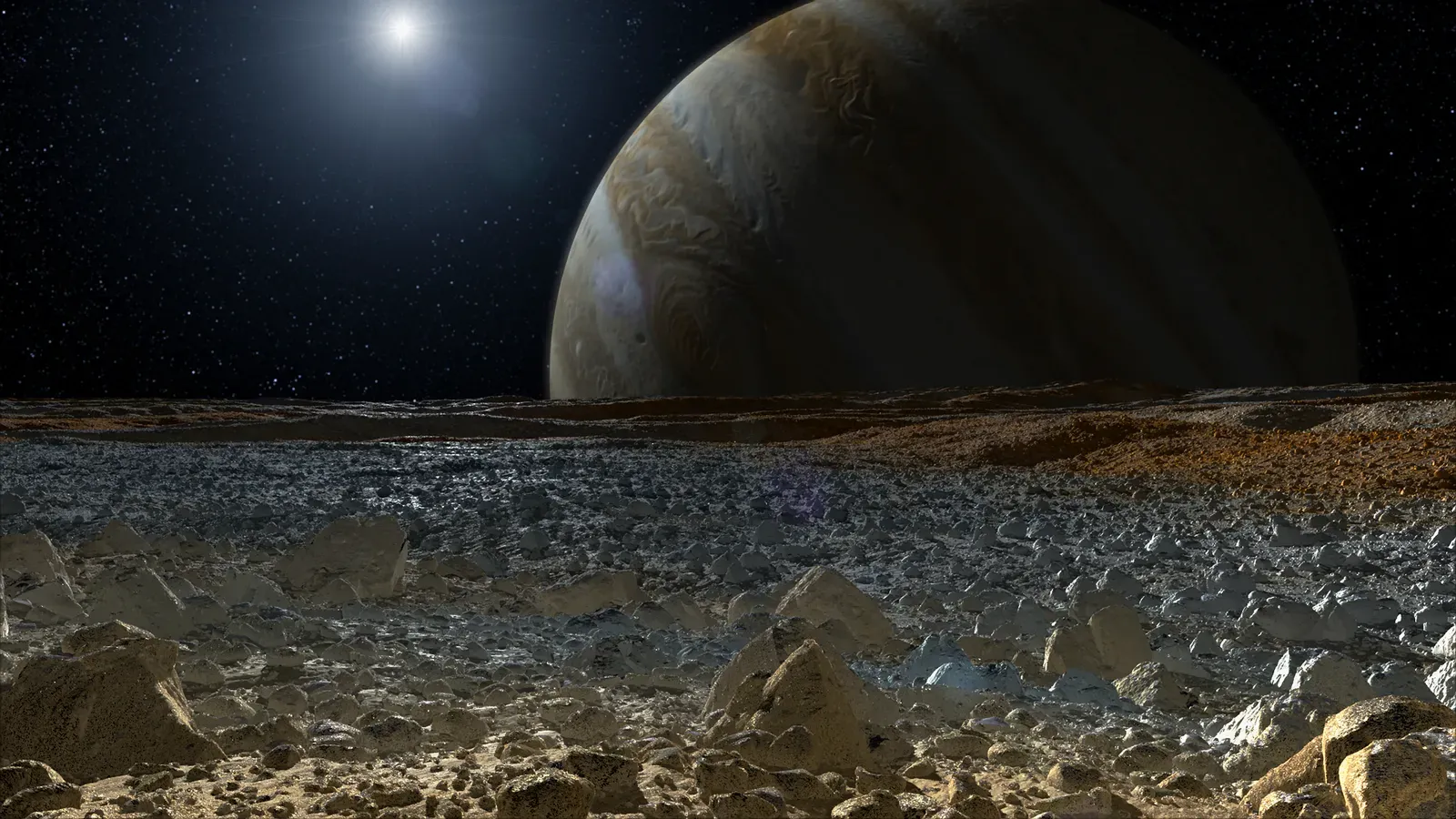
Europa is a contradiction wrapped in ice. It is simultaneously one of the most hostile-looking places in the solar system and one of the most promising. Its ocean sits in permanent darkness, sealed under kilometers of frozen crust, battered by radiation, potentially starved of geologic energy. Yet somehow, researchers keep finding new reasons to believe life could still find a way.
Science, at its best, is exactly this: a process of asking hard questions, overturning old assumptions, and following the evidence even when it leads somewhere uncomfortable. Europa doesn’t owe us a living biosphere. But it does offer us something equally valuable, a mirror to examine our assumptions about where life can and cannot exist. The universe may be far more alive than we ever dared to imagine. What do you think: are we truly alone out there, or is Europa quietly waiting to prove us wrong? Drop your thoughts in the comments below.