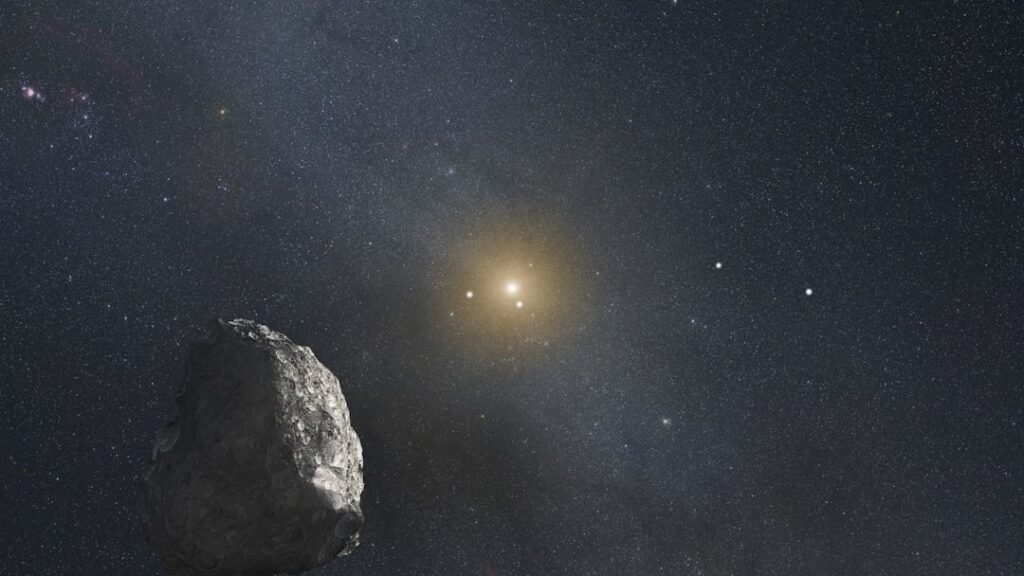

Somewhere in the frozen darkness beyond Neptune, a massive world might be lurking. For nearly a decade, astronomers have been hunting for something they can’t quite see, a planet so distant that it takes tens of thousands of years to orbit the Sun. The evidence is strange, compelling, and hotly debated. Strange patterns in the orbits of faraway objects suggest something big is out there, pulling strings from the shadows.
This isn’t the first time we’ve been here. Over a century ago, astronomers hunted for mysterious planets to explain weird wobbles in planetary orbits. Sometimes they found something real, like Neptune. Other times, the mystery dissolved with better calculations. So which is it this time?
The Strange Clues That Started Everything
In early 2016, California Institute of Technology’s Batygin and Brown described how the similar orbits of six ETNOs could be explained by Planet Nine and proposed a possible orbit for the planet. These weren’t just any distant icy rocks. These ETNOs tend to make their closest approaches to the Sun in one sector, and their orbits are similarly tilted.
Honestly, the odds of that happening by pure chance are shockingly low. The odds of that happening, as Brown said in a 2016 statement, are around .007%. Imagine six clock hands moving at completely different speeds, yet when you glance up, they’re all pointing the same direction. That’s essentially what astronomers saw.
Konstantin Batygin, a planetary astrophysicist at Caltech whose team may be closing in, said “There are now five different lines of observational evidence pointing to the existence of Planet Nine.”
What Would Planet Nine Actually Be Like?
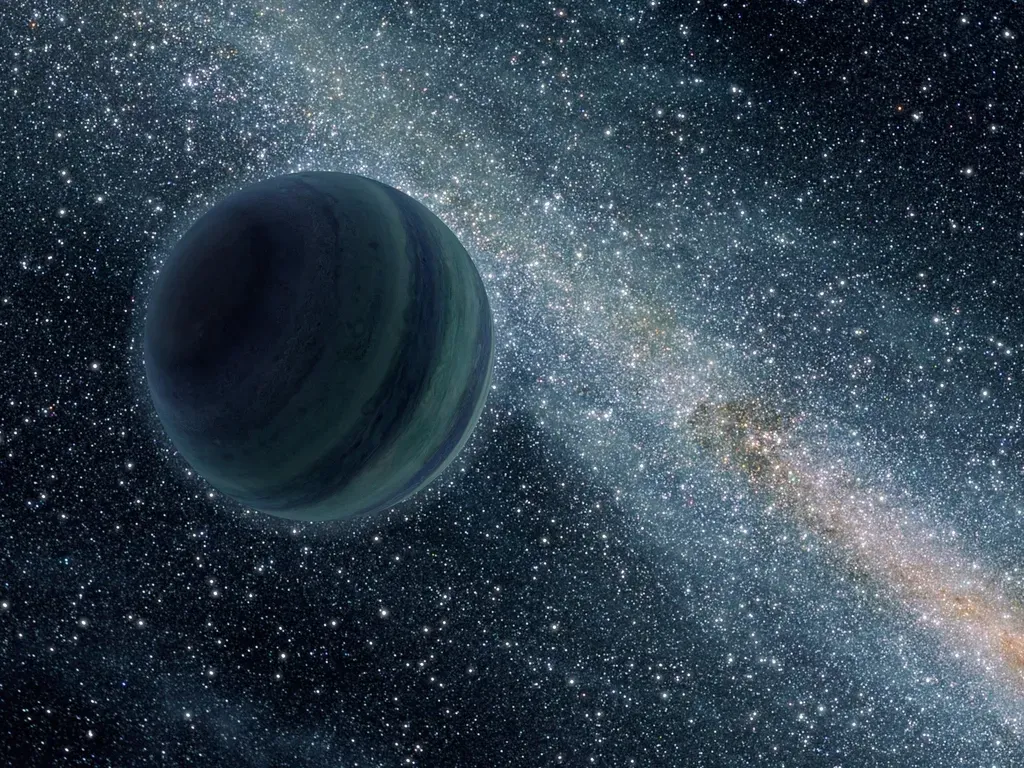
If this world exists, it’s nothing like the planets we know from textbooks. Planet Nine is estimated to have 5–10 times the mass and 2–4 times the radius of the Earth. Recent refinements have narrowed this down even further. Later simulations by Amir Siraj and colleagues in 2025 have refined estimates of the planet’s mass to 4.4 ± 1.1 times that of Earth.
The distance is mind boggling. This was shortly thereafter updated to 460 +160 −100 AU, and to 290±30 AU in 2025. Picture this: while Earth completes its yearly lap around the Sun, Planet Nine would barely budge. The potential planet in question is about the size of Neptune, and it’s so deep into the solar system that it could take between 10,000 and 20,000 years to orbit the sun.
It’s probably a frigid world, possibly an ice giant similar to Neptune. The planet is thought to be gaseous, similar to Uranus and Neptune. Temperatures out there would be unimaginably cold, far beyond anything we experience on Earth.
Why Haven’t We Found It Yet?
Here’s the thing: finding a planet that far away is ridiculously hard. However, no observational evidence for Planet Nine has been found so far, as its predicted orbit lies far beyond Neptune, where it reflects only a faint amount of Sunlight. It’s not like pointing a telescope at a bright star. We’re talking about spotting something incredibly dim against the black backdrop of space.
The biggest issue, however, is that the outer solar system just hasn’t been observed for long enough. While an object’s orbital path around the sun can be found in a short number of years, any gravitational effects probably need four to five orbits to notice any subtle changes.
This search, combined with previous searches using other databases and the team’s own observations, has now ruled out the planet’s presence from 78 percent of the predicted region. That still leaves roughly a fifth of the sky where it could be hiding. Space, as it turns out, is really, really big.
The Skeptics Push Back Hard
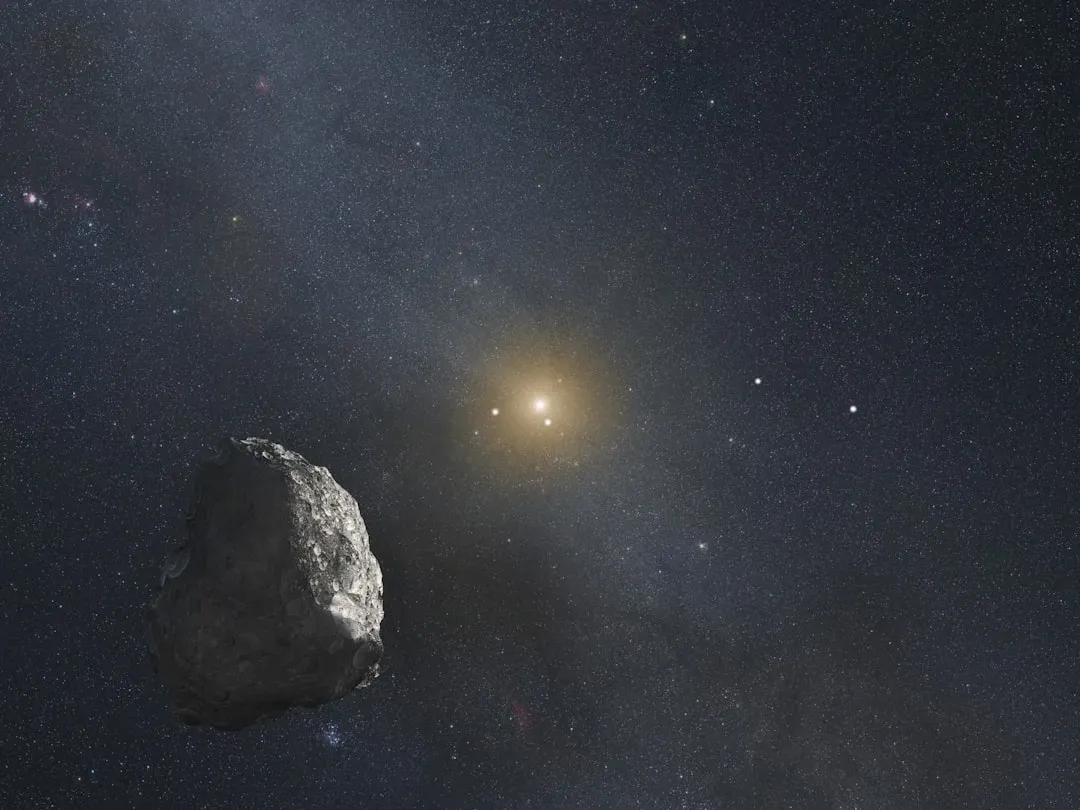
Not everyone is convinced. After a team of astronomers reported last week that the orbits of a handful of distant lumps of rock are not bunched together by the gravity of Planet Nine, as its proponents believe, but only seem clustered because that’s where telescopes happened to be looking. This is a classic problem in astronomy called observational bias.
Kat Volk of the Planetary Science Institute in Arizona says “Personally, I’m not convinced the clustering is real at all. It could simply be a result of where surveys have looked, or to do with the dynamics of Neptune.”
Yet supporters of Planet Nine aren’t backing down. As Brown said in 2024: I think it is very unlikely that P9 does not exist. There are currently no other explanations for the effects that we see, nor for the myriad other P9-induced effects we see on the Solar System. The debate has become surprisingly heated for the normally measured world of astronomy.
New Discoveries That Complicate the Picture
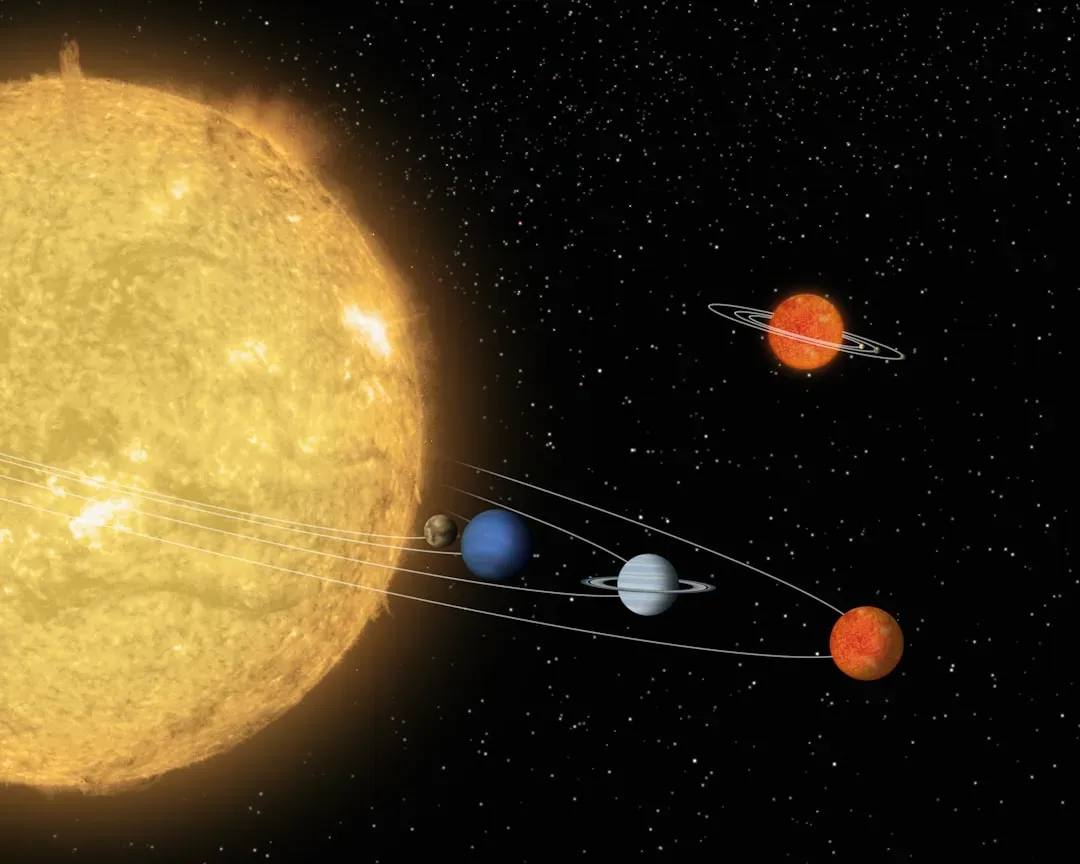
Recent findings have added fresh layers of mystery. The object, officially named 2023 KQ14 and nicknamed “Ammonite,” follows such a distant and stable path that it is forcing scientists to rethink how the outer solar system formed and whether a hidden Planet Nine really exists. Ammonite is the fourth member of an ultra rare group called sednoids.
Its orbit points almost the opposite way in space compared with the other sednoids. Computer simulations show that if Planet Nine sat on the closer orbits originally proposed, its gravity would likely have kicked Ammonite out of the solar system entirely. Co author Yukun Huang explains, “The fact that Ammonite’s current orbit does not align with those of the other three sednoids lowers the likelihood of the Planet Nine hypothesis.”
Interestingly, there’s been some tentative excitement recently. A team led by astronomer Terry Long Phan of the National Tsing Hua University in Taiwan has delved into the archives of two far-infrared all-sky surveys in search of Planet Nine – and incredibly, they have found something that could possibly be Planet Nine. Phan’s team were looking for objects that appeared in IRAS’s database, then appeared to have moved by the time AKARI took a look. However, confirmation is still pending, and skepticism remains high.
The Next Chapter in the Hunt
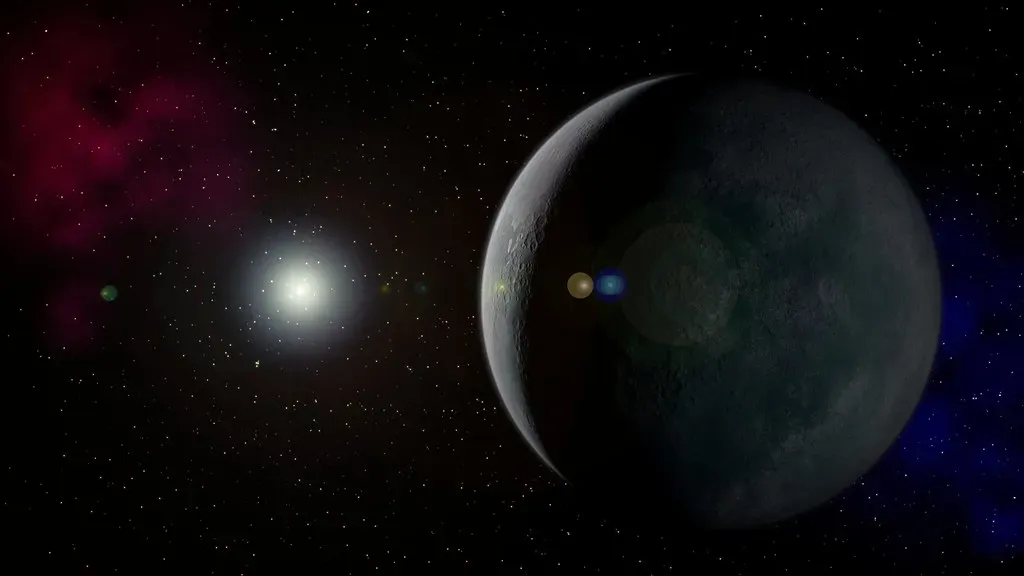
The search is about to get a major upgrade. Next year, the Vera C. Rubin Observatory will come online in Chile, scanning the entire southern sky every four days with the largest camera ever built. The team’s analysis says there is a very high probability that if Planet Nine exists, the Rubin system should be able to find it within a year or two, proving its existence
Next, the Vera C Rubin Observatory in Chile will scan the southern sky repeatedly and is expected to discover tens of thousands of trans-Neptunian objects. Among them could be many more sednoids and perhaps even the long sought Planet Nine if it is really out there.
We’re living in a weird moment. It’s hard to say for sure, but we might be on the verge of answering a question that’s tantalized astronomers for nearly a decade. Either we’ll finally spot this elusive world and rewrite our understanding of the solar system’s architecture, or we’ll discover that the patterns we’ve been chasing were illusions all along. Within the next few years, one way or another, we should know.
What do you think? Could there really be a massive planet hiding in plain sight at the edge of our cosmic neighborhood, or are we chasing shadows? The universe has surprised us before, and it likely will again.