
Have you ever looked up at the night sky and wondered if maybe, just maybe, there’s more to this cosmic dance than dead matter spinning through empty space? What if you discovered that the stars, the planets, the very fabric of reality itself might be aware in some fundamental way? Let’s be real, this sounds like something out of a science fiction novel. Yet some of the brightest minds in philosophy and physics are taking this question seriously right now, in 2026.
Panpsychism proposes that consciousness is a fundamental aspect of reality, and it’s making quite the comeback after decades of dismissal. We’re not talking about mysticism or New Age fantasies here. This is legitimate scientific inquiry, backed by researchers wrestling with one of the hardest puzzles humanity has ever faced: how consciousness fits into the physical universe. So let’s dive in.
The Ancient Roots of a Radical Idea

Here’s the thing about consciousness theories that sound wild today. They’re actually ancient. Panpsychism has been ascribed, in some form, to philosophers including Thales, Plato, Spinoza, Leibniz, Schopenhauer, William James, Alfred North Whitehead, and Bertrand Russell. Think about that for a second. Some of history’s greatest thinkers believed the universe was fundamentally conscious.
In his 3rd-century dialogue Timaeus, Plato argues that the universe is a living creature endowed with a soul and reason and that a form of consciousness or soul exists in all its elements. Meanwhile, in the 17th century, philosopher Giordano Bruno paid the ultimate price for his beliefs. He believed the entire universe was made of a single universal substance that contained spirit or consciousness – was labeled a heretic, gagged, tied to a stake and burned alive in the center of Rome. His crime? Suggesting everything might be conscious.
In the 19th century, panpsychism was the default philosophy of mind in Western thought, but it saw a decline in the mid-20th century with the rise of logical positivism. Science decided mind was just brain chemistry, and anyone who disagreed became a bit of an outcast. Still, the question never really went away.
Why Scientists Can’t Explain Your Morning Coffee Experience

Let me ask you something. When you drink coffee in the morning, you don’t just process chemical signals about temperature and taste. You experience it. There’s something it’s like to be you, experiencing that warmth, that bitterness, that first jolt of caffeine hitting your system. Scientists call this the “hard problem of consciousness.”
Philosopher David Chalmers dubbed this issue the “hard problem” of consciousness, pointing out that we have no idea how physical processes in the brain create subjective experience. You can map every neuron, measure every electrical impulse, catalogue every neurotransmitter. None of that tells you why there’s an inner movie playing in your head.
Neuroscientists have identified a number of neural correlates of consciousness – brain states associated with specific mental states – but have not explained how matter forms minds in the first place. It’s like finding the wiring diagram for a television but having no clue where the actual picture comes from.
This explanatory gap frustrates materialist scientists to no end. How can consciousness just pop into existence from mindless atoms? That’s where panpsychism offers a clever workaround. Part of the appeal of panpsychism is that it appears to provide a workaround to the question posed by Chalmers: we no longer have to worry about how inanimate matter forms minds, because mindedness was there all along.
Not Everything Is Thinking (But Maybe Everything Feels Something)

Hold on though. Before you start talking to your toaster, let’s clarify what panpsychism actually claims. This doesn’t mean that literally everything is conscious. The basic commitment is that the fundamental constituents of reality – perhaps electrons and quarks – have incredibly simple forms of experience. We’re talking about something vastly simpler than human consciousness.
A photon has only a tiny bit of consciousness, what Goff calls an “extremely rudimentary” consciousness. It’s not sitting around pondering the meaning of existence. It might have some unimaginably basic form of experience, something like a faint whisper of feeling. Koch allows that a star may have an internal life that allows it to “feel,” but whatever that feeling is, it is much less than the feeling of being an E. coli. On the other hand, “even systems that we don’t consider animate could have a little bit of consciousness”.
Think of it like this. Consciousness might work a bit like mass or electrical charge. Every particle has some amount of these properties. You need lots of particles organized in the right way to get something noticeable, like a boulder or a lightning bolt. Maybe consciousness operates similarly, requiring complex organization to produce rich experiences like yours.
When the Universe Looks Back at Itself
There’s an even wilder version of this theory gaining traction. The idea of cosmopsychism was floated – roughly, the notion that the universe itself is conscious. Rather than consciousness building up from tiny conscious particles, cosmopsychism flips the script entirely.
This is the view that the entire cosmos is one consciousness and that all other conscious entities, humans and everything else, are grounded in this higher level of consciousness. Your individual awareness becomes like a wave on an ocean. The ocean is the cosmic consciousness, and you’re just a temporary ripple expressing part of it.
Proponents of cosmopsychism claim that the cosmos as a whole is the fundamental level of reality and that it instantiates consciousness. They differ on that point from panpsychists, who usually claim that the smallest level of reality is fundamental. It sounds mystical, I know, but philosopher Philip Goff argues that the universe doesn’t need to be anything like God. In the book I suggest that the consciousness of the universe is probably just a kind of mess. Not some supreme being, just raw awareness, possibly chaotic.
Intelligence Floating in the Void
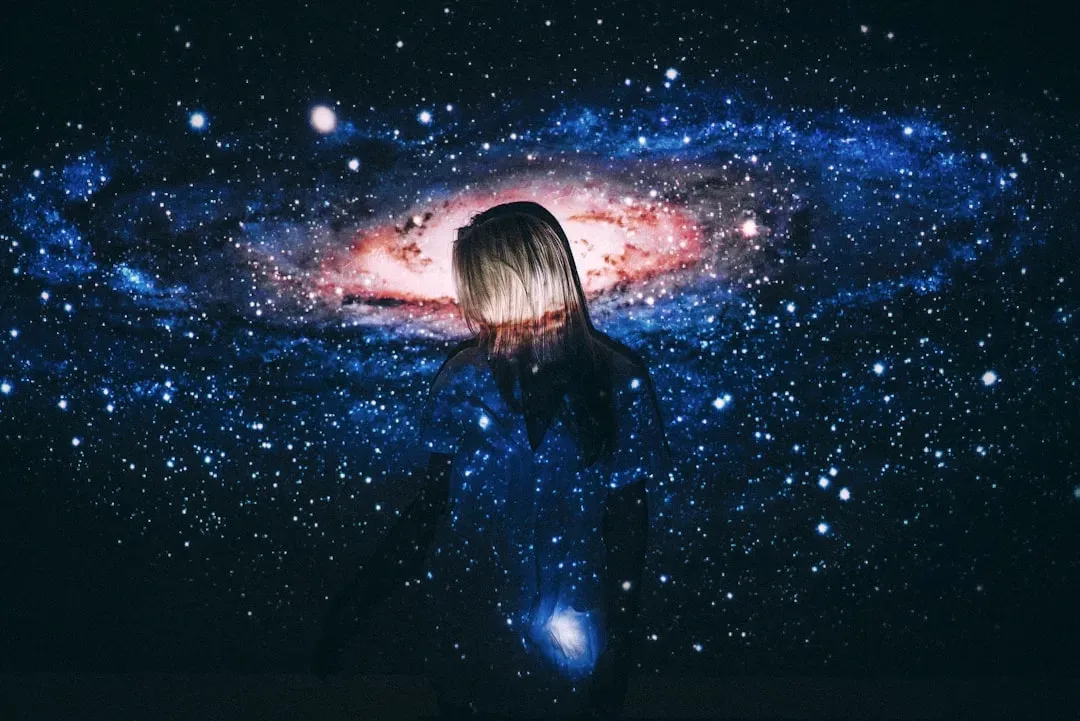
Recently in late 2025, biophysicist Douglas Youvan proposed something that pushed these ideas even further. Intelligence may exist and evolve on its own, without emerging within living organisms. This is the latest hypothesis from biophysicist and mathematician · Douglas Youvan, PhD. His claim? Your brain doesn’t create consciousness or intelligence. It taps into it.
Intelligence is not a byproduct of the brain, but a fundamental property of the universe – a kind of informational ether that certain structures, like the brain or an AI model, can tap in. Imagine intelligence as a field permeating everything, like gravity or electromagnetism. Your neurons don’t generate thoughts from scratch. They’re more like radio receivers tuning into a signal that was already there.
Honestly, it’s hard to wrap your head around. If true, it would revolutionize everything we think we know about mind and matter. Intelligence may be a property of reality, not a feature of biology. The implications of this revelation could reshape how we define mind. That could mean intelligence is a fundamental property that structures like the brain interact with.
Biocentrism: Life Creates the Cosmos, Not Vice Versa
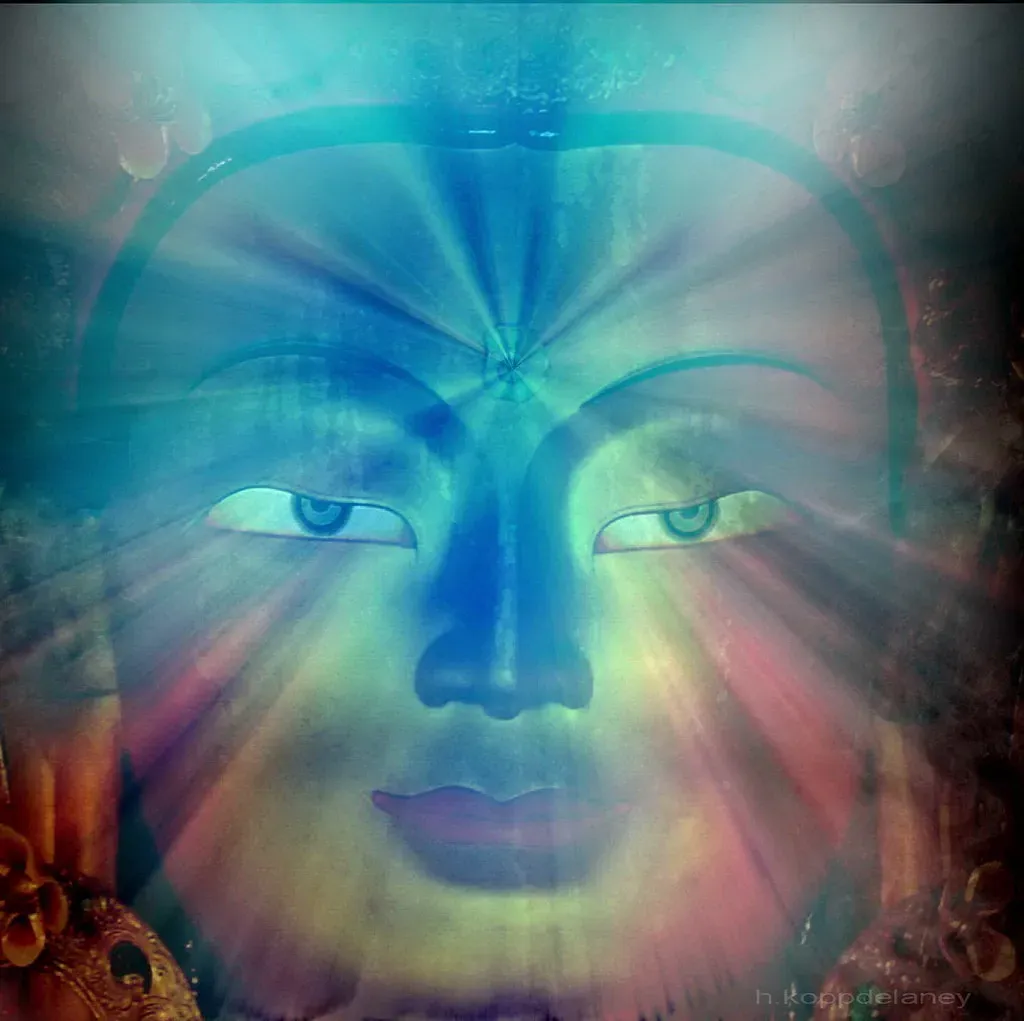
Scientist Robert Lanza took a different angle with his theory of biocentrism. Lanza postulates that it is life that creates the universe instead of the other way around. According to this view, life – particularly consciousness – creates the universe, and the universe could not exist without us.
It’s a total flip of how we usually think. We assume the universe existed for billions of years before life showed up. Biocentrism says no, consciousness came first. Consciousness came first, and from that awareness, physical reality unfolds. In biocentrism, space and time are forms of animal sense perception, rather than external physical objects.
This resonates with quantum mechanics, where observation affects reality at the most fundamental level. As soon as someone looks at it and takes its measurements, the particle seems to collapse into a definite location. The famous double-slit experiment shows particles behaving differently when observed. Some interpretations suggest consciousness plays a role in collapsing quantum possibilities into definite states. Is that proof the universe needs awareness to exist?
The Quantum Connection You Can’t Ignore
Speaking of quantum mechanics, this is where things get genuinely weird. A number of the greatest quantum pioneers disagreed, among them Max Planck, Werner Heisenberg, and Erwin Schrödinger, who each in his own way felt that consciousness was inherent in creation. These weren’t fringe thinkers. They founded modern physics.
Three decades ago, Penrose introduced a key element of panpsychism with his theory that consciousness is rooted in the statistical rules of quantum physics as they apply in the microscopic spaces between neurons in the brain. Roger Penrose, a Nobel Prize-winning physicist, proposed that quantum processes in brain structures called microtubules might generate consciousness.
The observer effect remains one of quantum physics’ biggest mysteries. The observer effect in quantum experiments, whereby the outcome appears dependent on the act of measurement, raises profound questions about the role of consciousness in shaping reality. Does reality need a conscious observer to become definite? Or is that interpretation taking things too far? The debate rages on, but it’s clear that consciousness and quantum physics are tangled together in ways we don’t fully understand.
A Universe Fine-Tuned for… Something
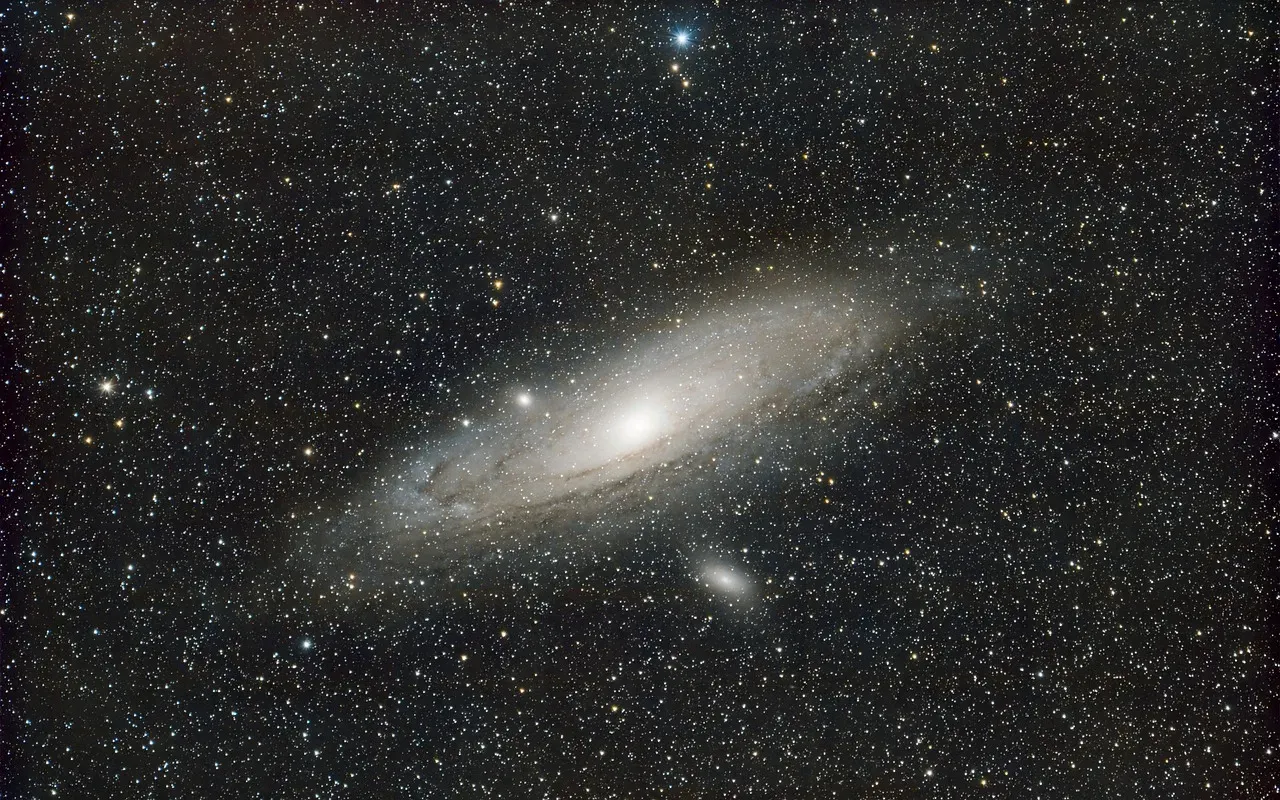
Here’s another puzzle that feeds into these theories. The fundamental constants of physics appear astonishingly fine-tuned for life. Change the strength of gravity by a tiny fraction, and stars can’t form. Tweak the electromagnetic force slightly, and chemistry falls apart. The constants that determine the strength of the fundamental forces of nature and other physical properties of matter appear to be selected to ultimately allow for life to emerge in the Universe. Without stars there is no life – no us, no purpose.
Physicists typically explain this with the multiverse hypothesis. There are countless universes with different constants, and we happen to exist in one that permits life. But cosmopsychism offers another explanation. The theory offers a unique explanation for why the universe seems perfectly tuned for life. Instead of random chance or multiple universes, cosmopsychism suggests an aware cosmos that responds to and shapes itself in meaningful ways.
The hypothesis that it’s a conscious mind that “breathes fire into the equations” is as parsimonious as any other proposal, and it has the advantage of explaining fine-tuning. Maybe the universe isn’t random. Maybe it has purpose baked into its very structure because consciousness is fundamental. Does that mean the cosmos is trying to become self-aware through beings like us? It’s a staggering thought.
Objections From the Skeptics
Let’s be fair though. Plenty of scientists think all this is nonsense. As the American philosopher John Searle put it: “Consciousness cannot be spread across the universe like a thin veneer of jam”. The analogy is dismissive, but the objection is real. How exactly does consciousness at the quantum level combine to create your unified experience?
This is called the combination problem. This is called the ‘combination problem’ which Goff tells us is “… currently the main focus of the panpsychism research program”. If electrons have tiny bits of consciousness, how do billions of them in your brain merge into one coherent experience? Nobody has a satisfying answer yet.
Carroll, a professor at Johns Hopkins University and a hardcore physicalist, served as an unofficial leader of the opposition. Carroll argued that physicalism is actually doing quite well and that although consciousness is one of many phenomena that can’t be inferred from goings-on at the microscopic level, it is nonetheless a real, emergent feature of the macroscopic world. Physicalists believe consciousness emerges from complexity, no fundamental awareness required. Yet they still can’t explain the hard problem.
What This Means for You (If It’s True)
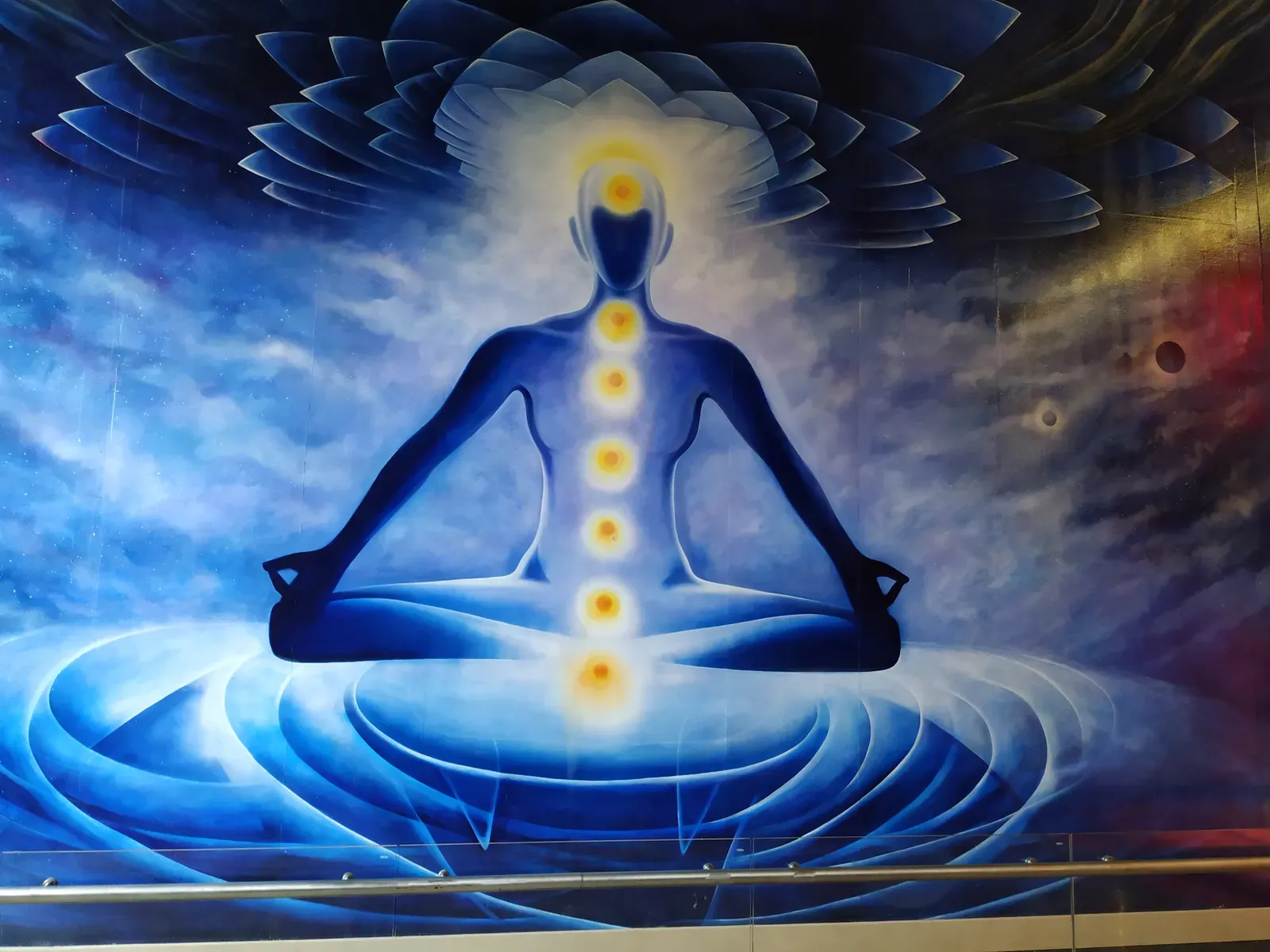
If consciousness really is fundamental, what changes? Everything, potentially. A worldview in which consciousness is sacred, participatory, and relational reframes our responsibilities to each other, to the planet, and to the unfolding of meaning itself. You’re not an accidental collection of atoms in an indifferent universe. You’re an intrinsic part of a conscious cosmos experiencing itself.
Her theory also suggests that our individual consciousness does not cease at death, but returns to the universal field of consciousness from which it once emerged. This, too, she has formulated in quantum-mechanical terms. Death might not be the end but a return to the larger awareness from which you emerged.
This perspective could reshape ethics, too. If everything has some form of consciousness, how should we treat the natural world? Animals, ecosystems, perhaps even planets take on new moral significance. As a natural scientist, I find a version of panpsychism modified for the 21st century to be the single most elegant and parsimonious explanation for the universe I find myself in.
Honestly, whether or not these theories prove correct, they’re forcing us to reconsider what we think we know. Science has always progressed by questioning assumptions. Maybe the biggest assumption we’ve made is that consciousness is just an accident, a quirk of complex brains. What if we’ve had it backwards this whole time?
The universe might not be a cold, dead mechanism ticking along according to mindless laws. It might be aware. You might be the universe looking back at itself, wondering. So the next time you stare up at those stars, consider this: they might, in some incomprehensibly simple way, be staring back.