
Imagine discovering that the moment you decide to reach for your coffee, your brain had already quietly made that decision before “you” knew it. That’s the unsettling implication of some famous neuroscience experiments, and it hits right at the heart of what we think it means to be human. Are we really choosing, or just watching decisions bubble up from hidden brain processes and then claiming them as our own?
This question used to belong mostly to philosophers, but in the last few decades, neuroscience, psychology, and even quantum physics have crashed the party. They don’t agree on a single clear answer, but together they paint a picture that’s far stranger – and more interesting – than the simple “yes” or “no” most of us grew up with. Free will may not be what we thought, yet that doesn’t automatically mean our choices don’t matter.
The Shocking Experiments That Seemed To Kill Free Will
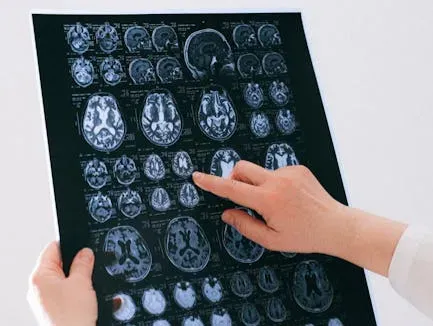
One of the most famous challenges to free will came from brain experiments that measured when a person becomes aware of an intention compared to when their brain activity ramps up. In these studies, a tiny burst of brain activity appears a fraction of a second before the person reports the conscious decision to move. To many people, that felt like a plot twist: your brain “decides” first, and your conscious mind learns about it later.
Later research pushed this even further, using brain scanners and machine learning to predict with some accuracy which button someone would press several seconds before they reported deciding. It sounded like a sci‑fi scenario: a machine guessing your choice before you know it yourself. That gave fuel to a blunt interpretation: consciousness is just a commentator, not a real driver, like a sports announcer describing a game that’s already been played.
Why Those Experiments Don’t Settle The Question

As dramatic as those findings sound, many neuroscientists and philosophers think they’ve been oversold. In most of these experiments, people are asked to do something trivial at a random moment, like flexing a wrist or pressing a button without any reason or stakes. That’s hardly the same as choosing a career, ending a relationship, or deciding whether to tell the truth when it really matters.
More recent work suggests that what’s being detected early in the brain might be a kind of buildup of background noise or bias, not a fully formed, fixed decision. The timing of when we report becoming aware of an intention is also surprisingly slippery and prone to error. In other words, the data show that unconscious processes are heavily involved in decision‑making, but they don’t prove that conscious reflection never plays a causal role. The story is messier – and that mess actually leaves room for a more nuanced kind of free will.
The Brain As A Prediction Machine, Not A Simple Puppet Master

A useful way to think about the brain is as a prediction machine. It constantly guesses what will happen next and what you should do, based on past experience and current context. Those guesses influence what ideas, urges, or options bubble into consciousness. You don’t choose what pops into your mind, but you often can choose what you do with it once it’s there.
This view suggests that a lot of “you” operates below awareness, but it doesn’t mean consciousness is powerless. When you pause, reflect, and consider long‑term consequences, you’re letting slower, more deliberate systems in your brain weigh in against fast impulses. It’s like steering a big ship: the water currents and wind matter, but the rudder still makes a difference, especially over time and across repeated choices.
Quantum Physics: Randomness Is Not The Same As Freedom
Quantum physics enters the conversation because, at the smallest scales, nature doesn’t seem completely determined. Some events look genuinely probabilistic: you can only talk about chances, not exact outcomes. That broke the old classical picture where, in theory, a perfectly informed observer could predict everything that ever happens, including every choice you will ever make.
However, randomness is not the same as freedom. If your decisions were driven purely by quantum coin flips, that wouldn’t feel like meaningful free will either; it would just be noise. Most physicists and philosophers who think about this agree that quantum uncertainty alone doesn’t magically give you the kind of agency we care about. At best, it cracks open the door by showing that strict, mechanical determinism is not the whole story of the universe.
Compatibilism: Free Will Redefined, Not Erased

Because of all this, many philosophers take a middle path known as compatibilism. Instead of demanding absolute, metaphysical freedom – being totally uncaused and separate from the laws of nature – compatibilism says you are free when your actions flow from your own values, reasons, and desires, without external coercion. On this view, you can be part of the physical world and still count as responsible.
Think about the difference between choosing to sign a contract after reading it carefully and being tricked or forced into signing. In both cases, your brain activity is wired into physics, but only one feels like a real choice. Compatibilism focuses on that difference: free will shows up in how decisions are formed, how reflective and informed they are, and how much they express your deeper character over time, not in some magical ability to step outside causality altogether.
How Believing In (Or Denying) Free Will Changes Behavior

Interestingly, what you believe about free will can itself nudge your behavior. Some psychological studies have found that when people are told that free will is an illusion and that everything is predetermined, a subset of them becomes a bit more likely to cheat, lie, or behave selfishly in small experiments. The effect isn’t universal or enormous, but it’s worrying enough to take seriously.
On the other hand, when people feel that their choices genuinely matter, they’re more likely to take responsibility, persevere through difficulty, and invest in self‑improvement. This doesn’t prove that free will exists, but it suggests that the belief in your own agency can be a kind of self‑fulfilling prophecy. If you see yourself as nothing more than a passenger, you’re more likely to act like one, even in situations where you do have room to steer.
Responsibility, Justice, And Compassion In A Determined World

If our choices are shaped by genetics, upbringing, and brain states, that has real implications for how we treat people who do harm. A purely blame‑heavy approach that imagines everyone could always have easily “done otherwise” starts to look too simple. Understanding the causes of behavior pushes us toward prevention, rehabilitation, and changing environments, not just punishment for its own sake.
At the same time, completely abandoning concepts like responsibility would be a mistake. Systems of law, praise, and blame influence future behavior by shaping incentives and social norms. A more mature perspective sees people as deeply influenced by factors they didn’t choose, while still holding them accountable enough to protect others and encourage better choices. It leans toward firmness about actions and softness about judging the whole person.
Living As If Your Choices Matter Anyway

In daily life, you don’t experience yourself as a passive spectator; you feel choices as real, often difficult, and sometimes costly. You deliberate, worry, and change your mind. Even if every one of those processes has a neural story behind it, they still matter the way a story matters even if you understand how ink sticks to paper. Explanations at one level don’t erase the reality at another.
Personally, I find it more helpful to treat free will less like a switch that’s either on or off, and more like a skill or capacity that can grow or shrink. When you sleep well, educate yourself, stay open to feedback, and build habits that protect you from your worst impulses, you expand your practical freedom. Whether or not the universe is ultimately deterministic, your next decision can still move your life in a slightly better direction – and that direction is something only you can choose.