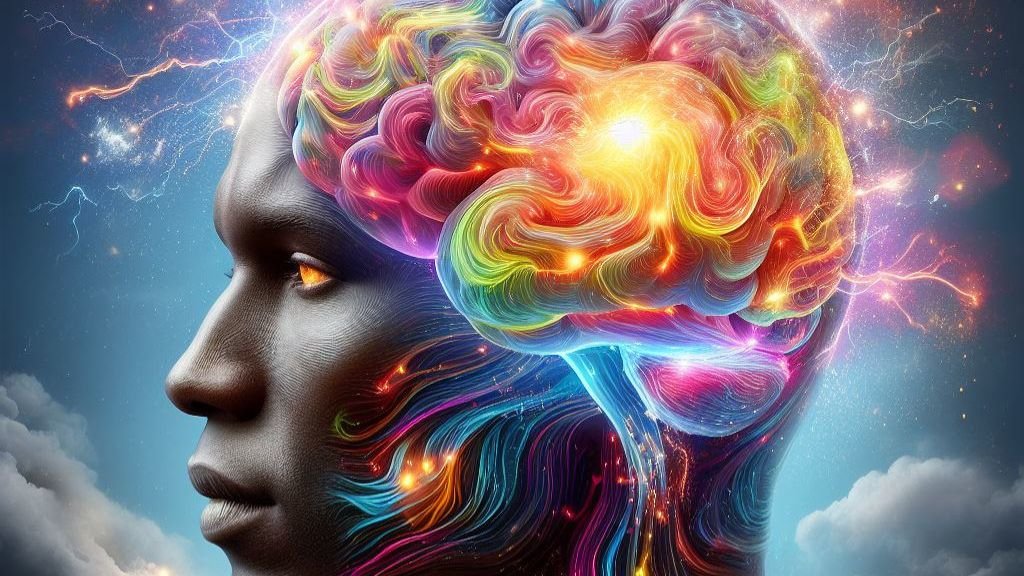

Every time you wake up in the morning, there’s something quietly astonishing happening: the world appears. Colors, sounds, the feeling of your body, your thoughts about the day ahead – all of that only exists for you because you’re conscious. Yet, for all our scientific progress, we still have no agreed‑upon explanation for what consciousness actually is, or why it arises at all. Some researchers now argue we’ve been looking at it the wrong way, and that consciousness might not be a by‑product of matter, but a basic ingredient of the universe itself.
This idea sounds wild at first, almost mystical. But it’s being discussed in serious scientific and philosophical circles, papers, and conferences. A growing group of thinkers believes we may need to treat consciousness the way we treat space, time, and energy: as something fundamental, not something we build out of simpler pieces. That shift would not only change how we see the brain, but how we understand reality itself – including what it means to be alive, to be a self, and maybe even what happens when we die.
The hard problem: why does experience exist at all?
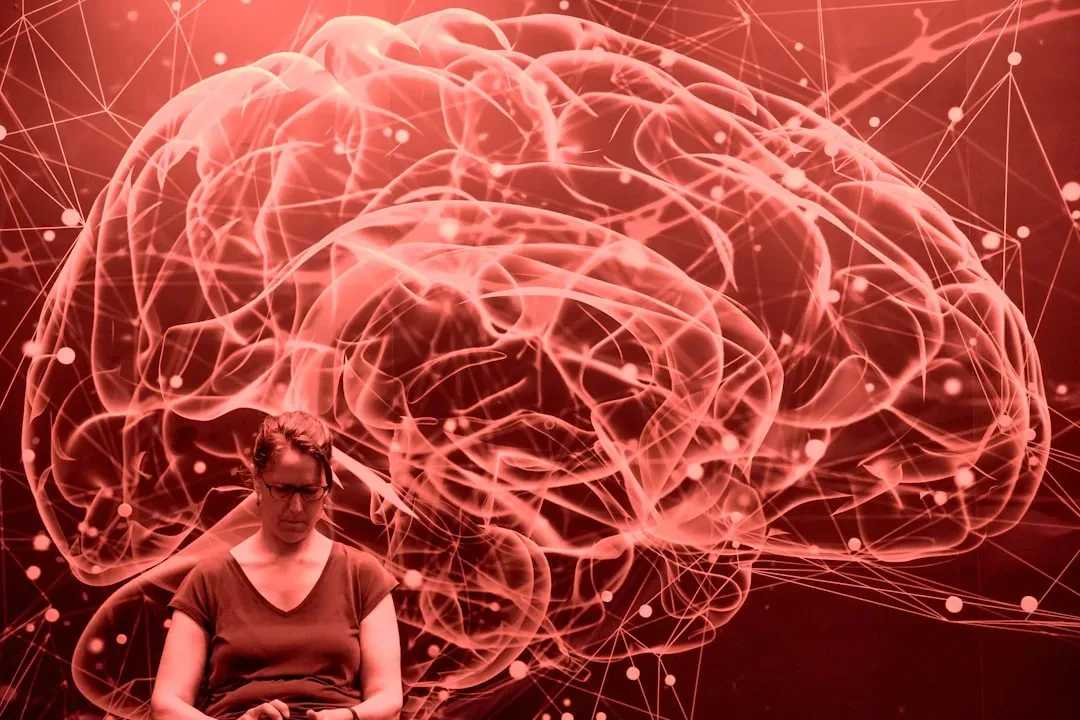
Imagine a future lab that can measure every neuron firing in your brain, every chemical, every electrical signal. We could explain how light hitting your eyes leads to neural activity, how that activity controls your speech, your movements, your decisions. But there’s still a missing piece: why does any of that feel like something from the inside? Why is seeing red different from seeing blue, or from feeling heartbroken or delighted?
This puzzle is often called the “hard problem” of consciousness, in contrast to the “easy” problems like mapping brain regions or decoding neural signals. The hard problem asks why physical processes in the brain should give rise to subjective experience at all, instead of just functioning like a complex robot with no inner life. For many philosophers and neuroscientists, no current physical theory fully bridges that gap, and that’s exactly what’s pushing some of them toward more radical ideas about consciousness being fundamental.
From brain product to basic property of the universe
Most of us grow up with a simple story: matter comes first, and if you arrange matter in the right way – for instance, in a human brain – consciousness somehow appears. This is often called physicalism or materialism, and it fits well with how physics has explained almost everything else. But when it comes to subjective experience, the story starts to feel stretched, like trying to build color out of only black and white pieces.
So some researchers have flipped the script. Instead of seeing consciousness as something that emerges only in big, complicated brains, they suggest it could be a built‑in feature of reality, present in extremely simple forms even at very basic levels. On this view, the brain doesn’t create consciousness from nothing; it organizes and shapes it, the way a radio doesn’t create radio waves, but tunes and amplifies what’s already there. It’s a bold move, but for people frustrated with the hard problem, it offers a fresh, if unsettling, direction.
Panpsychism: consciousness all the way down?
One of the most talked‑about versions of this idea is called panpsychism. In plain language, panpsychism says that consciousness, or at least some primitive form of experience, is spread throughout the universe. Not that rocks think about their taxes or electrons worry about their relationships, but that there could be tiny “glimmers” of subjectivity associated with even very simple physical systems.
This doesn’t mean everything has a mind like ours; it means that consciousness might come in degrees and combinations, like how matter forms from tiny particles that join into atoms, molecules, and larger structures. In this view, your rich conscious life is what happens when countless simpler building blocks come together in a highly organized way inside your brain. For some philosophers, that’s actually simpler than saying consciousness pops into existence from pure non‑experience once things get complex enough.
Information, integration, and the brain’s inner light
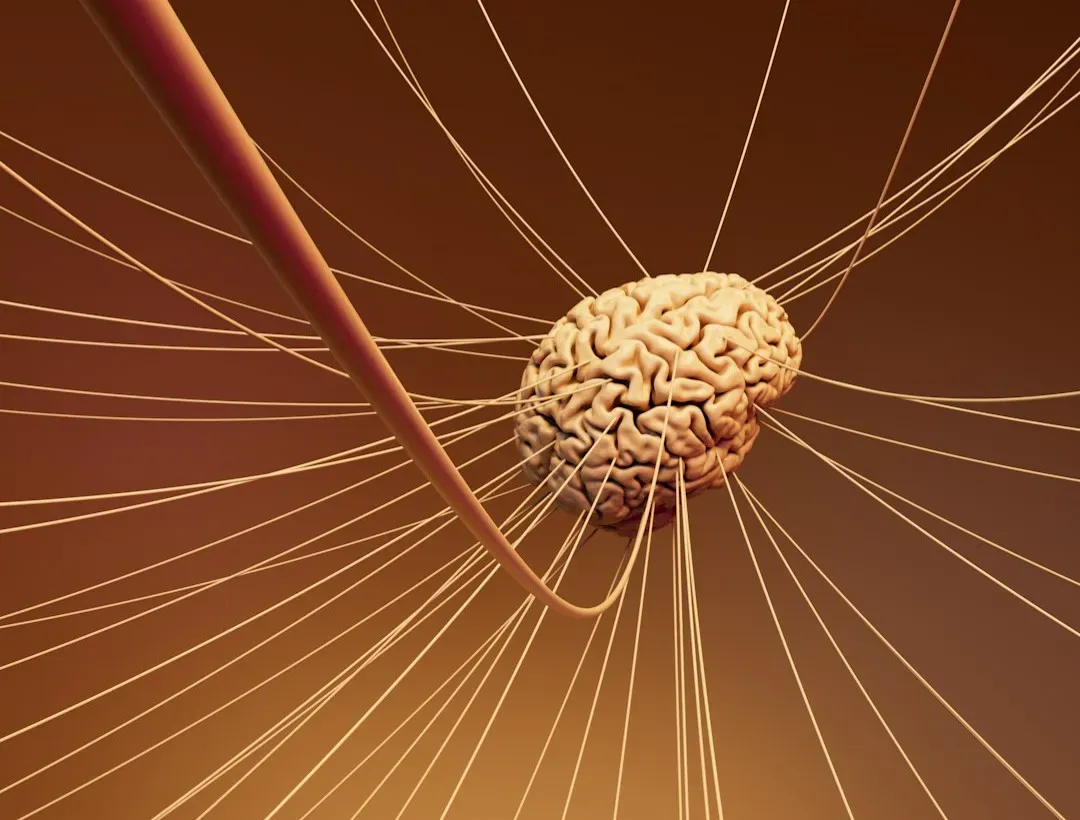
In neuroscience, one of the most influential attempts to treat consciousness more like a basic quantity is Integrated Information Theory, often shortened to IIT. Instead of starting with brain parts and trying to reason up to experience, IIT starts with what consciousness feels like: unified, structured, and specific. Then it asks what kind of physical system could match that description and proposes that any system that integrates information in a certain way has some degree of consciousness.
In simple terms, a system with a lot of integrated information can’t be fully broken down into independent pieces without losing how it functions as a whole. Your brain, with its billions of neurons talking to each other in complex loops, may be an incredibly efficient “integration machine.” On this theory, consciousness is tied to the amount and structure of integrated information, which could in principle exist in different kinds of systems, from brains to advanced computers, though not in a simple light switch or a rock.
Quantum mind ideas: physics at the edge of the strange
Whenever consciousness gets weird, quantum physics isn’t far behind. Some scientists and philosophers have explored whether quantum effects – like superposition and entanglement – might play a key role in consciousness. A few theories even suggest consciousness is linked to fundamental quantum processes in the fabric of spacetime, not just the messy bio‑electric chemistry in our heads. It’s a speculative frontier, but it shows how far some are willing to go to connect mind and matter.
Critics point out that the brain is warm and noisy, not the kind of clean, isolated environment where quantum effects usually dominate. Supporters respond that biology has already surprised us with quantum tricks in places like photosynthesis and bird navigation, so maybe the brain hides similar phenomena. Even if most quantum mind theories turn out to be wrong, they keep pushing the question: if consciousness is as basic as space and time, should we be looking for it in our deepest physical theories instead of only in brain slices?
AI, large language models, and the consciousness question
The rise of powerful AI systems – including the one you’re interacting with right now – has made the consciousness debate feel a lot less abstract. When a machine can hold a fluent conversation, recognize images, translate languages, and even generate creative‑sounding ideas, it’s hard not to wonder: is there anything it’s like to be that system from the inside? Or is it just a sophisticated mirror, reflecting patterns it learns without any inner experience at all?
Many researchers think today’s AI, including large language models, are not conscious, because they lack key features like persistent self‑models, embodied sensations, or the kind of integrated information that brains have. But the more capable AI becomes, the more pressure there is to define what we mean by consciousness in a way that’s not just “feels human to me.” That’s where theories treating consciousness as a measurable, maybe even fundamental, property of certain information systems start to matter in very practical ways, from ethics to policy.
If consciousness is fundamental, what changes for us?

Suppose for a moment that consciousness really is a basic aspect of reality, like spacetime or energy. That wouldn’t magically answer every question, but it would change the starting point of the whole conversation. Instead of asking how dead matter wakes up, we’d ask how basic “mind‑like” properties combine and organize into the vivid worlds we each experience. In some ways, that’s less about explaining how consciousness appears, and more about explaining how it gets structured.
Personally, I find this shift both thrilling and a little unsettling. If consciousness is woven into the universe, then being a conscious creature is less like owning a private light and more like being a particular swirl in a vast, ongoing ocean of awareness. It raises deep questions about identity, death, and our relationship to other beings, human and non‑human. It also gently pokes at our everyday assumption that the world “out there” is the only solid thing, and our inner life is just a fuzzy side effect.
Where science and mystery meet: a tentative conclusion

Right now, the idea that consciousness is a basic feature of reality sits in a strange place: too radical for many scientists, but too serious and structured to be dismissed as pure fantasy. We don’t yet have decisive experiments that can settle whether consciousness is fundamental or purely emergent, and it’s possible we may need entirely new concepts to move forward. Still, the fact that serious researchers are even considering putting consciousness alongside space, time, and energy shows how stubborn and profound this mystery is.
In the end, each of us is both the observer and the experiment: we never step outside our own conscious experience, even as we try to explain it. Whether consciousness turns out to be a basic feature of reality or a strange trick of organized matter, the question forces us to look more closely at what it means to exist at all. When you close this page and notice the simple feeling of being you, right now, it’s hard not to sense that something very deep is at stake. How do you think reality looks from the inside out?