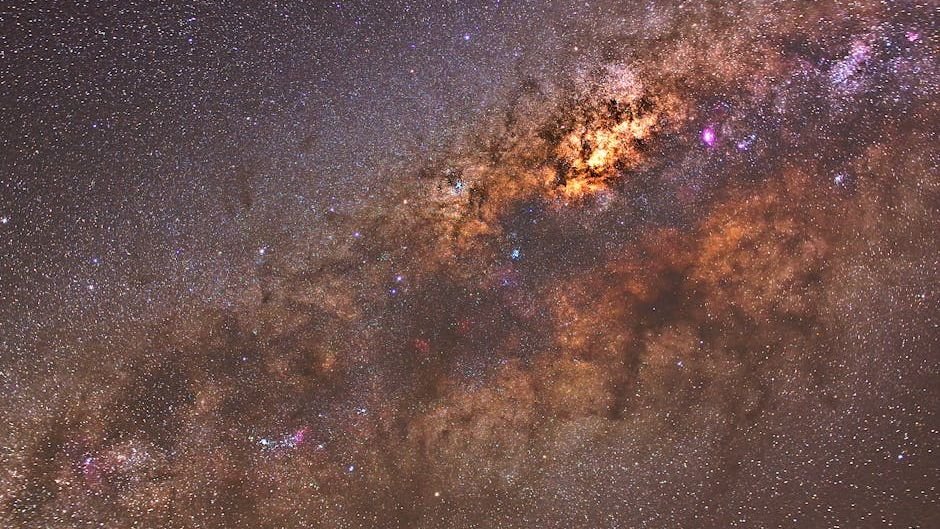

You are living inside a universe that is, for the most part, completely invisible to you. Not invisible in a poetic sense. Literally, physically invisible. The stars, planets, and galaxies you can see through a telescope? They add up to only a tiny sliver of what actually exists. The rest, the vast, overwhelming majority of everything, operates beyond the reach of your eyes, your instruments, and even your best theories.
It sounds like science fiction. It isn’t. The cosmos is a masterwork of hidden architecture, shaped by forces that your senses were never designed to detect. From the silent ripples that pass through the fabric of space to the mysterious pressure that is tearing galaxies apart, the universe operates on levels that routinely defy even the greatest human minds. So buckle up, because what you are about to read will challenge everything you thought you knew about the space around you.
The Hidden Majority: A Universe You Cannot See
Here is a fact that honestly should keep more people up at night. Scientists estimate that ordinary matter makes up only about five percent of the universe, while dark matter makes up about twenty seven percent. The rest is something even stranger. You are essentially looking at a cosmic iceberg from the surface and calling it the whole picture.
In today’s leading model of cosmology, roughly ninety five percent of the universe is made up of dark matter and dark energy. Scientists still do not know what either one actually is, but their influence is unmistakable. Dark matter provides extra gravity that helps shape galaxies and clusters, while dark energy is linked to the universe’s accelerating expansion. The sheer scale of our collective ignorance about the universe is breathtaking, and that is not an insult. It is an invitation to wonder.
Dark Matter: The Invisible Skeleton Holding Everything Together
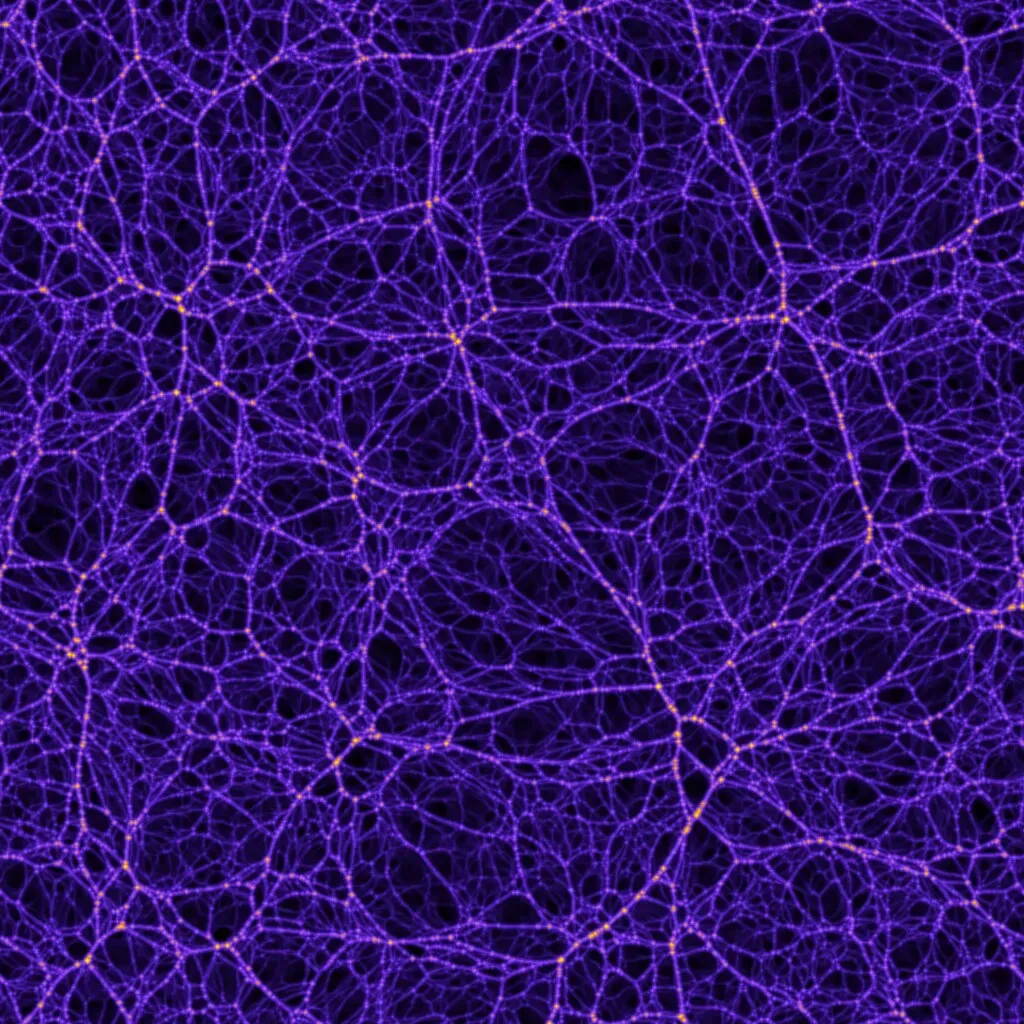
Dark matter is the invisible glue that holds the universe together. This mysterious material is all around you, making up most of the matter in the universe. Think of it like the steel frame inside a concrete building. You never see the steel, but without it, the whole structure collapses. Galaxies work the same way.
Dark matter often causes confusion because of its name. It is not a dark color. Rather, it is called “dark” because it is invisible to us since it does not absorb, reflect, or emit any light. Scientists have been chasing it for nearly a century. Because dark matter is thought to be five times more common than ordinary matter, even a small new insight helps clarify its role in shaping the Universe. That is how consequential this invisible substance truly is.
Dark Energy: The Force Tearing the Universe Apart
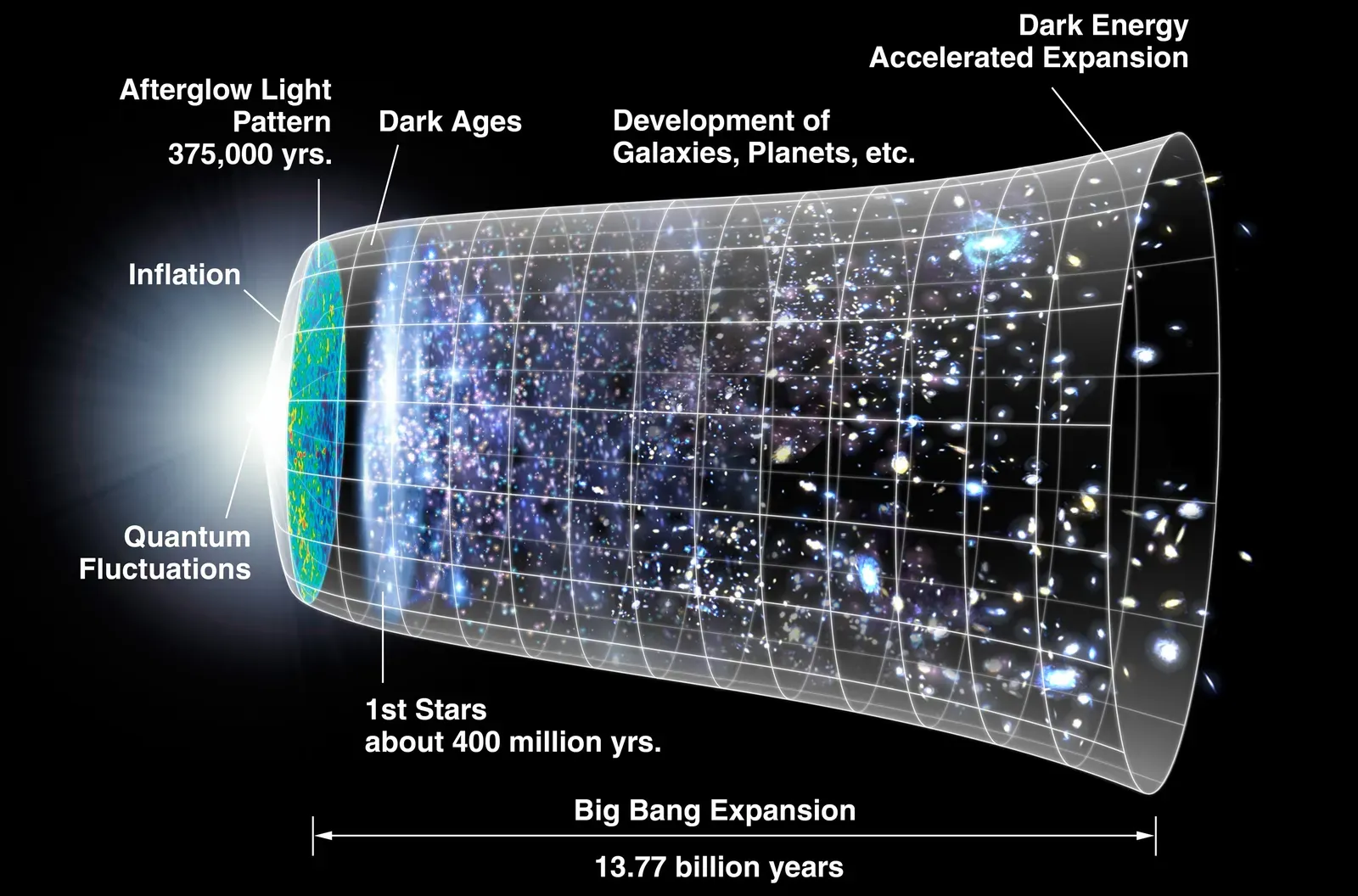
If dark matter is the glue, then dark energy is the opposite. It is a force so powerful, so relentless, that it is slowly pulling the cosmos apart at an accelerating rate. Dark energy refers to the force behind the universe’s accelerating expansion. Put simply, dark matter acts like cosmic glue, while dark energy drives space itself to expand faster and faster. You cannot feel it, but it governs the ultimate fate of everything.
The year 2024 was a big year for the study of the universe’s most troubling and mysterious ingredient: dark energy. Remarkably, data from the DESI instrument suggested that this force may not be constant at all. In particular, it appears that this mysterious force is weakening. If that is true, it rewrites decades of cosmological thinking. Still, I think the bigger story here is just how little certainty we actually have about the engine driving our universe’s expansion.
Gravitational Waves: Ripples in the Fabric of Reality
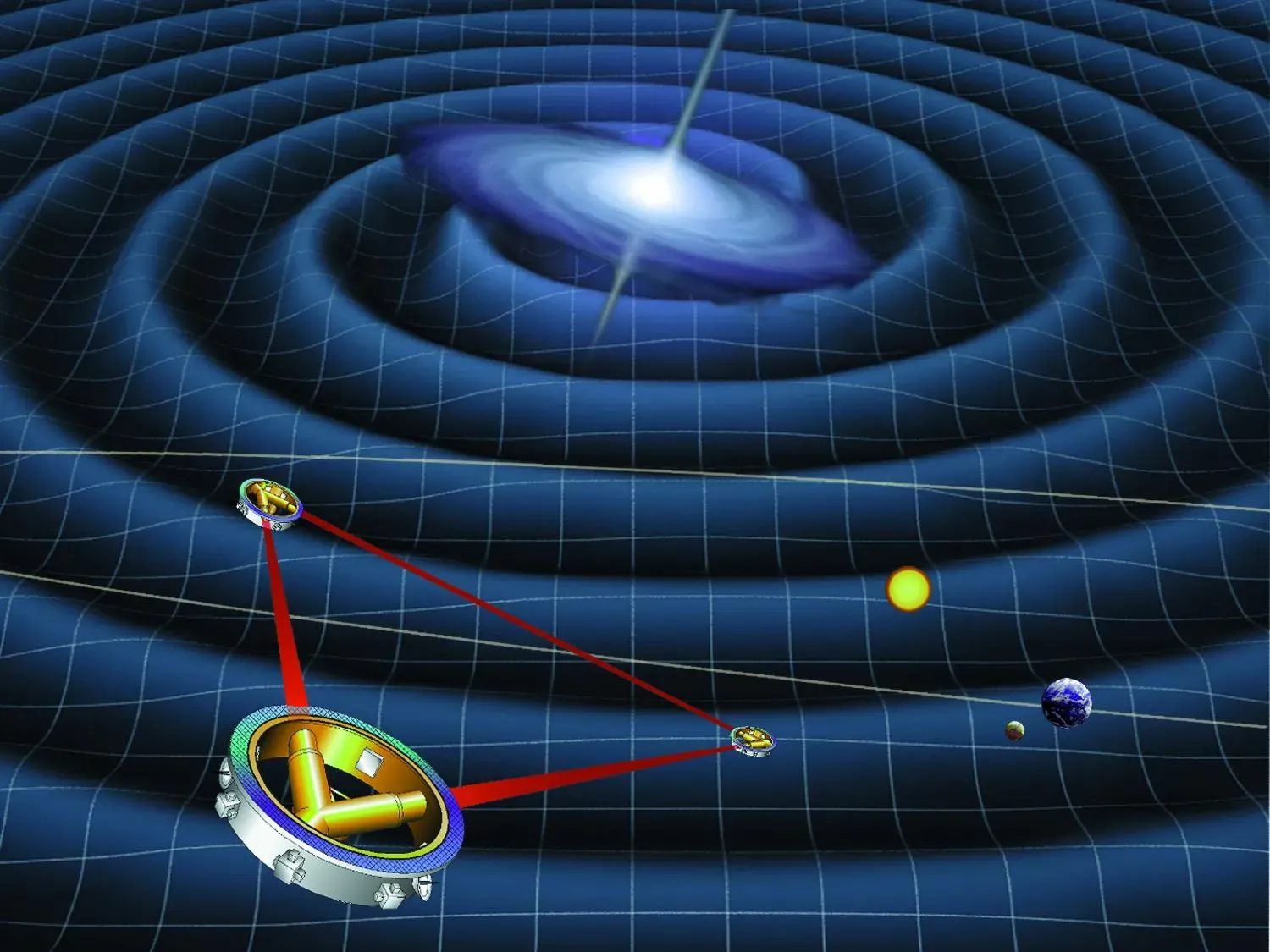
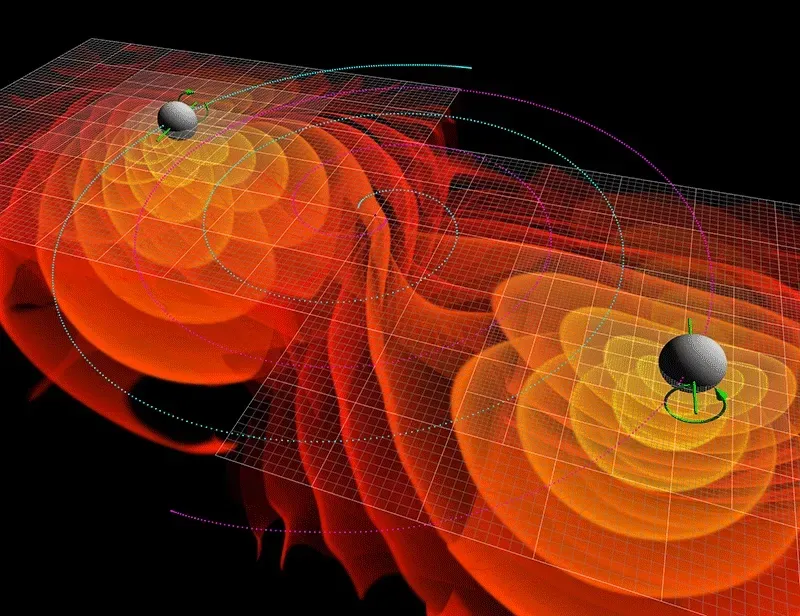
Gravitational waves are the invisible ripples in spacetime caused by supermassive interstellar activity. Picture spacetime as a giant stretched sheet of rubber. Now imagine two bowling balls the size of stars colliding on that sheet. The ripples that shoot outward in every direction? That is a gravitational wave. Gravitational waves are produced when massive objects accelerate and change the distortion of space, like ripples on a pond. Anything with mass or energy can create a gravitational wave, even humans. Your body movements cause extremely small ripples in space-time, but these are nearly undetectable.
On September 14, 2015, at approximately 5:51 a.m. EDT, a gravitational wave passed through the Earth, generating an almost imperceptible, fleeting wobble that would have gone completely unnoticed save for two massive, identical instruments, designed to listen for such cosmic distortions. It was a wave produced by a collision that happened over a billion years ago. By analyzing these ripples in space-time, researchers could now gather information that was previously invisible to light, revolutionizing our understanding of the universe. That single moment opened an entirely new way of listening to the cosmos.
Quantum Fields: The Invisible Ocean Beneath Everything
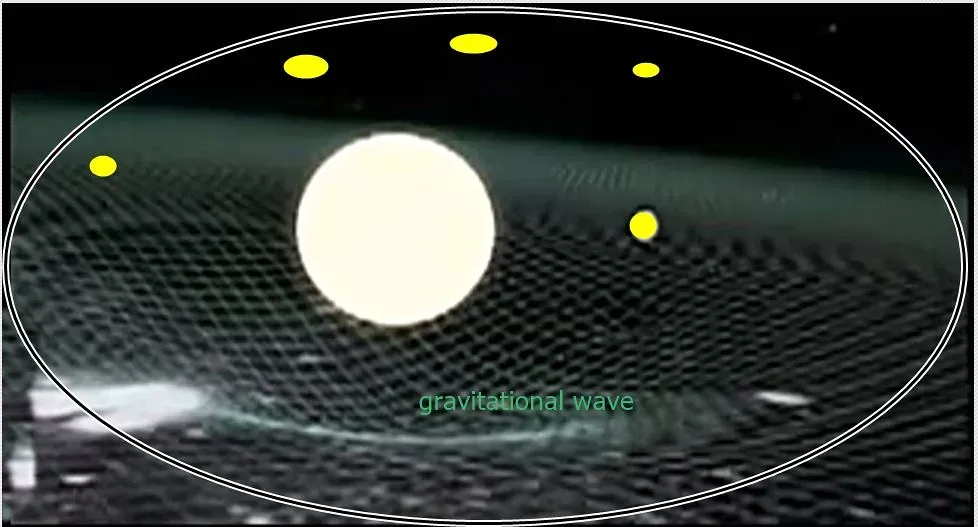
Let’s be real for a moment. When most people think of “empty space,” they picture exactly that: emptiness. Nothing. A void. Scientists know differently. These enormous voids are filled with the vacuum of spacetime. That vacuum is not truly nothing. The vacuum of spacetime contains something fundamental. It is difficult to describe precisely with everyday language, but physicists refer to these underlying ingredients as quantum fields.
In quantum field theory, the particles that make up your world, such as electrons and neutrinos, are not independent objects in the usual sense. What you call a particle is actually a visible expression of something deeper. These deeper structures are the fields themselves. Every type of particle has a corresponding field. You are not a collection of tiny solid marbles. You are a temporary pattern of disturbances rippling through an invisible ocean of quantum fields. I know it sounds crazy, but that is exactly what physicists currently believe.
Neutrinos: Ghost Particles That Pass Through Everything
Right now, as you read this, trillions of neutrinos are passing through your body every single second. You feel nothing. You detect nothing. They are among the most abundant particles in the universe, and they interact with ordinary matter so weakly that they can pass through an entire planet as if it were not there. Electrically neutral and interacting only by means of the weak interaction, neutrinos are not deflected by magnetic fields and are rarely absorbed by interstellar matter, and their direction indicates that their cosmic origin might be from the farthest reaches of the Universe.
In 2025, scientists made a stunning breakthrough. Researchers at KM3NeT, the deep-sea neutrino telescope in the Mediterranean Sea, reported an exceptionally high-energy cosmic neutrino detection, detecting a muon with an estimated energy of around 120 petaelectronvolts. This suggests that the neutrino may have originated in a different cosmic accelerator than the lower-energy neutrinos, or it may be the first detection of a cosmogenic neutrino, resulting from the interactions of ultra-high-energy cosmic rays with background photons in the Universe. Ghost particles, arriving from the edge of the known universe, caught for the first time at that energy scale. Remarkable.
Primordial Magnetic Fields: The Universe’s Ancient Invisible Wiring
Here is something that surprises even seasoned astronomy enthusiasts. The universe has magnetic fields. Enormous ones. Ancient ones. Primordial magnetic fields, billions of times weaker than a fridge magnet, may have left lasting imprints on the Universe. Researchers ran over 250,000 simulations to show how these fields shaped the cosmic web, then validated the results with observations. Their study sets a stricter upper limit on the fields’ strength, aligning with other data and suggesting important consequences for early star and galaxy formation.
The story does not stop there. Research published in Nature Astronomy in 2025 from the SLAC National Accelerator Laboratory found that these computer simulations of the first few hundred thousand years of the universe revealed the surest evidence yet for the existence of primordial magnetic fields. The researchers further report that these magnetic fields can resolve important conflicts in cosmology, including a discrepancy known as the Hubble tension. The magnetic field would have increased the density of the cosmic web, in turn accelerating the process of star and galaxy formation. These ancient magnetic whispers may hold the answer to one of cosmology’s most stubborn arguments.
The Hunt for the Invisible: Next-Generation Science Closing In
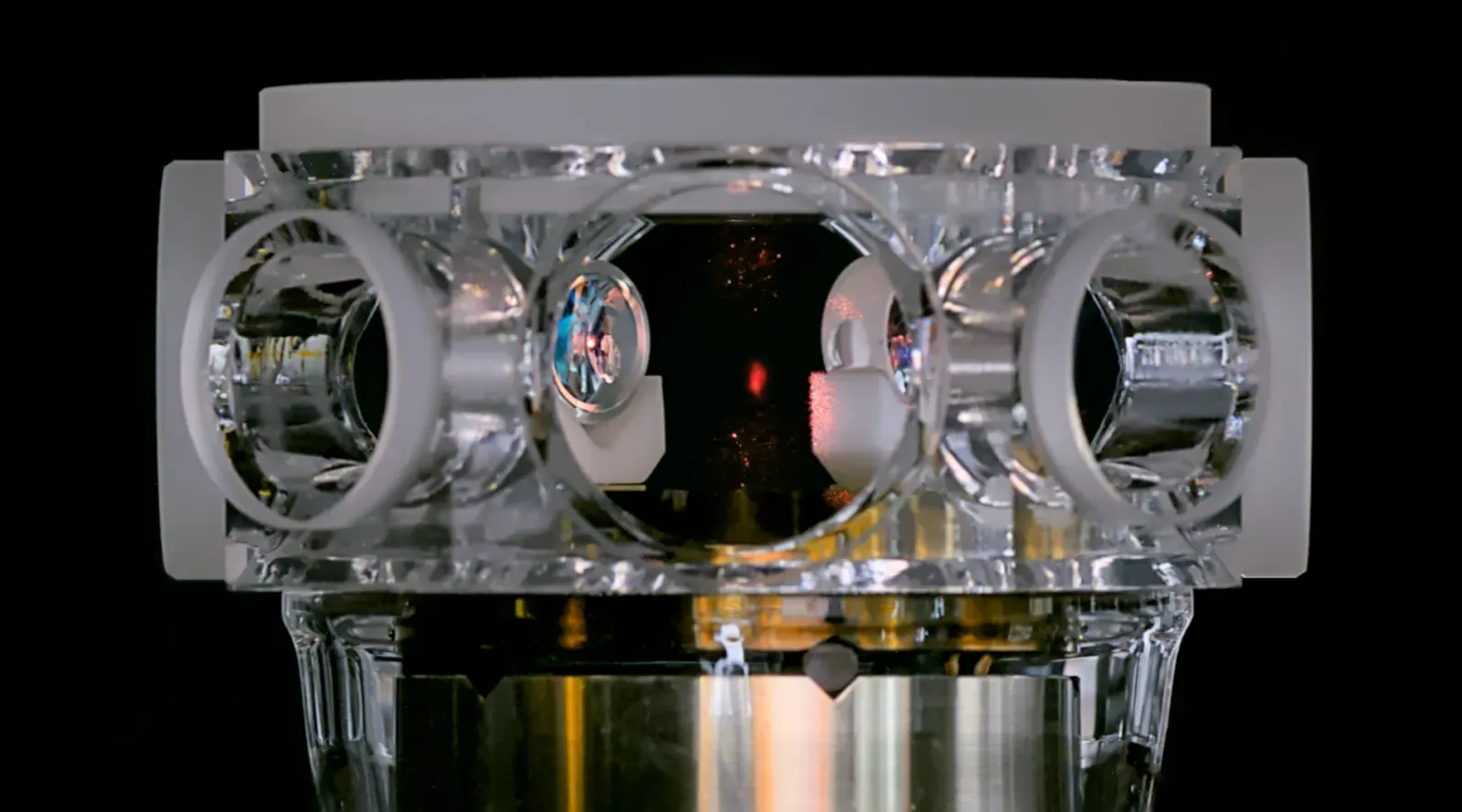
Scientists are developing detectors so sensitive they can spot particle interactions that might occur once in years or even decades. These experiments aim to uncover what shapes galaxies and fuels cosmic expansion. Cracking this mystery could transform your understanding of the laws of nature. The scale of ambition here is genuinely breathtaking. You are not just looking at telescopes peering into space. You are looking at machines designed to eavesdrop on the universe’s best-kept secrets.
Scientists are closer to unravelling the mysterious forces of the universe after working out how to measure gravity on a microscopic level. Experts had never fully understood how gravity works in the tiny quantum world, but now physicists have successfully detected a weak gravitational pull on a tiny particle using a new technique. Meanwhile, researchers are also turning to space itself as a detector. Scientists are turning Earth into a giant detector for hidden forces shaping the Universe, with the SQUIRE project aiming to detect exotic spin-dependent interactions using quantum sensors deployed in space, where speed and environmental conditions vastly improve sensitivity. The invisible universe is finally, slowly, starting to reveal itself.
Conclusion: The Greatest Mystery You Are Living Inside
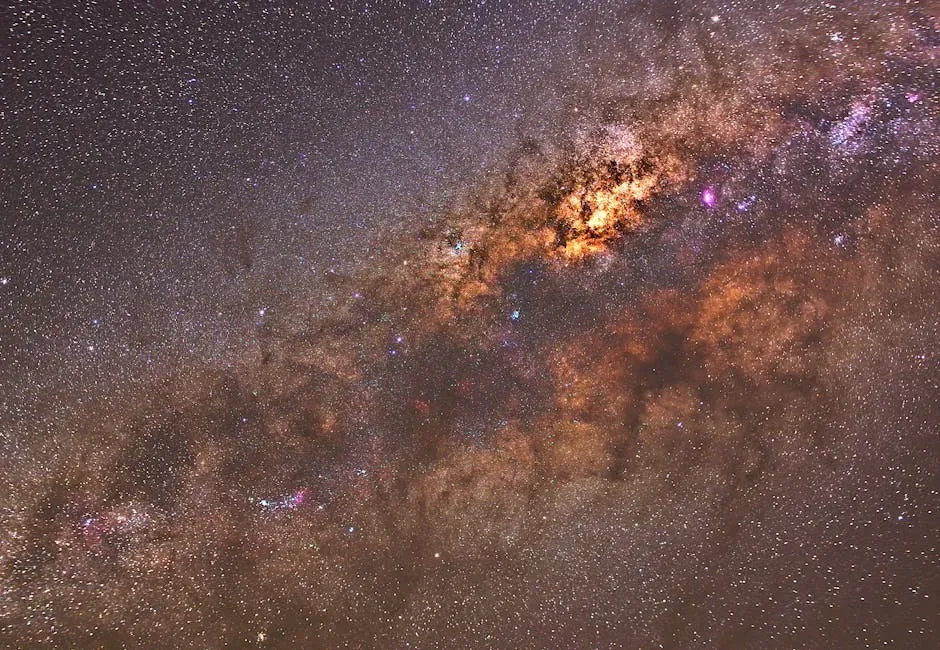
You are surrounded by forces you cannot see, particles you cannot feel, and fields you will never touch. The universe you experience every day, the sunlight, the gravity keeping your feet on the ground, the stars at night, represents an almost laughably small fraction of what is actually out there, operating quietly behind the scenes.
What makes this era of science so genuinely exciting is not just what has been discovered. It is how close researchers are now getting to the answers that have evaded humanity for a century. Natural quantum fluctuations in space-time, gravitational waves, were sufficient to seed the small density differences that eventually gave rise to galaxies, stars, and planets. These ripples evolve non-linearly, interacting and generating complexity over time, allowing for verifiable predictions with real data. Every answer unlocks a deeper question.
The invisible universe is not a gap in knowledge waiting to be filled. It is the main event. It always has been. The question is no longer whether these invisible forces exist. It is whether human curiosity is bold enough, and patient enough, to finally understand them. What part of this hidden cosmic story surprises you most? Let’s talk about it in the comments.