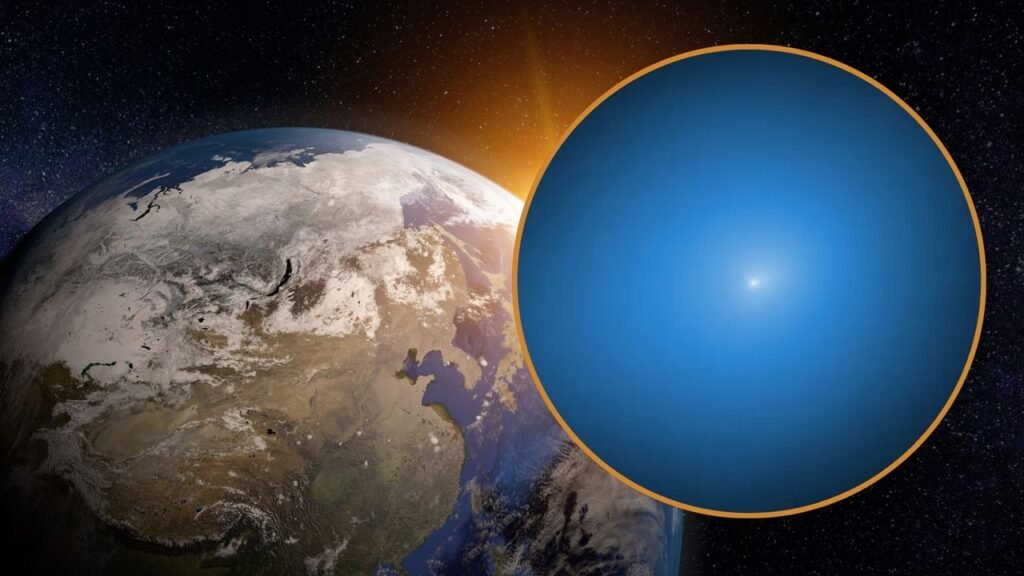

A Historic Flyby Unfolds (Image Credits: Cdn.mos.cms.futurecdn.net)
The interstellar comet 3I/ATLAS has completed its nearest pass by Earth, marking the end of an extraordinary chapter in astronomical observation as it now charts a course toward the distant reaches of the solar system.
A Historic Flyby Unfolds
Only the third confirmed interstellar object to visit our solar system, 3I/ATLAS captivated scientists with its unusual behaviors during the approach. Discovered earlier in 2025, the comet originated from beyond our stellar neighborhood, offering a rare glimpse into materials from another star system. Its trajectory brought it within about 170 million miles of Earth on December 19, a distance that ensured no risk to the planet but allowed for detailed study. Astronomers noted the comet’s green glow and extended tail, features that highlighted its composition of ice, dust, and gases.
Multiple observatories mobilized to capture data during this phase. The Hubble Space Telescope and the JUICE probe, en route to Jupiter, provided high-resolution images that revealed the comet’s dynamic surface activity. These observations documented eruptions and a peculiar “anti-tail” pointing toward the sun, challenging traditional models of cometary physics. As the comet receded, researchers expressed optimism about the wealth of information gathered, which could refine understandings of interstellar wanderers.
Unveiling the Comet’s Secrets
3I/ATLAS displayed traits that set it apart from typical solar system comets, including rapid brightening and color shifts observed in recent months. Scientists detected X-ray emissions extending far from its nucleus, a phenomenon that suggested intense interactions with solar particles. The comet’s hyperbolic orbit confirmed its interstellar origin, meaning it will not return after slinging past the sun. This one-way journey provided a unique opportunity to analyze pristine material untouched by our solar system’s formative processes.
Key findings emerged from the close approach data. The comet’s nucleus appeared to harbor “ice volcanoes,” releasing bursts of material that formed its visible coma and tail. Observations also indicated a wobbling jet of particles, adding to the intrigue of its path. These details, collected by ground-based telescopes and space assets, promised to inform models of exoplanetary formation and the diversity of cosmic objects.
Observing the Departing Visitor
Even as 3I/ATLAS moved away, stargazers retained chances to spot it in the night sky. On December 20, the comet remained visible to the naked eye under dark skies, positioned low in the evening hours. Binoculars or small telescopes enhanced views of its tail, which stretched impressively against the backdrop of stars. Virtual streams from projects like the Virtual Telescope Project allowed global audiences to follow along in real time.
For those who missed the peak, tracking apps and astronomy sites offered guidance on its fading path. The comet’s visibility would diminish as it headed outward, but archived images from NASA and other agencies preserved the event. Enthusiasts reported sightings from locations worldwide, from California’s clear skies to Europe’s observatories, underscoring the comet’s broad appeal.
Implications for Future Discoveries
The passage of 3I/ATLAS underscored the growing capability to detect and study interstellar objects. NASA missions coordinated efforts to monitor its trajectory, ensuring comprehensive data collection. This event built on prior visits like ‘Oumuamua and Borisov, expanding the catalog of known extrasolar visitors. Researchers anticipated that analyzing the gathered spectra would reveal isotopic compositions distinct from solar system bodies.
- Hyperbolic orbit confirms non-solar system origin.
- Safe distance of 170 million miles from Earth.
- Observations included X-ray glow and particle jets.
- Potential insights into planet formation elsewhere.
- Collaboration between space agencies enhanced data quality.
Key Takeaways
- 3I/ATLAS’s flyby provided unprecedented data on interstellar chemistry.
- No impact risks; the comet poses zero threat to Earth or climate.
- Future telescopes may detect more such visitors, advancing cosmic exploration.
As 3I/ATLAS fades into the outer solar system, it leaves behind a legacy of wonder and scientific progress, reminding humanity of the vast, interconnected universe. What are your thoughts on this celestial event? Share in the comments below.
Jan loves Wildlife and Animals and is one of the founders of Animals Around The Globe. He holds an MSc in Finance & Economics and is a passionate PADI Open Water Diver. His favorite animals are Mountain Gorillas, Tigers, and Great White Sharks. He lived in South Africa, Germany, the USA, Ireland, Italy, China, and Australia. Before AATG, Jan worked for Google, Axel Springer, BMW and others.