
A Rare Visitor from Beyond (Image Credits: Cdn.mos.cms.futurecdn.net)
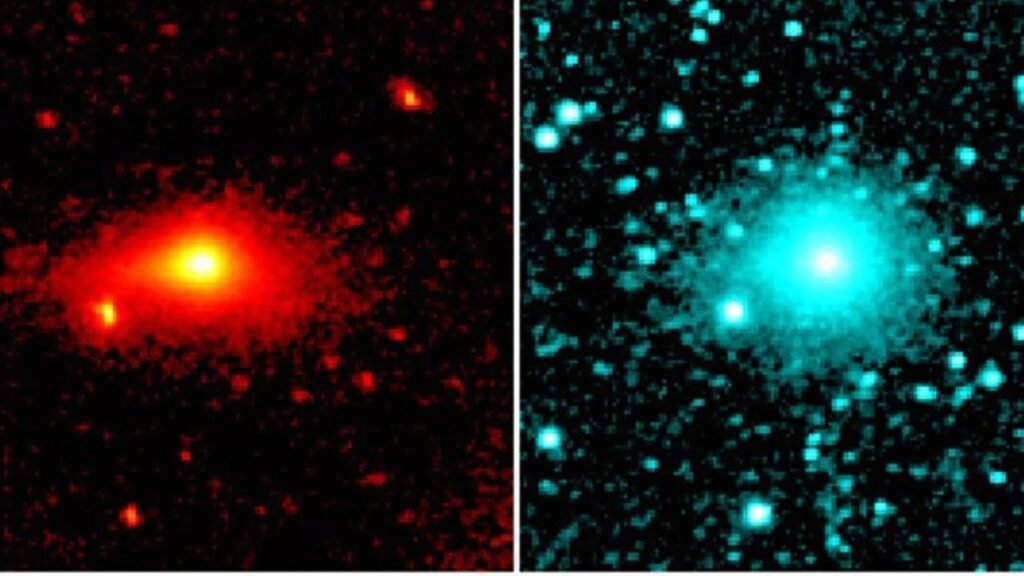
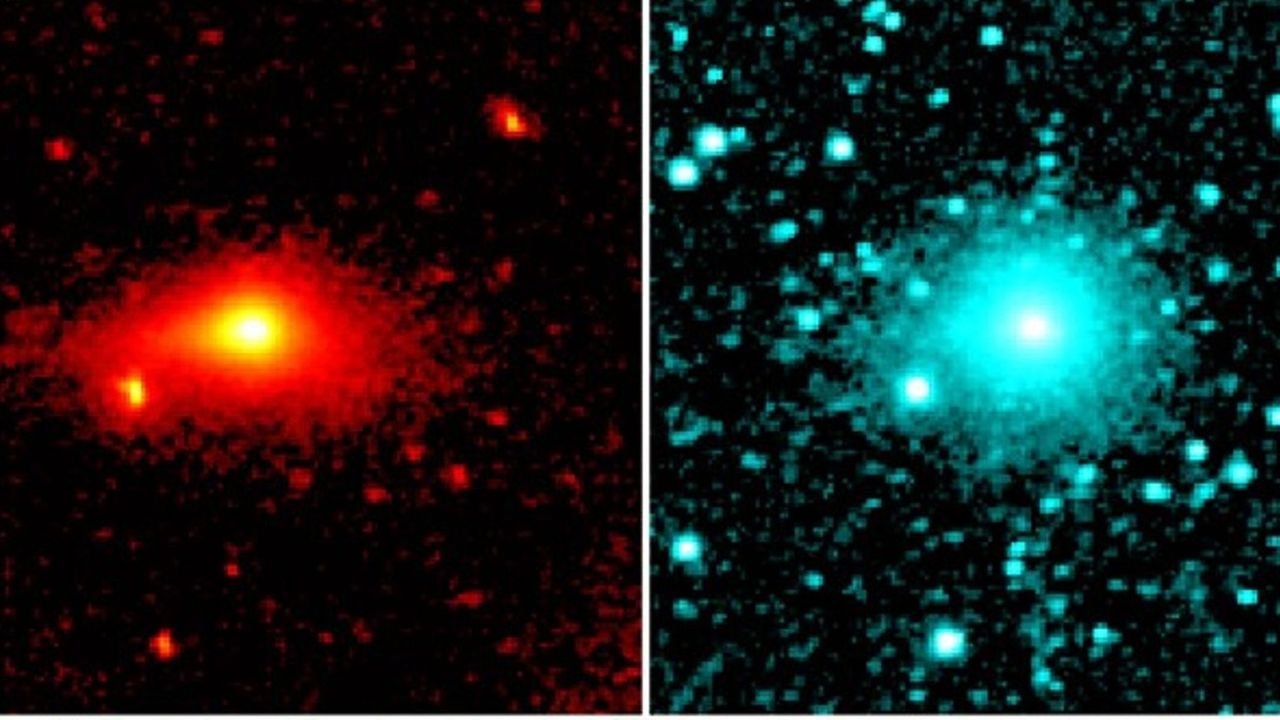
NASA’s SPHEREx mission captured a vivid display of activity from the interstellar comet 3I/ATLAS as the cosmic wanderer sped away from the Sun late last year.[1][2]
A Rare Visitor from Beyond
Astronomers discovered comet 3I/ATLAS on July 1, 2025, through the NASA-funded ATLAS survey telescope in Rio Hurtado, Chile. Pre-discovery images traced its path back to mid-June from observatories worldwide. The object’s hyperbolic trajectory quickly confirmed its interstellar origin, marking it as only the third such visitor after 1I/’Oumuamua and 2I/Borisov.[3]
The comet reached perihelion, its closest approach to the Sun, on October 29, 2025, at a distance of about 1.36 astronomical units – just inside Mars’ orbit. Traveling at speeds up to 153,000 miles per hour, it posed no threat to Earth, passing at a safe minimum of 170 million miles. Hubble Space Telescope images from July and November revealed a nucleus possibly as small as 1,400 feet across, shrouded in a teardrop-shaped dust cocoon.[4]
SPHEREx Witnesses the Eruption
In December 2025, well after perihelion, SPHEREx detected the comet undergoing a full-scale eruption. Infrared observations showed significant brightening as water ice and other volatiles sublimated into gas, even in the chill of interplanetary space. Carey Lisse, study lead from Johns Hopkins Applied Physics Laboratory, stated: “Comet 3I/ATLAS was full-on erupting into space in December 2025, after its close flyby of the Sun, causing it to significantly brighten. Even water ice was quickly sublimating into gas in interplanetary space.”[1]
This delayed outburst stemmed from solar heat penetrating the comet’s crust, formed over eons of cosmic ray bombardment. Earlier August scans by SPHEREx had noted abundant carbon dioxide with scant water, but by December the coma brimmed with diverse gases. The mission, launched in March 2025, mapped the scene across 102 infrared colors from low-Earth orbit.[1]
Unveiling Ancient Chemistry
The eruption released a mix of carbon-rich materials locked deep within the comet. SPHEREx identified organic molecules including methanol, cyanide, and methane – compounds common in early solar system bodies but also precursors to life on Earth. A small pear-shaped dust tail hinted at ejection of larger grains, like BB-sized chunks, pushed back by solar radiation.[1]
Phil Korngut, SPHEREx instrument scientist at Caltech, explained: “The comet has spent ages traversing interstellar space, being bombarded by highly energetic cosmic rays, and has likely formed a crust that’s been processed by that radiation. But now that the Sun’s energy has had time to penetrate deep into the comet, the pristine ices below the surface are warming up and erupting, releasing a cocktail of chemicals that haven’t been exposed to space for billions of years.”[1]
- Water ice and vapor
- Carbon dioxide and carbon monoxide
- Methanol, cyanide, methane
- Dust grains and rocky debris
- Carbonyl sulfide and other organics
Collaborative Skywatch Across Missions
NASA mobilized a fleet of observatories to study 3I/ATLAS throughout its passage. Hubble and James Webb telescopes imaged its coma and composition. Spacecraft like Psyche, Lucy, MAVEN, and Europa Clipper snapped pictures from afar, while rovers on Mars captured glimpses. TESS reobserved it in early 2026, extending the dataset as the comet faded outbound.[3]
These efforts refined the comet’s path and revealed similarities to solar system comets, despite its alien roots. Ground telescopes tracked it into spring 2026, though naked-eye views remained elusive.
Key Takeaways:
- 3I/ATLAS erupted post-perihelion, venting pristine ices billions of years old.
- SPHEREx data exposed organics akin to early solar system materials.
- The third interstellar object offers clues to distant planetary systems.
As 3I/ATLAS hurtles toward the outer Oort Cloud and eventual interstellar void, its fleeting visit underscores the dynamic nature of these rare intruders. Scientists continue analyzing the data for insights into other stars’ chemistry. What secrets from another solar system intrigue you most? Share in the comments.