
Picture the emptiest place you can possibly imagine. No atoms, no light, no sound. Absolute, total nothing. Now ask yourself – what if that “nothing” is actually the most fertile ground in the entire universe? What if the very foundation of existence is not matter or energy in any traditional sense, but pure, untamed possibility itself?
Quantum mechanics has a deeply unsettling answer to that question. And honestly, it’s one of the most mind-bending revelations in all of science. The idea that emptiness is not truly empty – that it hums, crackles, and seethes with invisible energy – reshapes everything we think we know about reality. Let’s dive in.
The Vacuum Is Not What You Think It Is
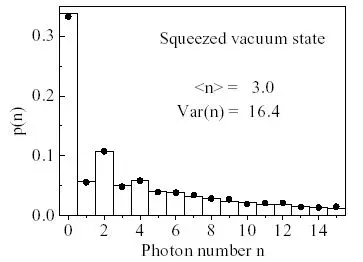
When you hear the word “vacuum,” your brain probably conjures something sterile and lifeless. A blank slate. The absence of everything. But here’s the thing – quantum physics tears that intuition apart completely. In quantum theory, nothingness is a full, rich field of potential replete with every possible form that matter and energy might take. Quantum field theory reimagines “empty space” not as a blank stage, but as a seething field of possibilities.
Nothing started to seem like something in the 20th century, as physicists came to view reality as a collection of fields – objects that fill space with a value at each point. In classical physics, a field’s value can be zero everywhere so that it has no influence and contains no energy. That would make the vacuum genuinely empty. But the universe simply does not work that way. Physicists learned that the universe’s fields are quantum, not classical, which means they are inherently uncertain. You’ll never catch a quantum field with exactly zero energy.
Zero-Point Energy: The Irreducible Hum of Reality
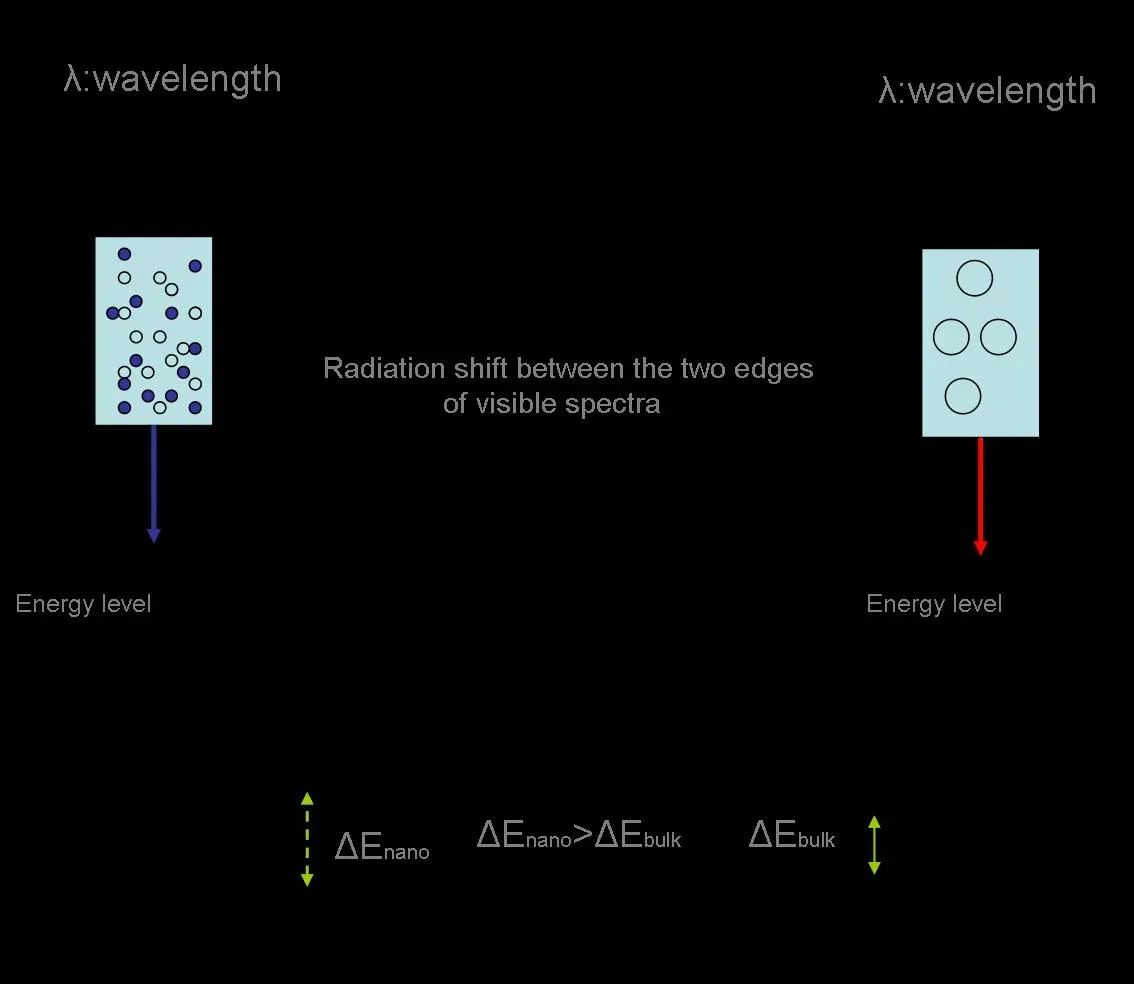
There is a concept in physics so elegantly strange it almost sounds like poetry. It’s called zero-point energy, and it refers to a minimum baseline of energy that quantum systems always retain, no matter how cold, no matter how stripped-down. Even in the most emptied state conceivable – a box with all matter removed and cooled to the closest approach to absolute zero – energy persists. This is not a deficiency of technology or imagination; it is a fundamental consequence of how reality operates at the smallest scales. In quantum mechanics, energy cannot simply be “turned off.” The universe prohibits it. This residue is what physicists call zero-point energy, a lowest possible energy that cannot be eliminated.
Zero-point energy was first introduced by Max Planck in 1911. After that, Einstein took it seriously for the first time, invoking zero-point energy to explain numerous phenomena, including the subtle vibrations of molecules and crystal lattices even in their lowest energy states, and the failure of liquid helium to condense into a solid at ordinary pressure, even at temperatures so low you would expect atoms to lock in place. Think of it this way – even when everything is frozen and still, nature keeps a small, irreducible spark burning. It simply refuses to let the lights go out entirely.
Heisenberg’s Uncertainty Principle: Why Nothing Can Never Be Zero
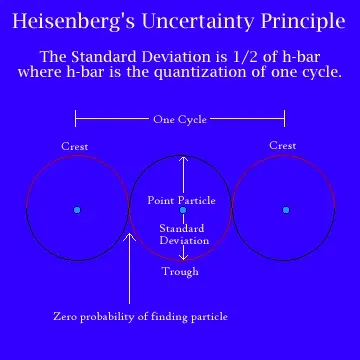
You might be wondering why the universe would insist on this restless baseline of activity. The answer lives in one of the most famous principles in all of physics. The uncertainty principle, also known as Heisenberg’s indeterminacy principle, is a fundamental concept in quantum mechanics. It states that there is a limit to the precision with which certain pairs of physical properties, such as position and momentum, can be simultaneously known. In other words, the more accurately one property is measured, the less accurately the other can be known.
The Heisenberg uncertainty principle, a cornerstone of quantum theory, forbids having precise knowledge of both a particle’s position and its momentum simultaneously. That means an object can never have exactly zero motion and zero position uncertainty. There must always be a minimal amount of fluctuation. This minimal activity is the zero-point energy. It’s almost like nature imposing a cosmic tax on precision. You want to know exactly where something is? You lose all certainty about how fast it’s moving. You want perfect stillness? Impossible. To zero out both components, you would have to give a precise value to both the object’s position and its velocity, something forbidden by the Heisenberg uncertainty principle.
Virtual Particles: Existence Borrowed From Nothingness
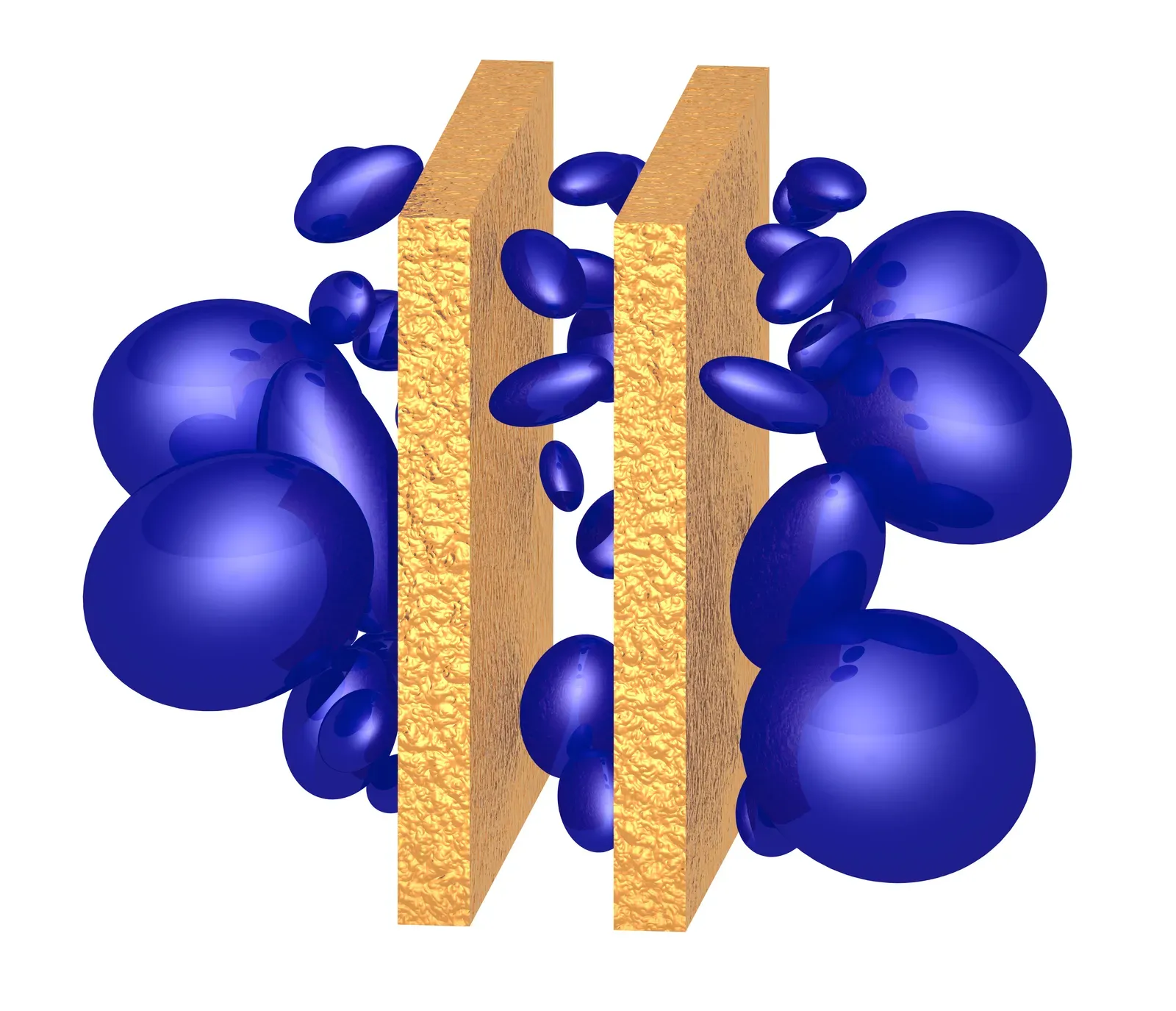
Now things get genuinely strange. Thanks to the uncertainty principle, the vacuum buzzes with particle-antiparticle pairs popping in and out of existence. They include, among many others, electron-positron pairs and pairs of photons, which are their own antiparticles. These fleeting presences are known as virtual particles, and they are one of the most debated and misunderstood concepts in modern physics. They are real enough to have measurable effects – yet they vanish before you could ever directly catch them.
A virtual particle is a theoretical transient particle that exhibits some of the characteristics of an ordinary particle, while having its existence limited by the uncertainty principle, which allows the virtual particles to spontaneously emerge from vacuum at short time and space ranges. The concept of virtual particles arises in the perturbation theory of quantum field theory, where interactions between ordinary particles are described in terms of exchanges of virtual particles. Let’s be real – calling these things “particles” is a generous use of the word. Their existence is permitted by the energy-time uncertainty principle, allowing them to “borrow” energy from the vacuum for a fleeting moment before repaying it.
The Casimir Effect: When Nothing Pushes Back
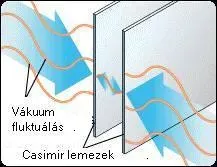
Here is where things stop being abstract and become genuinely, physically real. If the quantum vacuum truly seethes with energy, it should leave measurable fingerprints on the physical world. It does. Quantum physics reveals this “nothingness” to be a seething cauldron of virtual particles constantly popping into and out of existence. This isn’t mere theoretical fancy; it has measurable consequences, most strikingly demonstrated by the Casimir effect, a subtle yet undeniable force between two uncharged conducting plates placed in a vacuum. First predicted in 1948 by Dutch physicist Hendrik Casimir, the effect isn’t about pulling something from nothing, but rather about restricting the allowed wavelengths of these virtual particles, creating a pressure differential.
Only virtual photons with wavelengths that “fit” between the plates are allowed to exist in that space. Longer wavelengths are excluded, effectively reducing the density of virtual photons between the plates compared to the space outside. This difference in energy density creates a pressure differential. The virtual photons outside the plates exert a greater force than those inside, pushing the plates together. This force is incredibly weak, on the order of a few micronewtons per square meter, but it’s measurable with precise instruments. Honestly, the fact that two uncharged, unmagnetized metal plates attract each other through pure vacuum is one of the most quietly spectacular demonstrations in all of experimental physics.
Black Holes, Hawking Radiation, and the Vacuum’s Cosmic Role
If the quantum vacuum already sounds powerful, wait until you see what happens when it encounters a black hole. Hawking radiation is black-body radiation released outside a black hole’s event horizon due to quantum effects, according to a model developed by Stephen Hawking in 1974. The standard popular explanation involves virtual particle pairs forming near the event horizon, with one falling in and one escaping – though physicists have since noted this picture, while intuitive, is an oversimplification. Hawking radiation would reduce the mass and rotational energy of black holes and consequently cause black hole evaporation. Because of this, black holes that do not gain mass through other means are expected to shrink and ultimately vanish.
The implications are staggering. Stars, planets, people, and petunias: everything emits a special kind of radiation and will, if it sticks around long enough, evaporate into nothing. That’s the claim in a new study of physics effects that were previously thought to occur only near a black hole. And more recently, Hawking radiation is a theoretical phenomenon where black holes are predicted to emit radiation due to quantum effects near their event horizon, leading to their gradual evaporation. This process is intimately linked to vacuum fluctuations. Near the intense gravitational field of a black hole, virtual particle-antiparticle pairs constantly pop into existence. If one particle of a pair falls into the black hole while the other escapes, the escaping particle becomes a real particle, carrying away energy and effectively causing the black hole to lose mass. The vacuum, it seems, even has something to say about the ultimate fate of the cosmos.
The Cosmological Constant Problem and the Vacuum’s Unsolved Mystery
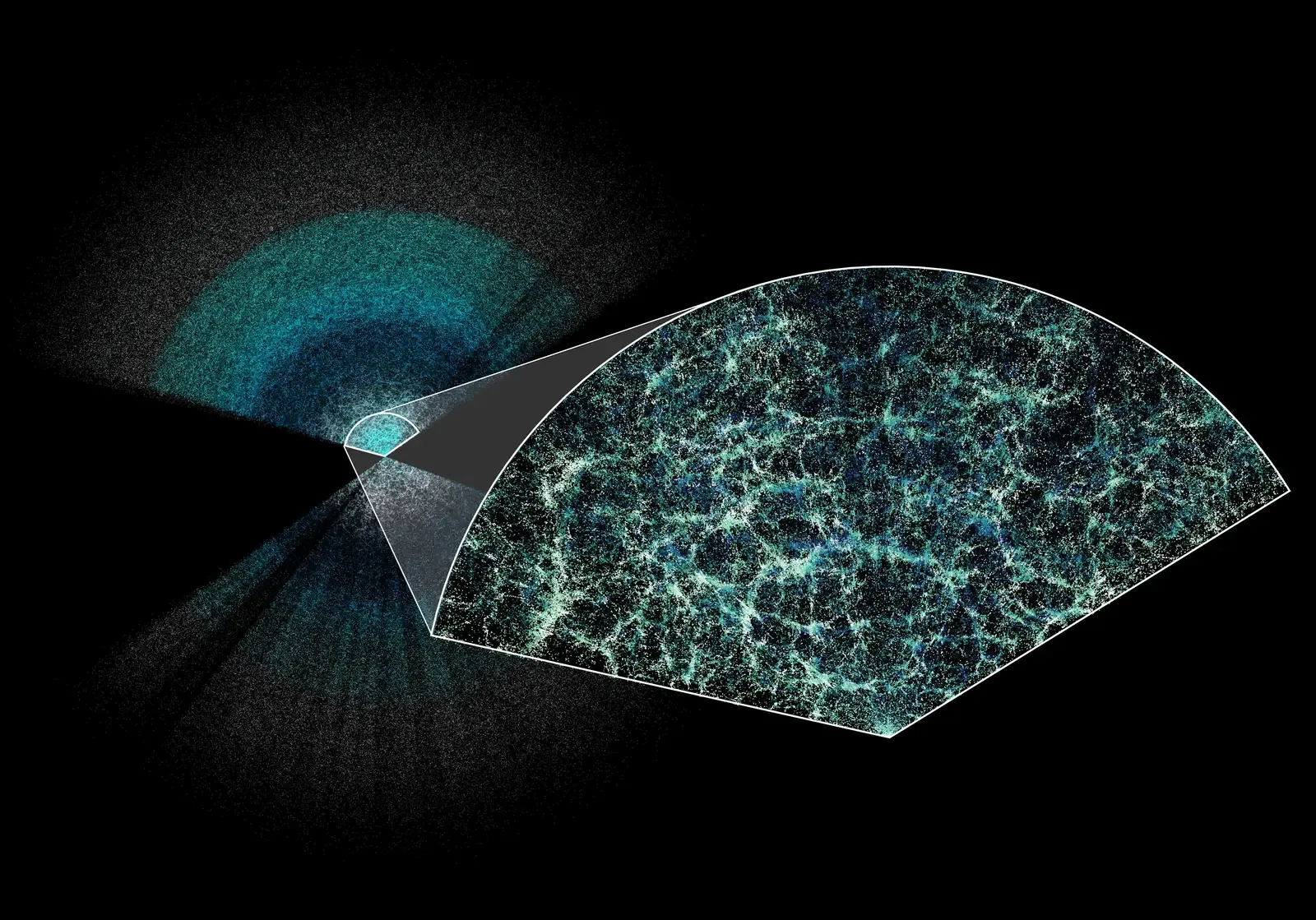
Here is where even the most seasoned physicists have to admit they’re stumped. In cosmology, the vacuum energy is one possible explanation for the cosmological constant and the source of dark energy. Dark energy is the mysterious force driving the accelerated expansion of the universe. It comprises the vast majority of the universe’s total energy content. One of the largest puzzles in cosmology is the nature of dark energy, which is driving the accelerated expansion of the universe. Vacuum energy is one of the main candidates for the explanation of this phenomenon, although the measured value of dark energy density is much smaller than naive quantum field theory predictions for the vacuum energy. The concept of vacuum energy provides a link between quantum field theory, particle physics, and cosmology, and is crucial in our understanding of the fundamental structure of the universe.
The gap between what theory predicts and what astronomers actually observe is so absurdly large it has earned its own colorful nickname. This huge discrepancy is known as the cosmological constant problem or, colloquially, the “vacuum catastrophe.” It’s hard to say for sure whether this represents a flaw in quantum field theory, a failure of general relativity at cosmic scales, or simply something entirely new waiting to be discovered. If the vacuum is saturated with zero-point energy, why isn’t the universe tearing itself apart under its own weight? This unresolved tension between quantum theory and gravity remains one of the deepest puzzles in contemporary physics. It is, in some ways, the single most embarrassing discrepancy in all of modern science – and nobody has solved it yet.
Conclusion: Nothingness as the Mother of All Things
What quantum mechanics ultimately teaches you is that the concept of “nothing” was never really what you thought it was. Zero-point energy shows us that “nothing” is not a simple absence. It is a threshold where possibility converges with reality. A kind of baseline hum that underlies existence itself. Rather than a void, the vacuum is generative, relational, and foundational. It is a space that embodies potential; thus, it is not empty at all, but filled with the structures of nature.
You might think of the quantum vacuum the way you’d think of a silent concert hall just before the music begins. There is no performance yet. No sound fills the air. Yet the space itself is loaded with everything a symphony could be – every note, every chord, every possible arrangement of musicians and instruments, all waiting in superposition. Scientists at Brookhaven National Laboratory have uncovered experimental evidence that particles of matter emerging from energetic subatomic smashups retain a key feature of virtual particles that exist only fleetingly in the quantum vacuum. The finding offers a new way to explore how the vacuum – once thought of as empty space – provides important ingredients needed to transform virtual “nothingness” into the matter that makes up our world. The universe, it turns out, was born from a kind of restless, creative nothing. And in that same nothing, you, this article, and everything around you ultimately finds its deepest roots.
The most profound realization may be this: nothingness, in the quantum world, is not absence. It is infinite potential, waiting for the right conditions to become something real. What would you have guessed “nothing” could do?