Space science has this wonderful habit of flipping everything we thought we knew completely upside down. For decades, the hunt for habitable worlds beyond Earth focused almost exclusively on rocky planets sitting in the so-called “Goldilocks zone” around their stars. Liquid water, breathable air, just the right temperature. That was the checklist.
Now researchers are suggesting we may have been thinking far too small. Moons, not planets, could be the hidden hotspots for life in the universe. More surprising still, the key ingredient might not be sunshine or warmth from a distant star. It could be hydrogen. Let’s dive in.
The Idea That Changes the Search for Life
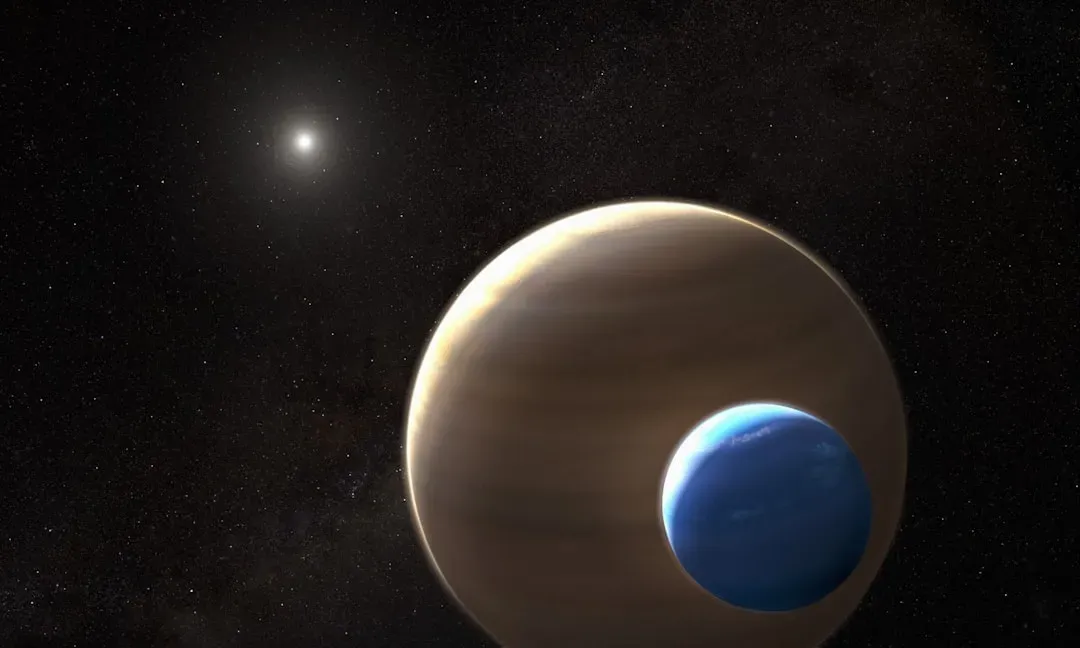
Here’s the thing about hydrogen: it’s the most abundant element in the universe, and scientists now believe it could act as a powerful insulating blanket for moons orbiting giant planets far from their stars. A new study published in 2026 proposes that exomoons, moons orbiting planets in other solar systems, could sustain habitable surface conditions for billions of years if they hold onto thick hydrogen-rich atmospheres. That’s not a small claim. That’s a fundamental rethinking of where life could exist.
The research suggests that hydrogen atmospheres create a greenhouse warming effect far more powerful than anything carbon dioxide or water vapor could manage alone. Think of it less like a thin jacket and more like wrapping a world in a heavy insulated duvet. The thermal retention is extraordinary, and the implications are staggering.
Why Exomoons Are Getting More Attention Than Ever
Exomoons have always been the overlooked cousins of exoplanets in the search for extraterrestrial life. They’re harder to detect, harder to study, and harder to model. Honestly, for a long time, they were almost an afterthought in astrobiological research.
That’s changing rapidly. Our own solar system alone has dozens of moons, several of which, like Europa and Enceladus, are already considered strong candidates for harboring microbial life. Scaling that idea outward across the galaxy, where gas giants and ice giants are extraordinarily common, the number of potential moon worlds becomes almost incomprehensibly large. Scientists estimate there could be more moons than planets across the Milky Way. That’s a lot of candidate real estate.
How Hydrogen Atmospheres Actually Work
The mechanics behind this are genuinely fascinating. Hydrogen is a very light gas, and under normal circumstances on a small rocky body, it would escape into space relatively quickly. However, if a moon is massive enough and cold enough, it could potentially retain a thick hydrogen atmosphere over geological timescales, meaning billions rather than millions of years.
This is where the science gets clever. A hydrogen-dominated atmosphere traps infrared radiation far more efficiently than thinner atmospheres. Even a moon sitting far beyond the conventional habitable zone of its star could maintain liquid water on its surface purely through this atmospheric greenhouse warming. No starlight required, or at least, far less of it than previously thought necessary. It’s a bit like discovering you can heat a house without windows, just with extraordinary wall insulation.
The Billions-of-Years Timeline Is What’s Shocking
Let’s be real, when scientists say a habitable condition could last “billions of years,” that number deserves some weight. Life on Earth took roughly three to four billion years to evolve from single-celled organisms into complex multicellular creatures. If exomoons with hydrogen atmospheres can maintain stable, warm, liquid-water-friendly conditions for similar timescales, that’s genuinely enough time for complex life to emerge.
The study indicates that under the right conditions, these hydrogen-blanketed moons could remain habitable not just for a few hundred million years, but potentially across timescales comparable to Earth’s own biological history. That’s not a trivial distinction. It transforms these moons from curiosities into serious candidates worthy of targeted telescope observation and future mission planning.
The Limitations and Challenges Scientists Acknowledge
It’s hard to say for sure just how common these hydrogen-retaining moons actually are. The research is theoretical at this stage, built on atmospheric modeling rather than direct observation of actual exomoons. We haven’t definitively confirmed even a single exomoon with certainty yet, though several tantalizing candidates exist in the data.
There are real physical hurdles too. A moon needs sufficient gravity to hold onto hydrogen long-term, which means it needs to be fairly large. It also needs to avoid too much ultraviolet radiation from its host star, which can strip lighter gases from atmospheres over time. These are not insurmountable barriers, but they do narrow the field of qualifying candidates somewhat. Still, even a narrow field, spread across hundreds of billions of stars, represents an enormous absolute number of possible worlds.
What This Means for Future Telescopes and Missions
The timing of this research is interesting because the next generation of space telescopes is already being planned and debated. Instruments capable of analyzing the atmospheric compositions of distant worlds are moving from concept to engineering reality. The James Webb Space Telescope has already started demonstrating what’s possible, detecting chemical signatures in exoplanet atmospheres with a level of precision that wasn’t achievable just a decade ago.
If researchers can identify spectroscopic signatures that indicate hydrogen-rich atmospheres around large moons, it would open an entirely new observational target list for astronomers worldwide. The science community is increasingly aware that limiting the search to Earth-like planets around Sun-like stars in traditional habitable zones is probably far too conservative. This hydrogen moon hypothesis gives future missions a concrete, scientifically grounded alternative to pursue.
A New Definition of Habitability Is Taking Shape
Perhaps the most profound takeaway from this research is what it says about our definition of habitability itself. For a long time, scientists used Earth as the template, essentially searching for a copy of our own world orbiting a star similar to our Sun. That approach made intuitive sense, but it may have dramatically underestimated the diversity of environments where life could take hold.
Hydrogen atmosphere moons represent a genuinely different habitability pathway, one driven by chemistry and atmospheric physics rather than stellar proximity. I think this is one of those moments in science where a single well-reasoned study can quietly shift an entire field’s perspective. It doesn’t invalidate earlier work, it expands the map. The universe, it turns out, may have far more creative solutions to the problem of supporting life than we ever gave it credit for. What kind of life might be thriving right now on a freezing moon wrapped in hydrogen, completely invisible to our current instruments? That question alone feels worth sitting with.
What do you think about it? Tell us in the comments below.