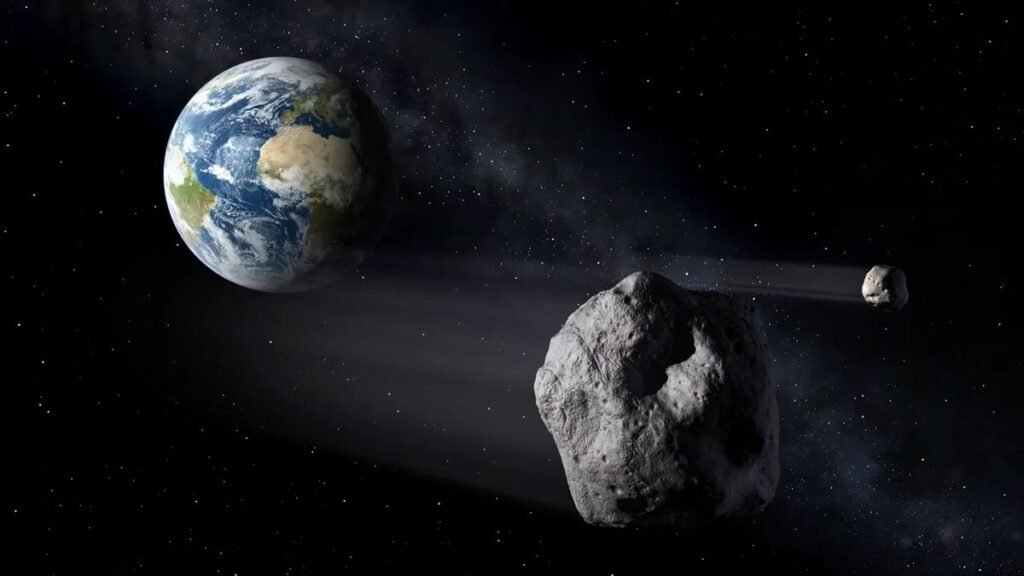

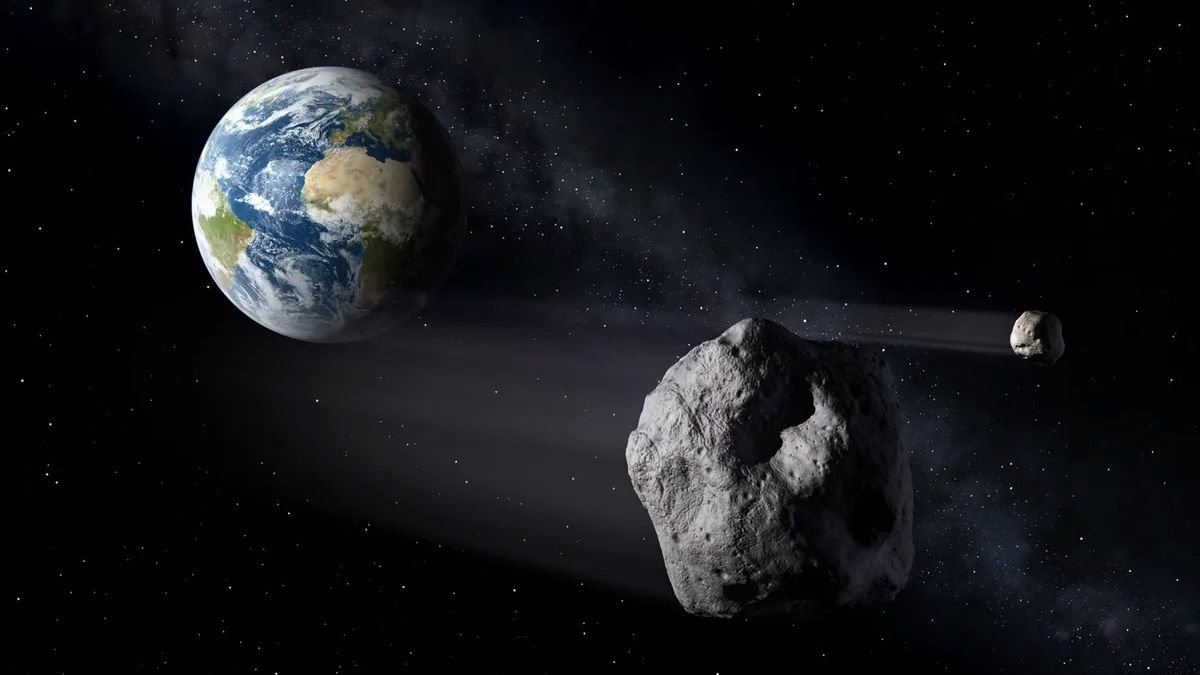
Astronauts Turn Guardians of the Planet (Image Credits: Cdn.mos.cms.futurecdn.net)
Mill Valley, California – A nonprofit organization born from the vision of former astronauts leads efforts to detect and mitigate near-Earth asteroids capable of catastrophic impacts.[1][2]
Astronauts Turn Guardians of the Planet
Former Apollo 9 astronaut Rusty Schweickart and NASA veteran Dr. Ed Lu co-founded the B612 Foundation in 2002. They drew inspiration from the asteroid in Antoine de Saint-Exupéry’s The Little Prince. Initial discussions at a NASA workshop focused on asteroid deflection strategies using gentle propulsion methods.[2]
The group quickly advanced innovative concepts. In 2005, they introduced the “gravity tractor,” a spacecraft that uses its own gravity to nudge asteroids off collision courses. A JPL study later confirmed its feasibility. This marked an early win in shifting planetary defense from explosive ideas to precise engineering.[1]
From Ambitious Telescopes to Smart Software
The foundation announced the Sentinel infrared space telescope in 2012. Designed by Ball Aerospace, it aimed to catalog hundreds of thousands of near-Earth objects from a Venus-like orbit. Despite partnerships with NASA and SpaceX, funding fell short of the $450 million needed, leading to cancellation in 2017.[2]
Leaders pivoted to cost-effective alternatives. They launched the Asteroid Institute in 2017, a global network of scientists and engineers. Key tools emerged from this shift, including the open-source THOR code. Released in 2020, THOR identified 104 asteroids in 2022 and 27,500 more using Google Cloud data in 2024.[1]
The Asteroid Discovery Analysis and Mapping (ADAM) platform followed. Modules like ADAM::Precovery debuted in 2023, uncovering previously missed observations of potential hazards. Newer releases in 2025 handled impact probabilities and trajectory modeling, with the full platform going online in October.[3][1]
Shaping Policy and Raising Awareness
B612 influenced international frameworks. Members helped establish the UN’s International Asteroid Warning Network and Space Missions Planning Advisory Group in 2013. They co-founded Asteroid Day in 2014, which grew to over 1,200 global events by 2017.
- Supported NASA’s Planetary Defense Coordination Office creation in 2016.
- Provided risk assessments for asteroid Apophis, narrowing its threat path.
- Highlighted “city-killer” impacts using infrasound data, revealing events every century.
- Endorsed surveys like NEOcam and LSST for detecting asteroids over 100 meters.
The Schweickart Prize, started in 2023, honors young innovators. Winners in 2024 and 2025 advanced detection via human space activities and NEO surveys.[1]
Recent Advances Fuel Optimism
Contributions extended to the Rubin Observatory’s asteroid research in January 2026. Staff presented ADAM tools at conferences like ADASS in 2024. Advisors include comet co-discoverer Carolyn Shoemaker and Astronomer Royal Lord Martin Rees.[1]
| Project | Launch Year | Key Achievement |
|---|---|---|
| THOR | 2020 | 27,500 asteroids mapped (2024) |
| ADAM::Precovery | 2023 | Rediscovered PHA 2022 SF289 |
| ADAM Platform | 2025 | Online trajectory analysis |
Key Takeaways:
- B612 shifted from hardware to software, enabling massive asteroid discoveries without new telescopes.
- Global policy wins ensure coordinated warnings for threats.
- Ongoing tools like ADAM position humanity ahead of impacts.
The B612 Foundation proves private initiative can complement government efforts in planetary defense. Its tools now empower researchers worldwide to stay vigilant. What steps should we take next to secure our cosmic neighborhood? Share your thoughts in the comments.