

Imagine, just for a second, that your thoughts aren’t locked inside your skull. Imagine they ripple out into a deeper fabric of reality, touching something vast and mysterious: the quantum field that underlies the entire universe. It sounds wild, almost like science fiction, yet more and more serious scientists and philosophers are daring to ask if consciousness might be woven into the same invisible sea of energy that gives birth to particles, stars, and galaxies.
I remember sitting awake at 3 a.m., staring at the ceiling after reading about quantum physics for the first time and thinking: if reality is that strange at its core, why wouldn’t consciousness be just as strange? The idea that our minds might be entangled with the universe is both unsettling and strangely comforting. It suggests we’re not isolated little islands of awareness, but part of a much larger ocean that we barely understand.
The Quantum Field: The Invisible Ocean Beneath Reality
To make sense of any link between mind and cosmos, you first have to get a feel for the quantum field itself. In modern physics, what we think of as “empty space” is anything but empty; it’s more like a restless ocean of energy, where particles constantly flicker in and out of existence. Every particle you’ve ever heard of – electrons, photons, quarks – can be thought of as local ripples or excitations in underlying quantum fields that fill all of space.
What’s really shocking is that this field is not just around you; it’s also inside you and, in a sense, is you. The atoms in your brain, your blood, your bones are excitations of this same quantum fabric that runs through everything in the universe. When people talk about the “oneness” of reality, they’re not just being poetic; they’re brushing up against the physical idea that the universe is one continuous field, cut into pieces only by our limited perception.
Consciousness: More Than Just Brain Chemistry?
Traditional neuroscience tends to describe consciousness as something the brain produces, like the way a computer produces images on a screen once you run the right code. Neurons fire, chemicals flow, signals pass along networks, and somehow that gives rise to the feeling of being you. This “brain as machine” story explains a lot – like why drugs, strokes, or injuries can change perception and personality – but it hits a wall when it comes to the raw experience of awareness itself.
There’s a name for that wall: the “hard problem” of consciousness. How do electrochemical signals become the taste of coffee, the pain in your knee, or the quiet sadness you feel on a rainy day? Some researchers suspect that maybe the brain doesn’t generate consciousness out of nothing, but instead tunes into something more fundamental, the way a radio tunes into invisible waves. If that’s even partly true, the quantum field suddenly becomes a very tempting candidate for what the brain could be interacting with.
Quantum Weirdness: Entanglement, Uncertainty, and the Role of the Observer
Quantum physics is famous for effects that sound downright mystical, even though they’ve been measured over and over again. Take entanglement: two particles can become linked so that changing one instantly affects the other, even if they’re separated by huge distances. It’s as if reality itself ignores the usual rules of space and time at the tiniest scales, maintaining hidden connections that defy everyday logic.
Then there’s the strange role of observation. In classic experiments, particles behave like smeared-out waves of possibility until a measurement is made; only then do they “choose” a specific state. Some interpretations suggest that observation, and possibly consciousness, plays a role in this collapse from many possibilities to a single outcome. While that idea is hotly debated and far from settled, it opens a provocative door: what if awareness is not just passively sitting in the universe, but actually participates in how reality takes shape?
Are Our Brains Quantum Devices? The Microtubule Hypothesis
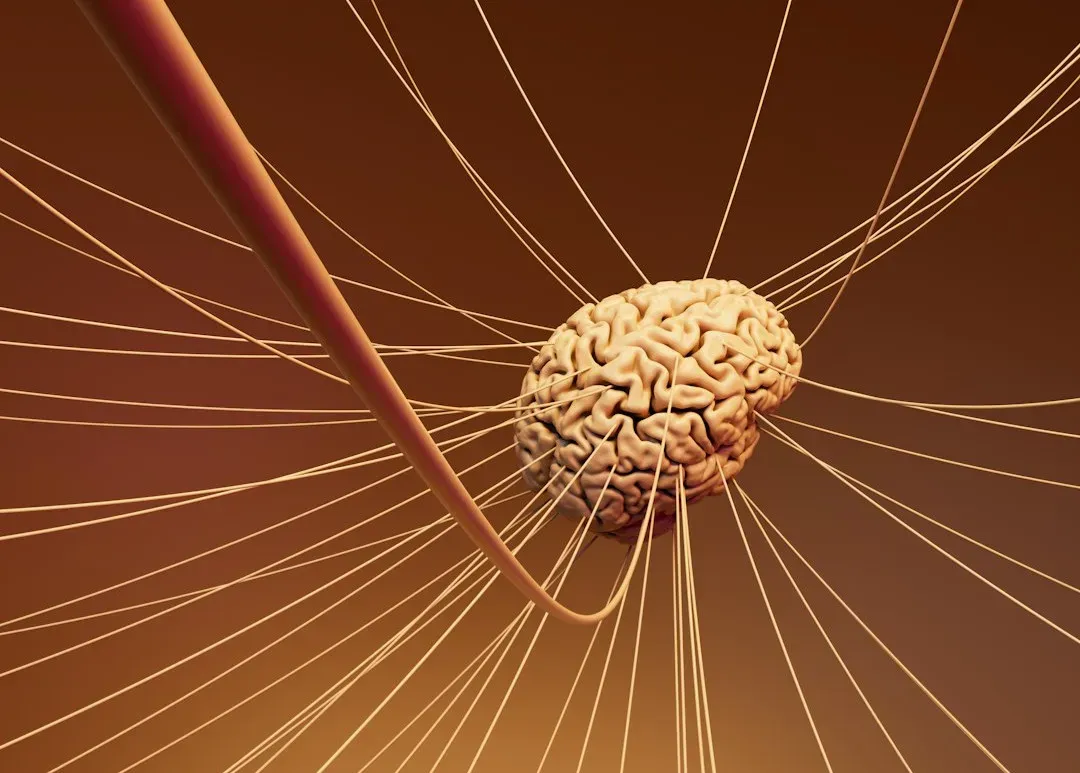
One of the boldest ideas linking consciousness and quantum physics is the proposal that the brain uses quantum processes to create awareness. A well-known hypothesis suggests that tiny structures inside neurons, called microtubules, might host delicate quantum states that flicker in and out of coherence. These quantum states could, in theory, influence how neurons fire, introducing a subtle, non-classical element into brain activity.
Critics argue that the brain is too warm and noisy for fragile quantum effects to survive long enough to matter, like trying to keep an ice cube frozen in boiling water. Supporters counter that biological systems often find clever ways to protect and use quantum phenomena, as we see in some types of photosynthesis and possibly in bird navigation. The truth is, we don’t yet know whether the brain exploits quantum states in a meaningful way, but if it does, that would make our consciousness directly entangled with the quantum fabric of reality.
Consciousness as a Fundamental Feature of the Universe

There’s another, even more radical idea on the table: maybe consciousness is not an accident or a late-stage by-product of evolution, but a basic ingredient of reality. Some philosophical views suggest that mindlike qualities might exist, in primitive form, even at the level of very simple systems. In this view, the universe isn’t a dead machine that mysteriously spits out awareness at the end; it’s more like a living process, with consciousness gradually becoming more complex as matter organizes itself.
If consciousness is in some way fundamental, then connecting it to the quantum field starts to feel less like wishful thinking and more like a natural step. The quantum field would not just be a sea of energy and probability; it might also carry the potential for awareness, which complex brains can tap into and amplify. It doesn’t mean rocks and tables have thoughts, but it hints that the roots of experience might go far deeper than our brains, down into the very fabric of the cosmos.
Quantum Biology: Nature Already Uses Quantum Tricks

One reason scientists take quantum consciousness ideas slightly more seriously today than a few decades ago is that quantum biology has shaken up old assumptions. For a long time, people thought quantum effects only mattered at very small scales and very low temperatures, like in lab experiments or near absolute zero. But evidence suggests that some biological systems use quantum coherence and tunneling at room temperature to boost efficiency, especially in processes like energy transfer during photosynthesis.
If plants and microorganisms can quietly harness quantum weirdness to survive and thrive, it suddenly feels less ridiculous to wonder if the brain might have evolved similar tricks. Our neural tissue is incredibly complex and fine-tuned, and we’re still uncovering new layers of structure and behavior. Quantum biology doesn’t prove consciousness is connected to the quantum field, but it does knock down one major objection: that living systems are simply too warm and messy for quantum effects to play any serious role.
Near-Death Experiences, Mystical States, and a Possible Quantum Connection

Beyond hard science, some of the most emotionally powerful hints of a deeper consciousness come from human experiences themselves. Near-death experiences, intense mystical states, and certain psychedelic journeys often include striking feelings of unity with everything, a sense of dissolving into a boundless presence. People describe it as if they briefly merged with something infinitely larger than their personal mind, something that feels more real than ordinary life.
Of course, the cautious explanation is that these are just unusual brain states caused by stress, chemistry, or a lack of oxygen. But it’s hard not to notice how closely the language people use echoes ideas from quantum physics: merging, oneness, interconnectedness, timelessness. While we can’t treat these experiences as scientific proof, they keep nudging us toward the question: are we glimpsing, in those altered states, a mind that’s somehow plugged into a deeper field of reality?
The Universe Observing Itself: A Cosmic Feedback Loop
There’s something almost poetic about the fact that humans, made of stardust and quantum fields, have evolved to the point where we can ask the universe what it’s made of. Some thinkers like to say that through conscious beings, the universe becomes aware of itself. If consciousness is genuinely connected to the quantum field, that statement might be more than just a metaphor; it could describe a real feedback loop between mind and cosmos.
In that loop, the quantum field gives rise to matter and energy, which eventually form brains, which in turn generate – or tune into – consciousness. That consciousness then observes, measures, and shapes reality at the quantum level, closing the circle. Whether or not this loop is literally true, it’s a powerful way to see yourself: not as a random bystander in a meaningless universe, but as an active participant in how reality unfolds, moment by moment.
The Skeptics’ Case: Why Many Scientists Remain Unconvinced
It’s important to admit that a lot of experts are deeply skeptical about linking consciousness and the quantum field. They point out that we already have strong, classical explanations for many aspects of brain function, and we don’t need quantum mechanics to describe how neurons fire. From this angle, dragging quantum ideas into the discussion can look like adding unnecessary mystery, especially when we’re still struggling to fully understand the ordinary biology of the brain.
There’s also the danger of overusing quantum language as a kind of mystical wallpaper – invoking “entanglement” or “fields” without clear, testable predictions. Serious science demands experiments, not just poetic analogies or appealing stories. So far, no experiment has definitively shown that quantum processes are necessary for consciousness, or that our minds can reach beyond the skull into some universal field. That doesn’t mean the idea is wrong, but it does mean it’s still very much in the realm of speculation and open questions.
Why the Possibility Still Matters for How We Live
Even with all the uncertainty, entertaining the idea that consciousness might be connected to the quantum field changes the mood of existence in a subtle but powerful way. If your awareness is not just a private flicker in a lonely brain, but a local expression of something woven through the universe, it can shift how you see yourself and others. The person sitting across from you, the stranger on the street, even your future self – suddenly they all feel a bit more like expressions of the same underlying field, rather than isolated strangers floating in the void.
On a more personal note, thinking this way has made it harder for me to see life as meaningless or purely mechanical. It doesn’t hand out simple answers or guarantee any particular afterlife, but it does invite a kind of quiet reverence for the fact that we’re here at all, conscious and questioning, in a universe that is far stranger than we were ever taught in school. If your mind really is, in some mysterious way, touching the quantum fabric of reality, what does that say about the choices you make with each passing moment?
Conclusion: Standing at the Edge of the Deep Unknown
Right now, the idea that sits in a fascinating middle ground: too speculative to be called established science, too intriguing to be dismissed as nonsense. We know that the quantum field underlies everything, including our brains, and we know that consciousness remains one of the deepest puzzles we’ve ever faced. Between those two facts stretches a wide, misty landscape of possibilities that we’re only beginning to explore.
Maybe future experiments will reveal that the brain really does use quantum processes in essential ways, or that awareness itself can’t be fully explained without rewriting our basic assumptions about reality. Or maybe the connection will turn out to be more poetic than literal, a powerful metaphor rather than a physical link. For now, we stand at the shoreline of the known, staring out at an ocean of mystery and asking a simple, unsettling question: if the universe is a quantum sea, what if your mind is one of its waves?