
Sometimes, when you suddenly “snap back” from a daydream or get lost staring at the night sky, there’s this strange feeling that your mind is brushing against something bigger than you. It’s unsettling and a little thrilling, like standing at the edge of an invisible cliff. For centuries, people have wondered whether that feeling is just a trick of the brain or a hint that our consciousness is somehow woven into the universe itself.
In 2026, this question is no longer just late-night philosophy. Physicists, neuroscientists, and philosophers are actively debating whether mind is more than a biological side effect. Some researchers are exploring ideas that sound almost sci‑fi: that consciousness could be tied to quantum processes, information structures, or even the basic fabric of spacetime. It’s controversial, often speculative, but also deeply human – because buried underneath all the math and brain scans is a simple question: what, exactly, are we?
The Strange Mystery At The Heart Of Consciousness

Here’s an oddly shocking fact: we still don’t know why anything feels like anything from the inside. You can map every neuron that fires when you see the color red, but that doesn’t explain why there’s an inner experience of “redness” and not just a blind processing of wavelengths. This is sometimes called the “hard problem” of consciousness – how a physical brain produces subjective experience, the raw feeling of being you.
What makes this so unsettling is that we’re used to explaining things in terms of mechanisms: engines burn fuel, phones use circuits, bodies use cells. But consciousness doesn’t neatly fit that story. You can describe brain activity until you run out of hard drive space, and you still haven’t crossed the gap into why it feels like something to be alive. That gap has pushed some scientists and philosophers to ask whether we’re looking at this from the wrong direction – maybe consciousness isn’t just something that pops out of matter, but something that belongs to the universe at a deeper level.
From Brains To Cosmos: Why Scientists Even Consider The Link
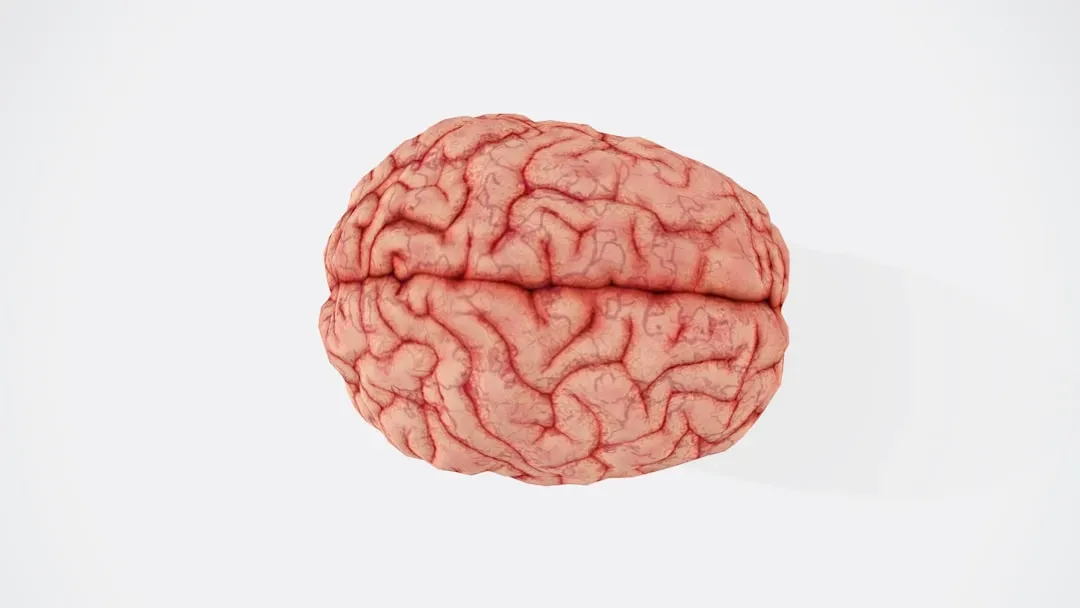
It sounds wild at first: why would anyone seriously think your private thoughts have anything to do with the universe’s fabric? The answer is that the more we’ve learned about both the brain and the cosmos, the stranger they’ve both become. Neuroscience keeps finding layers of complexity in how information flows and integrates in the brain. At the same time, physics describes a universe built from fundamental fields, quantum states, and invisible structures we never directly perceive.
Some researchers have noticed a striking parallel: both brains and the universe seem to be about patterns and information, not just matter in motion. The brain isn’t just a lump of tissue; it’s a constantly shifting network processing signals, forming memories, and predicting the future. The universe, as modern physics describes it, can also be seen as a vast informational structure, where what’s possible is written into its fabric. Once you start seeing mind and cosmos as information-rich systems, the idea that they might be more deeply connected stops sounding purely mystical and starts looking like a genuine scientific question.
Quantum Weirdness And The Temptation To Explain Mind
Quantum physics is often the first stop for people trying to link consciousness to the universe, and for good reason: quantum behavior is insanely counterintuitive. Particles seem to exist in many states at once until measured, and far‑apart objects can be mysteriously linked, influencing each other instantly. It’s no wonder some have speculated that consciousness could be related to this strange layer of reality, where the usual rules break down.
A few theories have tried to ground this in brain science, suggesting that quantum effects might occur inside neurons or in tiny structures like microtubules, and that these effects could be fundamental for conscious experience. The evidence so far is mixed and heavily debated, and many physicists think you can explain consciousness without dragging quantum mechanics into it. Still, the intuition remains powerful: if there is any part of the universe that feels like it doesn’t fit the ordinary, classical picture of cause and effect, it is both consciousness and the quantum world – and that tension keeps the discussion alive.
Panpsychism: What If Mind Is Everywhere, Not Just In Us?
One of the boldest ideas gaining attention in the last decade is something called panpsychism. In plain terms, it suggests that consciousness, or at least some sort of “proto‑experience,” might be a basic feature of reality, a bit like mass or charge. That doesn’t mean rocks think deep thoughts or your coffee mug has opinions. Instead, it proposes that the building blocks of the universe carry tiny, unimaginably simple seeds of experience that combine in complex systems like the human brain.
This idea appeals to some philosophers and scientists because it tries to dodge the hard problem: instead of asking how experience suddenly appears out of dead matter, it says experience was there all along in an ultra‑primitive form. Critics argue it’s just relabeling the mystery rather than solving it, and it’s hard to test experimentally. But it does something important: it reframes the human mind not as a freak accident in an indifferent universe, but as a sophisticated expression of something woven into reality from the start.
The Universe As Information: Are We Patterns In A Cosmic Web?
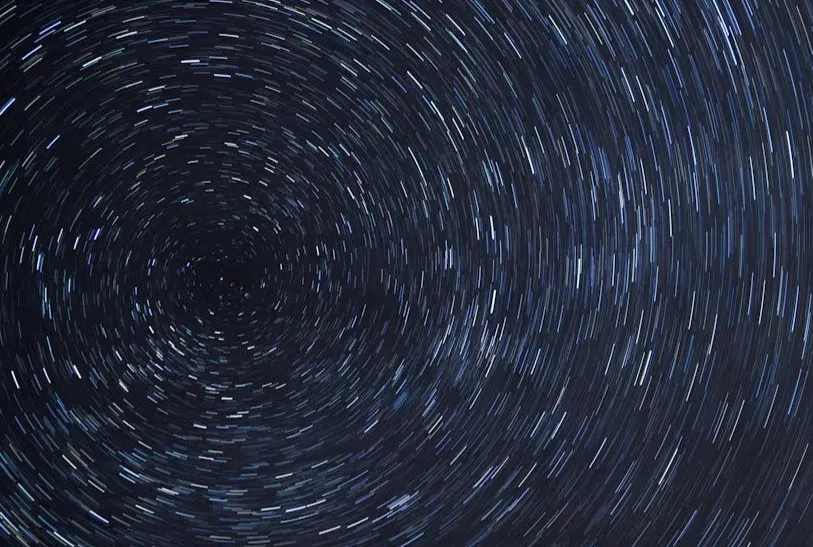
In recent decades, a lot of physics has been quietly shifting toward an information‑centric view of reality. Black hole research, for instance, suggests that information about matter falling in isn’t truly lost but encoded in some way, as if the universe keeps track of everything at a fundamental level. Some physicists argue that spacetime itself might emerge from deeper informational relationships, not the other way around.
If that’s even partly true, then consciousness starts to look less like “wet biology doing magic” and more like a particular kind of information process taking shape in a vast cosmic web. The idea isn’t that the universe is secretly a computer running a simulation, although some entertain that possibility too. It’s more that what we call reality might be best described in terms of patterns, codes, and relations. In that picture, a conscious mind could be a region where the universe is temporarily organized enough to know that it exists.
The Neuroscience Frontier: Brains As Windows, Not Origins
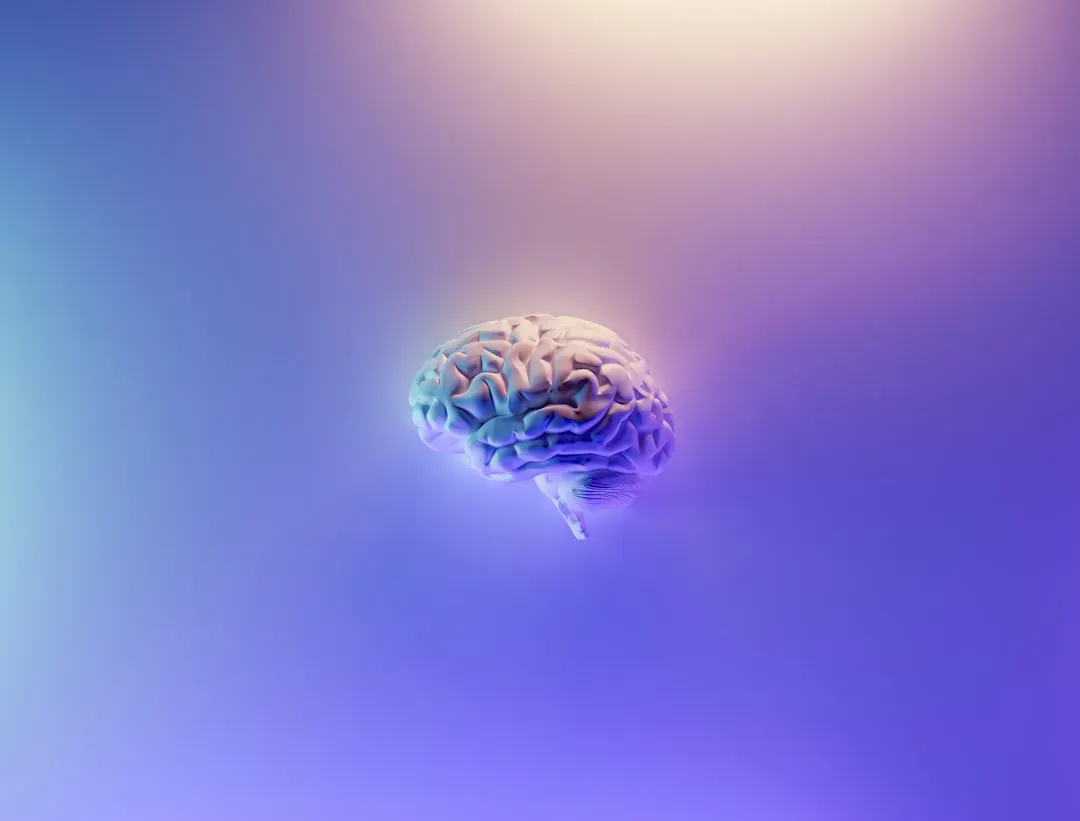
Modern brain science has done something incredible: it has shown, again and again, that our mental lives track closely with physical processes. When certain brain regions are damaged, specific aspects of consciousness change or disappear. When networks synchronize in particular ways, experiences sharpen or blur. New imaging tools let us watch brain activity shift as someone remembers, imagines, or meditates, almost like a weather radar for the storm of the mind.
At the same time, this success raises a subtle question: does the brain create consciousness from nothing, or does it tune, shape, and channel something more fundamental? Some researchers think the answer is entirely local: brain activity is enough. Others are open to the idea that the brain is like a receiver or resonator, organizing and amplifying an underlying “field” of potential experience. That view is controversial, but it fits an emotional intuition many people quietly carry – that their inner life feels both deeply personal and somehow larger than their skull.
Why This Matters For Meaning, Not Just Science

All of this might sound abstract, but it hits close to home when you ask what life is for. If consciousness is just an odd side effect of neurons firing, then the universe is mostly dead space, with brief flickers of awareness that mean nothing beyond themselves. That view can feel brutally honest but also a bit hollow, like living in a gorgeous house you’re not allowed to care about because it’s all going to collapse eventually.
If, on the other hand, consciousness is genuinely – whether through information, quantum structure, or some deeper principle – then your experience is not an accident, but a particular way the universe is showing up to itself. That doesn’t magically hand you a ready‑made purpose, but it changes the flavor of existence. You’re no longer a stranger in a meaningless cosmos; you’re a local expression of whatever this vast thing is, briefly awake and able to wonder about it.
Where We Stand Now And What Might Come Next

Right now, the honest answer is that nobody knows exactly how, or even if, consciousness connects to the universe’s foundations. Most working scientists still favor more traditional, brain‑based explanations and are rightly cautious about ideas that sound too grand or mystical. At the same time, a small but growing number of serious researchers are exploring these deeper links, developing testable models and not just armchair speculation.
In the coming years, better brain imaging, new quantum experiments, and more precise theories of information and spacetime could sharpen the picture. We may find that consciousness can be fully explained in terms of complex computation in matter – or we may uncover hints that mind and universe are entwined in ways we do not yet have the language to describe. Either way, the fact that a small, fragile creature on a small, fragile planet can even ask how its own awareness fits into the cosmos is astonishing in itself. Did you expect that?