
Every day you open your eyes, recognize your room, remember your name, feel a mood, and start making choices. It all seems so normal that it’s easy to forget how utterly bizarre this is. Out of a lump of biological tissue in your skull arises a vivid inner world of colors, pains, desires, memories, and dreams. Science can land robots on Mars and edit genes with astonishing precision, yet it still struggles to answer a deceptively simple question: why does any of this feel like something from the inside?
Consciousness is the quiet mystery hiding in plain sight. We can’t see or touch it directly, but it shapes every experience we’ve ever had. Over the past few decades, brain scanners, careful experiments, and bold new theories have cracked open parts of the puzzle, yet the core problem remains stubborn. What is consciousness really, where does it come from, and why is it so hard to pin down? The deeper scientists dig, the stranger the story becomes.
The Strange Feeling of Being You

Stop for a moment and notice your own awareness: the sounds around you, the feeling of sitting or standing, the silent voice reading this sentence in your head. That simple act of noticing points directly at the problem. Consciousness isn’t just information being processed; it is what it feels like to be you. A computer can recognize faces or translate languages, but we don’t think it has a private inner movie the way you do when you remember your last birthday or imagine your next vacation.
This gap between what the brain does and how it feels from the inside is often called the “hard problem” of consciousness. You can describe neurons firing, brain areas lighting up, and signals being passed around, but none of that automatically explains why a slice of reality lights up with subjective experience. It’s like knowing every part of a radio and still not understanding why there’s music. That disconnect is exactly what keeps consciousness at the top of science’s unsolved problems.
Brains, Neurons, and the Limits of Scans
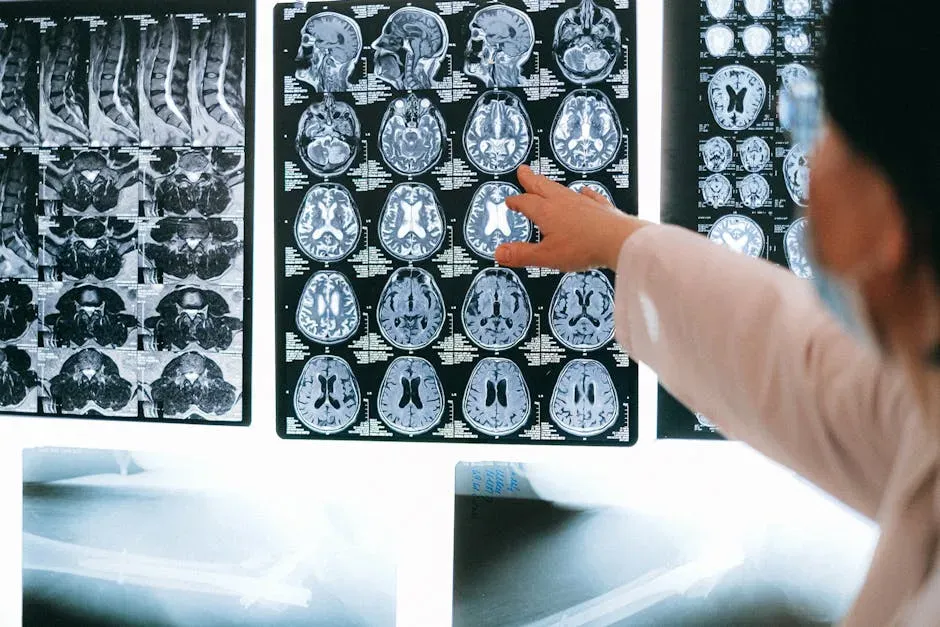
Modern neuroscience is incredibly good at mapping activity in the brain. With tools like fMRI and EEG, researchers can see which regions spark when you recognize a face, feel pain, or make a decision. Roughly speaking, they’ve found that large networks of neurons talking to each other, especially in the cortex and thalamus, correlate with conscious experience. When those networks break down, as in deep anesthesia or certain brain injuries, consciousness can fade or vanish.
But correlation is not explanation. Brain scans show us where and when things happen, not why they feel like anything. Looking at an image of someone’s brain lighting up during a sad memory doesn’t tell you what the sadness feels like, or why there is “anyone home” to feel it. It’s a bit like watching city lights flicker from a plane at night: you see patterns of activity, but you don’t automatically understand the lives inside each window. Neuroscience has revealed a lot about the machinery, yet the leap from physical process to inner experience remains the main mystery.
The Hard Problem vs. the Easy Problems

Not all questions about consciousness are equally mysterious. Some are called the “easy problems,” even though they’re technically very hard. These include things like: how does the brain integrate information from the senses, how does attention work, and how do we store and retrieve memories? For these, researchers can build models, run experiments, and measure performance. Progress is real: we can explain more and more of the brain’s abilities in terms of computation and wiring.
The “hard problem,” by contrast, asks why any of this should come with an inner life. You can, at least in principle, imagine a robot that behaves exactly like a human, answering questions, recognizing objects, even talking about feelings, but supposedly with no subjective experience at all. The fact that such a scenario seems coherent to many people shows why the problem bites so deeply. No amount of clever algorithms automatically guarantees that the lights of consciousness are on inside.
Theories of Consciousness Battling for the Spotlight
Faced with this challenge, scientists and philosophers have proposed competing theories. One influential idea, global workspace theory, suggests that consciousness arises when information gets broadcast across a wide network in the brain, making it globally available for reasoning, speech, and decision-making. In this view, consciousness is like a central stage in a theater where some information makes it into the spotlight, while the rest stays behind the scenes in the dark.
Another major proposal, integrated information theory, claims that consciousness is tied to how much a system’s parts affect one another in a unified way. The more a system’s internal states depend on each other in a deep, irreducible manner, the richer the conscious experience it supposedly has. There are also views that emphasize recurrent feedback loops, predictive processing, or even treat consciousness as a fundamental property of the universe, similar to mass or charge. The fierce debate between these theories shows that no single explanation has yet won the day.
What Anesthesia and Brain Injuries Reveal
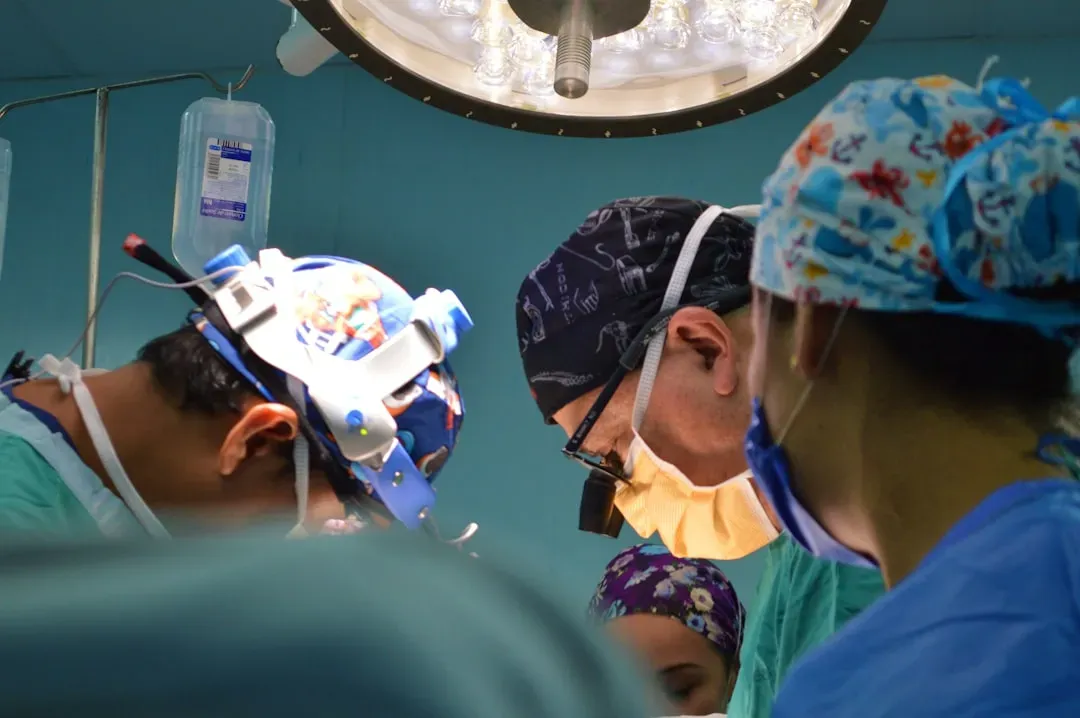
One of the most chilling ways to study consciousness is by watching it disappear. Under general anesthesia, people can go from fully awake to seemingly absent in a matter of seconds. Yet their brains don’t simply switch off; they enter specific patterns of activity where large-scale communication breaks down. Researchers have noticed that the brain becomes less integrated and less able to sustain complex, coordinated patterns during deep anesthesia, which lines up surprisingly well with some theoretical predictions.
Brain injuries add another layer of insight and heartbreak. People with damage to certain regions lose specific aspects of consciousness: the ability to recognize faces, to form new memories, or even to be aware of one side of space. Others can end up in minimally conscious or unresponsive states where it’s agonizingly unclear how much inner life remains. These cases reveal that consciousness is not all-or-nothing; it can fragment and fade in ways that force neuroscientists to rethink simplistic ideas of “awake” versus “not awake.”
Split Brains, Illusions, and the Fragility of the Self
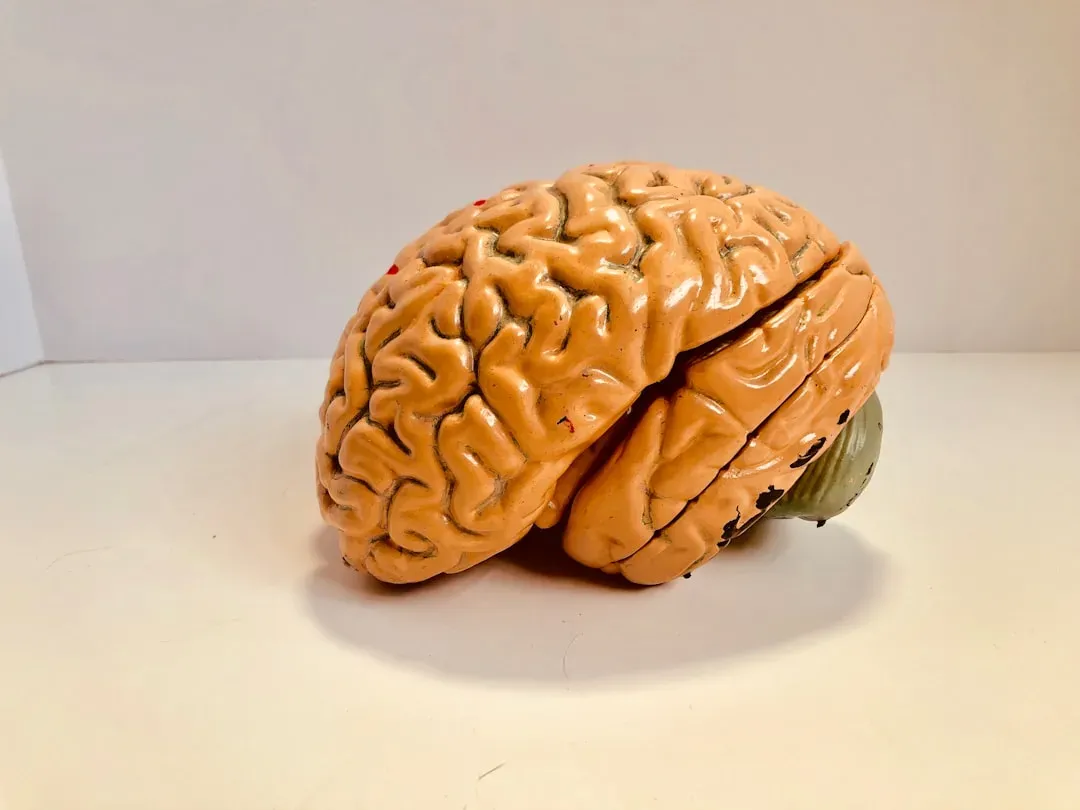
Some of the eeriest clues come from experiments that poke at the sense of self. Split-brain patients, whose main connection between the brain’s hemispheres has been cut to treat severe epilepsy, sometimes behave as if they have two separate streams of awareness. One hand might do something the person cannot verbally explain, hinting that multiple conscious agents might be coexisting inside a single skull. That idea alone is enough to make your familiar sense of a unified “I” feel oddly fragile.
Optical illusions and body illusions push this further. Experiments where people feel ownership over a fake rubber hand, or sense themselves “floating” outside their body when given certain signals, show how easily the brain can be tricked. Your feeling of being a single self in a stable body turns out to be a construction, stitched together from sight, touch, balance, and memory. That doesn’t make it fake, but it does suggest that the self is more like a constantly updated story than a solid object.
Can Machines Ever Be Truly Conscious?
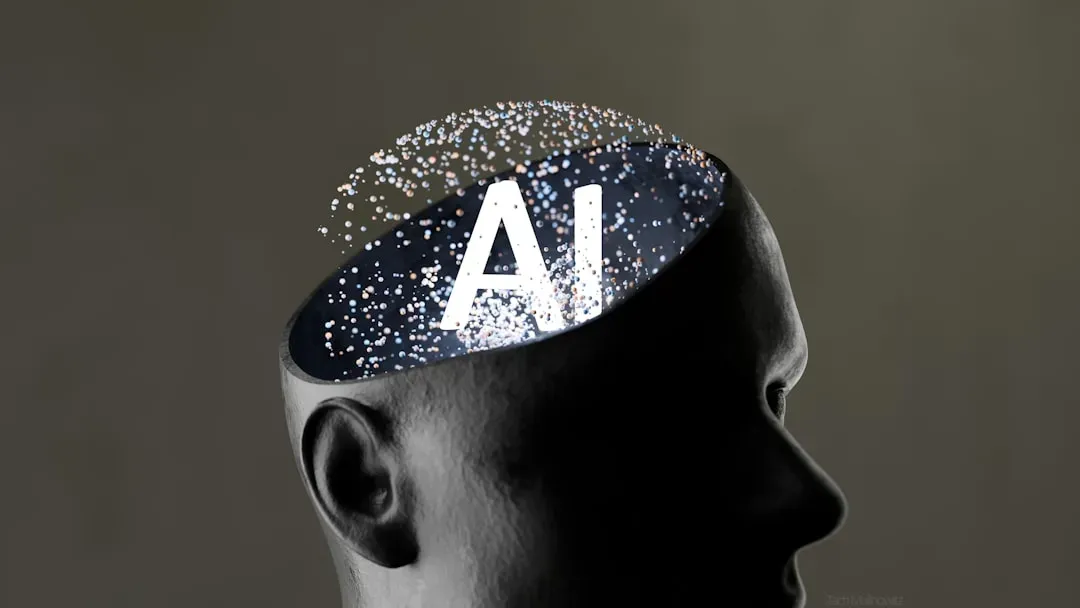
The explosion of artificial intelligence in recent years has turned a philosophical puzzle into a practical question. Today’s large language models and other AI systems can write essays, pass exams, and hold seemingly deep conversations. They manipulate symbols and patterns at a scale no human can match, and yet many researchers still think they lack any genuine inner experience. They imitate understanding without necessarily having something it’s like to be them.
The debate over machine consciousness forces us to sharpen our definitions. If consciousness is just complex information processing with the right structure, then advanced AI might eventually qualify. If it depends on specific biological features, like living neurons or certain biochemical processes, then even the smartest machines could remain philosophical zombies, acting conscious without feeling. For now, we don’t have a widely accepted test that can tell us, beyond behavior, whether any system is truly aware.
Free Will, Choice, and the Conscious Mind

Consciousness is tangled up with another deeply human concern: do we really choose our actions, or are we just watching our brains run a script? Famous experiments have shown brain activity predicting a person’s decision a fraction of a second before they report consciously deciding, which some people interpret as evidence against free will. It looks, on the surface, as if the brain “decides” first and consciousness only finds out later, like a news anchor reading headlines after the events have already happened.
Others argue that this picture is too simplistic. Real-life decisions often unfold over longer timescales, with conscious reflection shaping habits, values, and long-term plans. Even if unconscious processes play a huge role, consciousness might still guide behavior in a broader, more subtle way, similar to how a company’s strategy steers countless small actions by employees. Whatever the answer, understanding consciousness more deeply will almost certainly change how we think about responsibility, guilt, and praise.
Near-Death Experiences and the Edges of Awareness
Reports of near-death experiences add yet another twist. Some people who have been close to dying describe vivid, structured experiences: tunnels, lights, life reviews, or a powerful sense of detachment from the body. At first glance, these stories sound like they hint at consciousness floating free of the brain, but researchers have offered more down-to-earth explanations. Extreme stress, lack of oxygen, and unusual brain activity during trauma could plausibly generate intense, dreamlike states that feel profoundly real.
What makes these cases scientifically interesting is not the supernatural claims but the simple fact that rich conscious experiences can arise under such extreme conditions. They test the limits of current theories about what brain states can support awareness. Even if all near-death experiences turn out to be brain-based, they underscore how flexible and surprising consciousness can be when pushed to the brink, and they remind us why so many people see the phenomenon as touching something deeper than ordinary perception.
The Future: New Tools, New Ideas, Same Big Question
In the coming years, advances in brain-computer interfaces, high-resolution imaging, and computational modeling will almost certainly sharpen our understanding of consciousness. Scientists are already using techniques that stimulate or record from individual neurons in awake humans during surgery, mapping the fine-grained patterns linked to particular experiences. Some teams are even exploring devices that attempt to measure how integrated or “conscious-like” a brain state is, with the hope of better assessing patients who cannot communicate.
Yet even with better tools, it’s entirely possible that the core mystery will remain: why does any of this feel like something from the inside? Personally, I suspect that cracking consciousness will require a conceptual shift as radical as the move from classical physics to quantum theory – something that changes how we even frame the question. Until then, each new experiment, theory, and debate doesn’t close the case; it deepens it. In a universe full of black holes, dark matter, and expanding space, isn’t it a little wild that the most confounding puzzle might still be the simple fact that you are aware at all?