
The Elusive Alignment (Image Credits: Cdn.mos.cms.futurecdn.net)
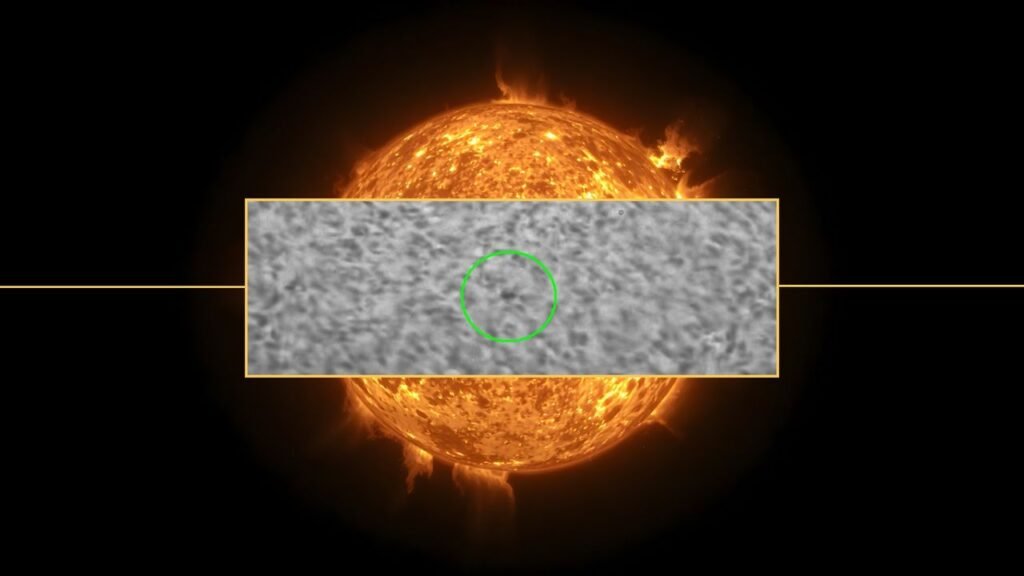
Puerto Rico – An astrophotographer’s precise timing turned a fleeting orbital event into a mesmerizing visual record of the Hubble Space Telescope’s path across the sun’s fiery disk.
The Elusive Alignment
In a split-second spectacle that lasted just one second, the Hubble Space Telescope appeared as a tiny dark speck against the blazing sun, a rare alignment visible only from specific locations on Earth. This transit occurred as Hubble orbited at about 17,500 miles per hour, making such captures extraordinarily challenging. The event highlighted the telescope’s ongoing journey in low Earth orbit, 340 miles above the planet, where it continues to deliver groundbreaking observations despite its age.
Astrophotographers worldwide chase these moments, but success demands perfect conditions and advanced equipment. The footage revealed Hubble’s silhouette in sharp detail, underscoring the precision required to document artificial satellites against celestial backdrops. Such transits remind observers of the delicate balance between human technology and the vast cosmos.
Crafting the Capture
The astrophotographer, based in Puerto Rico, employed a high-frame-rate camera to freeze the rapid motion, turning an imperceptible blink into a slow-motion revelation. Clear skies over the island provided the ideal vantage point, free from light pollution that often plagues urban stargazing. Equipment included specialized solar filters to safely view and record the sun’s intense light, preventing damage to both gear and eyes.
This feat built on decades of similar efforts, echoing a 2012 image where Hubble crossed the sun alongside Venus during a planetary transit. Yet, the recent video stood out for its clarity and brevity, compressing orbital dynamics into a digestible clip. The process involved calculating Hubble’s position using orbital data from NASA, ensuring the camera pointed exactly right at the critical moment.
Hubble’s Timeless Contributions
Launched in 1990, the Hubble Space Telescope has revolutionized astronomy with over 1.5 million observations, unveiling distant galaxies and exoplanets that reshaped our understanding of the universe. Even as newer telescopes like James Webb take the spotlight, Hubble remains operational, its instruments peering into cosmic mysteries from ultraviolet to near-infrared wavelengths. The recent transit footage served as a poignant reminder of its enduring presence in the skies.
Engineers at NASA monitor Hubble closely, adjusting its orbit to sustain functionality amid solar activity and atmospheric drag. This event drew attention to the telescope’s resilience, having survived decades in space without the repairs it once required via shuttle missions. For enthusiasts, seeing Hubble in action bridges the gap between abstract data and tangible wonder.
Insights for Aspiring Sky Watchers
Capturing satellite transits like this one requires more than luck; it demands preparation and community resources. Astrophotographers often share predictions via apps and forums, allowing coordinated efforts across time zones. The Puerto Rico video inspired a surge in online discussions, with viewers marveling at the scale of Hubble’s speed relative to the sun’s immense size.
Key techniques include:
- Using solar telescopes with hydrogen-alpha filters for safe, detailed imaging.
- Tracking satellite ephemerides through tools like Heavens-Above for precise timing.
- Employing high-speed cameras to capture events under a second long.
- Stabilizing setups on equatorial mounts to counter Earth’s rotation.
- Processing footage with software to enhance contrast and reveal fine details.
These methods democratize advanced astrophotography, encouraging hobbyists to attempt their own recordings of space hardware against natural phenomena.
Key Takeaways
- Rare transits like Hubble’s sun crossing occur predictably but require exact geographic alignment.
- High-frame-rate videography unlocks visuals of ultra-fast orbital events.
- Hubble’s legacy persists, blending engineering marvel with scientific discovery.
As Hubble continues its vigilant watch over the stars, captures like this one invite everyone to appreciate the intersection of technology and the heavens. What celestial event have you tried to photograph? Share your stories in the comments below.