
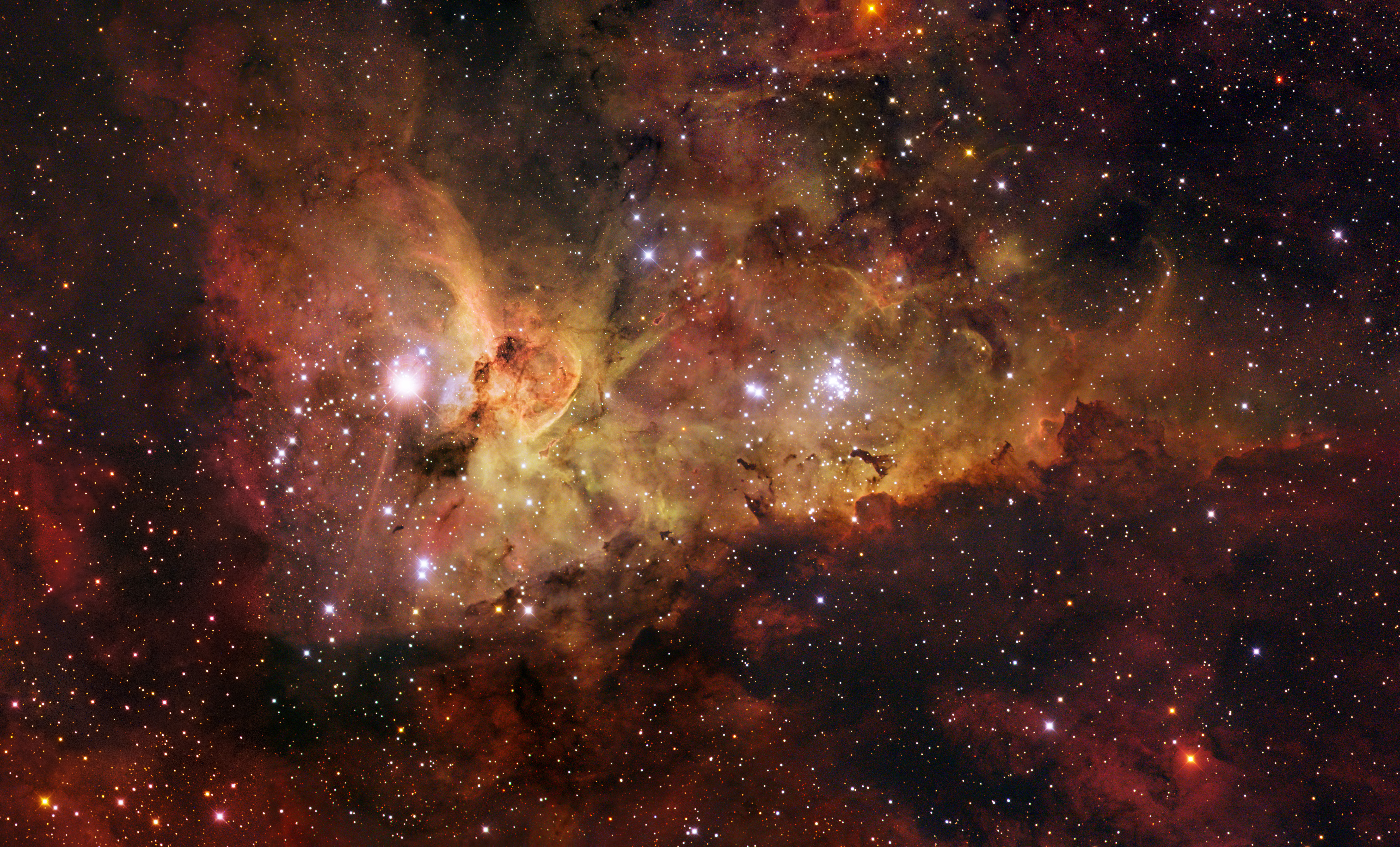
The Hidden Nursery of Scorpius (Image Credits: Upload.wikimedia.org)
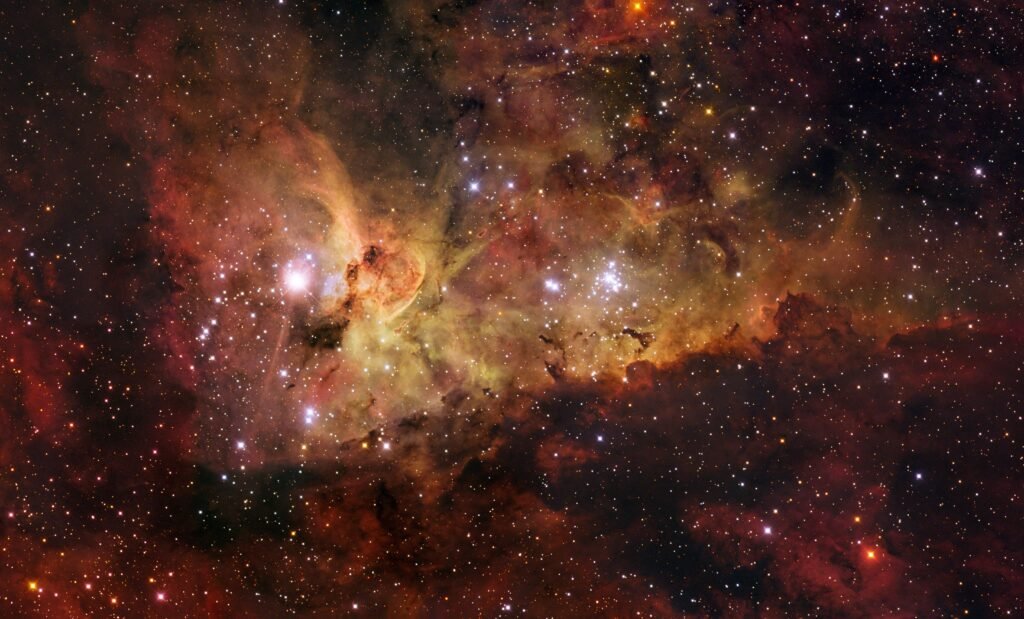
NASA’s Hubble Space Telescope recently captured a striking view of the Lupus 3 region, where swirling gases and dust conceal the dynamic process of stellar creation deep in the constellation Scorpius.
The Hidden Nursery of Scorpius
Located approximately 500 light-years from Earth, Lupus 3 forms part of a larger complex of molecular clouds in the Scorpius-Centaurus association. This star-forming area has long intrigued astronomers due to its proximity and the clues it offers about early universe conditions. Observations from ground-based telescopes had hinted at activity here, but Hubble’s advanced imaging brought unprecedented detail to light.
The constellation Scorpius, visible to southern hemisphere observers, hosts this cloud amid a backdrop of brighter stars. Lupus 3 stands out for its dense composition, which blocks much of the visible light from emerging stars. Researchers noted that the region’s structure includes elongated filaments of material, essential for triggering new stellar births. This setup mirrors other active nurseries, yet Lupus 3’s compact scale allows for clearer study of individual formation events.
Stars Emerging from Cosmic Dust
At the heart of Lupus 3, young protostars ignite amid collapsing clouds of gas and dust, marking the initial phases of stellar evolution. Bright T Tauri stars, precursors to main-sequence suns, dominate the scene with their intense radiation. These objects, still accreting material from surrounding disks, illuminate the otherwise dim environment and sculpt the cloud’s edges.
The process begins when gravitational forces pull together interstellar matter, heating it until fusion ignites. In Lupus 3, this leads to a cascade of newborn stars that heat nearby gases, creating the wispy trails observed by Hubble. Darker patches, rich in dust, absorb light and cast shadows that reveal the cloud’s three-dimensional structure. Such features highlight how star formation disrupts and reshapes the parent cloud over time.
Hubble’s Role in Unraveling the Mystery
Hubble’s observations pierced through the obscuring dust to expose infrared and optical emissions from forming stars. The telescope’s Wide Field Camera 3 gathered data over multiple wavelengths, compiling a composite image that emphasizes the region’s ethereal quality. Scientists analyzed these findings to map the distribution of young stellar objects, identifying clusters where formation rates peak.
Previous surveys, including those from the European Southern Observatory, complemented Hubble’s work by providing wider context. Together, they confirmed Lupus 3’s status as a prolific site, with dozens of embedded stars at various developmental stages. This layered approach not only refined distance measurements but also tracked outflows from protostars that carve channels through the gas.
Key Features of the Lupus 3 Landscape
The cloud’s diverse elements offer a snapshot of stellar infancy. For instance, reflection nebulae glow softly as starlight scatters off dust grains, while Herbig-Haro objects mark high-speed jets from emerging stars.
- Dark dust lanes that obscure central regions and foster isolated star formation.
- Bright clusters of T Tauri stars powering the illumination of surrounding gases.
- Filamentary structures channeling material toward dense cores.
- Outflow cavities where protostellar winds clear paths through the nebula.
- Diffuse ionized gas excited by ultraviolet radiation from hot young stars.
These components interact in a delicate balance, driving the evolution of the cloud from a quiescent state to one teeming with activity.
Key Takeaways
- Lupus 3 exemplifies how dust and gas coalesce to birth stars in nearby cosmic environments.
- Hubble’s imaging reveals hidden dynamics, aiding models of solar system origins.
- Ongoing observations could track the cloud’s transformation over decades.
As Hubble continues to peer into such stellar cradles, Lupus 3 reminds us of the universe’s ceaseless creativity, turning apparent voids into fountains of light. What aspects of star formation fascinate you most? Share your thoughts in the comments.