
A Frenzy of Formation in the Perseus Clouds (Image Credits: Cdn.mos.cms.futurecdn.net)
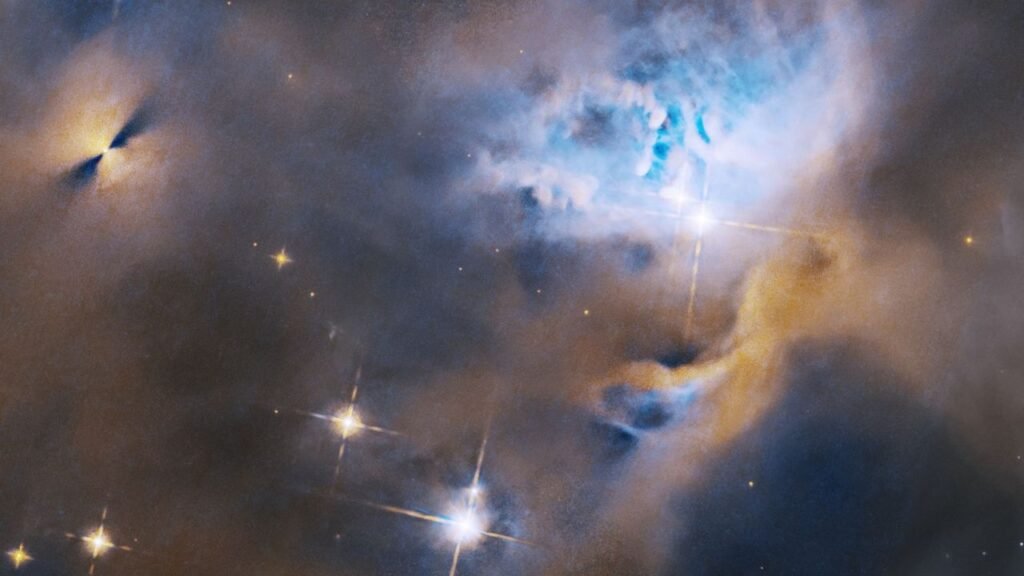
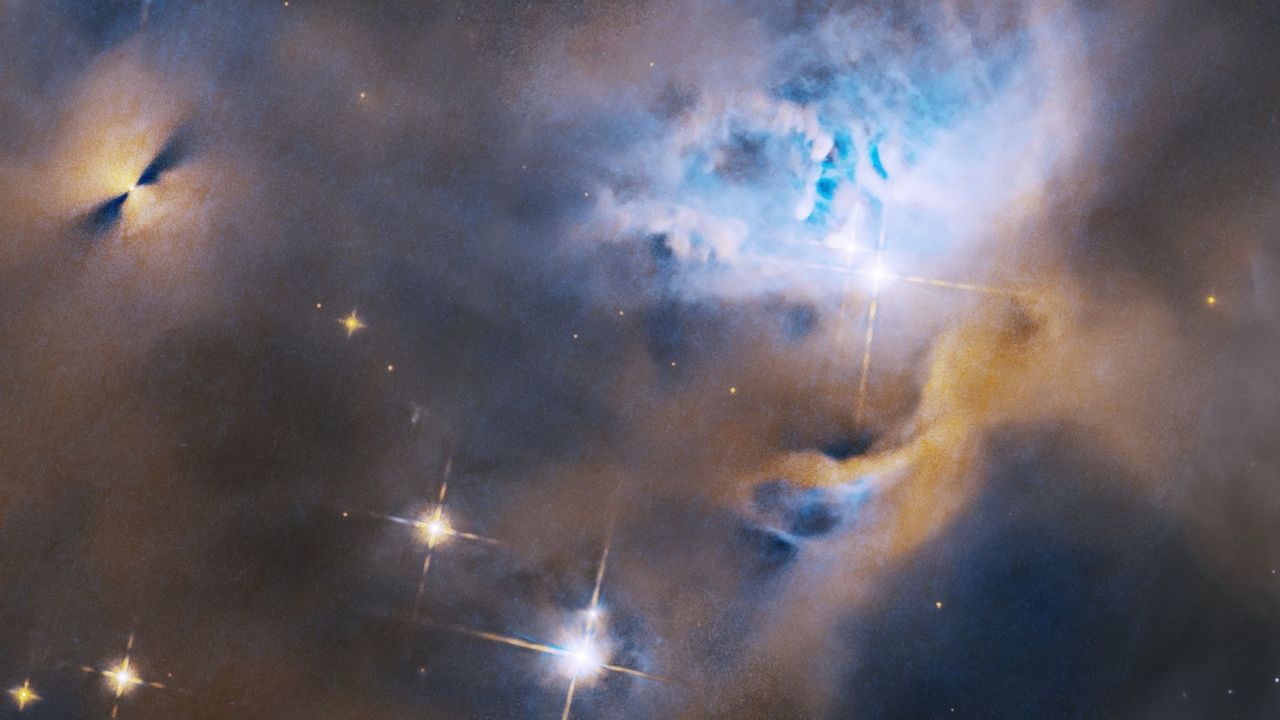
In the constellation of Perseus, roughly 1,000 light-years from Earth, the Hubble Space Telescope recently captured a vivid scene of cosmic creation unfolding within the NGC 1333 star-forming region.
A Frenzy of Formation in the Perseus Clouds
Young stars dominated the Hubble imagery, their intense radiation carving paths through surrounding dust and gas. These infant celestial bodies, still in the early stages of their lives, released powerful jets that sculpted the molecular cloud around them. Astronomers noted how the energy from these stars illuminated faint structures, revealing a bustling environment teeming with activity. The observation highlighted the raw power of star birth, where gravitational collapse triggered bursts of light and heat.
Released on January 16, 2025, this image showcased NGC 1333 as a prime example of a reflection nebula cluster. Dust particles scattered the blue light from nearby stars, creating ethereal glows that outlined the region’s complexity. Such views provided a snapshot of the universe’s ongoing renewal, where new stars emerged from collapsing clouds. The telescope’s precision allowed scientists to study these processes in unprecedented detail, offering clues about the galaxy’s future.
Protostars: Engines of Cosmic Change
At the heart of NGC 1333 lay numerous protostars, dense cores on the verge of igniting into full-fledged stars. These objects, shrouded in thick envelopes of gas, ejected material at high speeds, forming Herbig-Haro objects that appeared as bright streaks against the dark backdrop. The Hubble data revealed how these outflows influenced the surrounding environment, dispersing material and triggering further collapses nearby. Such interactions underscored the chaotic yet ordered nature of star formation.
Experts analyzed the protostars’ temperatures and masses, estimating that many would evolve into sun-like stars over millions of years. The region’s proximity to Earth made it an ideal laboratory for these studies, as the light travel time allowed observations of events from just a millennium ago. This close-up perspective helped refine models of how solar systems might begin, with disks of debris potentially coalescing into planets around these young suns.
Reflection Nebulas: Mirrors of Starlight
Scattered throughout NGC 1333, reflection nebulas reflected the glow of embedded stars, turning invisible dust into visible veils of blue. These features formed when ultraviolet light from hot, young stars bounced off microscopic grains, creating a soft illumination that outlined the nebula’s structure. The Hubble image captured dozens of these nebulas, each tied to a specific stellar source and varying in brightness based on dust density.
Astronomers used the varying intensities to map the distribution of interstellar matter, revealing lanes of denser material that shielded deeper regions from view. This scattering effect not only beautified the scene but also provided data on the composition of cosmic dust, which included silicates and carbon compounds essential for planet formation. The observations emphasized how light from baby stars transformed opaque clouds into windows on stellar evolution.
Unlocking Secrets of the Universe’s Youth
The NGC 1333 observations contributed to broader research on star-forming regions across the Milky Way. By comparing this site to distant galaxies, scientists gained insights into universal processes that have shaped the cosmos since its infancy. Hubble’s infrared capabilities pierced through obscuring dust, exposing hidden details that ground-based telescopes could not resolve. These findings supported theories on how clusters of stars form and disperse, influencing galactic structure over time.
Key features observed included:
- Over 100 young stars in various stages of development.
- Multiple protostellar jets extending up to several light-years.
- Dense cores with masses ranging from solar to several times that of the sun.
- Reflection nebulas spanning arcs of blue-hued dust.
- Evidence of triggered star formation from stellar winds.
Such data refined simulations of molecular cloud dynamics, predicting how regions like NGC 1333 evolve into mature star fields.
Key Takeaways
- NGC 1333 serves as a nearby analog for distant starburst galaxies.
- Protostellar outflows regulate the pace of star birth in clusters.
- Hubble’s images continue to advance our understanding of stellar life cycles.
Hubble’s gaze into NGC 1333 reminded observers of the universe’s relentless creativity, where each new star promised to light the way for future discoveries. As these baby stars matured, they would join the galaxy’s vast tapestry, sustaining life and exploration alike. What aspects of star formation intrigue you most? Share your thoughts in the comments.