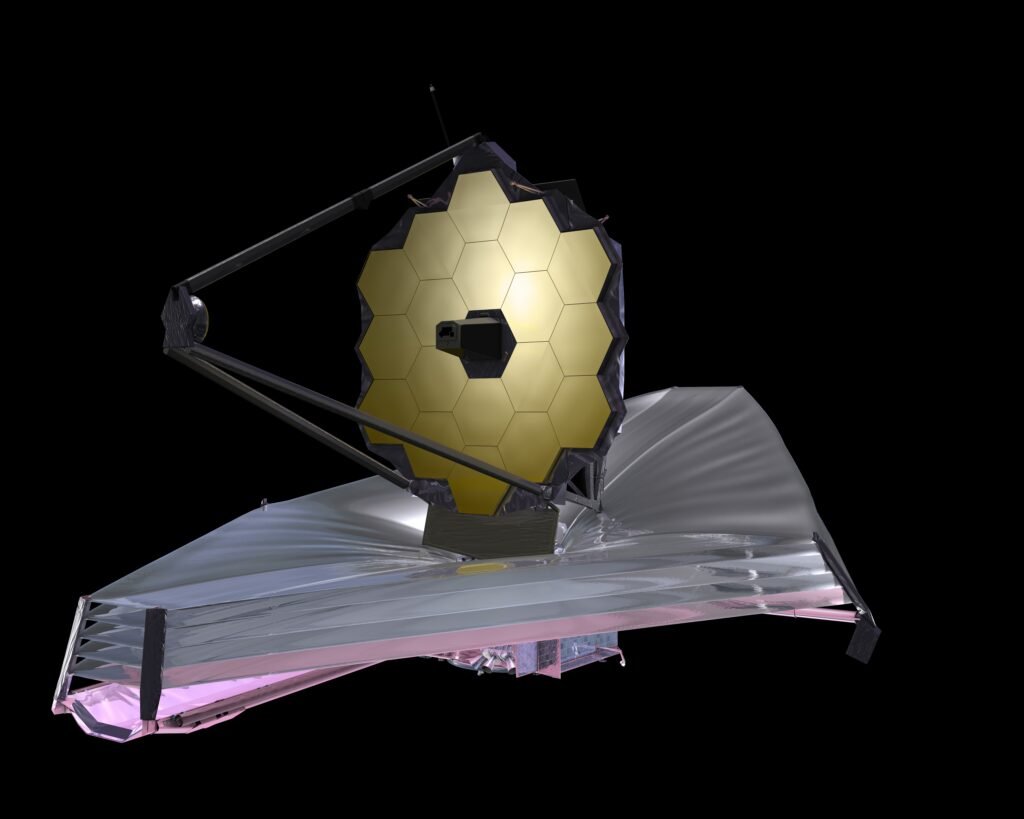

You might think you know space, that you’ve seen most of what the cosmos has to offer through decades of astronomical discoveries. However, the James Webb Space Telescope is proving just how wrong we all were about the universe’s earliest chapters. This revolutionary observatory is uncovering secrets that are forcing scientists to completely rewrite the textbooks about cosmic history.
Since its launch on December 25, 2021, Webb has been peering deeper into space and further back in time than any telescope before it. What it’s seeing is challenging everything we thought we understood about how galaxies formed, how black holes grew, and even when life might have first become possible in the universe.
The discoveries are coming thick and fast, each one more astonishing than the last. From massive galaxies that shouldn’t exist to mysterious objects that blur the line between galaxies and black holes, Webb is revealing a universe far stranger and more complex than we ever imagined. So let’s dive in and explore these groundbreaking revelations that are reshaping our understanding of existence itself.
The Discovery of JADES-GS-z14-0: Breaking All Distance Records
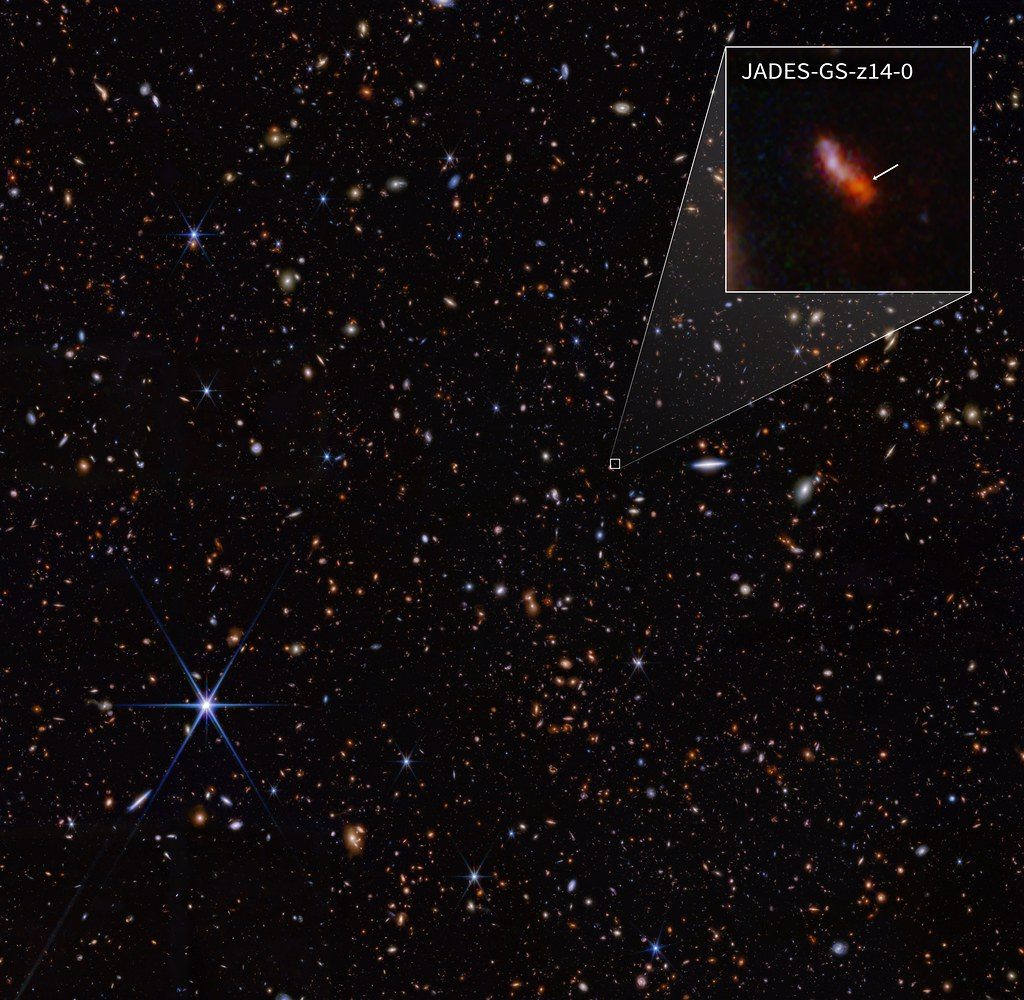
In 2024, Webb’s NIRSpec instrument captured the spectrum of a galaxy that existed only 290 million years after the Big Bang, shattering all previous distance records. This galaxy, dubbed JADES-GS-z14-0, has a redshift of 14.32, making it the most distant known galaxy in the universe.
What makes this discovery even more remarkable is that the galaxy spans over 1,600 light-years across and the light comes mostly from young stars rather than a supermassive black hole. This much starlight indicates the galaxy has a mass several hundreds of millions of times that of the Sun.
The implications are staggering. These observations tell us that JADES-GS-z14-0 is not like the types of galaxies predicted by theoretical models and computer simulations to exist in the very early universe. It forces us to reconsider how quickly massive structures could form after the Big Bang.
The Mystery of the 300 Unexplained Bright Objects
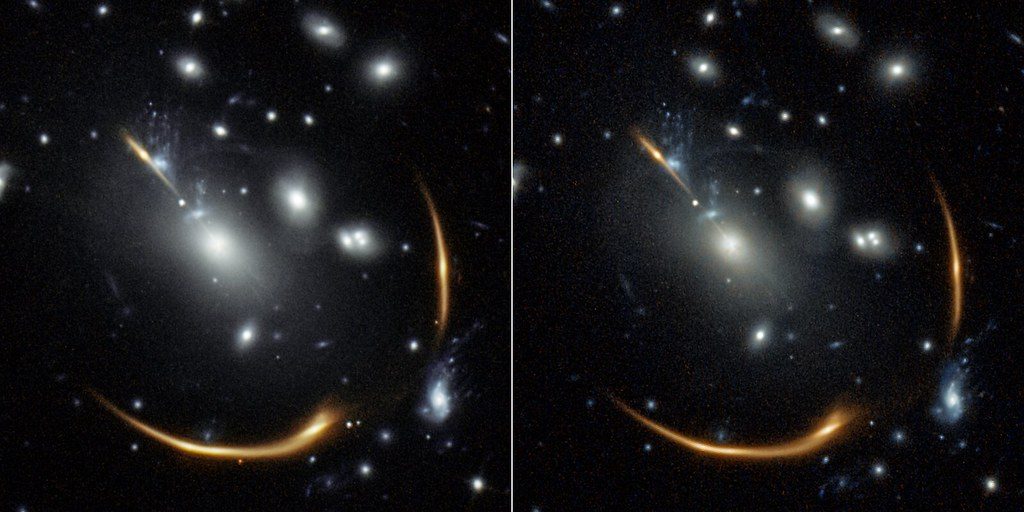
Astronomers at the University of Missouri have uncovered 300 unusually bright cosmic objects using Webb that may be some of the earliest galaxies ever formed, identified through techniques like infrared imaging and spectral analysis. These objects were much brighter than they should be according to current understanding.
The research methodology reveals fascinating insights into how we study the early universe. As light from early galaxies travels through space, it stretches into infrared wavelengths through redshift, helping scientists determine how far away galaxies are and how close they are to the beginning of the universe.
These discoveries could force scientists to completely rethink galaxy formation theories. The brightness levels observed suggest either our models are fundamentally wrong, or these objects represent an entirely new class of cosmic phenomena we’ve never encountered before.
Little Red Dots: A Universe-Breaking Discovery
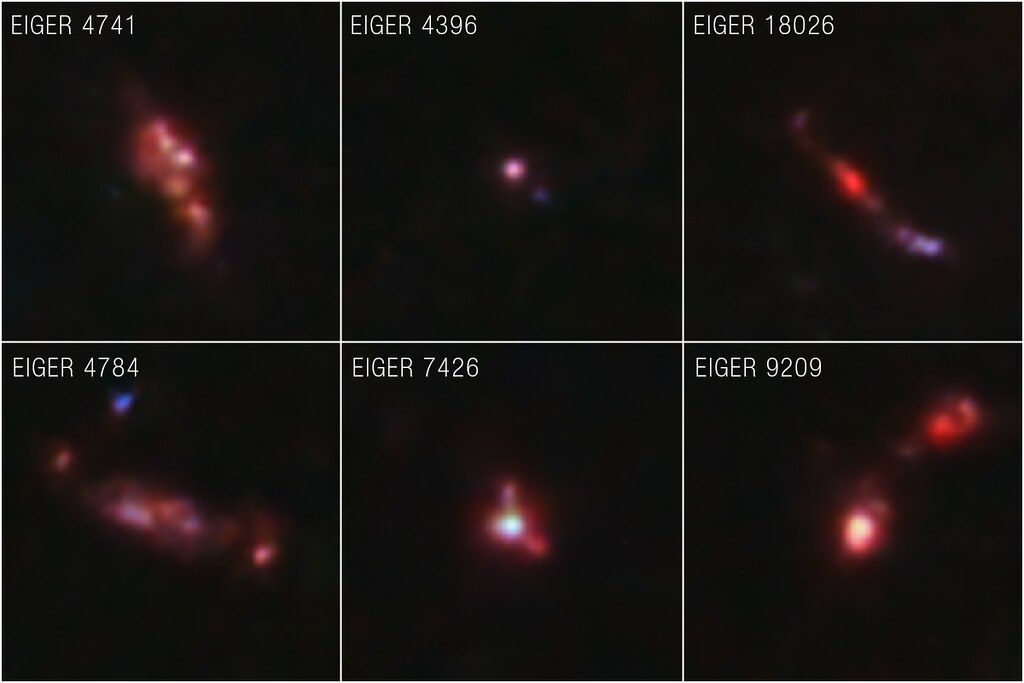
Less than six months after Webb began science operations, it revealed numerous red objects that appear small on the sky, which scientists called “little red dots” (LRDs). Researchers have compiled one of the largest samples of LRDs to date, nearly all existing during the first 1.5 billion years after the Big Bang, with a large fraction showing signs of containing growing supermassive black holes.
Scientists are confounded by this new population of objects that Webb has found, as no analogs exist at lower redshifts, which is why they weren’t seen prior to Webb. The discovery has sparked intense debate about their true nature.
When LRDs were first discovered, some suggested cosmology was “broken” because if all their light came from stars, it implied galaxies had grown impossibly big and fast, but research now supports that much of their light comes from accreting black holes rather than stars. This explanation solves the “universe-breaking problem”.
The Naked Black Hole That Rewrote History

The James Webb Space Telescope has found a lonely black hole in the early universe that’s as heavy as 50 million suns, a major discovery that confounds theories of the young cosmos. This black hole, dubbed QSO1, clashes with the old account of galaxy formation, which did not start with black holes but assumed they came only after stars gravitationally collapsed and merged, yet here stands a solitary leviathan with no parent galaxy in sight.
Follow-up studies confirmed that QSO1 contains a black hole with a mass equivalent to 50 million suns and showed unequivocally that it lacks a significant component of gas and stars, appearing as if the black hole itself is dominating the system while the wider galaxy is missing.
The discovery raises profound questions about black hole formation. The most exciting possibility dates back to Stephen Hawking’s 1971 proposal that black holes arose in the primordial soup of the Big Bang itself, which could explain how such massive objects existed so early in cosmic history.
Population III Stars: The Universe’s First Generation
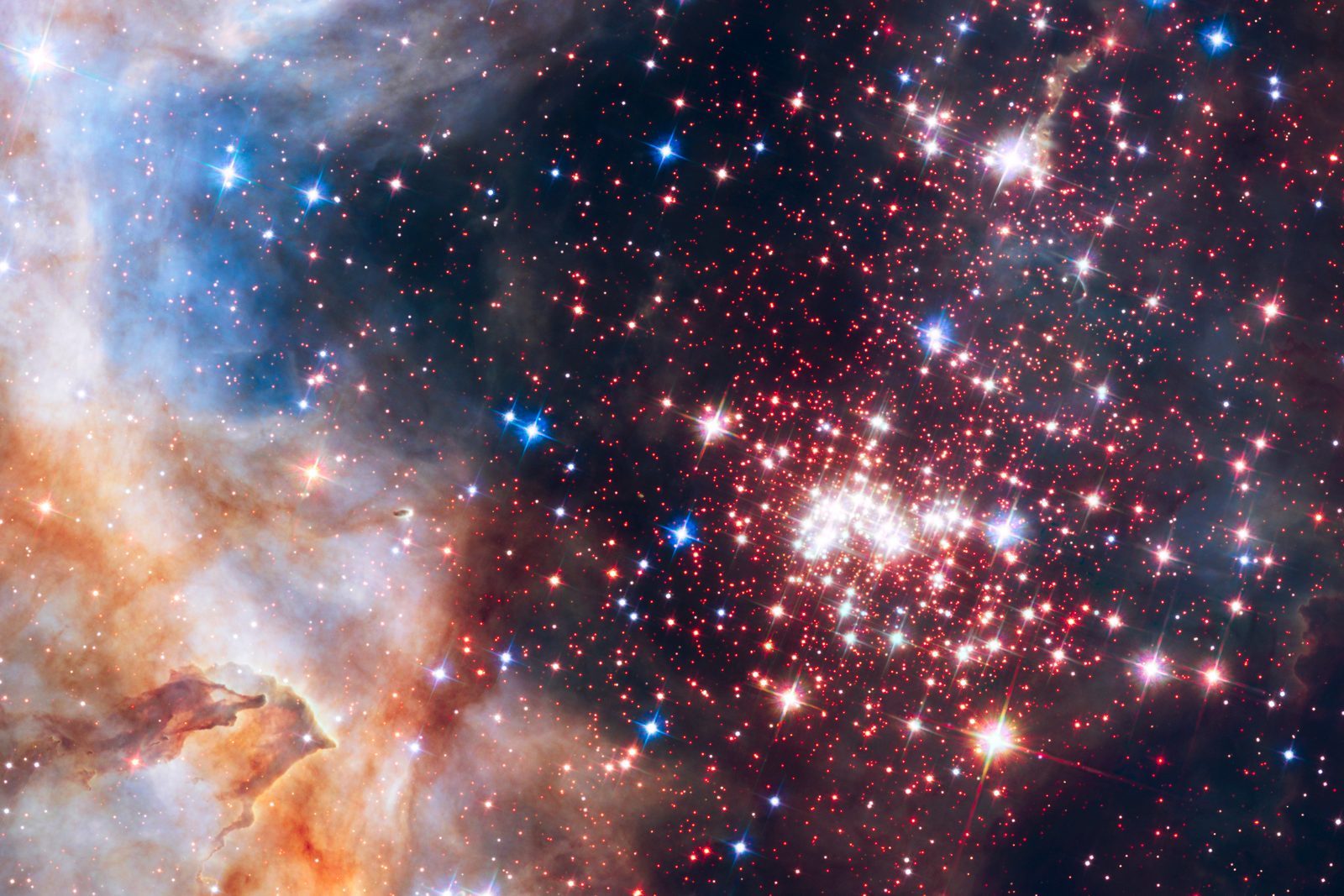
Astronomers using the James Webb telescope may have discovered some of the universe’s first stars, known as Population III stars, using gravitational lensing in a distant cluster. If confirmed, this would be the first detection of these primordial stars, requiring both Webb’s sensitivity and 100 times magnification from gravitational lensing.
The stars’ spectra showed emission lines suggesting lots of high-energy photons consistent with Population III predictions, and the spectra indicated the stars are very large, each on the order of 100 solar masses, meeting theoretical calculations.
These ancient stars are crucial because they represent the universe’s transition from darkness to light. Previous research has suggested Webb may have spotted similar stars in early galaxies formed in the universe’s first few hundred million years, indicating we’re witnessing the very beginning of stellar evolution.
The Direct Collapse Black Hole Formation
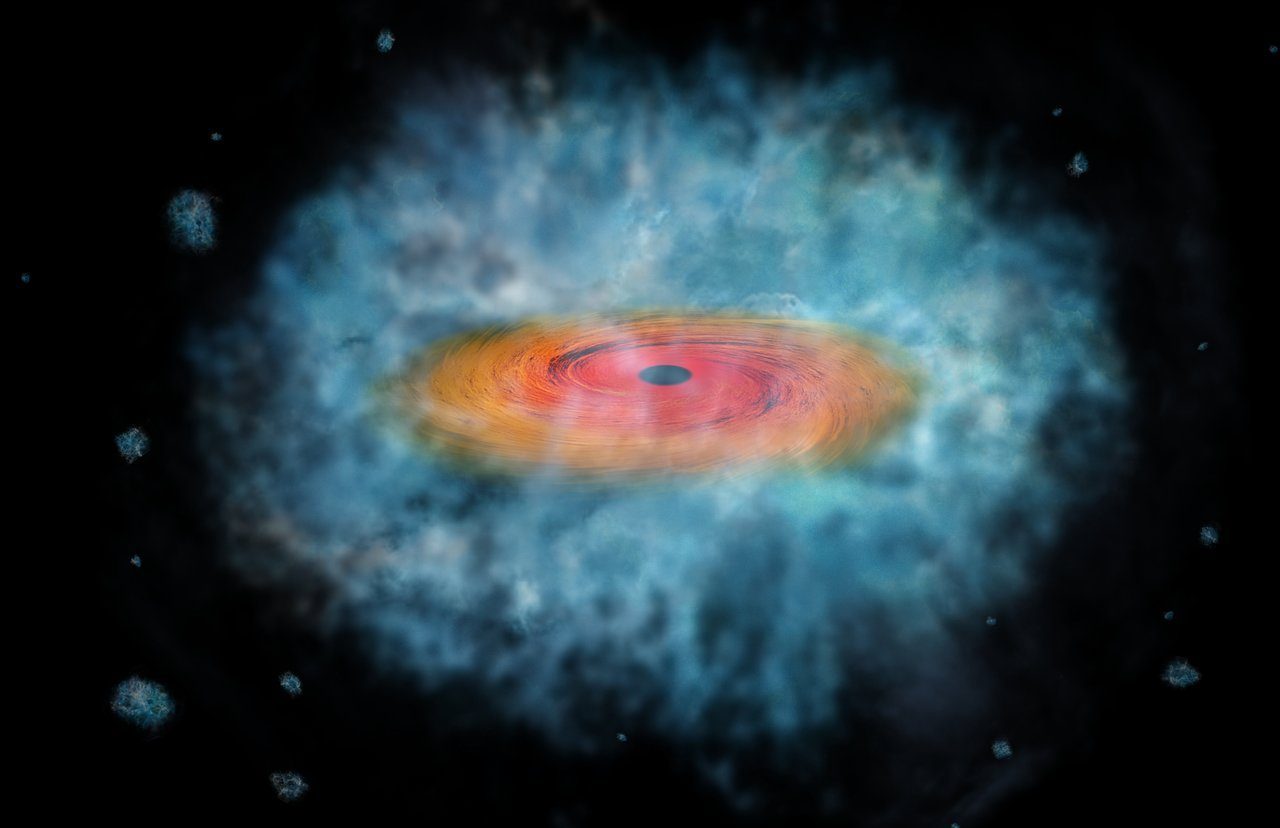
Two researchers discovered an unusual object nicknamed the Infinity Galaxy, displaying a highly unusual shape of two compact red nuclei surrounded by rings, giving it the infinity symbol shape, believed formed by the head-on collision of two disk galaxies. The galaxy hosts an active supermassive black hole unusually located between the two nuclei within a vast expanse of gas, with the team proposing it formed via direct collapse of a gas cloud.
Astronomers detected a million-solar-mass black hole embedded within a large swath of ionized gas, suggesting the black hole formed through direct collapse, a process that may explain some of the incredibly massive black holes Webb has found in the early universe.
This discovery provides crucial evidence for alternative black hole formation theories that don’t require stellar collapse. Direct collapse could explain how supermassive black holes grew so large so quickly in the early universe, solving a major cosmic puzzle.
Rapid Black Hole Growth in Infant Galaxies
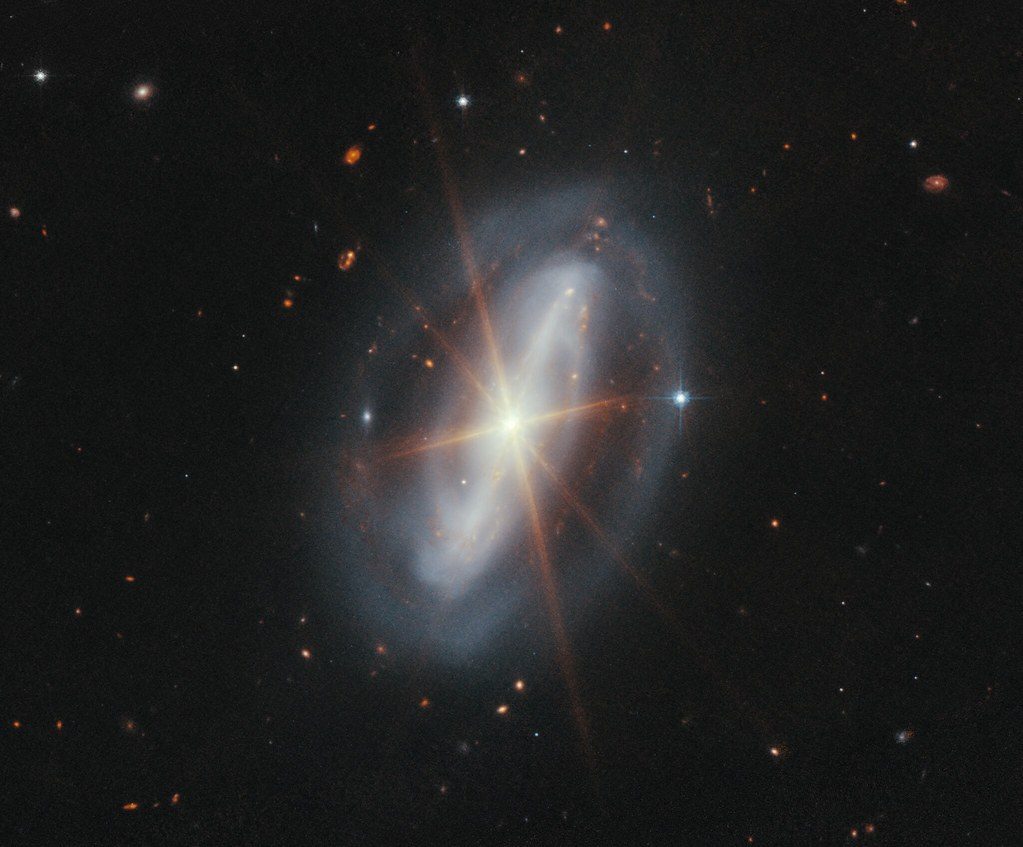
Webb has spotted a rapidly feeding supermassive black hole in galaxy CANUCS-LRD-z8.6 from less than 600 million years after the Big Bang, growing far faster than expected for such an early galaxy. Researchers confirmed an actively growing supermassive black hole within a galaxy just 570 million years after the Big Bang, challenging long-held ideas about black hole and galaxy formation.
Webb’s ability to capture precise spectral data was crucial in identifying the black hole’s properties, detecting highly ionized gas around the black hole suggesting it was feeding at an astonishing rate, with the black hole’s mass much larger than expected for a galaxy of this size and age.
This discovery challenges our understanding of black hole and galaxy formation in the early universe and opens up new avenues of research into how these objects came to be. The rapid growth rates suggest fundamentally different processes were at work in the infant cosmos.
Red Monsters: Challenging Standard Cosmology
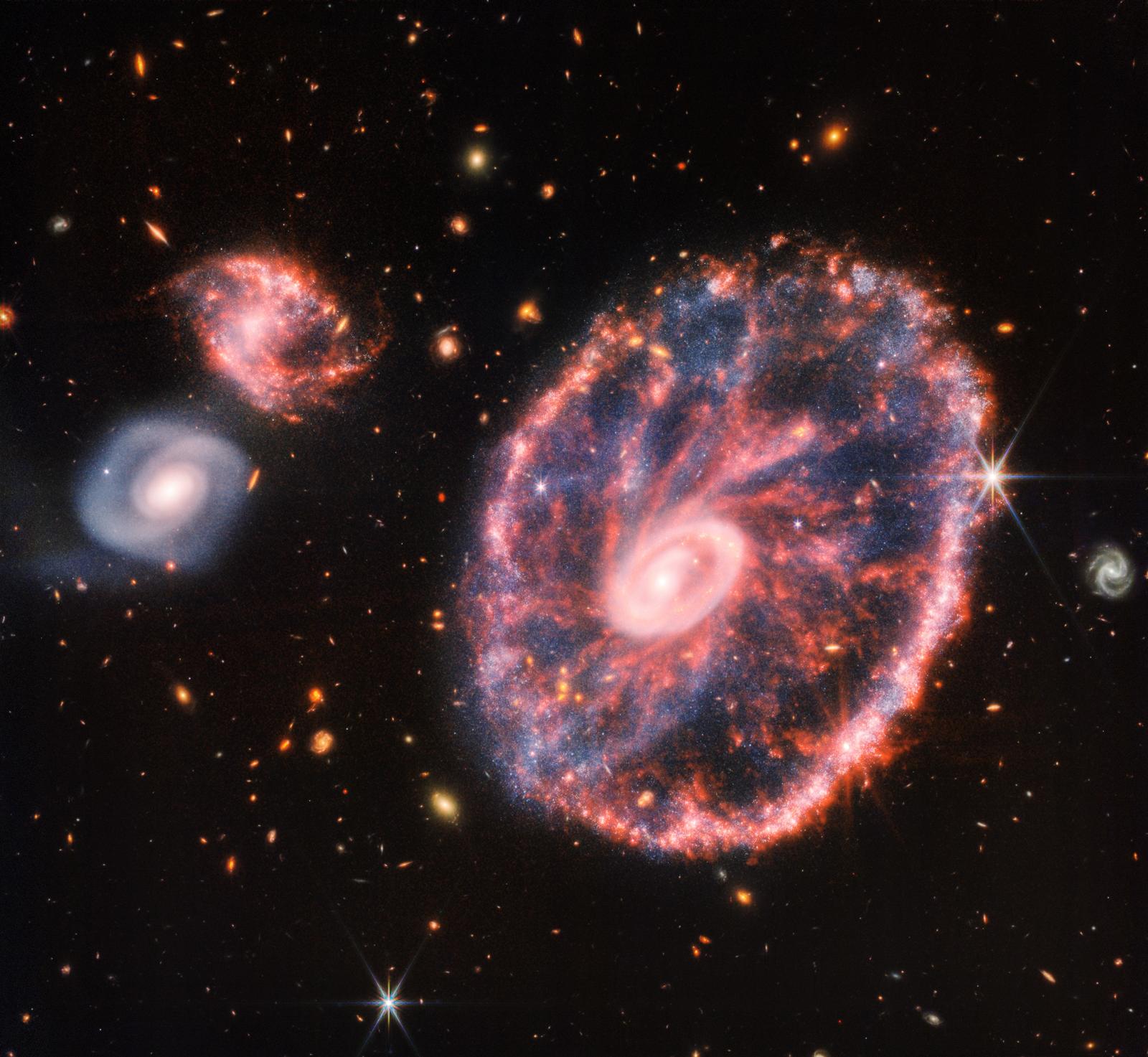
Three massive galaxies have been discovered with stellar masses comparable to today’s Milky Way, forming stars nearly twice as efficiently as their lower-mass counterparts and dubbed the “red monsters” due to their distinct red appearance from high dust content.
The findings were made possible by Webb’s powerful spectroscopic capabilities at near-infrared wavelengths, using the telescope’s primary near-infrared imager in combination with a grating-prism spectrograph to measure accurate distances and stellar masses.
These discoveries are forcing astronomers to reconsider how efficiently early galaxies could form stars. The findings are reshaping our understanding of galaxy formation in the early universe, suggesting that massive galaxies could develop much faster than previously thought possible.
The Carbon Cloud That Could Change Everything

Astronomers used Webb to find a cloud of carbon that formed surprisingly early, pushing the clock way back on when life could have first appeared in the cosmos, as the presence of large amounts of carbon suggests other key ingredients were likely floating around as well, potentially fashioning a planet before the universe was even half a billion years old.
A planet like Earth, rich enough in elements to make life possible, is typically the product of multiple generations of stellar lives and deaths spanning billions of years. This discovery suggests that the building blocks of life existed much earlier than we thought.
We don’t know yet if life existed back then, but this discovery is a major clue that it was possible. The implications for astrobiology are profound, potentially extending the window for life’s emergence by billions of years.
The Hubble Tension Confirmation
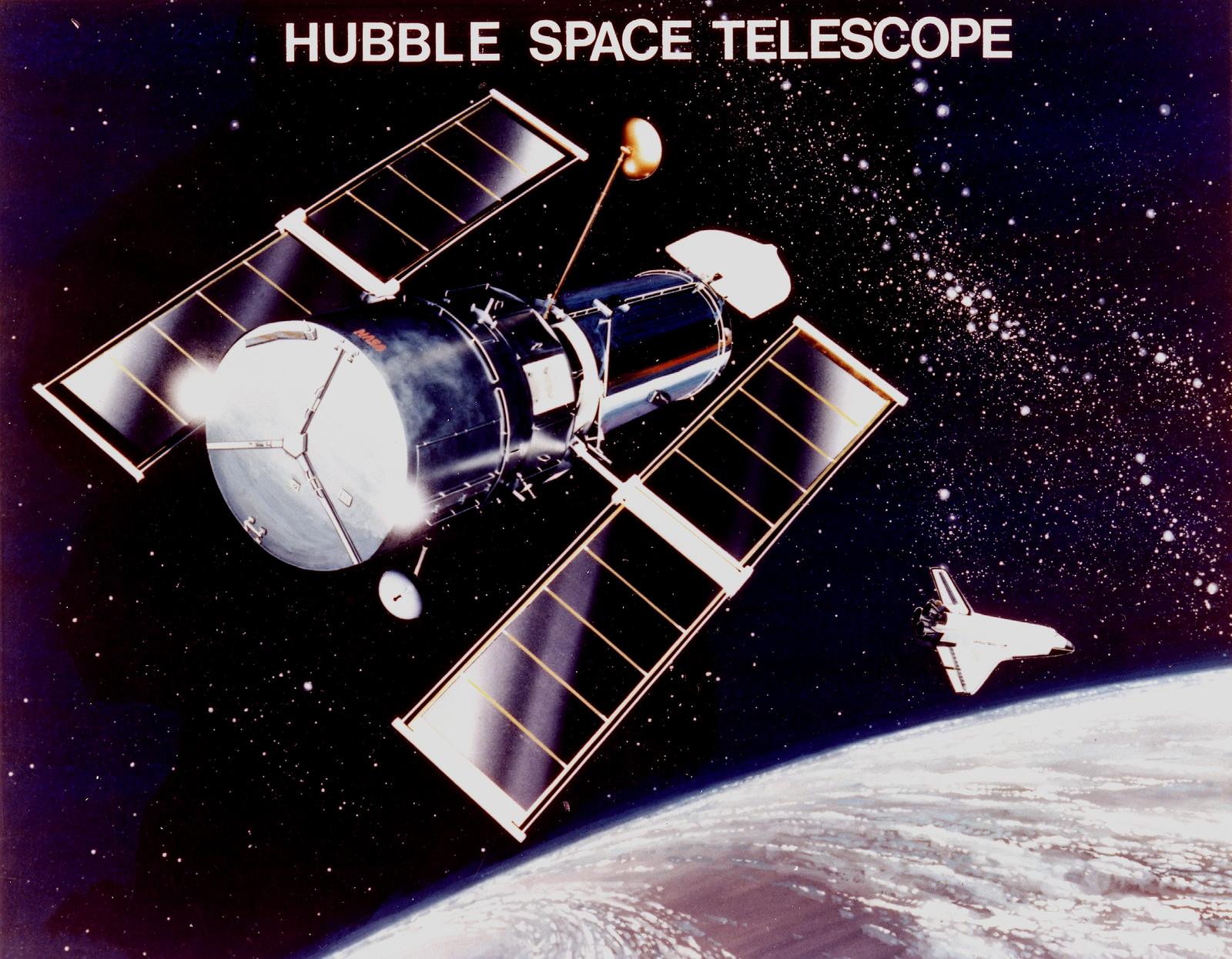
Cosmologists have been troubled by the Hubble tension, where different methods for estimating the universe’s expansion rate return slightly different numbers, with measurements from the early universe being slightly larger than those from the later universe.
Astronomers have proposed hundreds of solutions to resolve this tension, from measurement errors to rewriting our understanding of dark energy, but no commonly accepted explanation exists, and Webb has confirmed the problem persists.
This confirmation by Webb means we’re still missing something fundamental about how the universe works. The persistence of the Hubble tension suggests either our measurements are systematically flawed or our understanding of cosmic evolution needs major revision.
Conclusion: A Universe Full of Surprises
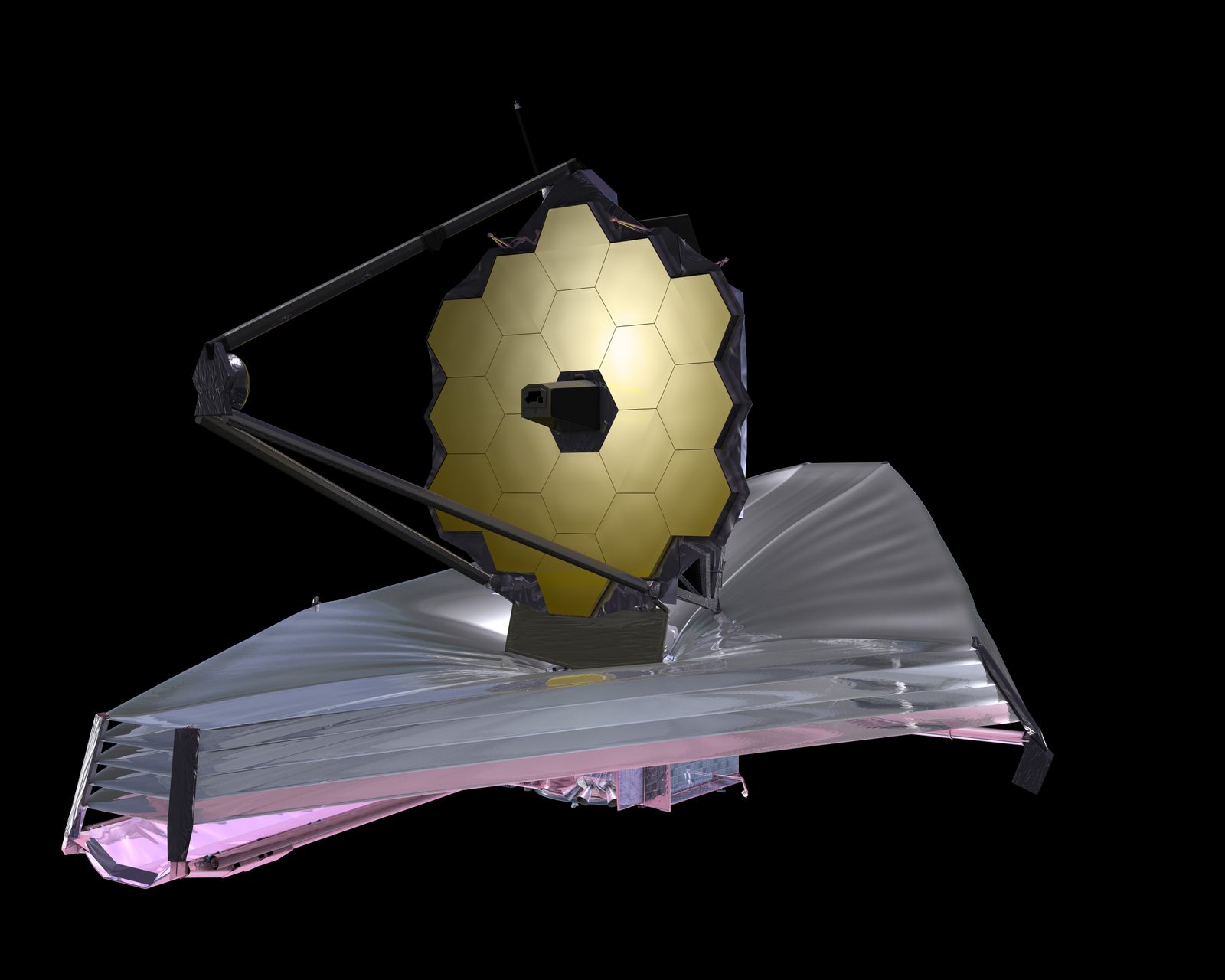
The James Webb Space Telescope has fundamentally transformed our understanding of the early universe in just a few short years of operation. From discovering galaxies that shouldn’t exist to finding black holes where we never expected them, Webb is revealing a cosmos far more complex and dynamic than we ever imagined.
These discoveries aren’t just academic curiosities. They’re forcing us to reconsider the most basic questions about existence: How did the first structures form? When could life have begun? What processes shaped the universe we see today? Each new observation from Webb seems to challenge another assumption we held about cosmic evolution.
What makes these revelations even more exciting is that we’re likely just scratching the surface. Webb is expected to continue operating for at least another decade, promising even more groundbreaking discoveries that will reshape our cosmic perspective. What do you think we’ll discover next in the hidden depths of space? Tell us in the comments.
Hi, I’m Andrew, and I come from India. Experienced content specialist with a passion for writing. My forte includes health and wellness, Travel, Animals, and Nature. A nature nomad, I am obsessed with mountains and love high-altitude trekking. I have been on several Himalayan treks in India including the Everest Base Camp in Nepal, a profound experience.