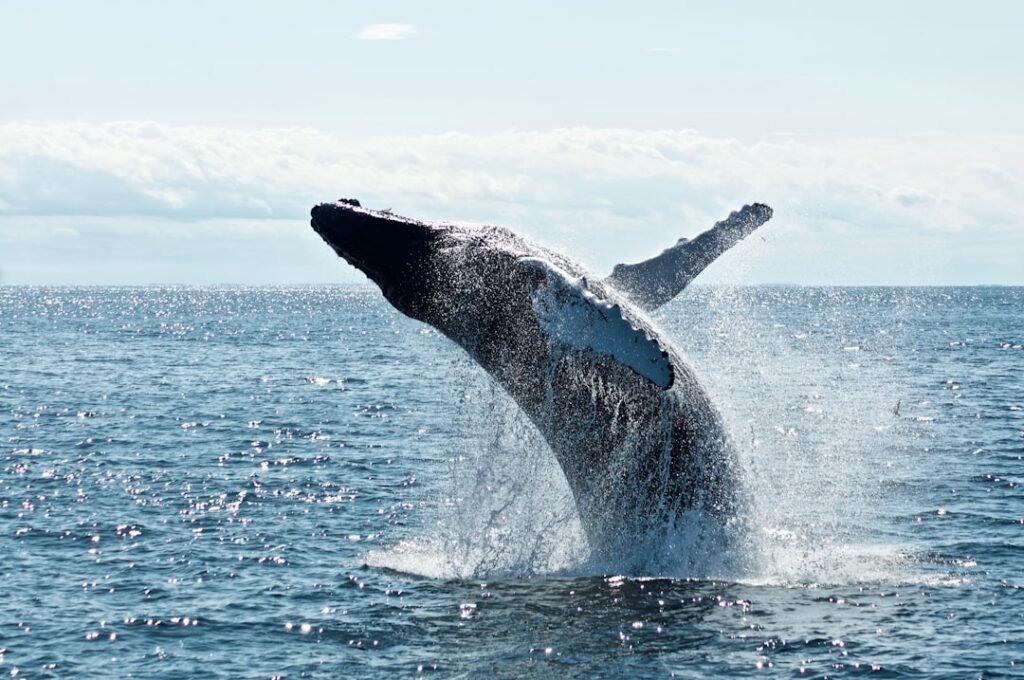

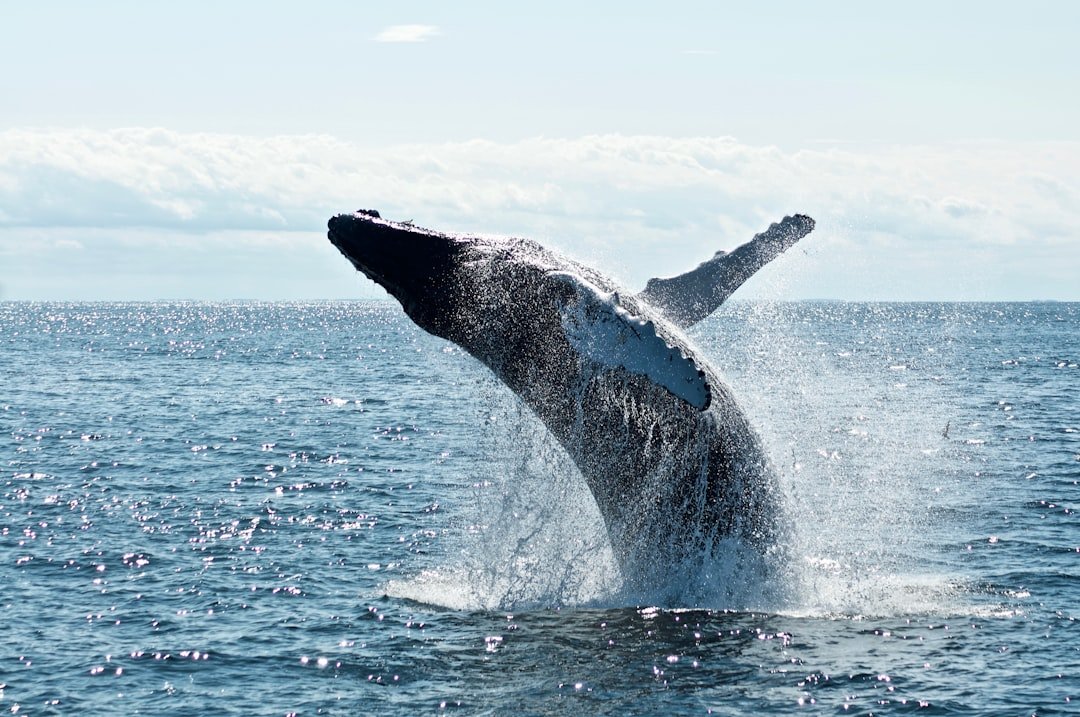
Awe-Inspiring Teamwork in the Fjords (Image Credits: Unsplash)
British Columbia – Humpback whales in the Kitimat Fjord System have transformed social bonds into a powerful tool for population rebound through a sophisticated group feeding method.
Awe-Inspiring Teamwork in the Fjords
Groups of up to 16 humpback whales gather in northern British Columbia’s Kitimat Fjord System each spring to execute bubble netting, a coordinated hunt that traps fish in rising curtains of bubbles.
Some whales circle underwater while expelling air from their blowholes; others add vocalizations to herd prey. Herring shoals become ensnared, allowing the pod to lunge upward for easy meals. Marine mammal ecologist Éadin O’Mahony of the University of St. Andrews described the sight as chillingly spectacular, one of the most incredible phenomena she has witnessed. This behavior emerged prominently after scientists began observations in 2005, in partnership with the Gitga’at First Nation.
Population Surge Tied to New Skills
Humpback numbers in the fjords climbed at 6 to 8 percent annually, surpassing 500 individuals in recent years. Bubble-net sightings rose steadily and peaked during the 2014-2016 Pacific heat wave, when scarce fish and krill demanded versatile foraging.
The technique outperformed solo lunging by accessing diverse prey. Regular groups arrived from April or May, diving in precise sequences that hinted at practiced roles. Gitga’at member Nicole Robinson, who monitored the whales for over a decade, noted these consistent “groups of regulars.”
Social Networks Reveal the Transmission
Researchers analyzed nearly 7,500 photographs spanning 20 years to chart social interactions and map the sequence of bubble-net adoption. Statistical models predicted behavior spread through specific connections.
The data pointed to a few influential whales disseminating the skill within groups. Canadian humpbacks likely acquired it from Alaskan counterparts during breeding in Hawaii, though direct sightings remain elusive. The study appeared January 21 in Proceedings of the Royal Society B.Full study here.
- Photographic tracking of individual whales over two decades.
- Social network mapping overlaid with first bubble-net observations.
- Statistical prediction of learning pathways.
- Evidence of key “teachers” accelerating adoption.
- Links to broader adaptability in changing oceans.
Lessons for Whale Conservation
Such social learning enhances resilience but introduces vulnerabilities; losing a knowledgeable whale to ship strikes could stall progress. Whale expert Vanessa Pirotta of Macquarie University, who studies Australian populations, praised the findings as evidence of adaptive feeding in flux.
Protecting sites like Kitimat, where skills propagate, emerges as a priority. The Gitga’at have sustained the ecosystem for millennia through balanced practices rooted in respect, or łoomsk in their language – for lands, waters, elders, and youth.
- Bubble netting drove a 6-8% annual population increase to over 500 whales.
- Social networks, not solo invention, spread the cooperative technique.
- Conservation must safeguard learning hubs amid environmental shifts.
Humpback recovery underscores nature’s ingenuity in social cooperation, offering a blueprint for safeguarding marine giants. What role do you see for Indigenous knowledge in ocean conservation? Share your thoughts in the comments.