Imagine being able to manipulate the very building blocks of the universe with precision and control. This is not the stuff of science fiction, but rather the exciting reality of modern scientific research. Scientists are learning to control atoms using lasers, a breakthrough that holds immense potential for technological advancement and deeper understanding of the natural world. By harnessing the power of light, researchers are opening doors to possibilities that once seemed unimaginable.
The Basics of Laser Manipulation

At the heart of this scientific marvel is the laser. Lasers are no ordinary beams of light; they are highly focused and coherent, meaning they can be directed with extreme precision. Scientists utilize these properties to interact with atoms. By adjusting the intensity and frequency of the laser, researchers can influence the behavior of atoms in remarkable ways. It’s akin to a conductor guiding an orchestra, where each atom plays its part in harmony with the others. This precision allows for the manipulation of atomic states, which is fundamental to many modern technologies.
Understanding Atomic Traps

One of the key techniques in controlling atoms with lasers is known as atomic trapping. Imagine trying to catch a fly using a beam of light—this is somewhat similar to what scientists do with atoms. By creating a potential energy well using laser light, atoms can be trapped and held in place. These traps are essential for experiments that require atoms to be stationary, such as in the study of quantum phenomena. Atomic traps allow researchers to examine the properties of atoms in a controlled environment, leading to discoveries that are fundamental to our understanding of quantum mechanics.
Cooling Atoms With Laser Light

At the core of laser manipulation is the concept of cooling atoms. When atoms are cooled, they move more slowly, which makes them easier to study and control. This is achieved through a process called laser cooling, where atoms are exposed to laser light that reduces their kinetic energy. This technique can bring atoms to temperatures near absolute zero, a state that reveals intriguing quantum behaviors. Laser cooling is not only a scientific triumph but also a testament to human ingenuity in utilizing light to unlock the mysteries of nature.
Quantum Computing: A New Frontier

The ability to control atoms with lasers is paving the way for advancements in quantum computing. Quantum computers operate on the principles of quantum mechanics, and the manipulation of individual atoms is crucial for their development. By using lasers to control atomic states, researchers can create qubits, the basic units of quantum information. This precision control could revolutionize computing by enabling calculations that would take traditional computers millennia to complete. The potential impact on industries such as cryptography, medicine, and artificial intelligence is enormous.
Exploring Quantum Entanglement

Quantum entanglement is one of the most fascinating phenomena in physics, and laser-controlled atoms are playing a vital role in exploring it. Entanglement occurs when particles become interconnected in such a way that the state of one instantly influences the state of the other, regardless of distance. By manipulating atoms with lasers, scientists can create and study entangled states with unprecedented accuracy. This research not only deepens our understanding of quantum mechanics but also has implications for quantum communication and teleportation technologies.
Advancements in Atomic Clocks
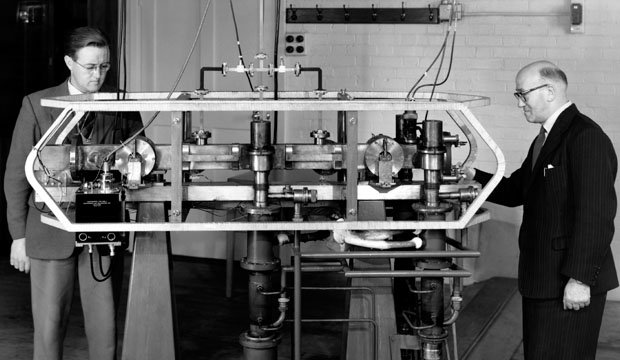
Atomic clocks, which measure time with incredible precision, are benefiting from laser manipulation techniques. By controlling atoms with lasers, scientists can reduce uncertainties in time measurement, leading to more accurate and reliable clocks. These advancements have far-reaching implications, from improving GPS technology to enhancing our understanding of the universe. Atomic clocks are a testament to how controlling atoms with lasers can lead to practical applications that touch our everyday lives.
The Role of Laser Manipulation in Medicine

Beyond physics, the control of atoms with lasers has significant implications for medicine. For example, laser manipulation techniques are being used to develop new imaging methods that provide detailed views of biological structures at the atomic level. This could lead to early detection of diseases and more targeted therapies. Additionally, the precision of laser control allows for the manipulation of biological molecules, opening doors to new treatments and medical technologies.
Environmental Monitoring and Lasers

Controlling atoms with lasers is not just confined to laboratories; it has practical applications in environmental monitoring. By using laser-based sensors, scientists can detect and analyze atmospheric gases with high precision. This technology is crucial for tracking pollution and understanding climate change. The ability to control and measure atomic interactions with lasers provides a powerful tool for protecting our planet and ensuring a sustainable future.
The Challenges Ahead

Despite the remarkable progress, controlling atoms with lasers is not without its challenges. The complexity of the techniques and the need for precision pose significant hurdles. Scientists must continually refine their methods and develop new technologies to overcome these obstacles. However, the potential rewards make it a worthy pursuit. The journey to mastering atomic control with lasers is a testament to human curiosity and the relentless pursuit of knowledge.
The Future of Laser-Controlled Atoms

The future of controlling atoms with lasers is bright and full of potential. As researchers continue to refine their techniques, new applications and discoveries are sure to emerge. The ability to manipulate atoms at such a fundamental level will undoubtedly lead to innovations that will shape the future of technology and science. Whether it’s in computing, medicine, or environmental science, the impact of laser-controlled atoms will be felt across various fields, heralding a new era of scientific exploration and technological advancement.