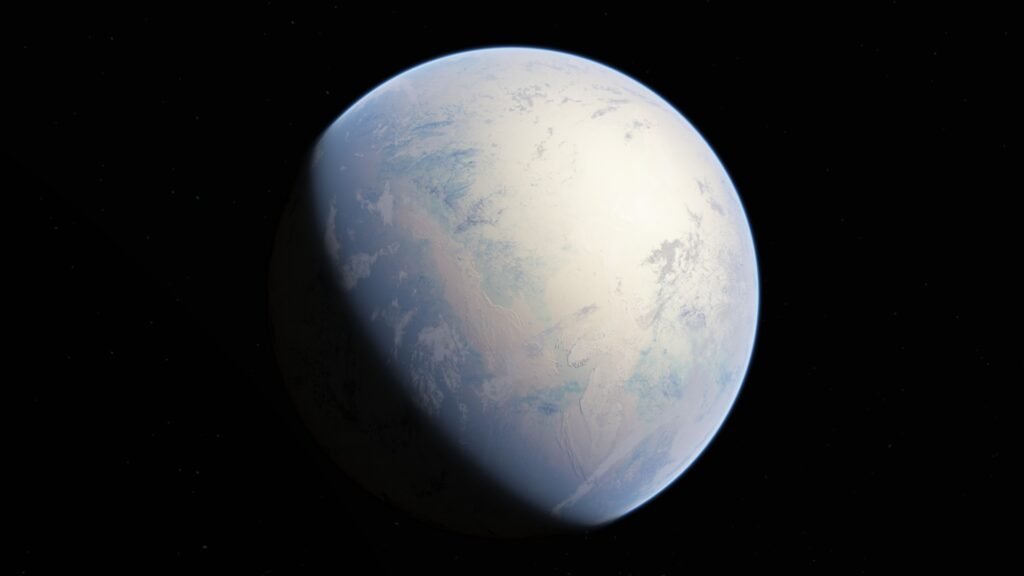

Imagine the entire planet frozen solid. Not just the poles, not just the mountain peaks, but every ocean, every shoreline, every inch of the surface locked under a thick sheet of ice. That was Earth roughly 700 million years ago, during what scientists call “Snowball Earth.” It sounds like science fiction, honestly, but the geological evidence is overwhelming.
What finally broke that freeze? For decades, researchers pointed to volcanic carbon dioxide as the escape mechanism. Now, a surprising new contender has entered the conversation, and it’s something you probably use every day at the dinner table. Let’s dive in.
The Deep Freeze That Nearly Ended Everything
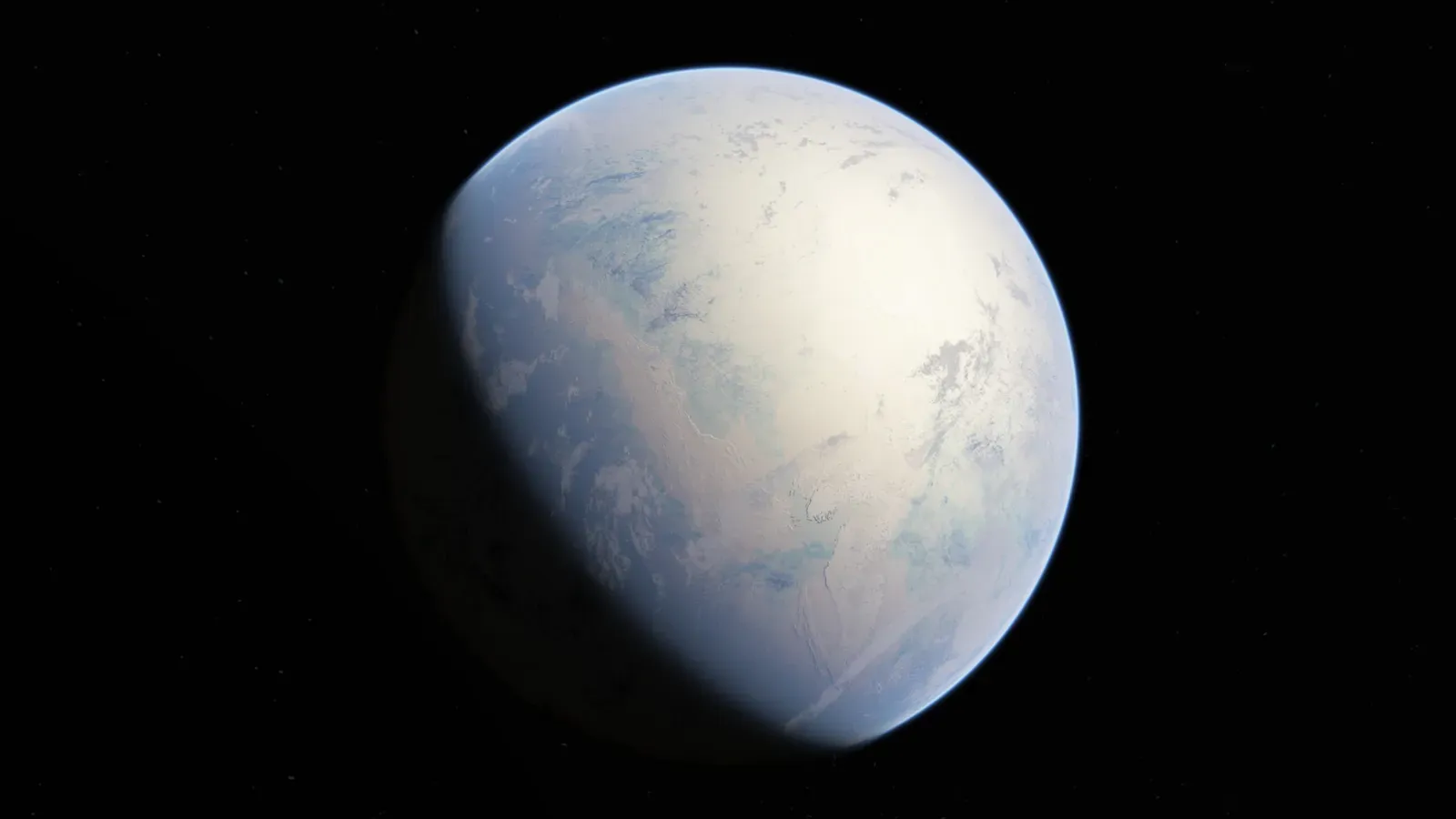
Let’s be real for a second: a planet entirely covered in ice shouldn’t be able to recover. Ice reflects sunlight, which cools the planet further, which makes more ice. It’s a runaway feedback loop with no obvious exit. Scientists have long struggled to explain how Earth broke free from this seemingly permanent deep freeze.
During the Snowball Earth episodes, global average temperatures are estimated to have plummeted far below freezing for millions of years. Life itself was squeezed into narrow refuges, possibly near hydrothermal vents or thin patches of equatorial ice. The fact that complex life eventually emerged and flourished after this period is, in my opinion, one of the most remarkable stories in Earth’s entire history.
The Old Theory: Volcanoes Did It Alone
The leading explanation for decades was volcanic activity. With the surface frozen and the typical weathering processes locked down, carbon dioxide from erupting volcanoes had nowhere to go. It built up in the atmosphere over millions of years, eventually reaching a threshold where the greenhouse effect became powerful enough to begin melting the ice.
Here’s the thing though: this explanation, while logical, has always had gaps. The amount of CO2 required to break the freeze under some models seems almost implausibly large. Researchers have continually searched for additional factors, additional triggers, that might have worked alongside volcanic gases to tip the balance. Turns out, the ocean itself may have been quietly doing some heavy lifting.
Enter Salt: The Unexpected Game Changer
New research published in 2026 suggests that salt accumulation in the oceans played a critical role in thawing Snowball Earth. As ice sheets grew and locked up enormous amounts of freshwater, the remaining liquid ocean water became increasingly salty. Salt water has a lower freezing point than fresh water, which is the same principle behind spreading road salt on an icy street.
This elevated salinity meant the deep ocean could remain liquid even under extreme cold conditions near the ice sheets. It also affected ocean circulation patterns in profound ways. Think of it like adding antifreeze to a car’s cooling system. The basic chemistry shifts, and suddenly the system behaves very differently than you’d expect.
How Salty Oceans Changed the Climate Equation
The saltier oceans created changes in density-driven circulation, the slow conveyor belt of water that moves heat around the globe. Denser, saltier water sinks differently, and this altered circulation would have redistributed heat in ways that could have destabilized the ice cover from below and from the edges. It’s subtle, but over millions of years, subtle effects compound enormously.
Researchers modeled scenarios where increasing ocean salinity interacted with volcanic CO2 buildup, and the results were striking. The combination appears to have dramatically lowered the threshold of CO2 needed to trigger a deglaciation event. In other words, salt made it easier for the volcanoes to finish the job. The two forces weren’t independent. They were partners.
What the Geological Record Actually Shows
One of the most compelling aspects of this research is how it aligns with physical evidence found in ancient rock formations. Salt deposits from this geological era, found in various locations around the world, suggest that ocean chemistry was indeed dramatically altered during these glaciations. These aren’t theoretical guesses. They’re readings from Earth’s own long-term diary.
Mineral signatures in ancient sediments also support the idea that the oceans during Snowball Earth were chemically extreme by modern standards. The concentrations of certain salts and minerals would have been far higher than anything we see in today’s oceans. Scientists are essentially reading a very old and very complicated recipe book, and they’re only now starting to understand what all the ingredients were actually doing together.
Why This Changes How We Understand Climate Tipping Points
This research matters well beyond ancient history. Understanding how multiple factors, greenhouse gases, ocean chemistry, circulation changes, interact to push a climate system past a tipping point has direct relevance to how scientists model climate today. It’s not always one single cause that drives dramatic planetary change. Often it’s a combination of pressures arriving at the right moment.
The Snowball Earth scenario is sometimes described as the most extreme climate event in Earth’s history. If salt-driven ocean changes genuinely helped trigger deglaciation, it adds an important variable to climate models that spans all geological eras. It’s a reminder that the Earth system is extraordinarily interconnected. Pull one thread, and something unexpected happens on the other side of the planet, or the other side of time.
What Comes Next in the Research
Scientists are now working to refine their models by incorporating more precise estimates of ancient ocean salinity. This requires painstaking analysis of rock cores, mineral compositions, and fluid inclusions in ancient crystals that can preserve tiny snapshots of the chemistry of vanished oceans. It’s slow, meticulous work, but incredibly rewarding when the pieces start fitting together.
Further studies are also planned to examine whether similar salt-driven dynamics might have played a role in other ancient glaciation events, not just the most famous Snowball Earth episodes. There may be a recurring pattern here, a kind of planetary mechanism that has quietly influenced multiple climate transitions throughout Earth’s four and a half billion year history. Honestly, the more we learn, the more we realize how little we understood before.
A Frozen Planet, A Salty Solution, and What It All Means
It’s genuinely humbling to think that something as ordinary as salt, the same stuff sitting in a shaker on your kitchen table, may have played a role in rescuing life on Earth from its most severe existential freeze. Science has a beautiful way of finding the extraordinary hiding inside the mundane. This discovery is a perfect example of that.
The Snowball Earth story is still being written. New evidence continues to reshape our understanding of how the planet recovered and set the stage for the explosion of complex life that followed. What’s clear is that Earth’s climate system is far more nuanced and interconnected than simple single-cause explanations can capture. Every new variable we identify reminds us to be humble about how much we still don’t know about the planet we call home.
Does it change how you think about the ordinary things around you, knowing that something as simple as salt might have once saved the entire living world? Tell us what you think in the comments.