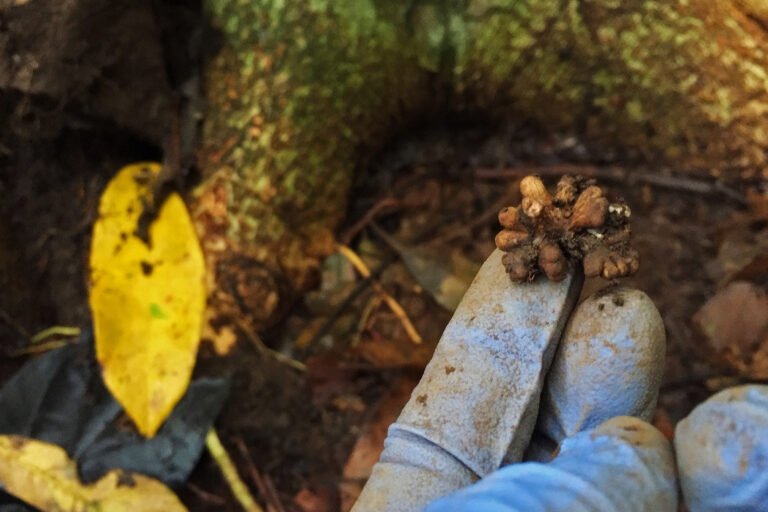
Nitrogen Emerges as Growth Game-Changer (Image Credits: Imgs.mongabay.com)
Researchers uncovered a critical nutrient gap that hampers the regrowth of tropical forests, key players in pulling carbon dioxide from the atmosphere to combat climate change.[1][2]
Nitrogen Emerges as Growth Game-Changer
Young tropical forests regrew nearly twice as fast when scientists added nitrogen to the soil, a finding that stunned the research team. In experiments, nitrogen supplementation spurred aboveground biomass accumulation by 95 percent in newly abandoned pastures and 48 percent in 10-year-old forests.[1] Phosphorus additions showed no such benefits, upending long-held assumptions about nutrient limitations in these ecosystems.
“The plots with added nitrogen looked so much bigger than the ones where we didn’t add nitrogen – the trees were just huge,” said Sarah Batterman of the Cary Institute of Ecosystem Studies.[1] This dramatic response highlighted nitrogen’s pivotal role during the critical first decade of recovery, when forests absorb carbon most rapidly. Older forests, past 30 years, displayed no growth boost from extra nitrogen, likely due to natural accumulation from nitrogen-fixing trees.
Two Decades of Field Experiments
The study drew from the world’s largest and longest-running nutrient addition trials, spanning 76 plots across Panama’s recovering forests. Teams monitored sites from newly cleared pastures to mature woodlands, applying nitrogen, phosphorus, both, or neither since as early as 1997. They censused more than 20,000 trees multiple times over two decades.[2][1]
Lead author Wenguang Tang of the University of Leeds noted the experiment’s scale provided robust evidence. Disruptions like logging, fires, and farming had depleted soil nitrogen in about half of all tropical forests worldwide. The controlled tests isolated nitrogen’s effects, revealing its dominance over phosphorus in early regrowth stages.
Carbon Sequestration Potential Skyrockets
Nitrogen shortages could prevent recovering tropical forests from capturing 470 to 840 million metric tons of CO2 annually – equivalent to removing 142 million gasoline cars from roads each year. With sufficient nitrogen, these forests might absorb an extra 820 million tons yearly for a full decade.[1] Such gains would buy precious time for global efforts to slash fossil fuel emissions.
Tropical forests already serve as vital carbon sinks, but regeneration slowdowns undermine their climate mitigation power. The research, published January 13, 2026, in Nature Communications, emphasized that faster early growth translates directly to heightened CO2 uptake without altering long-term storage capacity.[2]
| Forest Age | Biomass Increase with Nitrogen | Effect of Phosphorus |
|---|---|---|
| Newly abandoned | 95% | No effect |
| 10 years old | 48% | No effect |
| 30+ years old | None | No effect |
Smart Strategies Over Fertilizers
Scientists urged avoiding synthetic fertilizers, which prove costly, energy-intensive, and risky due to waterway pollution and nitrous oxide emissions. Instead, they advocated planting nitrogen-fixing trees, such as legumes, alongside native species in regrowing areas.
- Include nitrogen-fixers to naturally enrich soil during early recovery.
- Target restoration near farms or factories, where atmospheric nitrogen pollution aids tree growth.
- Preserve mature forests first, then optimize young ones for maximum carbon gains.
- Extend trials to African and Asian tropics to confirm patterns.
“Nitrogen is limiting how quickly young forests can regrow,” Batterman explained. “Faster growth rates mean faster absorption of carbon dioxide.”[1]
Key Takeaways
- Nitrogen drives 95% faster regrowth in new forests, doubling carbon uptake potential.
- Plant nitrogen-fixing trees to accelerate recovery without chemicals.
- Global boost could sequester 820 million tons more CO2 yearly for 10 years.
This breakthrough reframes tropical restoration as a nutrient-smart climate strategy, offering actionable paths to amplify nature’s carbon drawdown. What steps should policymakers take next to harness this discovery? Tell us in the comments.