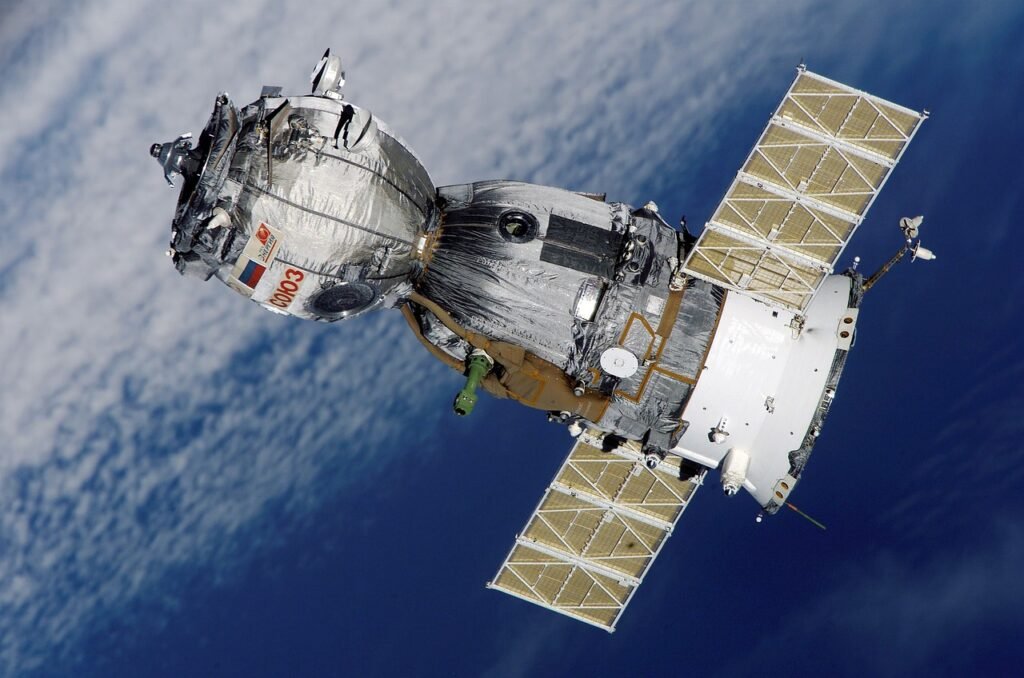


Navigating the Data Deluge from Spacecraft (Image Credits: Pixabay)
Los Angeles – In an era where spacecraft navigate vast distances and telescopes capture the universe’s deepest secrets, machine learning emerges as an essential tool for managing the overwhelming influx of cosmic data.
Navigating the Data Deluge from Spacecraft
Machine learning algorithms process telemetry data from individual spacecraft, which generate thousands of points per second. Engineers once relied on manual analysis to interpret these streams, a method that often delayed critical decisions. Now, neural networks identify anomalies in real time, alerting operators to potential issues before they escalate. This shift has streamlined operations for missions exploring distant planets and monitoring Earth’s orbit.
Consider the sheer volume: a single probe can produce gigabytes of information daily, far beyond human capacity to review manually. By training models on historical datasets, teams predict equipment failures with greater accuracy. Such advancements ensure smoother voyages, reducing downtime and extending mission lifespans. As space agencies push boundaries, these tools become indispensable for maintaining reliability amid complexity.
Transforming Satellite Imagery into Actionable Insights
Satellite images span millions of square kilometers, revealing everything from climate patterns to urban expansion. Traditional image processing required extensive human intervention, limiting the speed of discoveries. Machine learning changes this by automating feature detection, such as identifying deforestation or tracking weather systems with precision. Researchers now extract valuable patterns that inform policy and science alike.
Deep learning techniques, like convolutional neural networks, classify terrain and objects in photos faster than ever. This capability supports environmental monitoring and disaster response, where timely analysis saves lives. In astronomy, similar methods sift through telescope feeds to spot celestial events, enhancing our understanding of the stars. The result is a more responsive space sector, where data drives innovation rather than overwhelming it.
Safeguarding Orbits Through Predictive Tracking
With millions of objects circling Earth, collision risks demand vigilant oversight. Space agencies track these debris and satellites using radar and optical sensors, but the data volume challenges even the most advanced systems. Machine learning steps in by forecasting trajectories, calculating potential conjunctions with high fidelity. This predictive power has prevented numerous near-misses, preserving valuable assets in orbit.
Algorithms integrate data from ground stations and onboard sensors to model orbital paths dynamically. They account for variables like atmospheric drag and gravitational influences, refining predictions over time. International collaborations benefit from shared ML models, fostering safer space environments. As satellite constellations grow, these technologies will play a pivotal role in avoiding the Kessler syndrome, where cascading collisions could clutter low Earth orbit.
Advancing Astronomy with Intelligent Analysis
Astronomers face petabytes of data from observatories like the James Webb Space Telescope, where manual sifting proves inefficient. Machine learning accelerates the classification of stars, galaxies, and exoplanets by learning from vast spectral libraries. This automation uncovers hidden patterns, such as unusual stellar behaviors, that might otherwise go unnoticed. Recent workshops, like those at ICML conferences, highlight how these methods propel astrophysical research forward.
In space domain awareness, ML aids in predicting resident space object movements, crucial for military and civilian operations. Tools developed by organizations like RAND demonstrate feasibility in trajectory forecasting, blending AI with traditional physics models. Such integrations enhance security while supporting scientific endeavors. Ultimately, these applications bridge operations and discovery, making the cosmos more accessible.
Key Takeaways
- Machine learning handles massive telemetry and imagery data, enabling real-time decisions in space missions.
- Predictive tracking prevents orbital collisions, ensuring safer navigation for satellites and debris.
- In astronomy, AI classifies celestial objects swiftly, revealing insights into the universe’s structure.
Machine learning stands as the unsung hero of modern space endeavors, quietly enabling feats that once seemed impossible. As we look to future explorations, its role will only expand, promising safer orbits and richer astronomical knowledge. What innovations in space technology excite you most? Share your thoughts in the comments below.