
You’ve probably looked up at the night sky and wondered what lies beyond those glimmering dots of light. The question gnaws at you, doesn’t it? Is space endless, stretching on forever like some cosmic highway with no final exit sign? Or does it eventually stop somewhere, hitting a boundary we can’t see or understand?
Honestly, it’s one of those questions that’s kept scientists, philosophers, and curious minds up at night for centuries. We’re living in 2025, and despite all our technology and brilliant telescopes, we still can’t give you a simple yes or no answer. The truth is much stranger and more fascinating than you might expect. Let’s be real, the universe doesn’t make things easy for us.
What Your Eyes Can Actually See
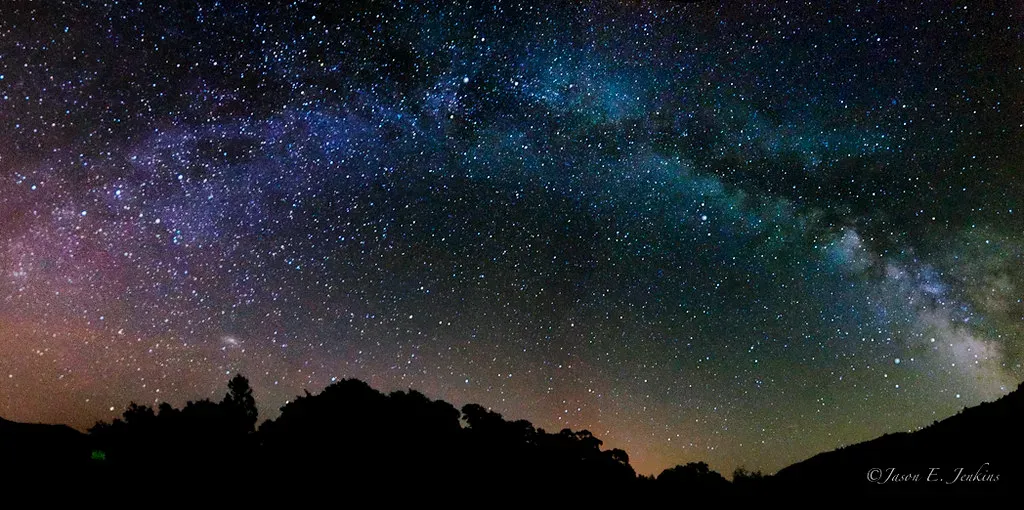
The observable universe extends approximately 46.5 billion light-years from Earth in every direction, even though the universe itself is only 13.8 billion years old. Confusing, right? Think of it like this: imagine you’re watching a train pull away from a station, but the tracks themselves are also stretching and moving. The light from distant galaxies has been traveling toward you for billions of years, but during that journey, space itself has been expanding.
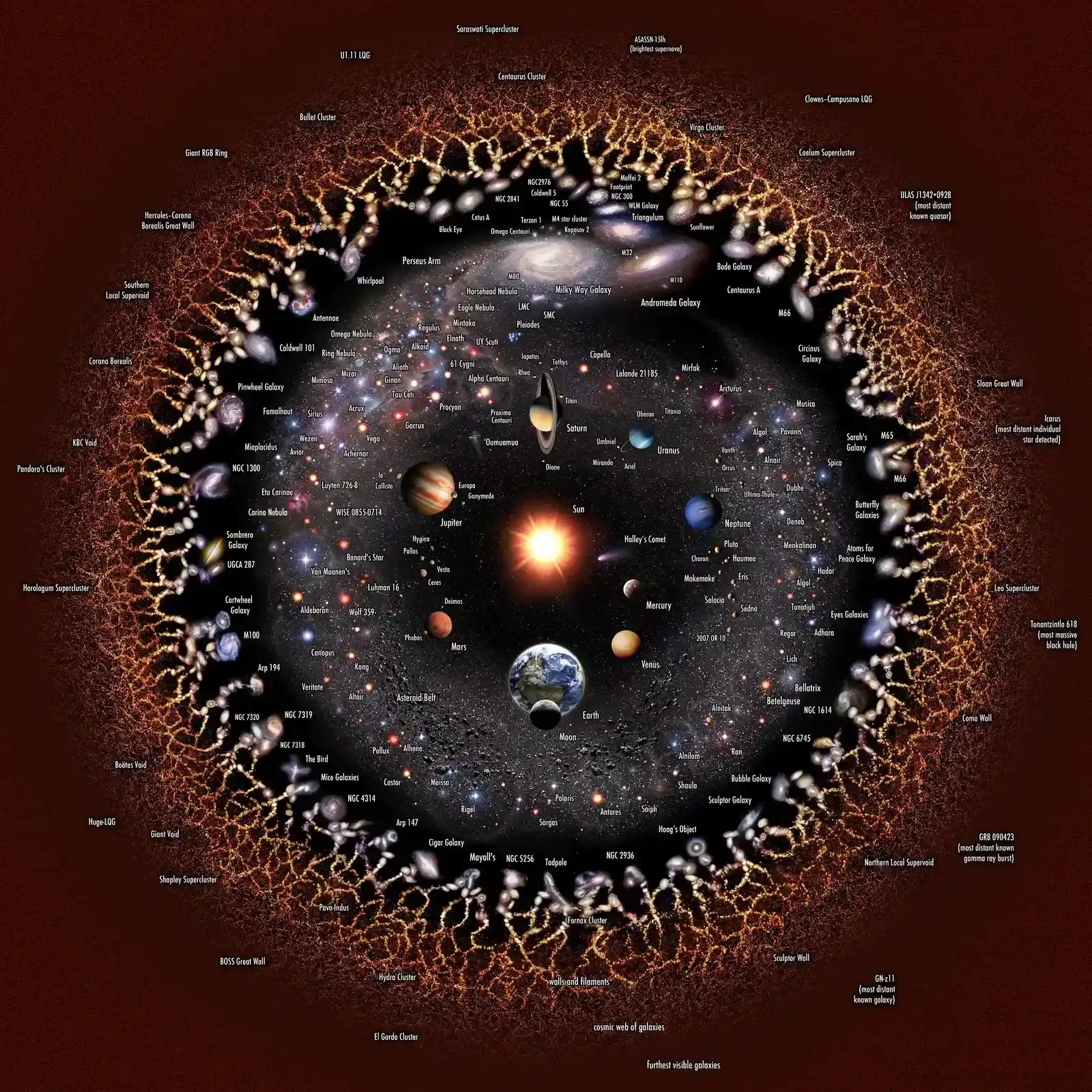
There’s a spherical boundary about 13.8 billion light-years away called the cosmic event horizon, beyond which nothing can be seen even in principle. That’s your cosmic bubble, and everything you could ever possibly observe sits inside it. The speed of light, even in an expanding universe governed by general relativity, only allows signals to travel so far over the universe’s 13.8 billion year history.
Yet here’s where things get wild. No evidence exists to suggest that the boundary of the observable universe constitutes a boundary on the universe as a whole. What you can see is just a tiny slice of what might actually be out there.
When Space Runs Faster Than Light
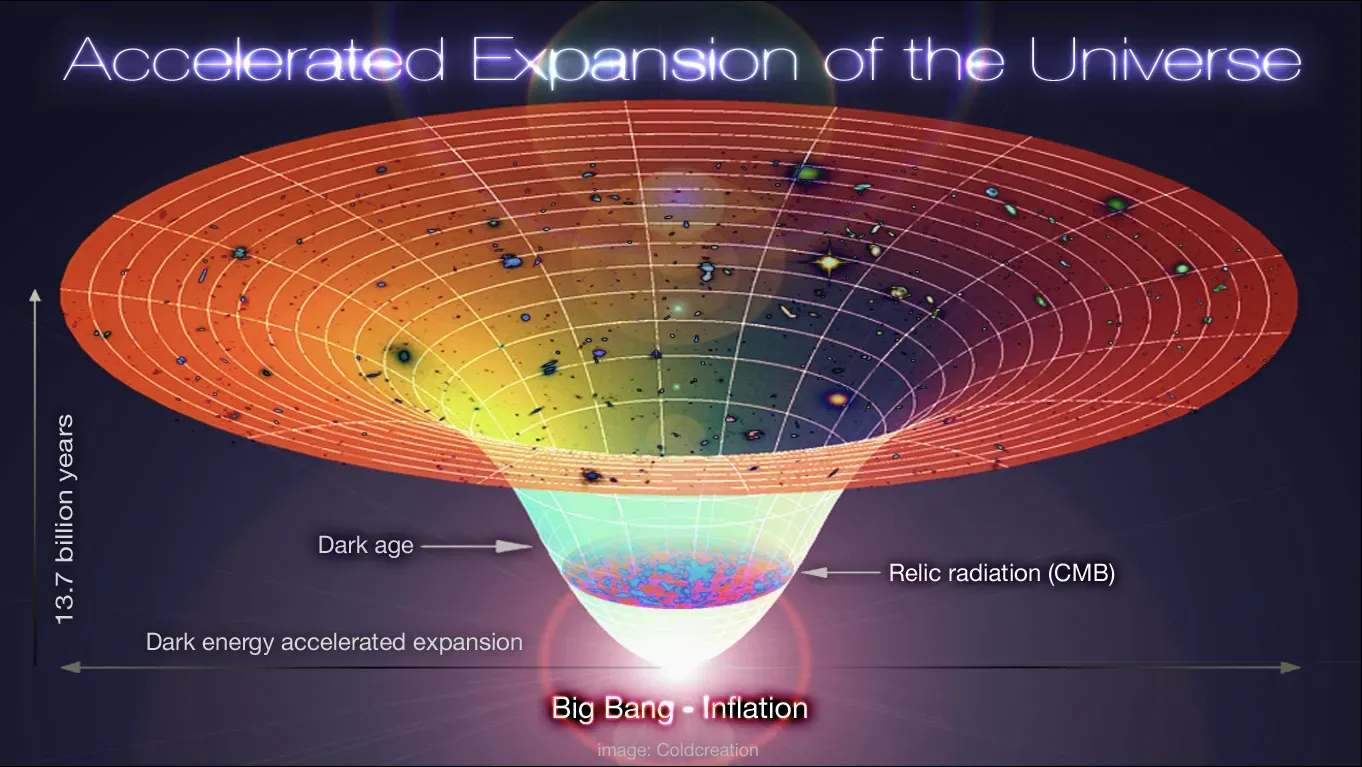
Regions distant from observers are expanding away faster than the speed of light, at rates estimated by Hubble’s law, and the expansion rate appears to be accelerating. Now, before you think that breaks Einstein’s rules, let me clarify something. Special relativity says that nothing can move through space faster than light. Space itself, though? That’s a different story entirely.
While special relativity prevents two local objects from ever traveling faster than the speed of light relative to each other, it does not prevent two distant objects from traveling away from each other faster than the speed of light as a result of the expansion of the universe, meaning light from these galaxies will never reach us.
Think about inflating a balloon with dots painted on its surface. The dots aren’t moving across the rubber, they’re being carried along as the rubber itself stretches. Assuming dark energy remains constant so that the expansion rate of the universe continues to accelerate, there is a future visibility limit beyond which objects will never enter the observable universe at any time in the future. Galaxies beyond this limit are permanently out of reach, no matter how long we wait or how fast we travel.
The Mysterious Geometry of Everything
The universe’s geometry determines whether it’s finite or infinite, with three possibilities: flat (infinite), negatively curved or open (infinite), or positively curved or closed (finite). Imagine drawing a triangle in space and adding up its internal angles. On a flat sheet of paper, they always total 180 degrees, exactly what you learned in school.
If you have a surface of positive curvature like a sphere, your angles will add up to more than 180 degrees, and if you have a surface of negative curvature like a saddle or hyperboloid, the interior angles will always add up to less than 180 degrees. The universe could theoretically have any of these shapes on the grandest scales.
Current observational evidence from missions like WMAP, BOOMERanG, and Planck indicate that the observable universe is spatially flat to within a 0.4 percent margin of error. So within our cosmic neighborhood, space appears flat. Current observations indicate the universe is remarkably flat, consistent with inflationary theory predictions and strongly suggesting infinite extent. Yet here’s the catch: we can only measure what we can see, and the whole universe might be vastly different beyond our horizon.
The Force Tearing Galaxies Apart
Something truly bizarre started happening roughly five billion years ago. Dark energy appeared to begin its rule and start speeding up the expansion of the universe around five billion years ago, or roughly nine billion years after the Big Bang. Before this point, gravity was the dominant player, pulling matter together. Then this mysterious force started pushing everything apart, and it’s been accelerating ever since.
Dark energy makes the universe expand at an accelerating rate, and approximately 68.3 to 70 percent of the universe is dark energy. Let that sink in for a moment. Nearly three quarters of everything that exists is this weird repulsive force we barely understand. Gravity pulls galaxies closer together while dark energy pushes them apart, and right now, dark energy is winning by a landslide.
University of Michigan cosmologist Dragan Huterer notes that observations combined with the spectacularly successful inflationary theory make it likely that the universe actually is infinite, and not just for practical purposes. Still, some recent findings hint that dark energy might not be as constant as we thought. Dark energy, the mysterious force accelerating the expansion of the universe, may not have always provided a steady push as cosmologists have assumed for decades, according to the latest data from the Dark Energy Spectroscopic Instrument.
Where Time Creates Boundaries
The particle horizon represents the largest comoving distance from which light could have reached the observer by a specific time, while the cosmic event horizon is the largest comoving distance from which light emitted now can ever reach the observer in the future. These are two different kinds of edges, and understanding the difference matters.
Your particle horizon keeps growing as the universe ages. Every year, light from slightly more distant regions finally completes its journey to your telescope. As time goes, we will see light that came from farther and farther away, so the distance to the particle horizon is increasing, but meanwhile the accelerated expansion of the universe ensures that light emitted from distant galaxies in the future are able to reach us only if they are increasingly closer.
The current distance to our cosmic event horizon is about five gigaparsecs (16 billion light-years), well within our observable range given by the particle horizon. This means you can currently see galaxies whose light, if emitted today, would never reach you. It’s a bit like watching someone wave goodbye before they step over a threshold you can never cross. This edge represents the limit of what we can see because the speed of light, even in an expanding universe governed by general relativity, only allows signals to travel so far.
Could Copies of You Exist Out There
Here’s where things get truly mind bending. In an infinite universe, every possible arrangement of matter must eventually repeat, leading to identical copies of Earth, solar systems, and even individual people existing somewhere in the cosmic expanse, as this mathematical certainty emerges because finite numbers of particles can only combine in finite ways.
Let that settle in for a second. If space truly extends forever, then somewhere unimaginably far away, there’s another version of you reading this exact same article. There’s also a version who decided to skip it, one who became an astronaut, one who lives on a planet where the sky is purple. Every possible combination has to exist somewhere.
Beyond the observable universe, you won’t just find more planets and stars and other forms of material, you will eventually find every possible thing, which means that somewhere out there there is another person who is identical to you in every possible way, and there is also a you who is only slightly different. It sounds like science fiction, yet it’s a logical consequence of true infinity combined with physics.
The Beginning Happened Everywhere at Once
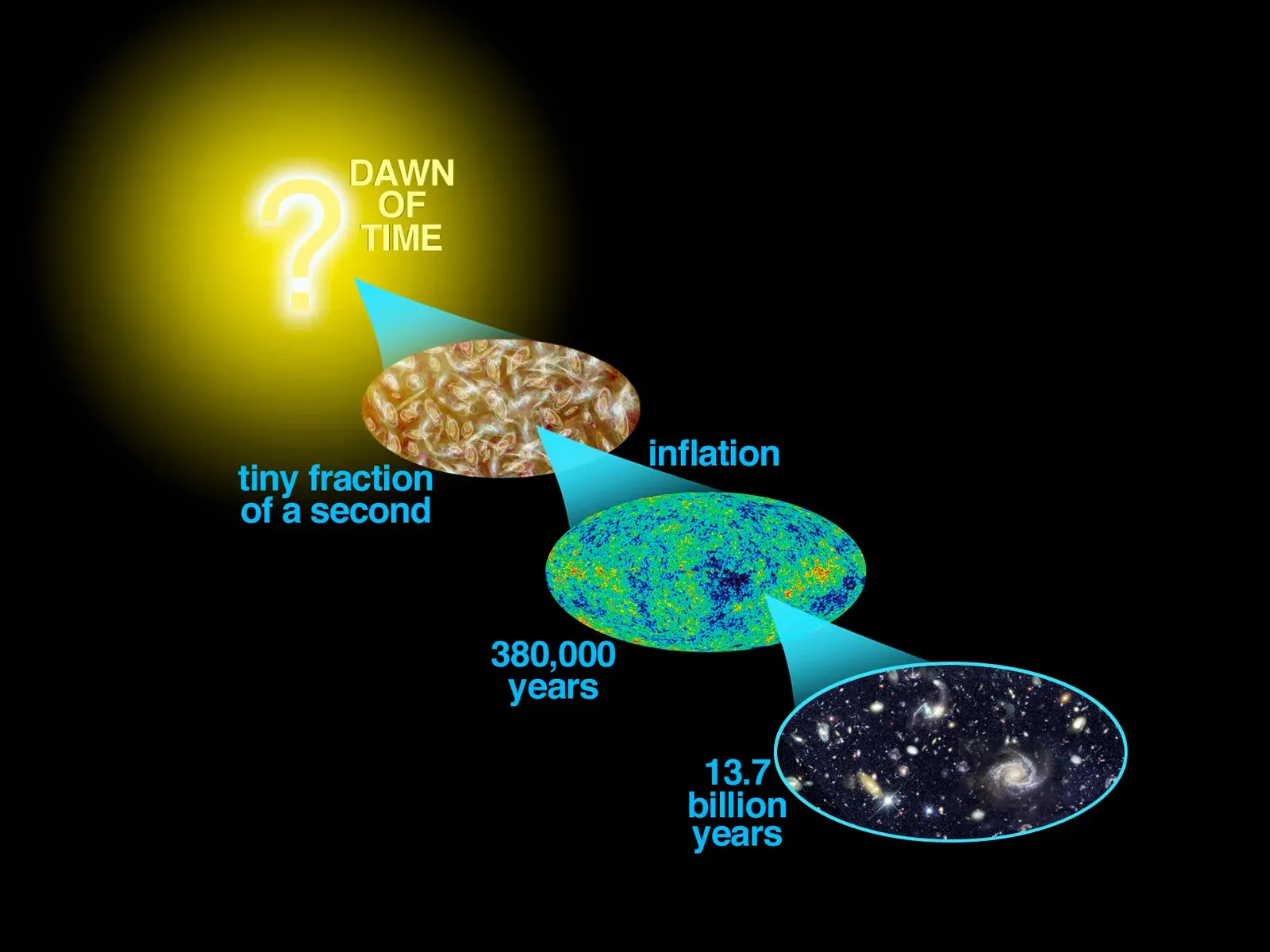
The universe did not start out as finite in size; the Big Bang was not like a bomb on a table exploding and expanding to fill a room with debris, it did not happen at one point in the universe but happened everywhere in the universe at once. This is probably one of the most challenging concepts to wrap your head around, because we naturally think of explosions as starting from a single point.
Current evidence suggests our expanding universe lacks both a center and edge, with the Big Bang occurring everywhere simultaneously rather than from a single point. There’s no spot in space you could travel to and say, “This is where it all began.” Every location in the universe was present at the Big Bang, compressed into an unimaginably hot, dense state. The remnant of the Big Bang, the cosmic microwave background radiation, exists everywhere in space, and even today we can look at any corner of the universe and see it.
What Flat Really Means in Three Dimensions
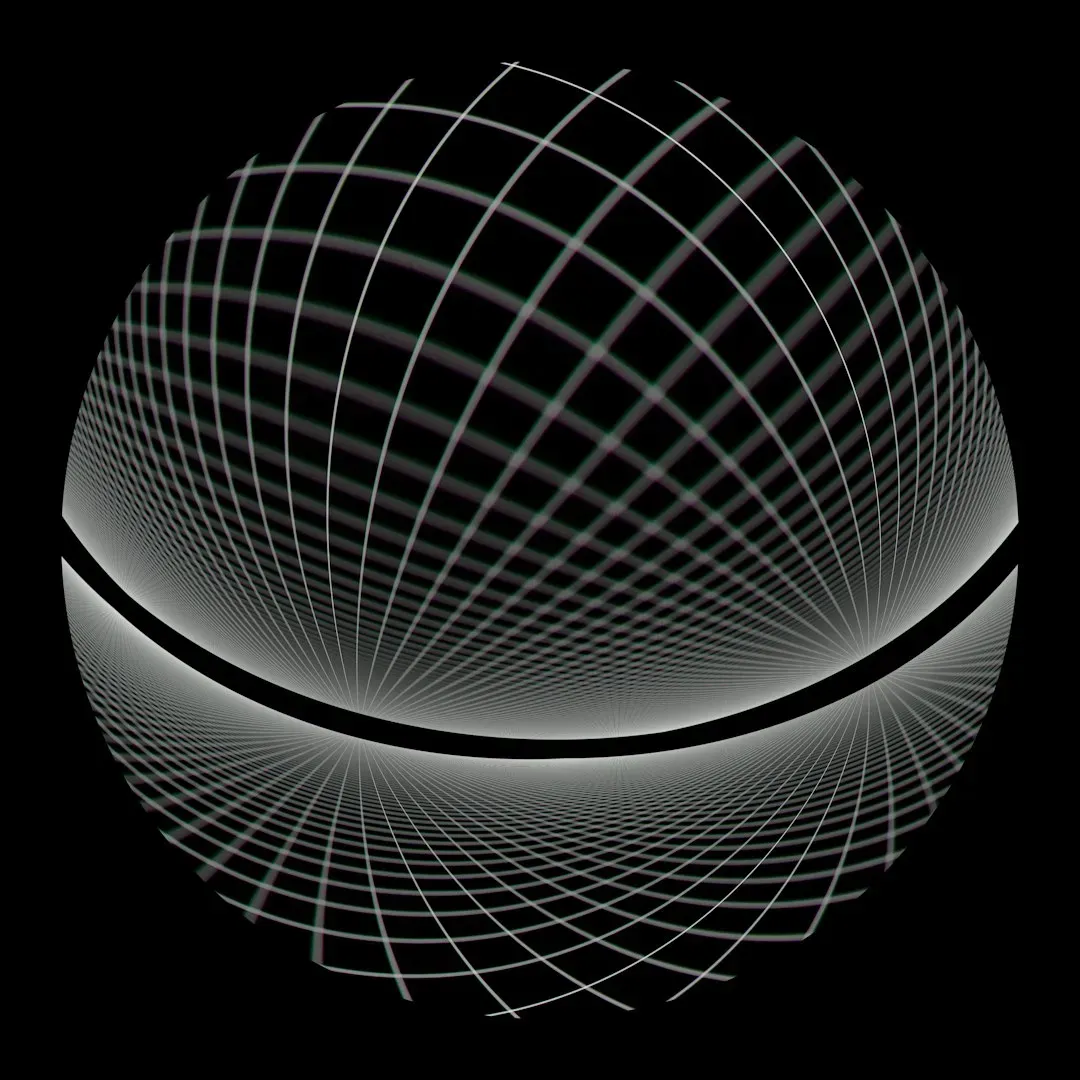
Most cosmological evidence points to the universe’s density as being just right, around six protons per 1.3 cubic yards, and that it expands in every direction without curving positively or negatively, meaning the universe is flat. Before you picture a giant cosmic pancake, understand that “flat” in this context doesn’t mean two dimensional.
A flat universe has Euclidean geometry, and the simplest shape it can adopt is that of a sheet, though there are other more complex shapes that a flat universe could have, such as a three dimensional torus. Picture two rockets flying side by side through space. In a flat universe, these two rockets will always remain parallel as they travel through space. Their paths never converge or diverge. This is different from a curved space where parallel lines eventually meet or separate.
Beyond the boundaries of our observable bubble, the universe could be curved, which would mean it only appears flat to us because we only get to see a small portion of it. It’s hard to measure the curvature of Earth’s surface from your backyard, and the same problem applies to the cosmos on a vastly larger scale.
The Ultimate Limits of Knowledge
The truth is we’ll likely never know the total size of the universe beyond what we can observe because the observable limit is not just a limit to what we can see but a limit to what we can know. That’s both humbling and frustrating. There’s a finite amount of information that we could ever hope to receive even in the infinite future, and all we can do is guess.
Because we observe only a portion of the universe, any conclusions about the entire cosmos require an extrapolation that might never be testable, and questions about what lies beyond our horizon, how space is connected, whether there is an edge, or if time or space extends infinitely, may remain unanswerable. We’re like sailors on an infinite ocean who can only see to the horizon. What lies beyond might be more of the same, or it might be something completely unexpected.
One thing’s for sure: the universe does not have an edge, there’s no physical boundary, no wall, no border, no fence around the edges of the cosmos. If you flew a spaceship in a straight line through space forever, you would never reach a wall, a boundary, an edge, or even a region of the universe without galaxy groups.
So, is our universe infinite? Based on everything we can measure and observe, it very likely is. The geometry appears flat, the expansion continues accelerating, and theory strongly supports an endless cosmos. Yet we can’t prove it beyond all doubt because our view is fundamentally limited by light speed and the universe’s finite age. What we do know for certain is that the universe is vastly, unimaginably larger than what we can see, and that alone should fill you with wonder. Did you expect that level of uncertainty from modern science? Sometimes the most honest answer is simply that we’re still figuring it out, and that’s what makes the search so thrilling.
Jan loves Wildlife and Animals and is one of the founders of Animals Around The Globe. He holds an MSc in Finance & Economics and is a passionate PADI Open Water Diver. His favorite animals are Mountain Gorillas, Tigers, and Great White Sharks. He lived in South Africa, Germany, the USA, Ireland, Italy, China, and Australia. Before AATG, Jan worked for Google, Axel Springer, BMW and others.