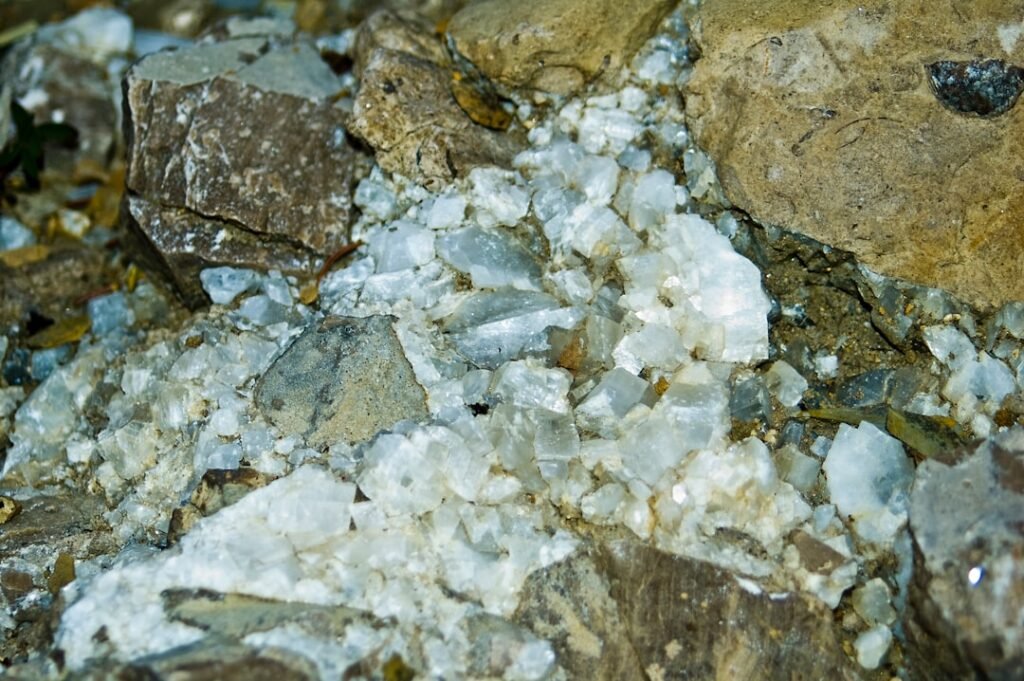


The Surprising Dual Nature of Hydrogen Cyanide (Image Credits: Unsplash)
A toxic compound long known for its dangers may hold secrets to how life emerged on a frigid early Earth.
The Surprising Dual Nature of Hydrogen Cyanide
Hydrogen cyanide has earned a notorious reputation as a lethal gas, yet scientists now propose it served as an unlikely building block in prebiotic chemistry. Researchers examined its behavior under extreme conditions and found that, when solidified into ice, the molecule transforms into something far more constructive. This shift challenges traditional views of the substance and opens new avenues in understanding life’s origins.
Studies from early 2026 highlighted how hydrogen cyanide, or HCN, could have accumulated in cold environments billions of years ago. Volcanic activity and atmospheric processes likely produced it in abundance during Earth’s formative stages. Rather than posing only threats, these molecules might have facilitated the complex reactions needed for organic compounds to form.
Crystals That Defy the Cold
At temperatures far below freezing, hydrogen cyanide does not simply lie dormant; it organizes into crystalline structures with surfaces primed for action. Computer simulations revealed that certain facets of these crystals exhibit exceptional reactivity, allowing chemical bonds to form where they otherwise would not. This discovery explains how sluggish reactions in icy settings could accelerate dramatically.
The crystals resemble delicate cobwebs, providing a scaffold for molecules to interact. In such low-energy environments, typical chemical processes grind to a halt, but the reactive planes on HCN ice enable proton transfers and other key steps. Experiments modeled these dynamics, showing pathways to intermediates that resemble life’s precursors. This mechanism suggests that cold worlds harbor more chemical potential than previously assumed.
Bridging Earth’s Past to Cosmic Possibilities
On ancient Earth, where oceans and ice coexisted, frozen hydrogen cyanide could have dotted the landscape or floated in the atmosphere. As glaciers advanced during the planet’s cooler epochs, these crystals might have concentrated in pockets, driving the synthesis of amino acids and nucleotides. The findings align with evidence of HCN in meteorites and comets, hinting at widespread availability.
Beyond Earth, this chemistry extends to distant icy bodies. Saturn’s moon Titan, with its nitrogen-rich atmosphere, contains hydrogen cyanide in liquid and solid forms. Similar processes there could mirror early Earth conditions, raising questions about life’s potential in the outer solar system. NASA’s Cassini mission previously detected HCN on Titan, and these new insights refine models of its reactivity.
- Reactive crystal surfaces enable bond formation in sub-zero temperatures.
- HCN ice acts as a catalyst for prebiotic molecule assembly.
- Abundant on early Earth via volcanic and cosmic sources.
- Relevant to exomoons and other frozen environments.
- Challenges assumptions about chemistry in extreme cold.
Key Takeaways from the Research
- Hydrogen cyanide’s frozen form creates highly active sites for unusual reactions, even in deep freeze.
- This could explain the buildup of life’s essential molecules on a cold early Earth.
- The work broadens the search for habitable zones to icy worlds across the universe.
These revelations underscore the ingenuity of nature, where peril and promise intertwine in the quest for life. As researchers continue to probe these frozen pathways, the story of our origins grows richer. What role do you see for such extreme chemistry in the search for extraterrestrial life? Share your thoughts in the comments.