
You walk into a bakery and the smell of fresh bread hits you before the door fully closes. You see golden loaves behind glass, hear the soft hum of an oven, and instantly feel warm. Right there, in that tiny ordinary moment, your brain just pulled off something breathtaking. It assembled a world for you out of raw electrical signals – light waves, air pressure, chemical molecules – and delivered it as a rich, vivid experience that feels completely real.
Here’s the thing though: none of what you experienced was directly “out there.” What you perceived was a model, a construction, an extraordinarily refined interpretation that your brain generated based on sensory input combined with memory, prediction, and expectation. It sounds almost unsettling when you think about it. Your entire lived experience is essentially your brain’s best guess. So how exactly does it pull this off? Let’s dive in.
The Starting Point: How Your Senses Collect Raw Data

Every experience you have begins with a physical event in the world around you. The perceptual process starts with a distal stimulus, which is any physical object in the environment. Your sensory receptors receive information about that object through different types of environmental energy, such as light, sound waves, or chemicals, creating a representation called a proximal stimulus. Think of it like this: the apple on your kitchen counter isn’t sending itself directly into your brain. It’s sending light, and your eyes are intercepting that light on its behalf.
All perception involves signals that travel through the nervous system, arising from physical or chemical stimulation of the sensory system. Vision involves light striking the retina of the eye, smell is mediated by odor molecules, and hearing involves pressure waves. Crucially, perception is not only the passive receipt of these signals – it is also shaped by the recipient’s learning, memory, expectation, and attention. That last part is what most people never realize. You are not a camera. You are an interpreter.
From Signal to Sensation: The Brain’s Translation Process
Once raw sensory data enters your nervous system, the real work begins. Light enters the eye and is detected by photoreceptors in the retina. These photoreceptors transform the light refracted off an object into electrical impulses, which are then transmitted to the lateral geniculate nucleus in the hypothalamus via the optic nerve. The lateral geniculate nucleus then sends signals to the primary visual cortex in the occipital lobe. This is a journey measured in milliseconds, yet it involves a staggering cascade of neural activity.
The same kind of intricate relay happens with sound. Sound occurs from a change in air pressure. Sensory receptors in the inner ear transform the sounds you hear into electrical impulses, which are transmitted from neuron to neuron and taken to the cochlear nucleus in the medulla. From there, auditory information is carried to the medial geniculate nucleus, then to the primary auditory cortex in the temporal lobe. What arrives at these cortical destinations is nothing resembling the experience of sound or vision. It’s a pattern of electrical firing, and your brain has to make sense of it in real time.
The Brain as a Prediction Machine: Constructing Reality From the Inside Out
Honestly, one of the most mind-bending discoveries in modern neuroscience is that your brain doesn’t simply wait for sensory information to tell it what’s out there. Rather than waiting for sensory information to drive cognition, the brain is always actively constructing hypotheses about how the world works and using them to explain experiences and fill in missing data. Some neuroscientists favor a predictive coding explanation for how the brain works, in which perception may be thought of as a “controlled hallucination” – a theory that emphasizes the brain’s expectations and predictions about reality rather than the direct sensory evidence that the brain receives.
Today these ideas have gained new momentum through an influential collection of theories that turn on the idea that the brain is a kind of prediction machine. The central idea of predictive perception is that the brain is attempting to figure out what is out there in the world by continually making and updating best guesses about the causes of its sensory inputs. It forms these best guesses by combining prior expectations or beliefs about the world, together with incoming sensory data, in a way that takes into account how reliable the sensory signals are. Your brain, in other words, is always a step ahead of you.
Top-Down Meets Bottom-Up: The Two-Way Traffic of Perception
How you process incoming sensory information is referred to by neuroscientists as “bottom-up processing.” Additionally, your existing knowledge, assumptions, and memories can influence perception and recognition – a process referred to as “top-down processing.” Perception involves both bottom-up and top-down processing working together. Imagine two lanes of a highway running simultaneously toward the same destination. Bottom-up brings raw data from your senses; top-down brings everything your brain already believes about the world.
Predictive coding inverts the conventional view of perception as a mostly bottom-up process, suggesting that it is largely constrained by prior predictions, where signals from the external world only shape perception to the extent that they are propagated up the cortical hierarchy in the form of prediction error. The differences between predicted and actual sensory signals give rise to so-called prediction errors, which are used by the brain to update its predictions, readying it for the next round of sensory inputs. By striving to minimize sensory prediction errors everywhere and all the time, the brain implements approximate Bayesian inference, and the resulting best guess is what you perceive. Your entire experience of reality, it turns out, is essentially a really well-managed correction process.
Multisensory Integration: When the Senses Team Up
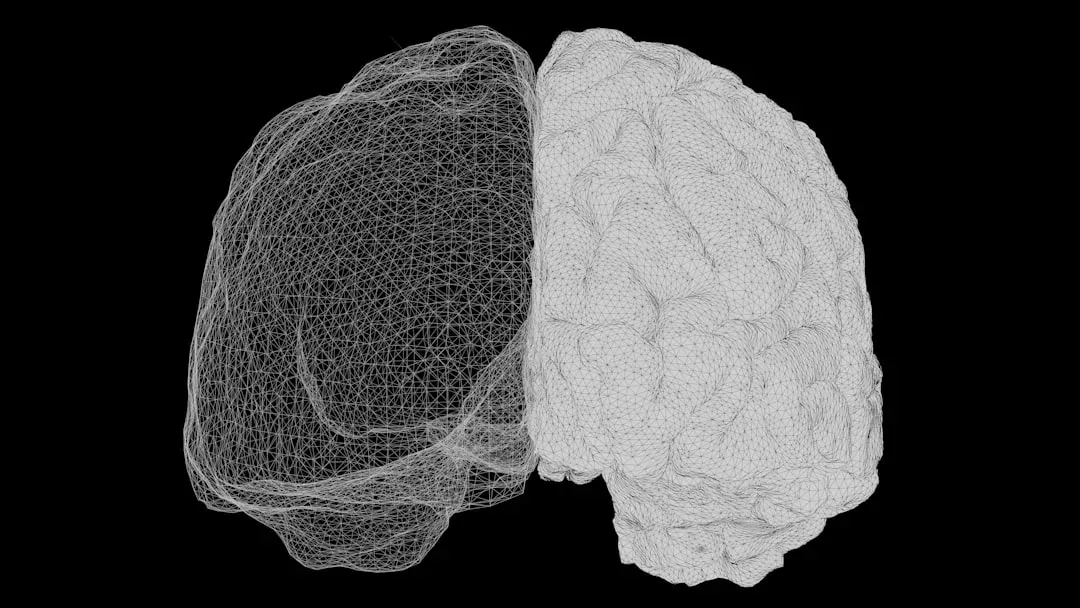
Your senses never really work alone. The brain gathers distinct sensory inputs from visual, auditory, tactile, muscular, and vestibular systems to construct one unified perception of reality. Your sensory experiences merge together to create a unified perception of the world. It’s a bit like an orchestra – each instrument plays its own part, but what you hear is a single piece of music. The brain’s job is to be the conductor.
The ability to use cues from multiple senses in concert is a fundamental aspect of brain function. It maximizes the brain’s use of the information available to it at any given moment and enhances the physiological salience of external events. Because each sense conveys a unique perspective of the external world, synthesizing information across senses affords computational benefits that cannot otherwise be achieved. Multisensory integration not only has substantial survival value but can also create unique experiences that emerge when signals from different sensory channels are bound together. A classic example is the McGurk effect: if you are shown a video of a person articulating the syllable “ba” with a sound matching the syllable “ga,” the majority of people perceive the syllable “da.” The dissociation between the signals coming from the two sensory channels of sound and image prevents the brain from correctly interpreting the signal and ultimately creates an illusion.
How Emotion and Memory Color What You Experience

Here’s something that might surprise you: how you feel at any given moment genuinely changes what you perceive. Emotion has a substantial influence on cognitive processes including perception, attention, learning, memory, reasoning, and problem solving. Emotion has a particularly strong influence on attention, especially modulating the selectivity of attention as well as motivating action and behavior. This attentional and executive control is intimately linked to learning processes, as intrinsically limited attentional capacities are better focused on relevant information. Emotion also facilitates encoding and helps retrieval of information efficiently.
To create your vision of reality, the brain’s work depends on intrinsic factors such as your knowledge, level of alertness, emotional state, and motivations. Some studies have shown that a person in a good mood tends to perceive others’ faces as friendlier or more pleasant. Emotion has been shown to be closely tied to memory – you tend to retain and recall memories with a strong emotional component much better than memories that are emotionally neutral. This is why a song can catapult you back to a specific moment in your past. Memory and emotion aren’t just stored separately; they are woven directly into the fabric of your ongoing perception.
When Perception Breaks Down: Illusions, Disorders, and the Limits of Reality
![When Perception Breaks Down: Illusions, Disorders, and the Limits of Reality (CarbonNYC [in SF!], Flickr, CC BY 2.0)](https://nvmwebsites-budwg5g9avh3epea.z03.azurefd.net/dws/0c6c23d8ffccf2197ed042de35ca0c0a.webp)
The deeper truth is that perception is never a direct window onto an objective reality. All your perceptions are active constructions, brain-based best guesses at the nature of a world that is forever obscured behind a sensory veil. Visual illusions are fractures in the “Matrix,” fleeting glimpses into this deeper truth. Think of the optical illusions you have surely seen online – two lines that look different in length but are actually identical. Your brain isn’t malfunctioning. It’s doing exactly what it always does, only this time the clever visual design exploits the rules your brain uses.
What you see is not what you perceive: a large part of the sensory information that constantly arrives through your senses is never consciously processed. Complex mechanisms in the brain filter the incoming sensory information and shape the representation of the world in your mind. Aberrant priors in conditions like schizophrenia lead to distorted perceptions. Adaptive priors, however, allow robust perception in ambiguous environments by leveraging accumulated knowledge. Understanding where perception breaks down tells us a great deal about how magnificently it works when everything goes right.
Conclusion: You Are Living in Your Brain’s Best Guess
The world you experience every single day, with all its colors, sounds, textures, and emotional weight, is not a direct readout of objective reality. It is a breathtakingly sophisticated model built inside your skull, constantly updated, constantly refined, and informed by everything you have ever known and felt. This view of perception does not mean that nothing is real. It means that reality, as you know it, is a collaborative project between your brain and the world outside it.
Sensory inputs such as sights, sounds, and touches yield rich information about the external world. Your perception and interpretation of those sensations are heavily shaped by cognitive processes such as attention, expectation, and memory. Your brain has been running this remarkable program your entire life, without ever asking for credit. It filters the impossible complexity of the universe down to a story you can live inside. That story feels seamless. It feels true. I think that’s the most astonishing part of all. What does it make you wonder about the moments you think you perceived perfectly clearly?