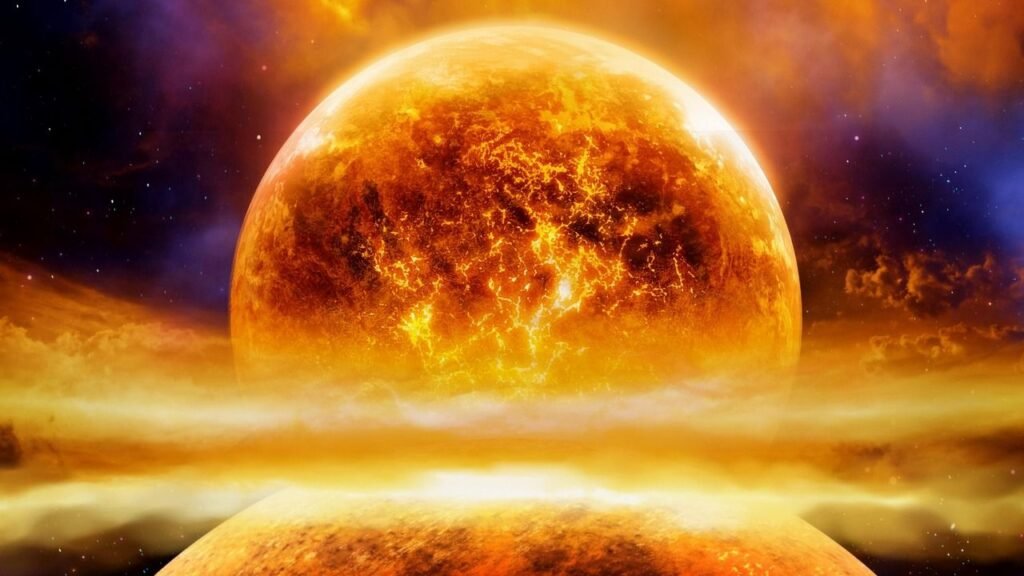

Stand at the edge of space and look toward the Sun. There’s , a tiny battered world clinging to the edge of solar annihilation. It shouldn’t work, really. This small, cratered planet faces conditions that would destroy most other worlds we know. The temperatures are wild, swinging by more than a thousand degrees. There’s virtually no atmosphere to speak of. The solar wind batters the surface with relentless fury.
Yet here it is. endures.
Scientists have puzzled over this peculiar planet for decades. Let’s be real, the more we learn about , the stranger it gets. From its oversized iron heart to its ghostly thin exosphere, everything about this world seems to defy simple explanation. So let’s dive in.
Surviving the Inferno Next Door
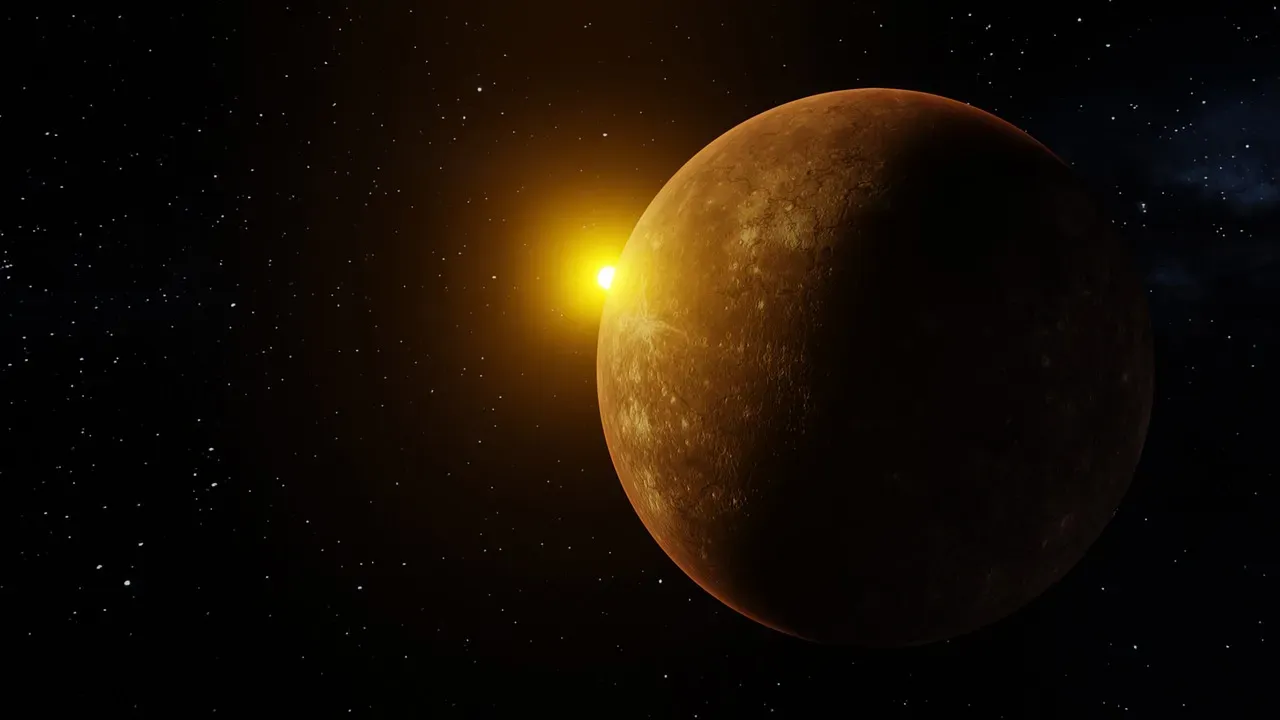
Day temperatures on Mercury can reach highs of 800°F (430°C), which is hot enough to melt lead right off the surface. Picture that for a moment. The Sun, appearing more than three times larger than it does from Earth, dominates the sky with crushing intensity.
Here’s the thing though. Without an atmosphere to retain that heat at night, temperatures can dip as low as -290°F (-180°C). That’s a temperature swing exceeding eleven hundred degrees, the most extreme in our entire solar system. Most materials would crack and shatter under such thermal stress, yet Mercury’s rocky surface has endured this punishment for billions of years.
The planet orbits frighteningly close to our star. From an average distance of 36 million miles (58 million kilometers), Mercury is 0.4 astronomical units away from the Sun. This proximity means the solar radiation bombarding Mercury is overwhelming, sometimes ranging between 4.59 and 10.61 times the solar constant experienced on Earth.
The Atmosphere That Isn’t Really There
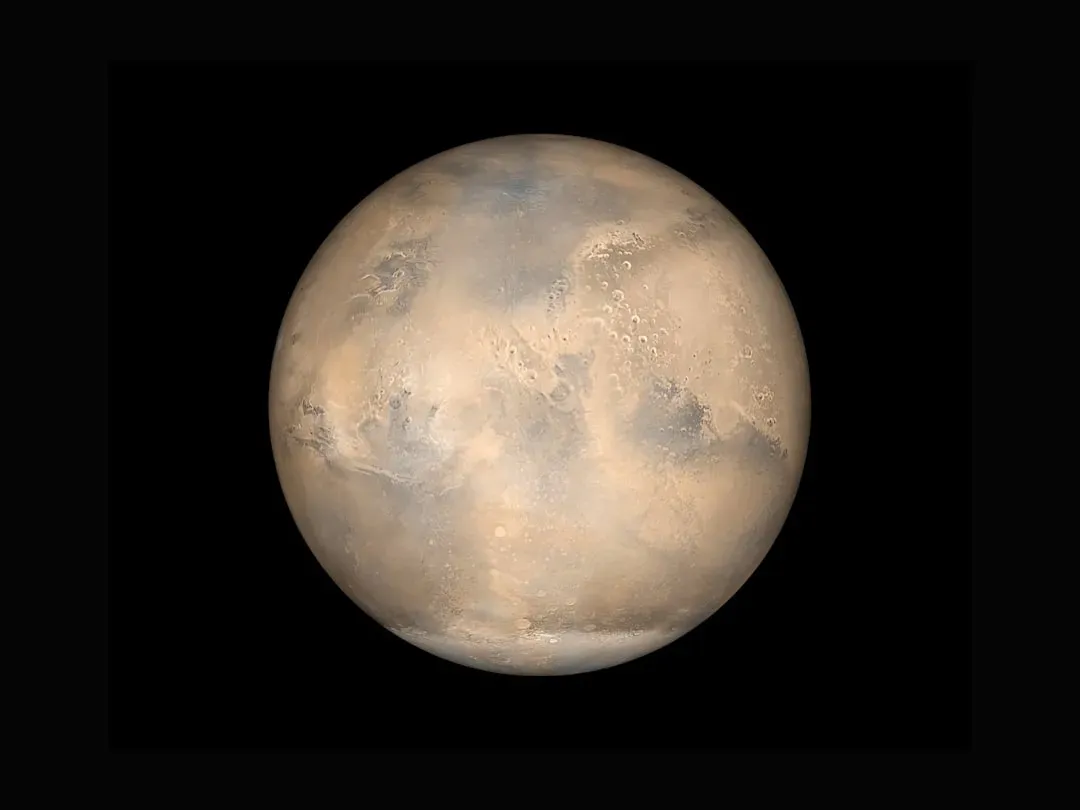
Mercury possesses what scientists politely call an exosphere. Honestly, calling it an atmosphere is generous. The surface pressure is less than 10−12 bar (1 nPa), which makes it essentially a vacuum.
Mercury is small and doesn’t have much gravity so it’s hard to hold onto an atmosphere, and it’s close to the Sun so any atmosphere gets blasted away by stuff being blown off the Sun. Think of it like trying to hold water in your hands during a hurricane. The solar wind, that constant stream of charged particles from the Sun, continuously strips away whatever thin gases manage to accumulate.
What little exosphere exists gets constantly replenished. Mercury’s atmosphere is made up of atoms blasted off its surface by the Solar wind, and because Mercury is so hot, these atoms quickly escape into space. It’s a never-ending cycle of creation and destruction. Sodium, potassium, oxygen, and other elements briefly dance above the surface before being whisked away into the void.
The Iron Heart Mystery
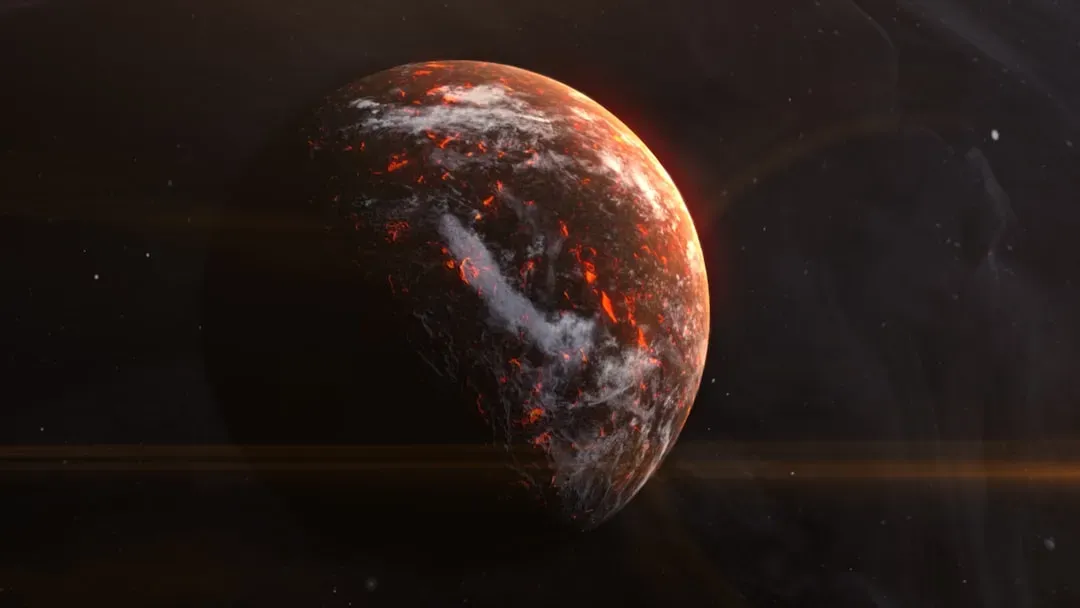
Mercury has a large metallic core with a radius of about 1,289 miles (2,074 kilometers), about 85% of the planet’s radius. This is frankly bizarre. No other planet in our solar system has such a disproportionately massive core relative to its size.
Earth’s core, by comparison, makes up only about sixteen percent of its radius. Proportionately to Mercury’s size, the planet’s core contains double the amount of iron found in any other world in the solar system. It’s like someone built a giant iron ball and then wrapped only the thinnest shell of rock around it.
The planet’s density is the second highest in the Solar System at 5.427 g/cm3, only slightly less than Earth’s density of 5.515 g/cm3. Remember, Mercury is roughly the size of Earth’s Moon. For such a small body to be nearly as dense as our much larger planet suggests something unusual happened during its formation. Several competing theories try to explain this oddity, from violent collisions that stripped away the outer layers to the Sun’s magnetic field sorting materials during planetary formation.
A History Written in Violence
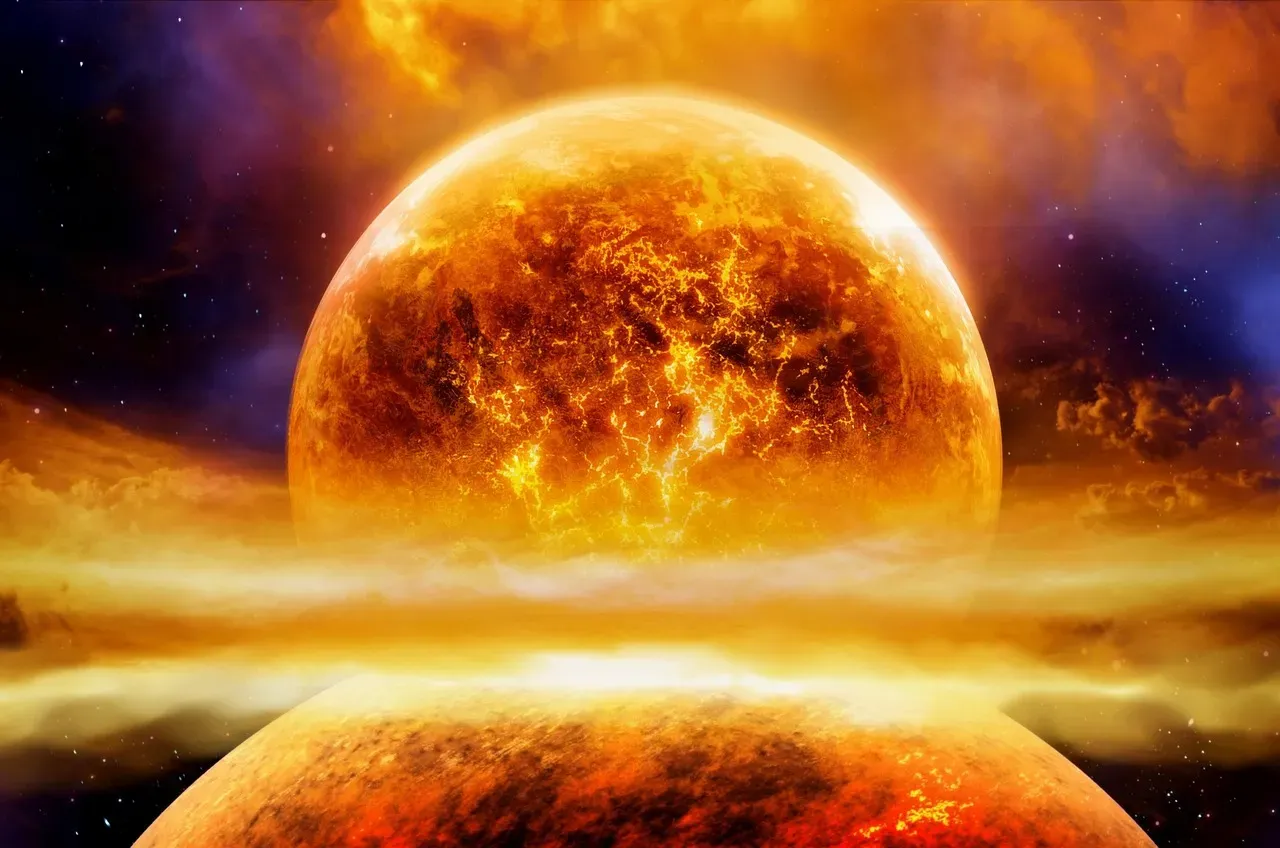
Researchers have proposed that the planet’s unique geology might have resulted from a massive collision that stripped away much of its original rocky mantle. The giant impact hypothesis suggests that early in the solar system’s chaotic youth, Mercury got absolutely pummeled.
It is more likely that Mercury formed from multiple subsequent collisions, allowing each collision to occur at more reasonable impact velocities. Picture a cosmic demolition derby where proto-planets smashed into each other repeatedly. Each impact would have blasted away lighter rocky material while the heavy iron core remained largely intact.
The timing mattered too. After material is blown off, it takes approximately a thousand years for the cloud of debris to cool and settle back onto the planet, and the tighter the collisions are in time, the easier it is to lose the mantle. If Mercury caught its breath between impacts, it held onto more material. If the collisions came in rapid succession, more of the lighter elements got stripped away forever.
The Surprising Magnetic Shield
When Mariner 10 made a fly-by of Mercury in April 1974, it detected a magnetic field that was about 1/100 the total magnitude of Earth’s magnetic field. This discovery genuinely shocked scientists. Such a small planet with such slow rotation shouldn’t generate a magnetic field at all.
The existence of a magnetic field suggests that Mercury’s iron has undergone differentiation and formed a hot, convecting core. There’s liquid metal sloshing around deep inside that tiny world, creating electrical currents that generate the magnetic field through dynamo action. This means Mercury’s core hasn’t completely solidified despite the planet’s small size and ancient age.
Mercury’s magnetic field is almost 4 billion years old, between 3.7 and 3.9 billion years old. That’s incredibly ancient, persisting through nearly the entire history of the solar system. The field may have once been as strong as Earth’s before weakening to its current state. Strong electrical currents in the magnetosphere driven by interaction with the solar wind counteract the internal dynamo effect, and this feedback ultimately causes the weak magnetic field.
Ice in Hell
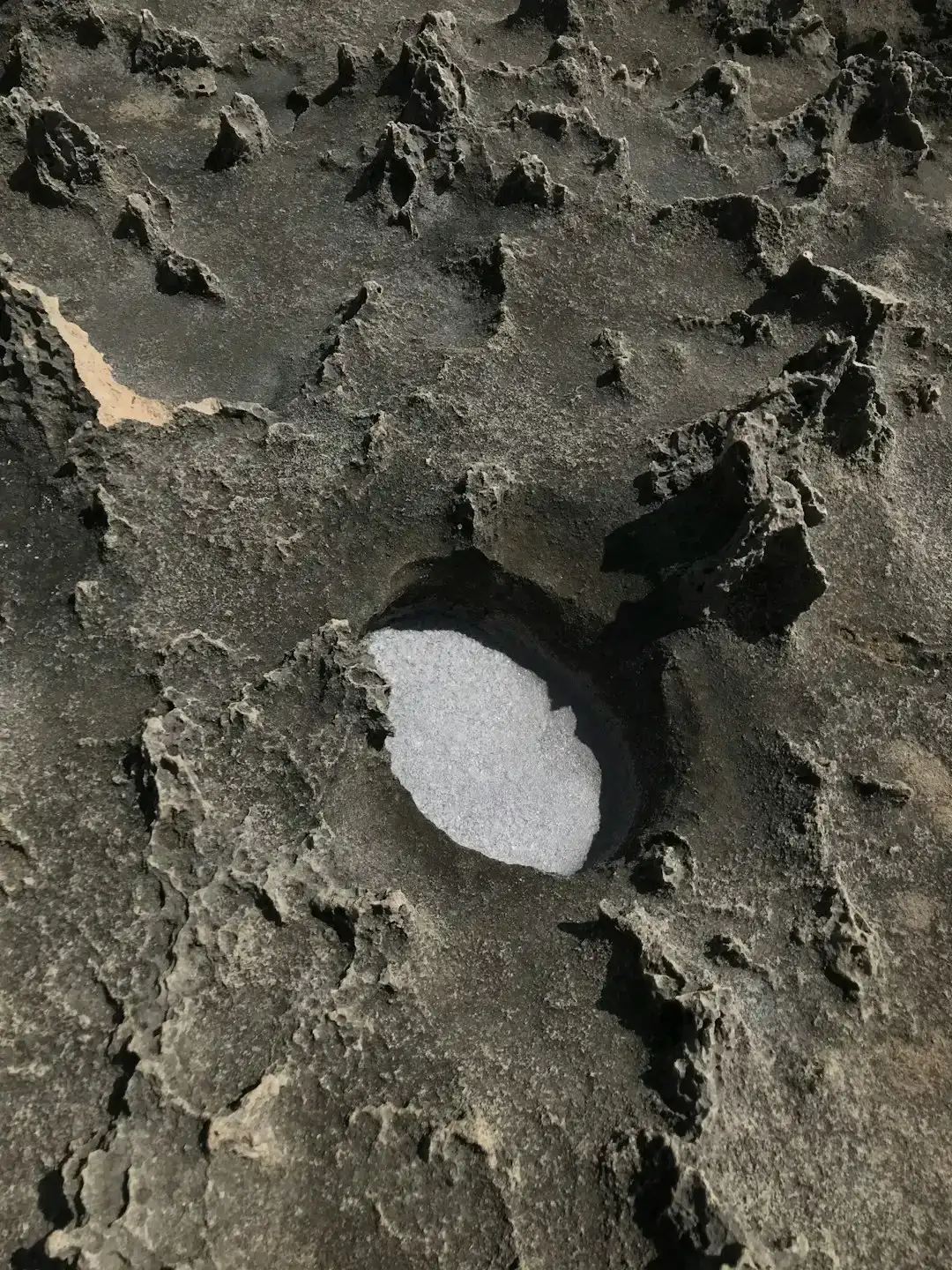
Here’s something that sounds completely absurd. Although daylight temperatures at the surface of Mercury are generally extremely high, observations strongly suggest that ice exists on Mercury in deep craters at the poles that are never exposed to direct sunlight.
Water ice could be present in permanently shadowed craters, and temperatures there remain below 102 K, far lower than the global average. These polar craters act like cold traps, capturing water delivered by comets and asteroids over billions of years. The ice sits there, frozen solid in permanent darkness, while just a few kilometers away the sunlit surface reaches temperatures hot enough to vaporize lead.
It’s a testament to Mercury’s extreme nature. On the same small world, you have some of the hottest and coldest places in the entire solar system existing side by side.
The Puzzle of Planetary Formation
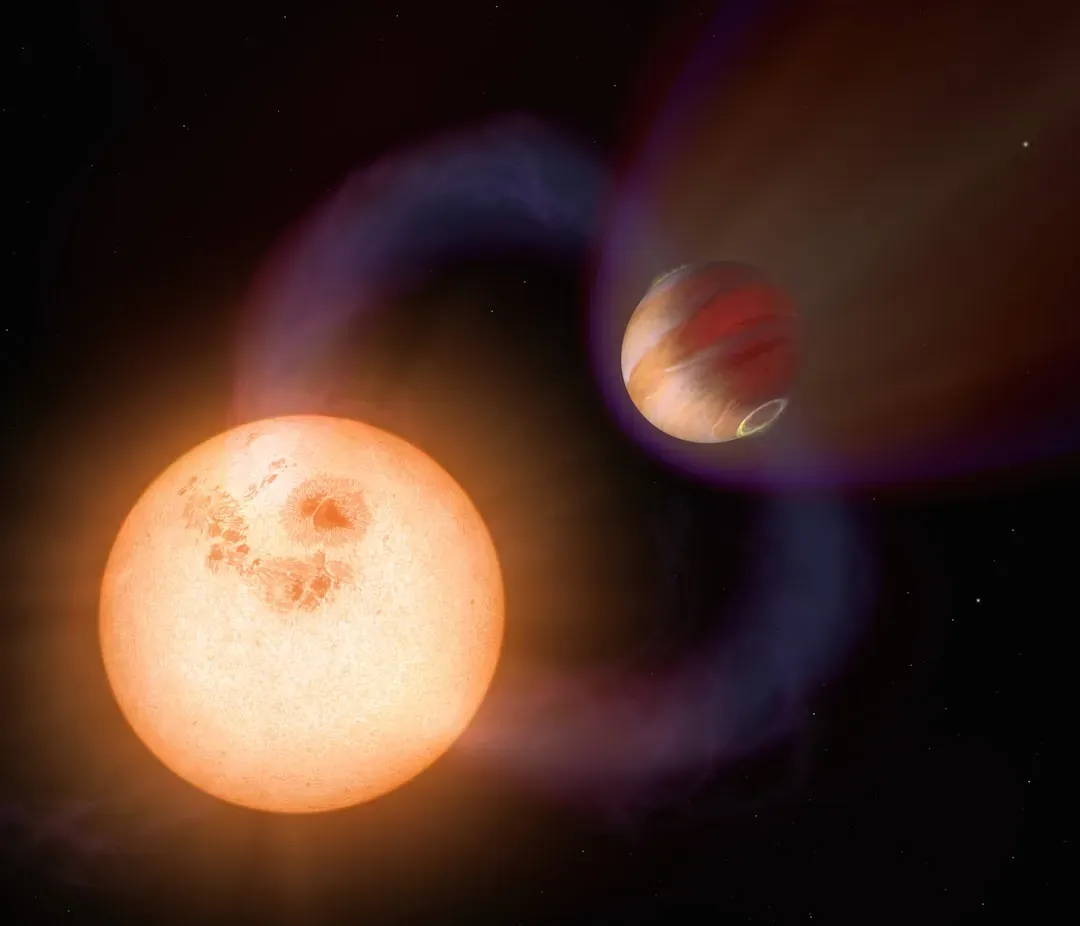
Current simulations have an extreme amount of difficulty getting the masses of the four terrestrial planets right, especially Mercury, and we need to pay more attention to the giant planets in order to understand the evolution of the smaller ones. Mercury doesn’t fit neatly into our models of how planets should form.
A model showing that the density, mass and iron content of a rocky planet’s core are influenced by its distance from the sun’s magnetic field reveals that there is a gradient in which the metal content in the core drops off as the planets get farther from the sun, and the distribution of raw materials in the early forming solar system was controlled by the sun’s magnetic field. This newer explanation suggests the Sun itself sorted materials during the solar system’s formation, concentrating iron-rich material closer in.
As giant planets moved and migrated they pulled away a lot of planet-building material, and the remaining planetesimals collided together in frequent collisions, which resulted in heavy metals being dumped into the innermost planet. Jupiter and Saturn, those massive gas giants, may have sculpted Mercury’s destiny from afar through their gravitational influence. The story of how Mercury came to be involves not just local conditions but the dynamics of the entire early solar system.
Conclusion: A World That Refuses to Quit
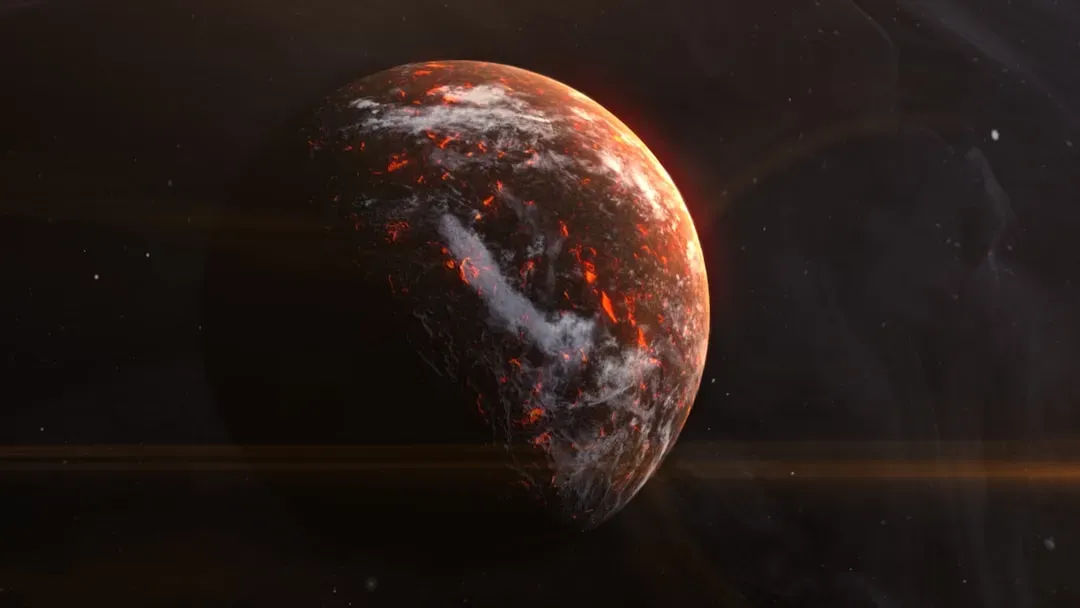
Mercury exists because it’s tougher than it looks. This scorched, airless rock ball has survived nearly four and a half billion years in one of the most hostile environments imaginable. It endures temperature swings that would pulverize most materials. The solar wind constantly tries to blast it apart atom by atom.
Yet there it remains, locked in its swift orbit, its ancient iron heart still generating a feeble magnetic field. Scientists continue unraveling Mercury’s mysteries with each new observation, each computer simulation, each spacecraft flyby. The planet challenges our understanding of how worlds form and survive.
What do you think? Does Mercury’s existence make you appreciate just how diverse and surprising our solar system really is? It’s a reminder that nature often refuses to play by the rules we think we understand.
Hi, I’m Andrew, and I come from India. Experienced content specialist with a passion for writing. My forte includes health and wellness, Travel, Animals, and Nature. A nature nomad, I am obsessed with mountains and love high-altitude trekking. I have been on several Himalayan treks in India including the Everest Base Camp in Nepal, a profound experience.