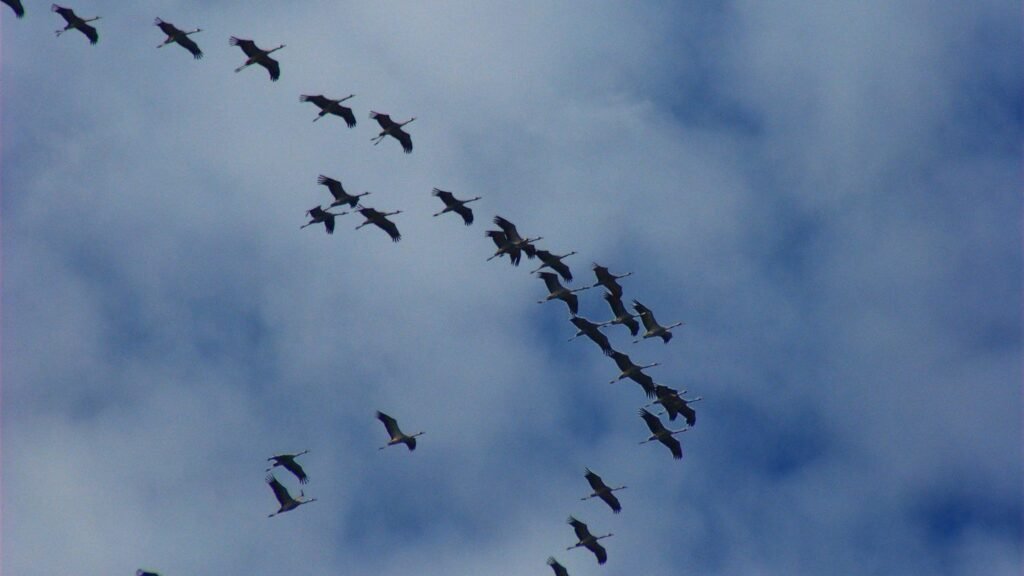

Imagine flying across an entire ocean in the dark, with no phone, no map, no road signs, and somehow landing on the exact same patch of land you left the year before. That’s normal life for a migrating bird. Tiny warblers that weigh less than a sheet of paper cross continents, while albatrosses circle the globe like it’s a casual afternoon walk. To us, it feels almost supernatural.
Yet birds are not using magic. They’re running a navigation system far more complex than anything we’ve ever built, stitched together from the sky, the Earth itself, and even the chemistry inside their own eyes. The more scientists study avian navigation, the more it starts to feel like we’re looking at a living, flying supercomputer. Let’s dig into how they actually pull off these unbelievable journeys.
The Secret Compass: Sensing Earth’s Magnetic Field
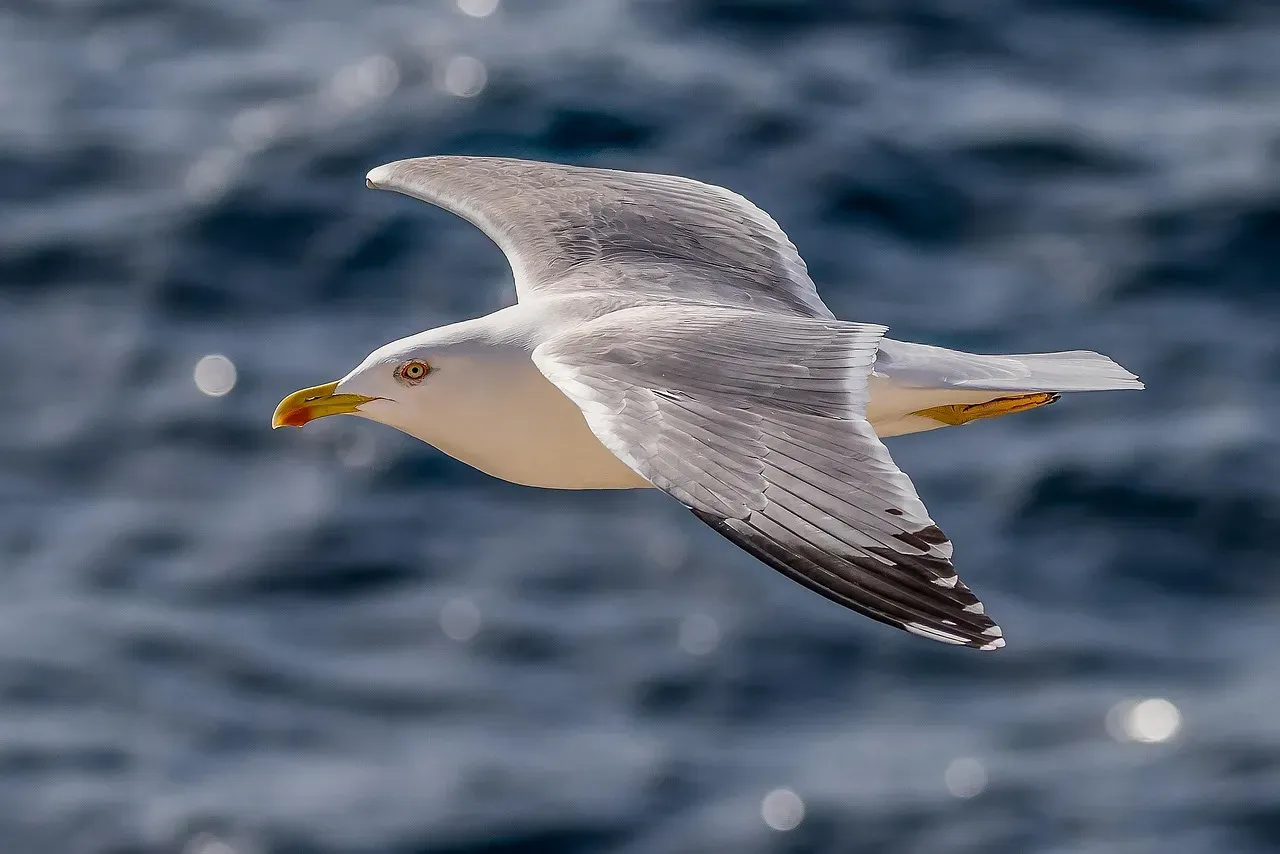
Here’s the wild part: many birds appear to carry an internal compass that can sense the Earth’s magnetic field. They don’t see a compass needle floating in front of them, of course, but their bodies somehow detect magnetic direction and strength. This gives them a sort of north-south orientation, even on cloudy nights when stars and the sun are hidden. It’s like having a quiet, always-on backup GPS baked right into their biology.
Researchers have found magnetically sensitive particles in some bird tissues and evidence that the magnetic sense may be tied to special molecules in their eyes. The leading idea is that when certain light-sensitive molecules are hit by light, they form pairs of particles whose reactions are subtly influenced by the Earth’s magnetic field. In simple terms, the bird’s visual system may be overlaying a sort of magnetic pattern onto what it sees. So while we look at the horizon and just see the sky, a bird may be seeing the sky plus an invisible compass grid superimposed on top.
Reading the Sky: Sun, Stars, and the Moving Heavens
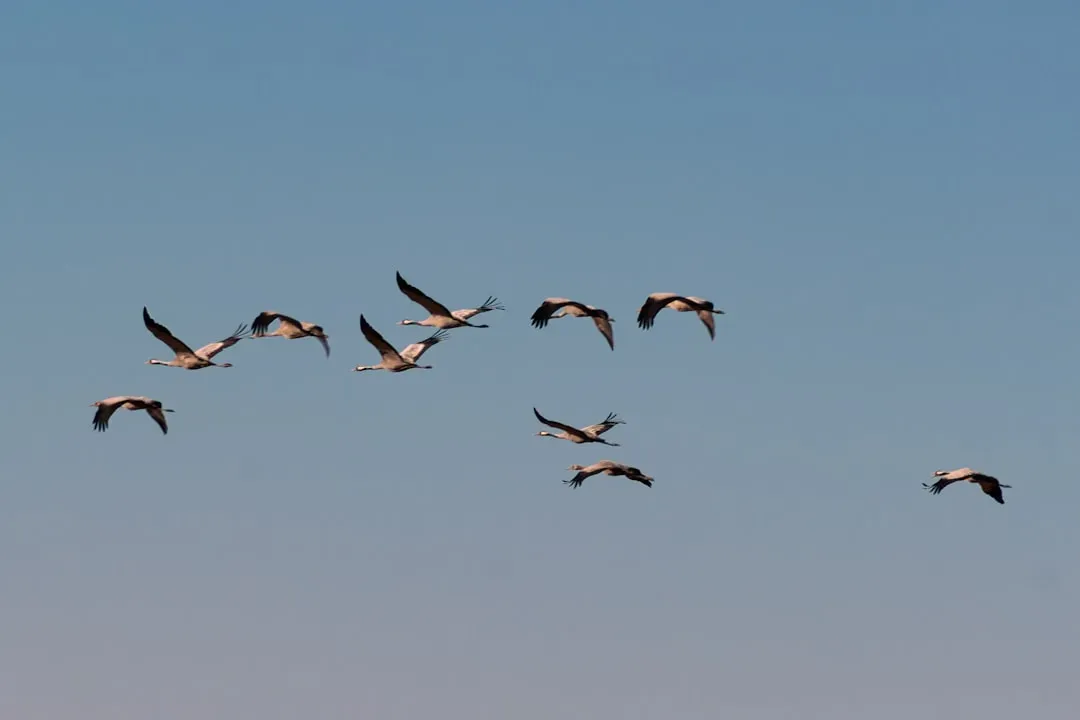
Long before we built telescopes or compasses, birds were already using the sky as a map. Many species navigate using the position of the sun during the day, adjusting for its movement across the sky as time passes. They seem to have an internal sense of time that lets them correct for the sun’s changing position so that “east” at sunrise doesn’t confuse them later in the day. For them, the sun is less a bright ball and more a moving landmark they’ve learned to interpret.
At night, things get even more impressive. Experiments have shown that some migratory birds actually learn the pattern of the stars as youngsters and then use that star map to guide their journeys. They don’t just lock onto one star; they read the rotation of the whole sky around the night’s central pivot. It’s a bit like memorizing the face of a giant clock, where the spinning of the stars tells you which way is north and where you should go. While we might get lost staring at constellations, they treat the night sky like a reliable, ancient navigation app.
Following the Landscape: Rivers, Coasts, and Mountain Ridges
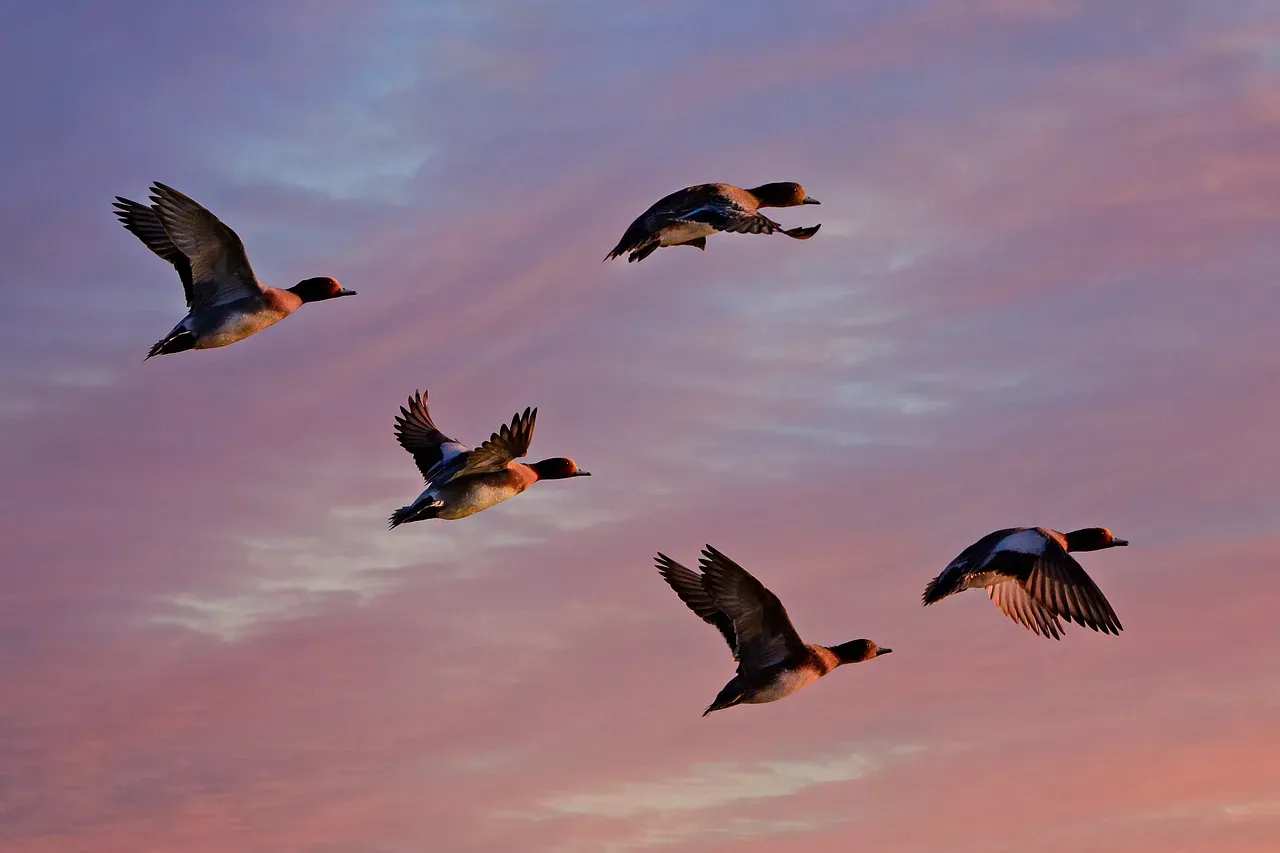
Even with all that fancy physics going on, birds still rely heavily on good old-fashioned landmarks. Many species follow coastlines, rivers, and mountain chains like natural highways across continents. If you imagine a map of major migration routes, you often see lines that hug shorelines or trace mountain ranges for thousands of miles. These features help birds stay oriented and give them predictable paths that generations have followed before them.
Some birds fly low enough to recognize forests, cities, lakes, and even individual valleys. Others, like soaring raptors, may trace the edges of mountain ridges where rising warm air makes flying easier. It’s like driving home and recognizing that you’re near when you pass a familiar gas station or bridge, except their “gas stations” are entire geographic formations. This visual memory of the landscape builds up over time, allowing experienced migrants to refine their routes year after year.
Smell as a Map: The Surprising Role of Odors

Smell doesn’t usually come to mind when we think about navigation, but for certain birds, it’s absolutely crucial. Some seabirds, for example, appear to follow smell gradients over the open ocean, picking up on subtle differences in the odor of the air and water. Where different currents meet, there are often tiny changes in chemicals and biological activity, and these changes can create an “odor landscape” that birds learn to recognize. To us, the open ocean might seem like a blank blue desert, but to them, it can be full of invisible scent trails.
Experiments where birds temporarily lose their sense of smell often show that they struggle to find their way home, even when their magnetic and visual cues should still work. This suggests that at least some species build mental maps that include smell, almost like we’d include roads on a map. It’s a bit like using your nose to know when you’re close to the sea, a bakery, or a pine forest, except they’re doing this across hundreds of miles. The idea that the wind itself carries navigational information adds another surprising layer to how complex their guidance system really is.
Built-In Maps: Genetic Programs and Innate Routes
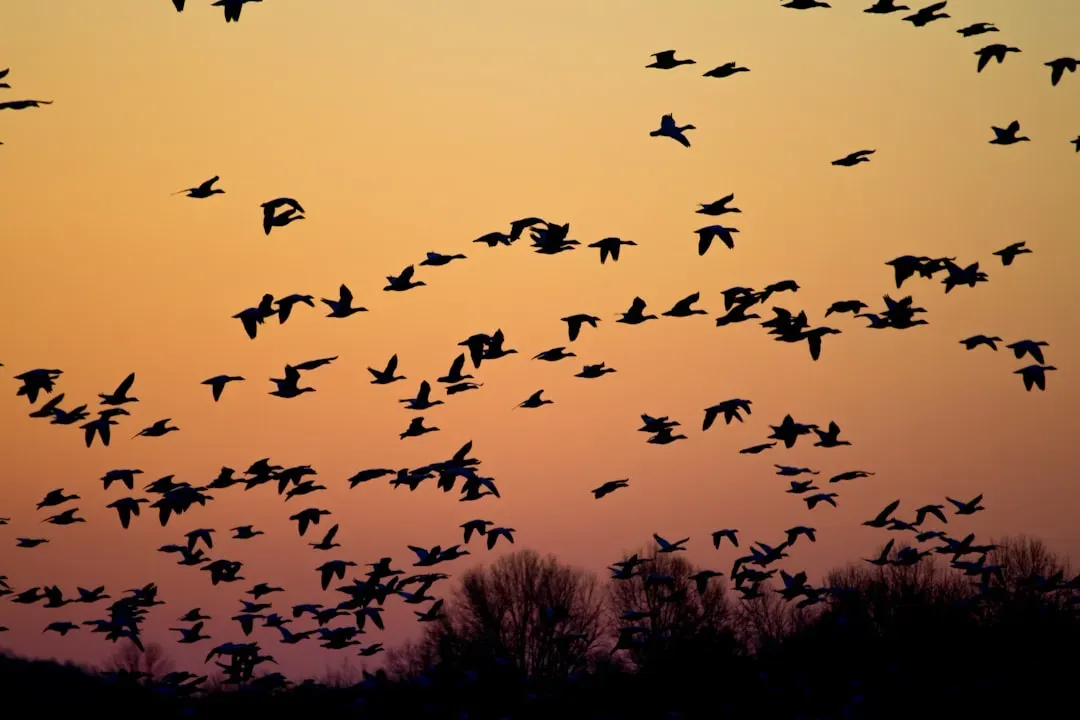
What’s even more astonishing is that many young birds set off on their first migration without any experienced adult leading them. They just launch into the sky at the right time of year and head in more or less the correct direction, guided by something deep within their biology. Scientists have found that birds bred in captivity, with no chance to watch older migrants, still show restlessness in the direction of their traditional migration route. That suggests that some part of the route is hardwired into their genes.
These inherited programs seem to encode not a precise path but a general compass direction and approximate distance or duration. For example, a species might have a built-in instinct to fly southwest for a certain number of weeks, then stop. It’s like giving someone a rough instruction to “drive west for a day” rather than handing them a turn-by-turn GPS route. Later, as birds gain experience, they can refine that genetic template with more detailed memories of landmarks, winds, and stopover sites, improving their accuracy over time.
Learning on the Wing: Experience, Memory, and Social Guidance
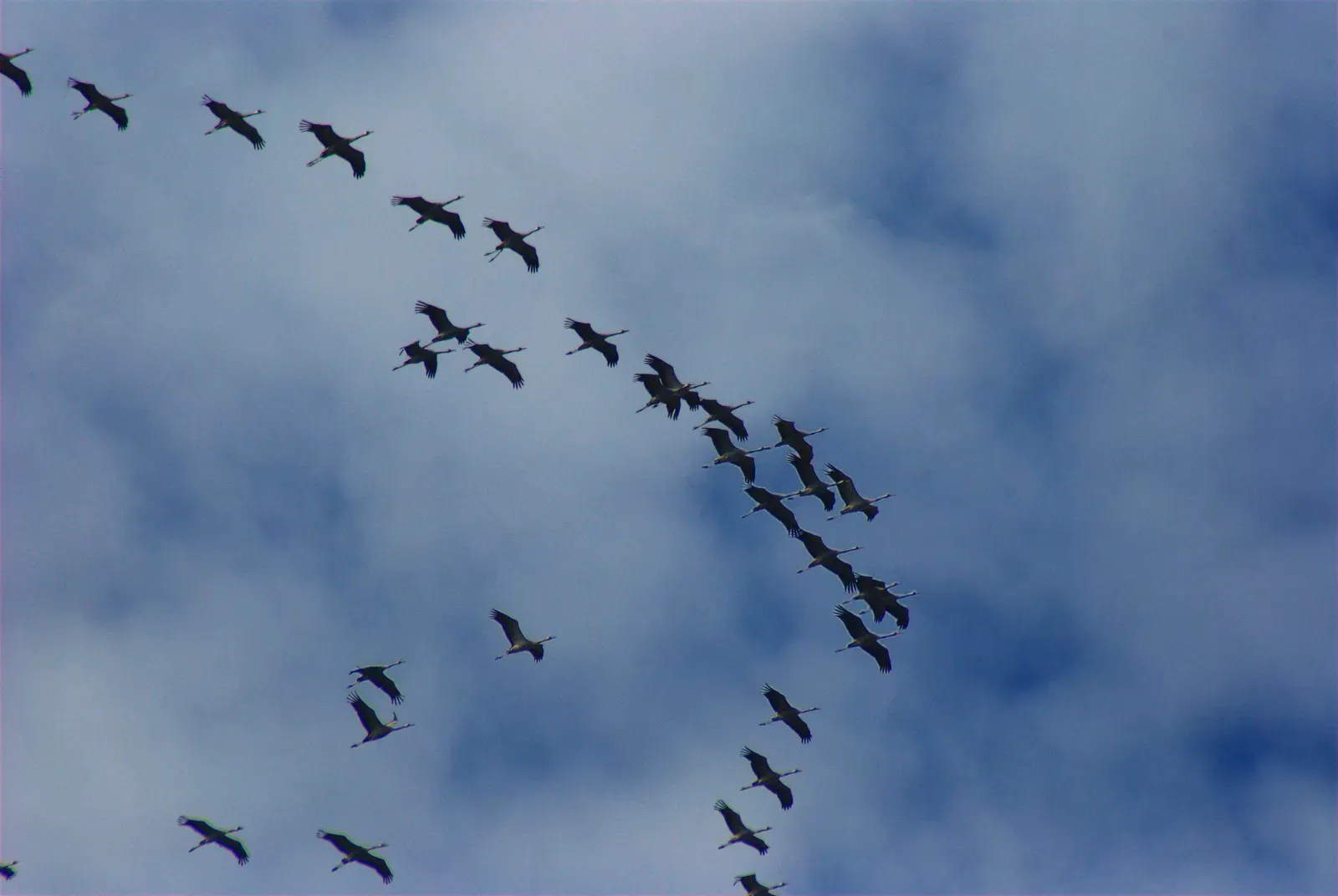
Genetics can get birds started, but experience sharpens their skills. Adult birds often take more efficient, direct routes than first-time migrants, suggesting they’ve learned from earlier trips. They remember where food was plentiful, where storms tend to appear, and which paths are safer from predators. Over time, this memory becomes a powerful internal atlas, helping them adjust to changing conditions year after year. It’s a living, constantly updated database stored in their brains.
Some species also benefit from social learning. Birds flying in flocks may follow experienced individuals who know the way, a bit like new drivers following a friend’s car through a confusing city. Groups like cranes, geese, and storks often migrate in family units or social groups, and the presence of a veteran leader can make a big difference. This social transmission of route knowledge gives them a flexibility that pure instinct alone can’t match. It allows migration paths to adapt if landscapes or climates change over time.
High-Risk Journeys: Storms, Lights, and Human Obstacles
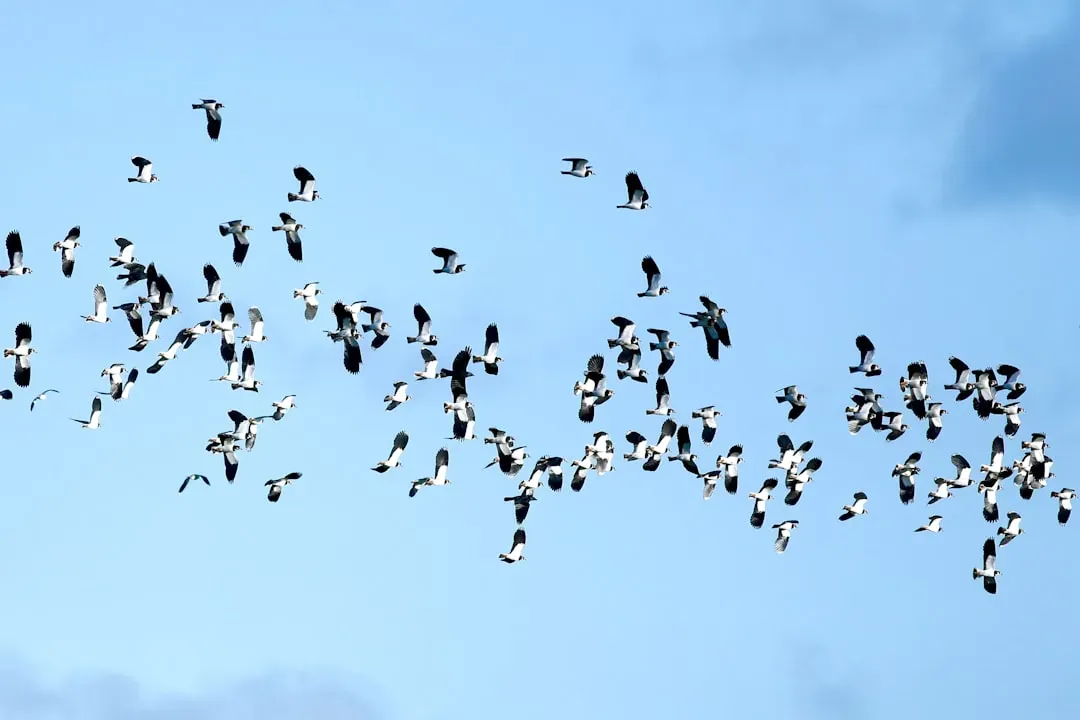
For all their abilities, migratory journeys are incredibly risky. Birds face storms, shifting winds, predators, and now, more and more, the obstacles we’ve built. City lights can confuse birds that navigate by stars, pulling them into urban areas where they crash into glass buildings at night. Tall structures, wind turbines, and power lines create deadly hazards along routes that used to be wide open airspace. Even small disruptions along a migration corridor can ripple through a population that depends on precise timing and specific stopover sites.
Climate change is also rearranging the world beneath their wings. Seasons are shifting, food sources are moving, and traditional rest stops may become less reliable. Birds need their navigation systems to do more than repeat old patterns; they have to adapt in real time to a changing planet. Conservation efforts that reduce light pollution, protect key wetlands, and preserve coastal and inland corridors are not just nice gestures. They’re essential to keep these ancient sky highways open and usable for the species that depend on them.
The Mind-Blowing Big Picture: A Living, Layered Navigation System

When you put it all together, bird navigation is not one simple trick; it’s a stack of overlapping tools. They use the Earth’s magnetic field as a compass, the sun and stars as a celestial map, landmarks as visual signposts, smells as subtle guides, genetic programs as a starting script, and experience plus social learning as ongoing updates. If one system fails, another can back it up, which is probably why their migrations are so reliably repeated across generations. It’s redundancy and elegance rolled into one.
For me, the most humbling part is realizing that the world we walk through casually is, for birds, a dense tapestry of signals and patterns we barely notice. The sky, the wind, the sea, even the faint chemical traces in the air all become clues, like a secret code layered over the planet. Next time you see a small bird perched on a wire in autumn, it might be days away from crossing deserts or oceans, guided by senses and instincts we’re only just beginning to understand. If you had to make that trip with no technology at all, do you think you’d even get close?