
About four billion years ago, on a young Earth battered by asteroids and wrapped in a toxic atmosphere, something extraordinary happened: chemistry turned into biology. We still do not know exactly how that transition unfolded, and that uncertainty haunts and energizes modern science in equal measure. Over the last few years, though, a wave of new experiments and bold theories has started to chip away at the mystery, replacing simple origin stories with a messier, more fascinating picture. Instead of a single spark, researchers now imagine networks of reactions, multiple starting points, and worlds within worlds of early chemistry. The story of how life began is no longer a static chapter in a textbook; it is an unfolding investigation that could reshape how we see our planet, and ourselves.
The Hidden Clues in Ancient Rocks and Alien Oceans
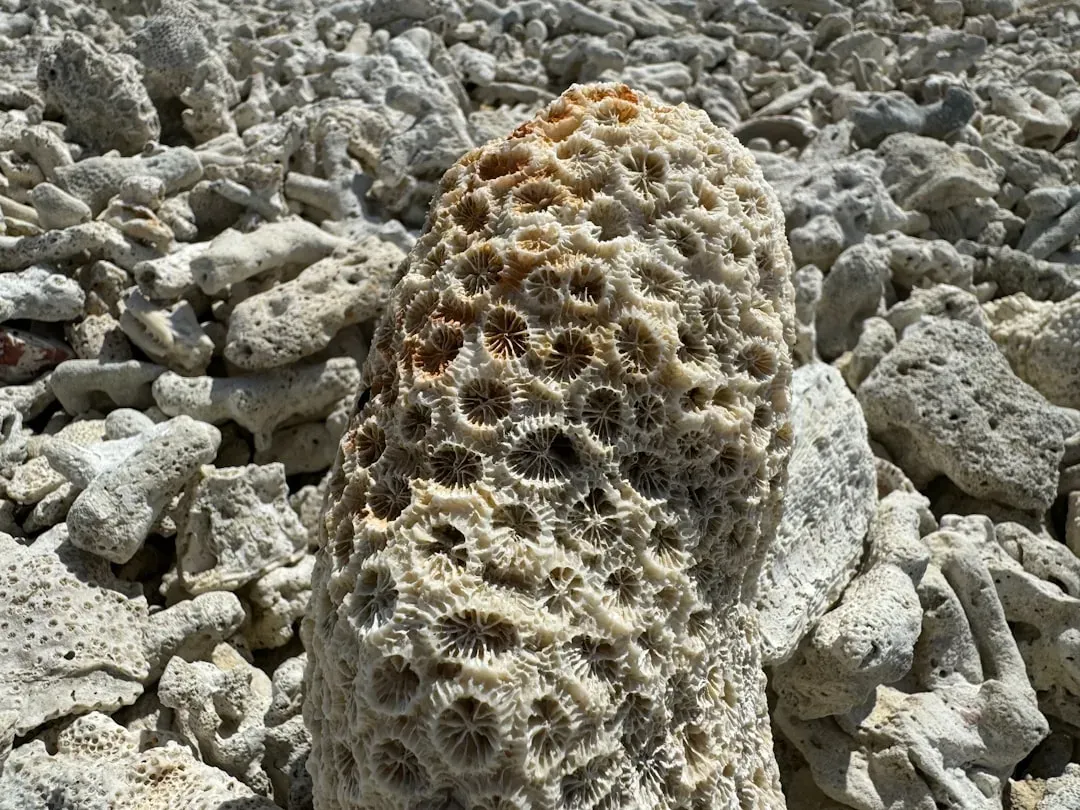
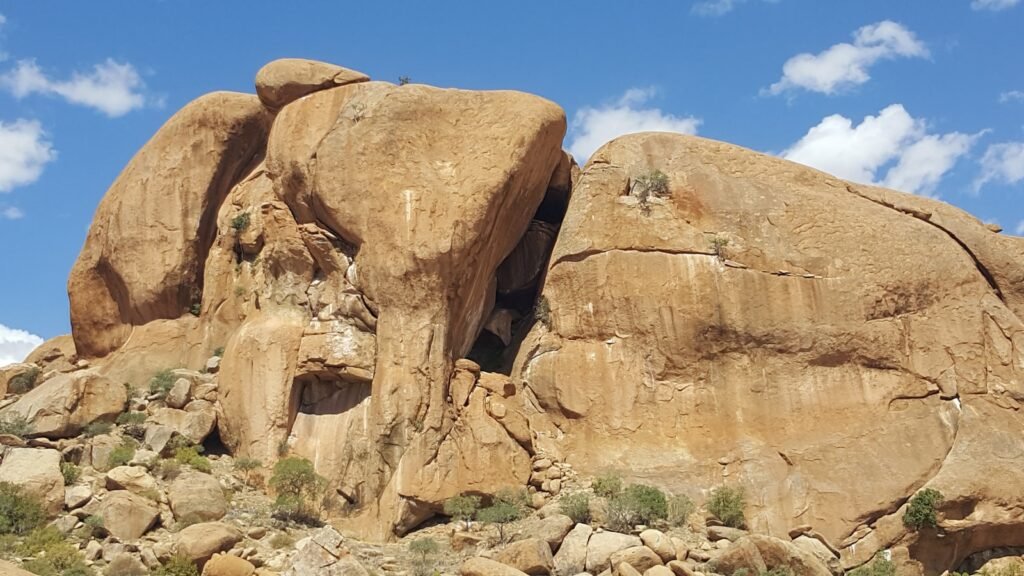
Walk across a barren outcrop of ancient rock, and you might be stepping over some of the earliest clues to life’s beginnings. In Western Australia and Greenland, scientists have found chemical fingerprints in rocks more than three and a half billion years old that suggest early microbes were already at work, cycling carbon and perhaps even breathing something like we do. These signatures are subtle shifts in the ratios of light and heavy forms of elements such as carbon and sulfur, which living organisms tend to sort in predictable ways. The rocks speak in isotopic whispers rather than clear words, but taken together they imply that life appeared surprisingly quickly after Earth cooled. That raises a provocative possibility: maybe the origin of life is not an impossibly rare fluke, but something that happens more easily than we once thought.
Those ancient clues have made scientists look outward, too, at places like Mars and the icy moons of Jupiter and Saturn. On Enceladus, for instance, space probes have detected plumes containing organic molecules and hints of hydrothermal activity, the kind of energy-rich environment some theories say is ideal for kick-starting biology. Under the frozen surface of Europa or in the once-wet basins of Mars, the same basic chemistry that took hold on early Earth may have had a chance to play out. If life emerged there and left even faint traces behind, it would fundamentally change how we interpret our own planet’s early history. Suddenly, those quiet rocks on Earth would be part of a much larger cosmic story.
From “Warm Little Ponds” to Violent Early Oceans
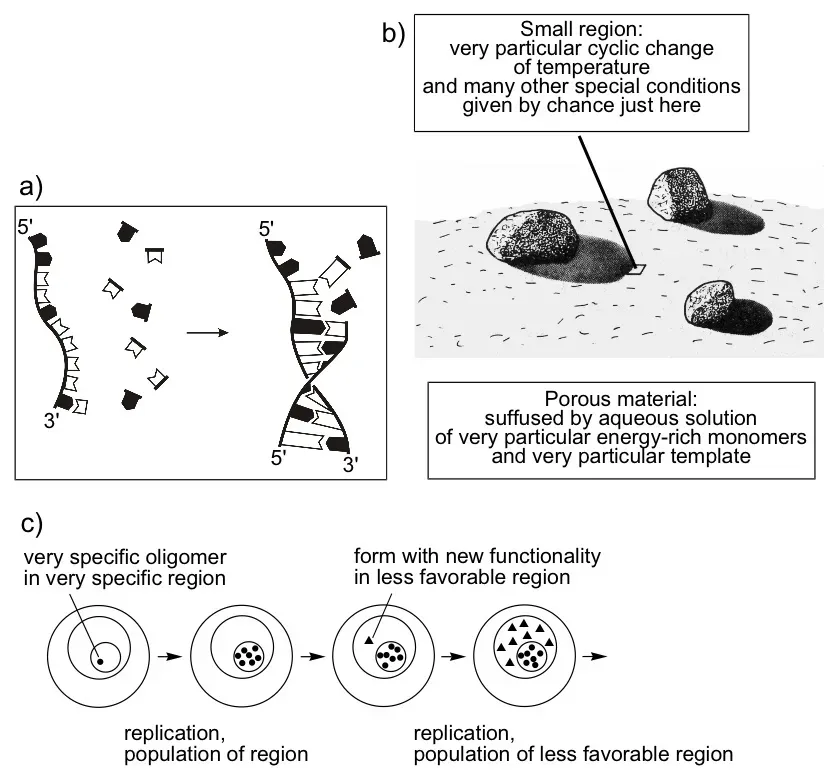
For more than a century, many scientists were fond of the idea that life began in a gentle setting, something like a warm little pond rich in simple chemicals and bathed in sunlight. Recent work has not killed that idea outright, but it has made the early Earth look less like a calm garden and more like a restless laboratory full of storms, impacts, and extreme environments. Volcanoes belched gases, lightning cracked across thick clouds, and comets and asteroids periodically slammed into the surface, delivering new materials and resetting the chemistry. In that chaos, small pools may have formed along volcanic coasts, drying and refilling again and again, concentrating molecules in a way that oceans could not. In such fluctuating environments, strands of RNA or other early polymers might have formed and broken and reformed, slowly exploring the space of possible primitive “genomes.”
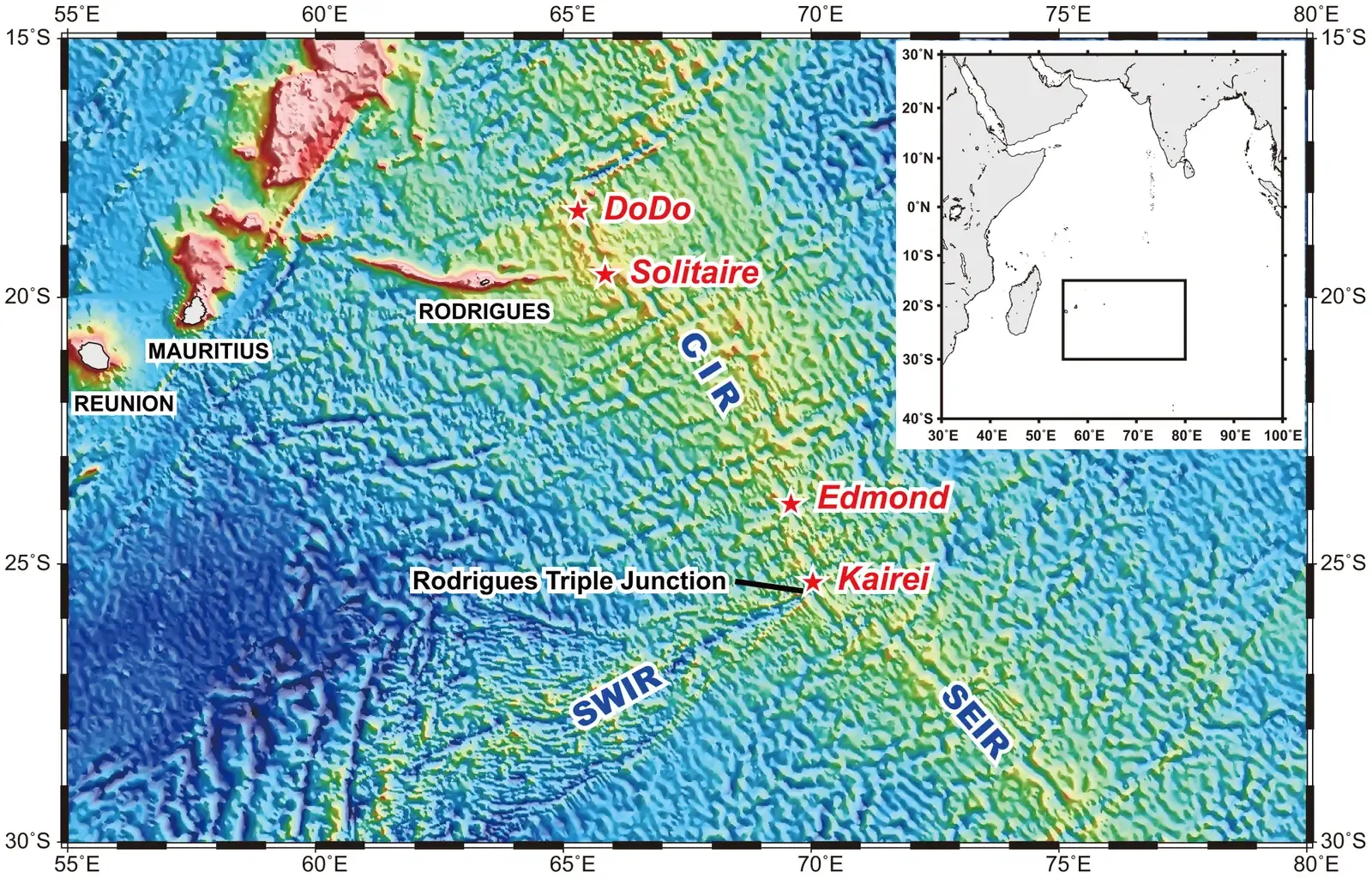
At the same time, another camp of researchers has argued that the real action happened not in pools but deep under the sea. Along hydrothermal vents, where hot, mineral-rich fluids gush through porous rock, you get natural chemical reactors with steep gradients in temperature and acidity. Some experimental studies show that these gradients can drive simple molecules to assemble into more complex chains, even without the help of enzymes. Think of these vents as natural battery banks, where energy continually flows and pushes molecules into unusual configurations. Whether in ponds at the surface or chimneys in the deep, the common thread is that life seems to require places where matter is pushed away from equilibrium, kept just far enough from chemical comfort to explore new possibilities.
RNA Worlds, Lipid Bubbles, and the New Chemical Cast
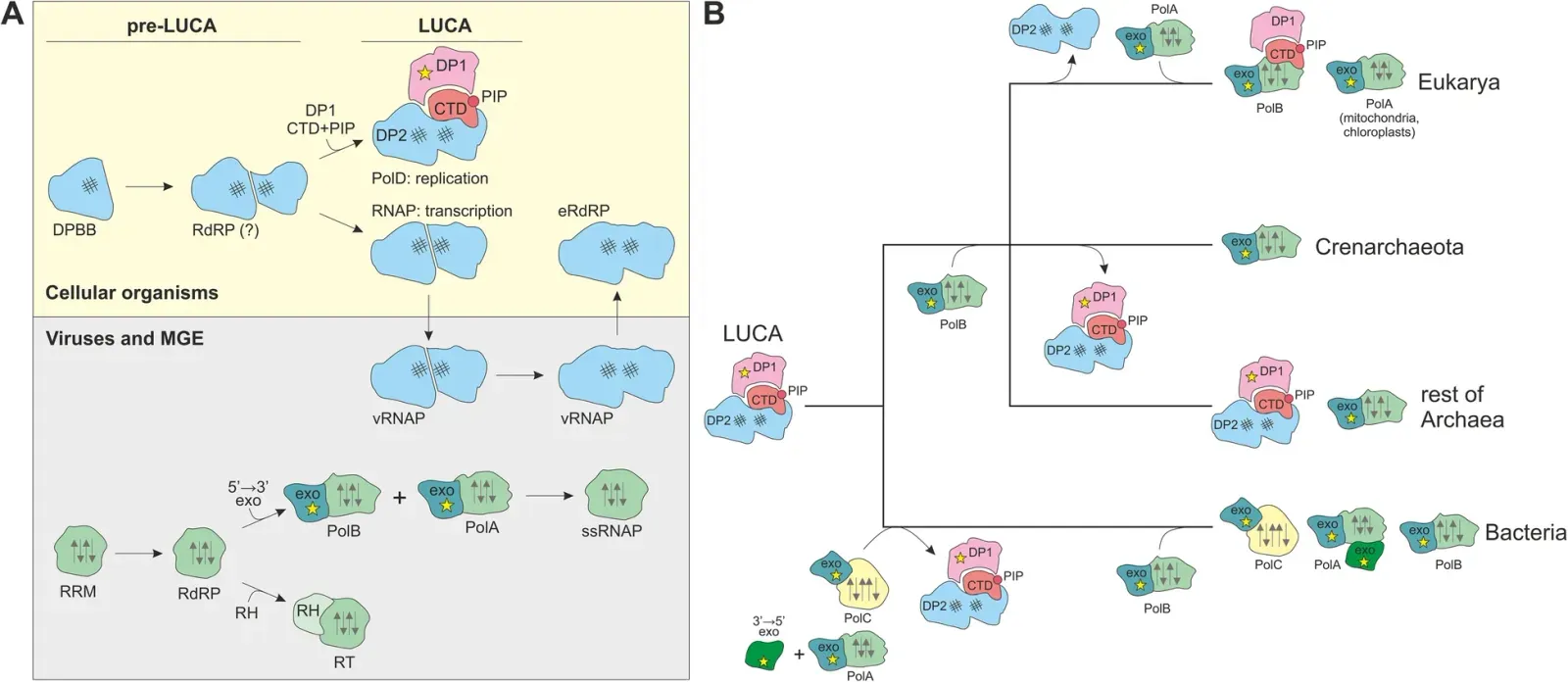
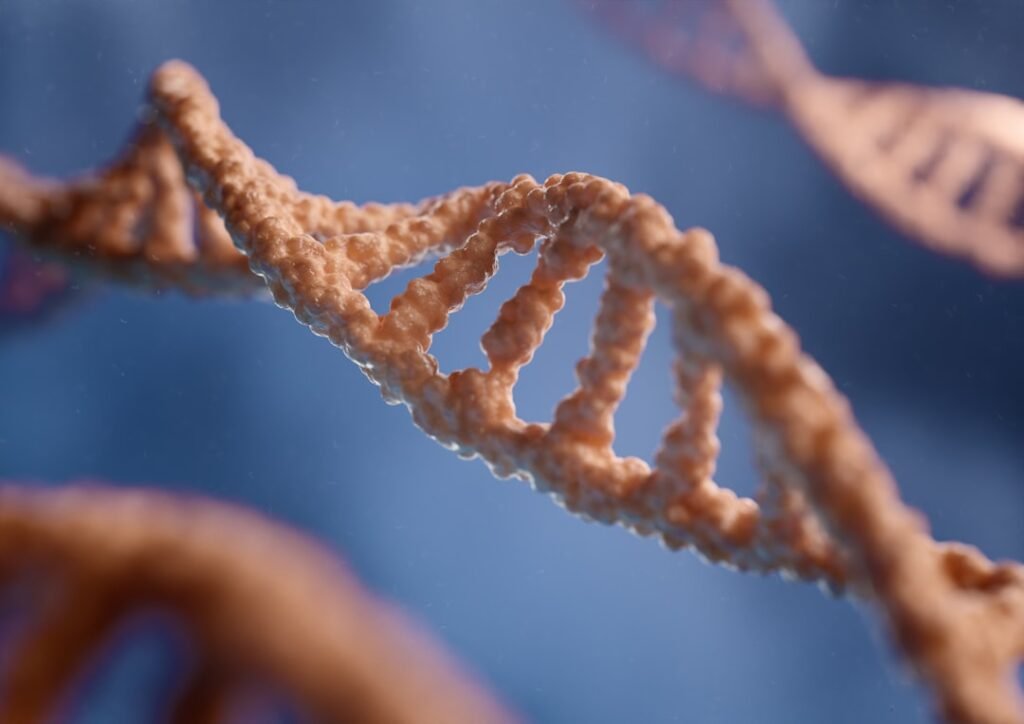
If you ask origin-of-life researchers what came first, genes or cells, the conversation almost always turns to something called the RNA world. RNA is a close chemical cousin of DNA that can both store information and catalyze reactions, making it a tempting candidate for life’s first genetic material. In the lab, scientists have coaxed RNA molecules into copying parts of themselves, cutting other strands, and even evolving new functions over many generations of selection. That has fueled the idea that, before DNA-based life and complex proteins took over, there may have been a population of free-floating RNA-like molecules competing, mutating, and occasionally cooperating. The story sounds neat, but there’s a catch: making RNA from scratch in realistic early Earth conditions is fiendishly hard.
That difficulty has pushed researchers to broaden the cast of characters in their origin stories. Some teams focus on simpler, RNA-like molecules that might have acted as stepping stones, while others spotlight lipids, the fatty compounds that naturally form bubbles in water. These bubbles, sometimes called protocells, can trap molecules inside and maintain a kind of primitive separation from the environment, a key feature of living cells. When simple genetic polymers get stuck inside such bubbles in experiments, they sometimes show rudimentary signs of growth and division. Rather than a single ancestor suddenly springing to life, we may be looking at a gradual entanglement of chemistry: genetic strands, metabolic pathways, and fragile membranes all co-evolving, stumbling into what we would finally recognize as biology.
Energy First: Metabolism as the Spark
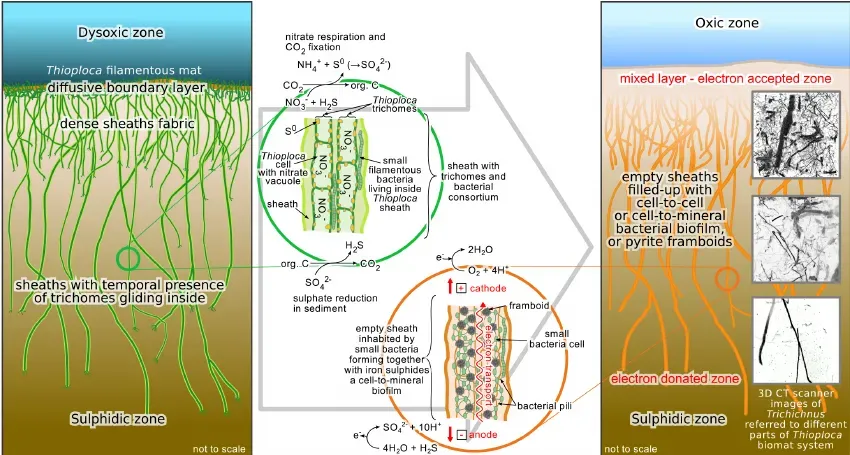
Not everyone is convinced that information molecules were the stars of the earliest chapters. A growing group of researchers argues that we should look first at metabolism, the web of chemical reactions that shuttles energy and raw materials around every living cell. In their view, before there were genes, there were networks of reactions powered by natural sources like geothermal heat or redox gradients at mineral surfaces. Experiments have shown that some of the core reactions in modern metabolism can occur under plausible prebiotic conditions, with simple metals serving as catalysts. This suggests that the backbone of life’s chemistry might have started as ordinary geochemistry that got progressively organized and enclosed.
When you think of life as metabolism first, the origin problem becomes less about a single lucky molecule and more about the gradual closure of reaction loops. Over time, reaction networks that could regenerate their own ingredients would persist longer than those that burned out, especially if they happened to become trapped in small compartments like rock pores. Eventually, such networks might have been “captured” by genetic systems, which offered a way to stabilize and refine what worked. This perspective does not reject the RNA world; it reframes it as one piece in a larger puzzle where energy flow and self-sustaining cycles are just as crucial as information. In other words, before life had a language, it may have had a metabolism.
Beyond Earth: Panspermia and Cosmic Seeding
There is another, more controversial possibility that refuses to go away: maybe life did not start on Earth at all. The idea of panspermia suggests that the first living cells, or at least key prebiotic ingredients, arrived here on rocks or dust grains flung through space. We know that meteorites can carry complex organic molecules, including amino acids and sugars, and some hardy microbes on Earth can survive the kind of extreme cold and radiation found beyond our atmosphere. Space missions have found organic chemistry almost everywhere they look, from the atmosphere of Titan to the tail of comets, which makes the cosmos look less like a sterile void and more like a sprawling chemical factory. If early Mars cooled faster and hosted liquid water earlier than Earth, it is not entirely outlandish to imagine that simple life began there and was later transferred here by impact debris.
Panspermia does not really solve the deeper question of how life begins; it merely moves the origin story to another world. Still, it forces scientists to test ideas about survival and transfer in brutal, realistic conditions, which is healthy for any theory. Radiation experiments, simulation of re-entry heating, and studies of microscopic life on spacecraft surfaces all feed into this discussion. Even if we eventually conclude that life did originate on Earth, the possibility of cosmic seeding sharpens our thinking about what is necessary and what is optional in early biology. It also reminds us that our planet is not a closed box but part of a larger exchange of material, and perhaps, someday, of living systems.
Why It Matters: From Consciousness to Our Place in the Universe
It is easy to treat the origin of life as a remote puzzle about molecules we will never see, but the stakes run far deeper. Every question about how chemistry became biology echoes in our attempts to understand how simple nervous systems gave rise to consciousness and self-awareness. If we can trace a path from blind chemical reactions to organisms that feel, remember, and wonder, we build a bridge across one of the biggest gaps in human knowledge. That bridge also changes how we think about uniqueness: if the steps from nonliving to living matter turn out to be robust under many conditions, then consciousness might not be a freak accident confined to Earth. Instead, it could be the distant outcome of a process that plays out wherever the right chemistry and time come together.
On a more practical level, origin-of-life research shapes other fields in surprising ways. It influences how we design biosignature searches on exoplanets, how we classify weird organisms on Earth, and how we think about building synthetic cells in the lab. It even affects ethics, because the more we understand about life’s fragility and contingency, the more seriously we may take planetary protection and biodiversity. Compared with older, simpler stories that framed life as a one-time miracle, the new, emerging picture is more dynamic and unsettling. It asks us to reconsider what counts as alive, what counts as conscious, and how far back in time those traits begin to emerge.
The Future Landscape: Lab-Generated Protocells and Alien Detections
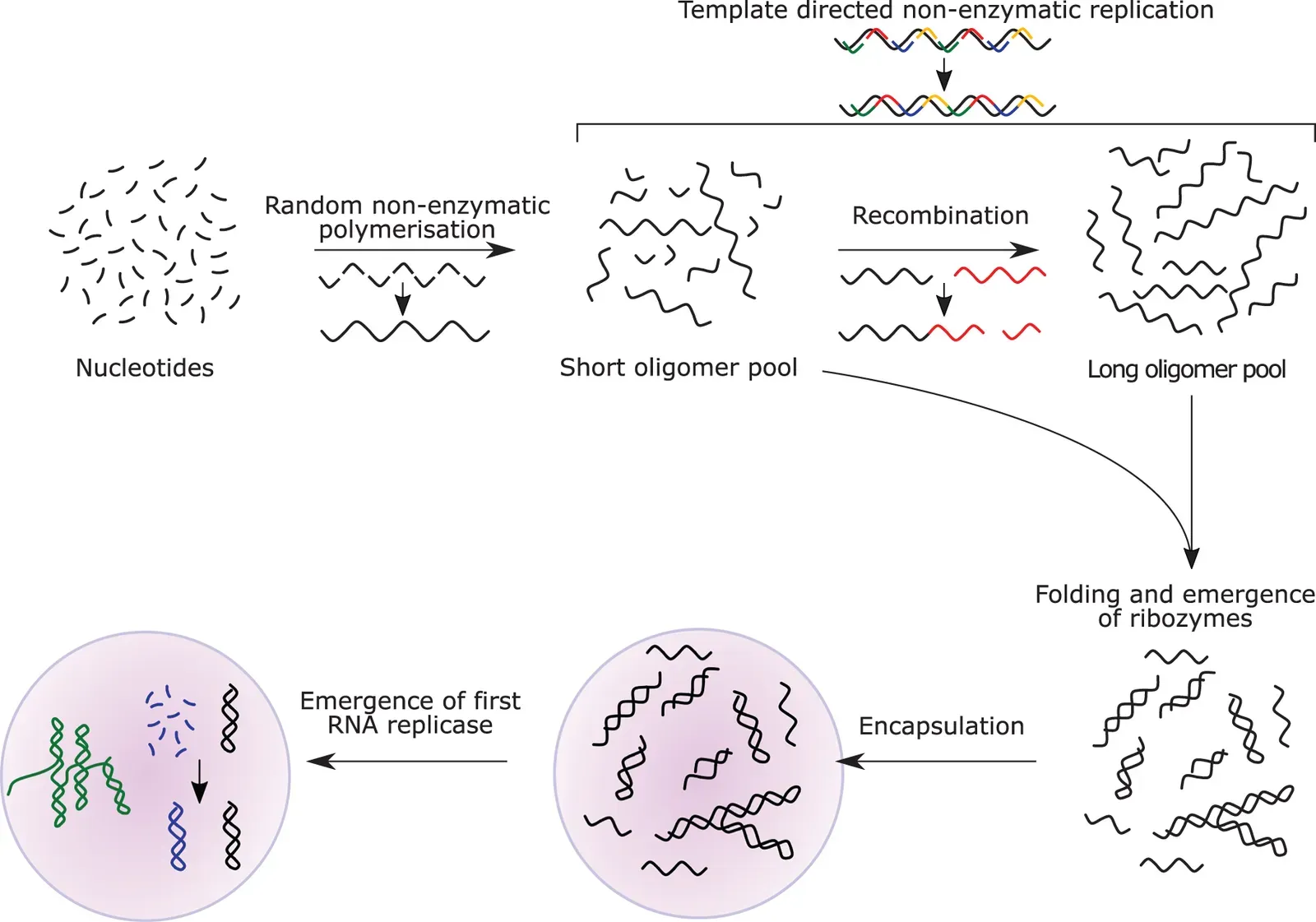
Looking ahead, the field is racing toward experiments that would have sounded like science fiction not long ago. Teams around the world are trying to build protocells from the bottom up, combining lipid membranes, simple metabolic cycles, and self-copying genetic strands into systems that can grow, divide, and evolve. If they succeed, even partially, they will not recreate the exact path that life took on early Earth, but they will prove that the transition from chemistry to biology is within reach in a controlled setting. At the same time, advances in telescopes and planetary missions are giving us sharper eyes on distant worlds. Instruments planned for the coming decade aim to sniff out atmospheric gases on exoplanets that could signal biological activity, such as combinations of methane and oxygen that are hard to explain by geology alone.
With every new instrument, the risk and reward both increase. A detected biosignature in an exoplanet atmosphere would push origin-of-life debates into a new phase, forcing theories to account not just for one example of life, but for many. Meanwhile, progress in synthetic biology blurs the line between natural and engineered organisms, making it possible to test hypotheses about early evolution in fast-forward. Future challenges will include avoiding contamination of other worlds, navigating ethical questions about creating new life forms, and ensuring that the benefits of these discoveries are shared widely. The global implications are enormous: origin-of-life science could inform climate models, biotechnology, and even our philosophical and cultural narratives about what it means to be alive.
How You Can Engage With the Origins Question
For a topic that seems so abstract, there are surprisingly concrete ways to take part in the search for life’s beginnings. Many observatories, planetary missions, and origin-of-life labs run public outreach programs where you can follow experiments in near real time, from tracking exoplanet discoveries to watching protocell research unfold. Some projects invite citizen scientists to help classify planetary images or analyze data sets for unusual patterns, turning your curiosity into actual contributions. You can also support organizations that promote basic research in astrobiology and early Earth science through memberships, donations, or simply by amplifying their work in your own circles. Even choosing to read and share reliable, nuanced science reporting makes a difference in an online space crowded with oversimplified stories.
On a more personal level, engaging with this mystery can be as simple as asking better questions in everyday life. When you hear about a new exoplanet discovery, you might wonder what its early chemistry looked like, or whether it ever had its own version of tidal pools or hydrothermal vents. When you encounter debates about consciousness or artificial intelligence, you might remember that all of our thoughts rest on an unbroken chain that began in some ancient chemical dance. The origin of life is not just a scientific puzzle; it is part of the background story of every breath you take, every memory you form, and every decision you make. Paying attention to that story is one small way to honor how improbable, and yet how strangely plausible, our existence really is.
Suhail Ahmed is a passionate digital professional and nature enthusiast with over 8 years of experience in content strategy, SEO, web development, and digital operations. Alongside his freelance journey, Suhail actively contributes to nature and wildlife platforms like Discover Wildlife, where he channels his curiosity for the planet into engaging, educational storytelling.
With a strong background in managing digital ecosystems — from ecommerce stores and WordPress websites to social media and automation — Suhail merges technical precision with creative insight. His content reflects a rare balance: SEO-friendly yet deeply human, data-informed yet emotionally resonant.
Driven by a love for discovery and storytelling, Suhail believes in using digital platforms to amplify causes that matter — especially those protecting Earth’s biodiversity and inspiring sustainable living. Whether he’s managing online projects or crafting wildlife content, his goal remains the same: to inform, inspire, and leave a positive digital footprint.