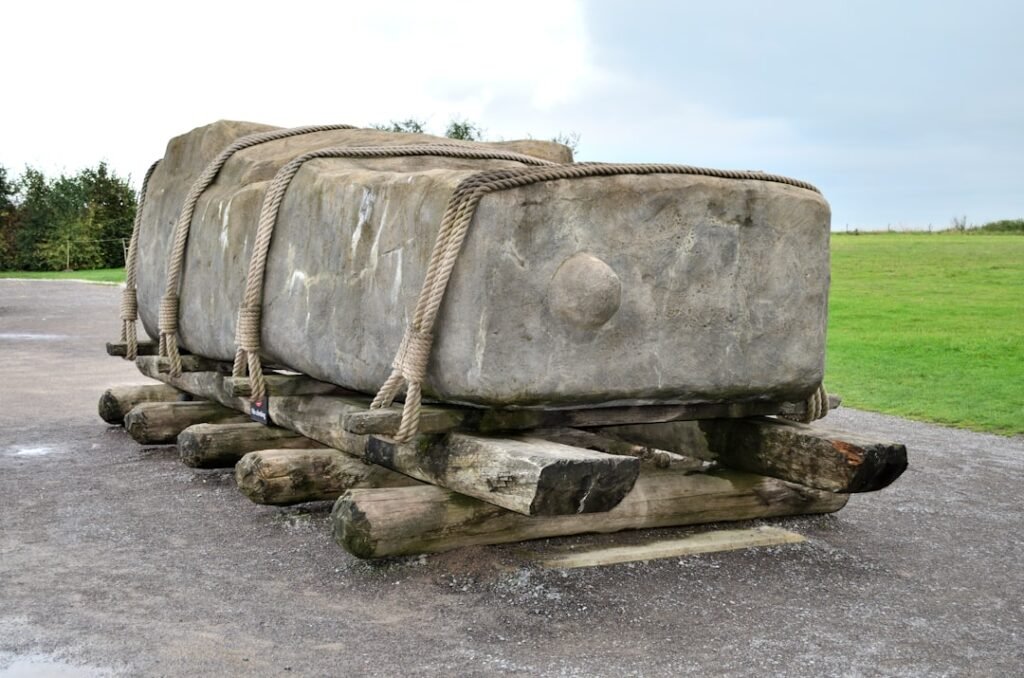

You’ve probably stood in front of the pyramids of Egypt or seen photos of Stonehenge and thought to yourself, how on earth did they do that? Massive stones weighing tons, moved across deserts and hills, lifted into perfect position. No cranes. No trucks. No steel cables. Just human hands, simple tools, and a level of determination that frankly makes our modern complaints about heavy furniture seem a bit ridiculous.
The truth is, these ancient builders were operating on a completely different wavelength. They didn’t have blueprints in the way we think of them, yet they constructed monuments that have survived earthquakes, storms, and millennia of wear. It’s tempting to think they must have had some secret we’ve lost, or maybe even outside help if you believe certain late-night documentaries. Yet the real answer is far more impressive. These people were brilliant problem solvers who understood physics, materials, and teamwork in ways that put many of us to shame.
Let’s be real, the mystery of moving massive stones isn’t really about aliens or lost technology. It’s about ingenuity. What you’ll discover as we dig into this topic might surprise you. From wet sand tricks in Egypt to statues that literally walked on Easter Island, ancient engineers had methods that were as practical as they were creative.
The Egyptian Secret: Wet Sand and Wooden Sledges
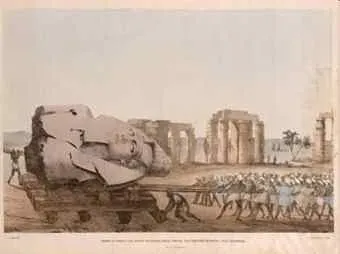
Ancient Egyptians who built the pyramids likely moved massive stone blocks across the desert by wetting the sand in front of contraptions built to pull the heavy objects. Think about that for a second. Water and sand. That’s the game changer.
A wall painting discovered in the ancient tomb of Djehutihotep, dating back to about 1900 B.C., depicts 172 men hauling an immense statue using ropes attached to a sledge, with a person standing on the front pouring water over the sand. For years, Egyptologists thought this was purely ceremonial, maybe some symbolic gesture to the gods. Turns out, it was practical engineering at its finest.
By making the sand wet, it reduces the amount of sliding friction when a sledge is being moved over the sand as opposed to dry sand. When researchers tested this, they found that dampening the sand increased its stiffness. Droplets of water create bridges between the grains of sand, which helps them stick together. It’s the same reason building a sandcastle with wet sand is easier than with dry sand.
This wasn’t just clever. The method made it easier to move the stones and was also labor efficient, requiring fewer workers to transport the rocks when the right amount of water was used. The Egyptians were optimizing their workforce thousands of years before anyone coined the term efficiency.
Waterways as Ancient Highways
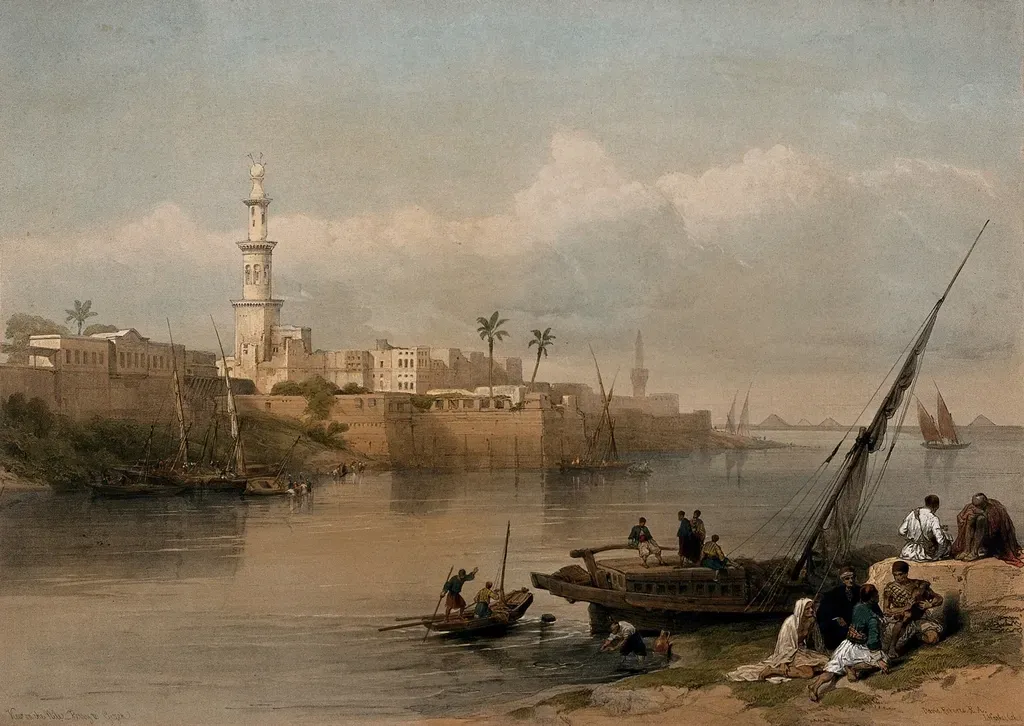
Here’s something that often gets overlooked. The Egyptians would use the Nile whenever possible, and mainly quarries in ancient Egypt were located along the Nile, so the transportation distances were relatively short. Rivers weren’t just for drinking water and irrigation. They were the interstate highway system of the ancient world.
In ancient Egyptian manuscripts known as the Wadi-al-Jarf papyri, the design of a water diversion project that allowed for the transport of materials to the Giza Plateau was described in detail, relating how limestone was quarried at a site known as Toura and transported to the construction site of the Great Pyramid of Khufu over a canal route covering a distance of 11 miles. Excavations in the region have revealed the existence of a series of canals and basins that experts are certain were used to carry materials to the Giza site.
The Egyptians engineered an entire network of canals. For long-distance transport, the blocks were loaded on barges and transported down the Nile, with workers digging canals to get the barges nearer to the site. Imagine coordinating that kind of infrastructure project. They had to harness the Nile’s flow, time the annual floods, and create basins that could handle massive stone-laden boats.
Honestly, it’s hard to say for sure how much of their system was pre-planned versus improvised as they went. Yet what remains clear is that water transport was fundamental. This interlocking system of canals, basins, ports, and natural river tributaries that unlocked the transportation potential of the Nile was itself a work of engineering genius.
Ramps, Levers, and the Power of Patience
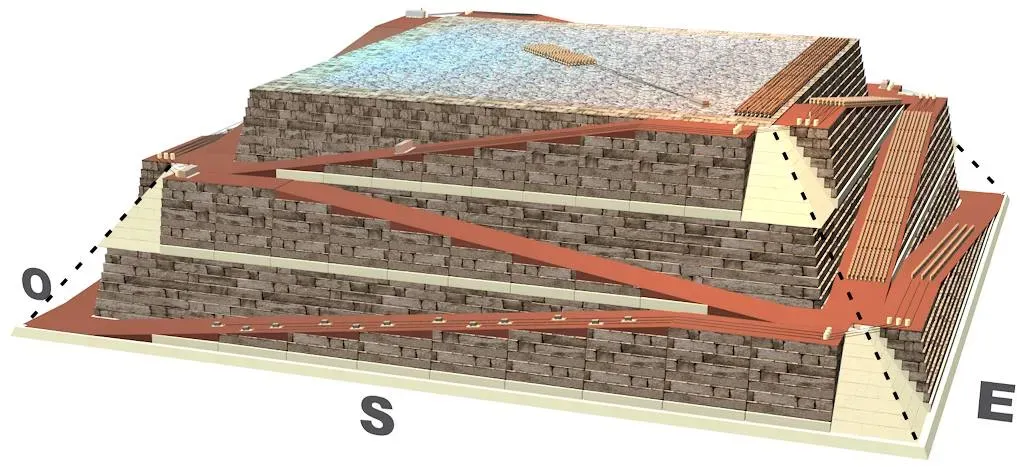
Once stones arrived at the construction site, they still had to be lifted and positioned. Ramps and inclines have been a cornerstone of ancient construction techniques, capitalizing on the principle that it is easier to move a heavy object up a gentle slope than to lift it vertically. The Egyptians likely used straight ramps, zigzagging ramps, or possibly a combination of both.
The construction of the Great Pyramids of Giza provides a vivid example of the sophisticated use of ramps, with archaeologists believing that the Egyptians employed a series of straight and zigzagging ramps to transport limestone blocks from quarries to the construction site. These ramps were meticulously engineered, with surfaces smoothed and lubricated to minimize friction, while workers would haul the stones up the inclines using sledges, ropes, and sheer manpower.
Levers also played a role. By placing a rigid beam over a pivot point, or fulcrum, ancient builders could lift and maneuver massive stones with relative ease. Four or five men were able to use levers on stones less than one ton to flip them over and transport them by rolling. For heavier stones, teams combined levers with ramps and sledges.
The process was labor intensive, no doubt. Yet it was achievable with the tools they had. Lehner and Hopkins found that by putting the stones on wooden sledges and sliding the sledges on wooden tracks, they were able to tow a two-ton stone with 12 to 20 men.
Stonehenge: Rollers, Grease, and Sheer Determination
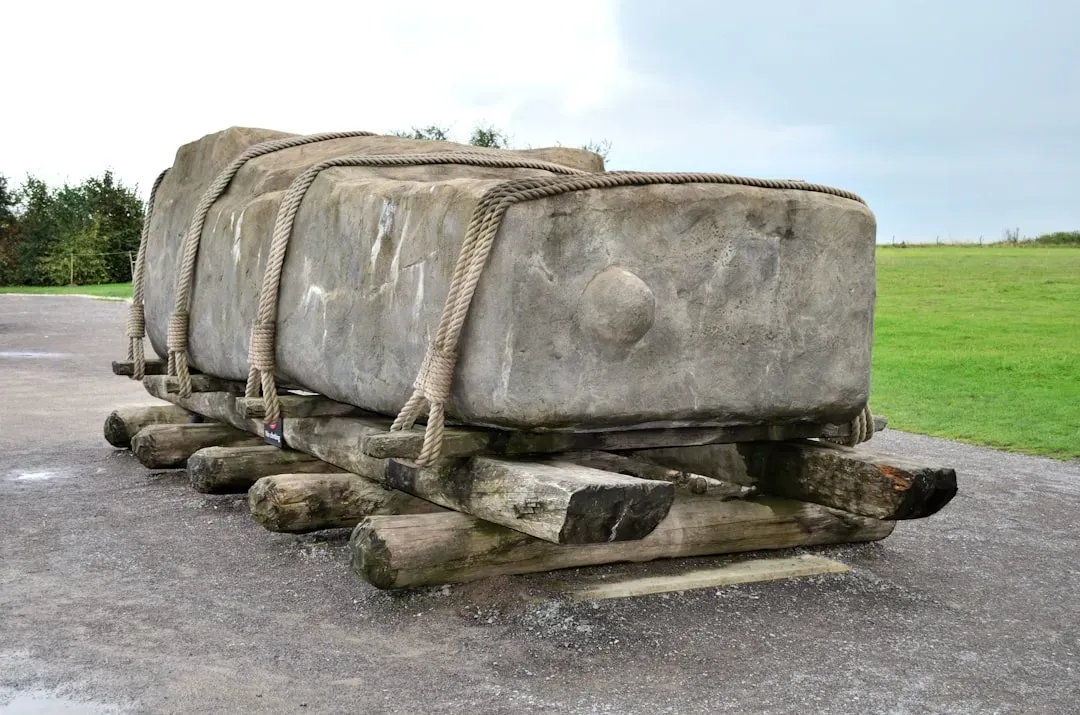
Stonehenge is somewhere between 4,000 and 5,000 years old. The sarsens were moved about 40 to 50 kilometers from essentially local sources. Some of these stones weigh around 40 tons. Moving them would have required serious coordination.
The most common theory of how prehistoric people moved megaliths has them creating a track of logs along which the large stones were rolled, or using a type of sleigh running on a track greased with animal fat, with an experiment near Stonehenge in 1995 successfully using a team of more than 100 workers to push and pull a 40-ton slab along an 18-mile journey. Let that sink in. Over 100 people working together to haul one stone nearly 20 miles.
There’s recent evidence that pig lard was used as a lubricant. Ancient people may have moved some of the massive megaliths of Stonehenge into place by greasing giant sleds with pig lard, then sliding the giant stones on them across the landscape. Lipid residue found in pottery at the nearby Durrington Walls site indicates ancient Britons may have relied on pig fat to grease a system of logs and sledges.
A simulation showed that 10 people can move a 1-ton stone at nearly 1 mph. Scale that up to a 40-ton stone, and you’d need a small army. Yet it was possible. Some of the bigger sarsens weigh about 40 tons and would need about 150 people to pull them along.
The Moai of Easter Island: Statues That Walked
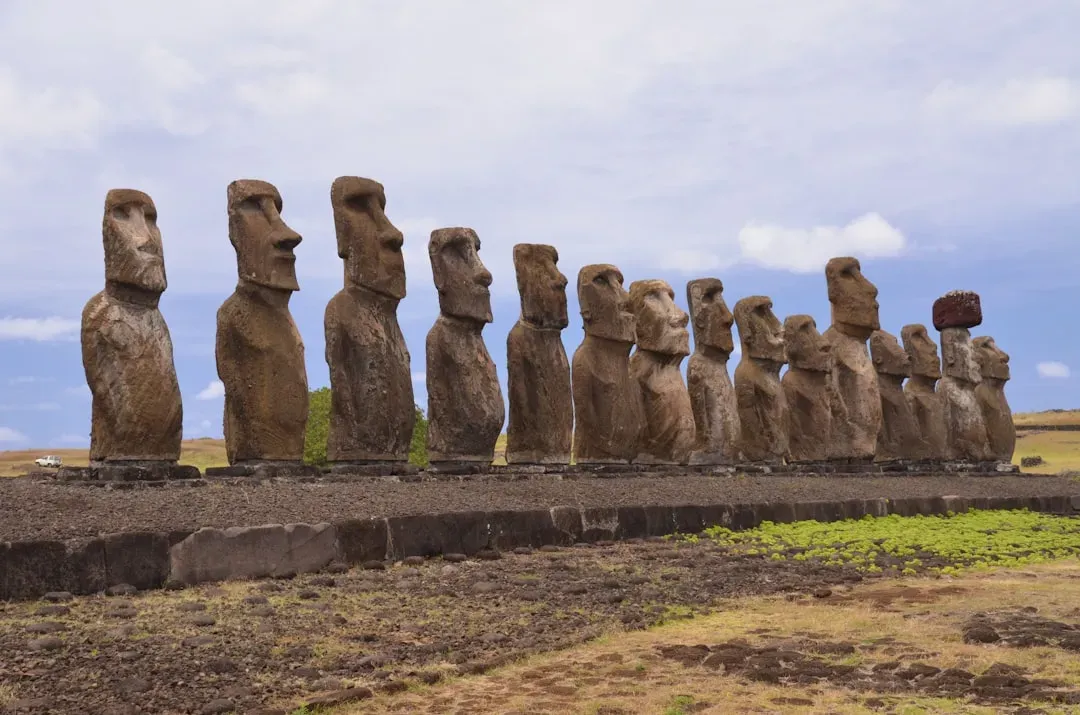
Easter Island’s moai statues present one of the most intriguing transportation mysteries. For years, researchers have puzzled over how the ancient people of Rapa Nui moved their iconic moai statues, with a team using physics, 3D modeling and on-the-ground experiments confirming that the statues actually walked with a little rope and remarkably few people.
Yes, you read that right. They walked. The islanders’ oral traditions have long recounted that the statues walked, with Thomson being told the statues were endowed with power to walk about in the darkness and Metraux recounting that the huge blocks walked for a distance and then stopped. For centuries, outsiders dismissed this as myth or superstition.
Studying nearly 1,000 moai statues, researchers found that the people of Rapa Nui likely used rope and walked the giant statues in a zig-zag motion along carefully designed roads, with high-resolution 3D models identifying distinctive design features including wide D-shaped bases and a forward lean that would make them more likely to be moved in a rocking, zig-zagging motion. The statues were literally engineered to walk.
Putting their theory to the test, the team built a 4.35-ton replica moai with the distinct forward-lean design, and with just 18 people, the team was able to transport the moai 100 meters in just 40 minutes. That’s astonishingly efficient. By the researchers’ calculations, a six-mile journey would have taken 15 to 22 days for a 40-person team.
The roads themselves were part of the system. Every time they were moving a statue, it looks like they were making a road, with the road being part of moving the statue, and they probably cleared a path, moved it, cleared another, and moved it further in certain sequences.
Inca Precision: Stone Fitting Without Mortar
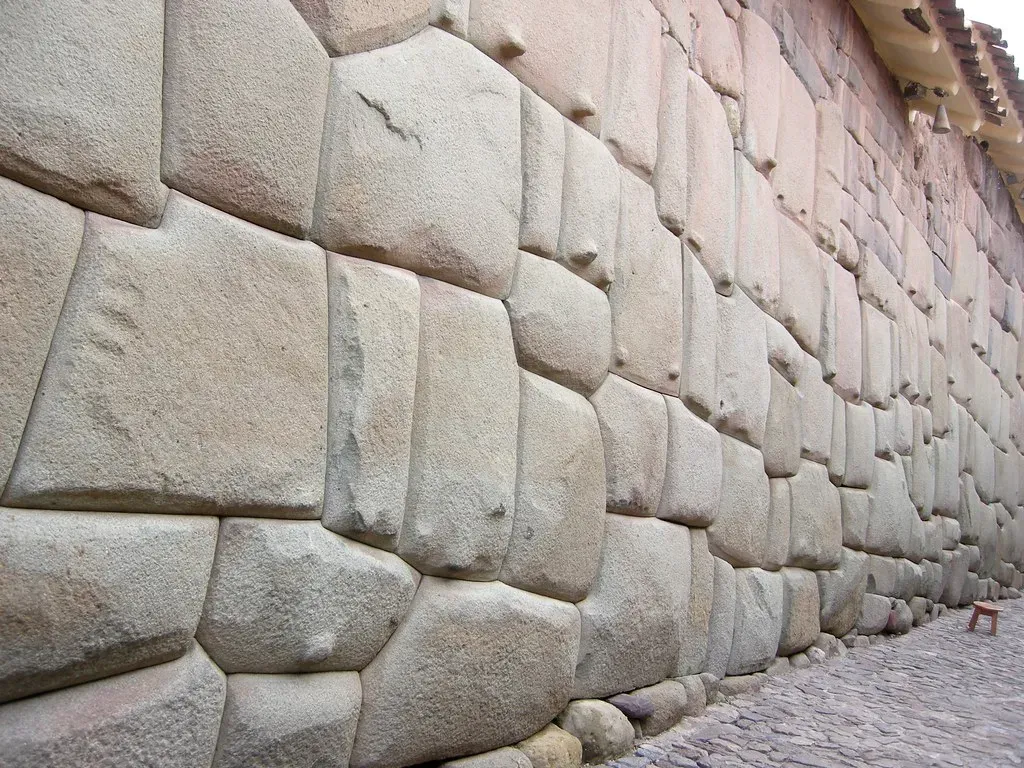
The Incas constructed Machu Picchu and other sites using a technique that still baffles modern engineers. The most striking feature of Machu Picchu’s architecture is the precision of its ashlar masonry, where massive stone blocks fit together so perfectly that not even a knife blade can slide between them, with this technique creating walls that have survived centuries of earthquakes and weather.
The Inca builders made stones fit together so well that not even a knife could fit between them. Some sources say even a piece of paper can’t slide between the joints. The tools available to Inca masons included bronze chisels, stone hammers, and wooden wedges, yet they achieved tolerances measured in fractions of millimeters, with archaeological evidence suggesting they used sand and water as abrasives, combined with repeated testing and adjustment to achieve perfect fits.
How did they move these massive stones into position? Archaeologists found that the Inca moved stones weighing 10 to 15 tons, showing their incredible engineering skills. Theories suggest they used ramps, wooden rollers, and pulleys, showing great engineering by moving huge stones up mountains.
The precision wasn’t just on the surface. X-ray analysis of Machu Picchu’s walls reveals that the precision extends beyond visible surfaces deep into the stone interfaces, with this three-dimensional fitting technique requiring extraordinary spatial visualization skills and understanding of stone properties that rivals modern engineering capabilities.
Labor Organization and Community Effort
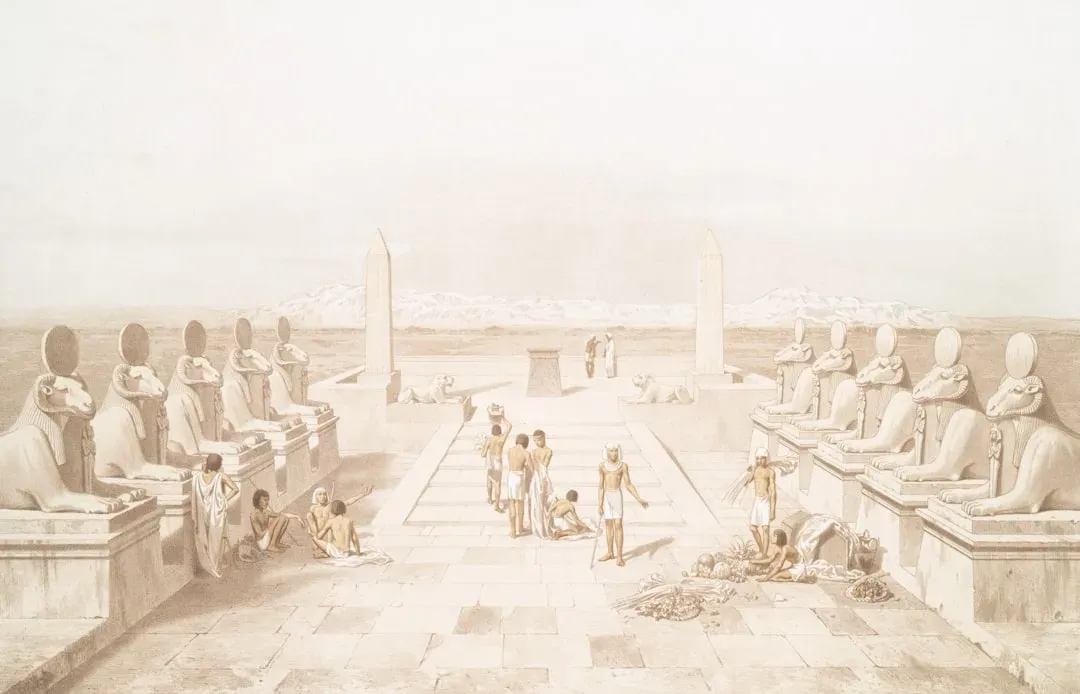
Moving massive stones wasn’t a solo endeavor. It required massive coordination. Construction projects required harnessing the seasons, people, and animals to transport stone blocks weighing many tons to construction sites. Ancient societies organized their labor forces around these monumental tasks.
The people who built Machu Picchu were part of a system called mit’a, which made sure thousands of skilled workers from all over the Inca Empire were involved. The Egyptians similarly mobilized thousands of workers. Physicist Kurt Mendelssohn calculated that the workforce may have been 50,000 men at most, while Ludwig Borchardt and Louis Croon placed the number at 36,000.
These weren’t slaves toiling under the whip, as popular imagination might suggest. Analysis of worker cemeteries near the pyramids reveals signs of good health and proper care, incompatible with the harsh conditions expected of slaves often portrayed in fictionalized accounts. Workers were skilled craftsmen who took pride in their work.
There’s a lesson here about what humans can accomplish when they work together toward a common goal. As one archaeologist noted, we forget that ancient people are just as smart as we are, and in fact, they may have been better focused because they didn’t have our distractions.
The Ingenuity of Working With Nature
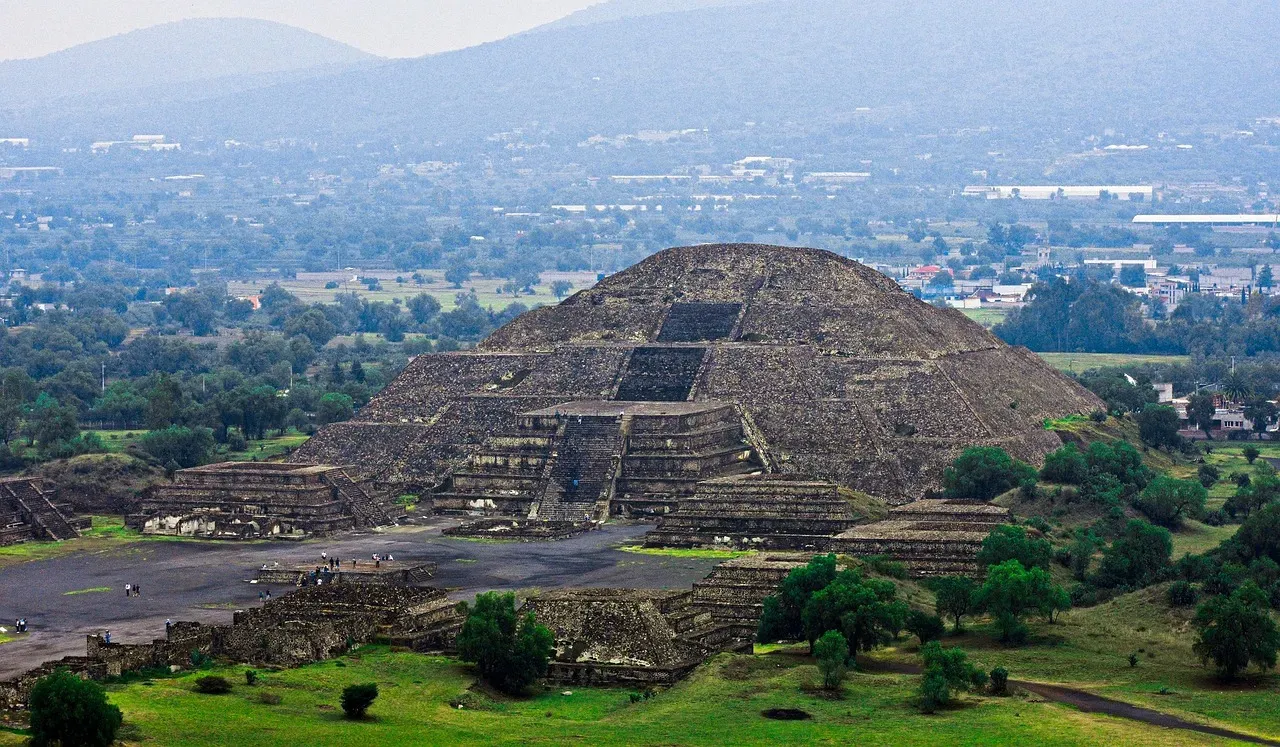
What strikes me most about these ancient methods is how closely they worked with natural principles rather than against them. Making nature work for them is a common theme in the techniques experts think ancient peoples used to build their monuments and temples. They didn’t try to conquer physics. They understood it and used it to their advantage.
The Egyptians exploited water’s ability to reduce friction. The Easter Islanders designed statues with centers of gravity that made rocking motion efficient. The Incas chose volcanic rock that was both hard and workable, then used abrasives from nature itself to shape it.
In some cases, all they needed was rope, a little manpower, and some ingenious carving, while other construction projects required harnessing the seasons, people, and animals. They observed the world around them, experimented, and refined techniques over generations.
Modern experiments have validated many of these methods. Some say the massive rocks of Stonehenge were placed on tracks made out of tree trunks and rolled the distance, with a group of students in London testing this theory and actually covering a lot of ground moving a couple tons with just a small group of people. We can replicate what they did because the physics hasn’t changed.
Conclusion: Lost Knowledge or Simply Lost Patience?
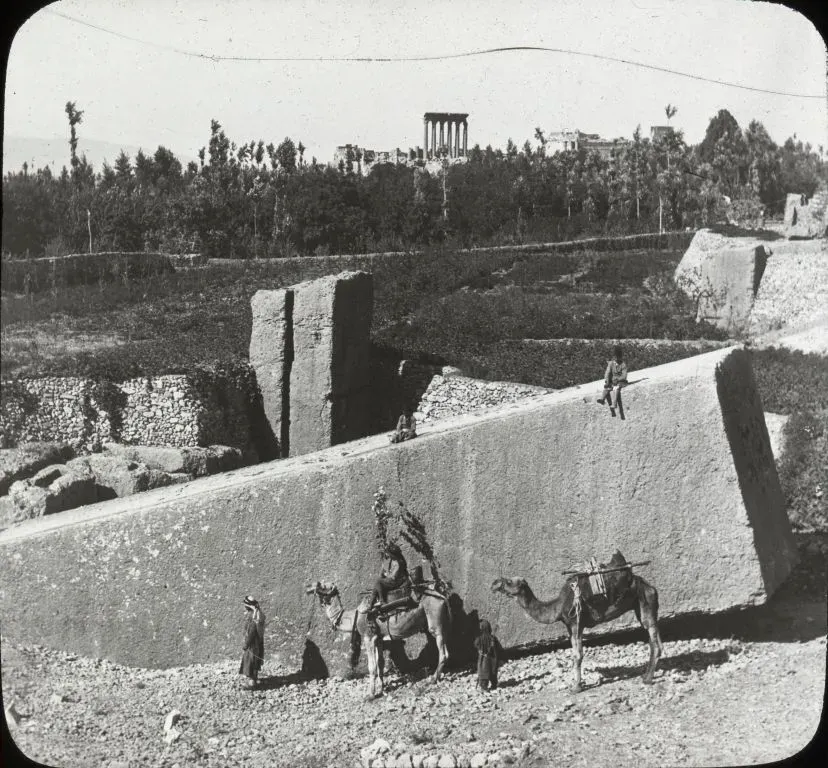
So They used ingenuity, physics, community organization, and an incredible amount of patience. They wetted sand to reduce friction. They floated stones on rivers and canals. They built ramps and used levers. They designed statues to walk and fitted stones with millimeter precision using bronze tools and abrasives.
Ancient civilizations are not very different from societies of people today, as they were no less intelligent or less physically capable, these civilizations just didn’t have the advantage of hundreds of years of technological advances on their side, so they had to be innovative. They solved problems with the resources available to them.
What’s remarkable isn’t that they had some lost technology or extraterrestrial help. What’s remarkable is that human beings, working together with simple tools and brilliant minds, achieved feats that still inspire awe thousands of years later. These monuments stand as testaments not to mystery, but to human capability and determination. They remind us that sometimes the most impressive technology is simply knowing how to use what you have in the smartest way possible.
What do you think? Could you imagine coordinating 150 people to haul a 40-ton stone across miles of countryside? It makes you appreciate just how much our ancestors achieved, doesn’t it?