

You’ve probably noticed it by now. That little voice in your head that whispers, “Why bother this through when AI can do it for you?” Maybe you’ve caught yourself reaching for ChatGPT before even trying to work through a problem. It’s convenient, sure. Maybe too convenient. Let me be real with you: there’s something happening beneath the surface of all this AI assistance, something researchers are only beginning to understand, and it’s got implications for how you think, learn, and solve problems in your everyday life. The question isn’t whether AI tools are useful. They absolutely are. The real question is what’s happening to your brain while you use them. So let’s dive in.
Your Brain on Autopilot: What the MIT Study Revealed
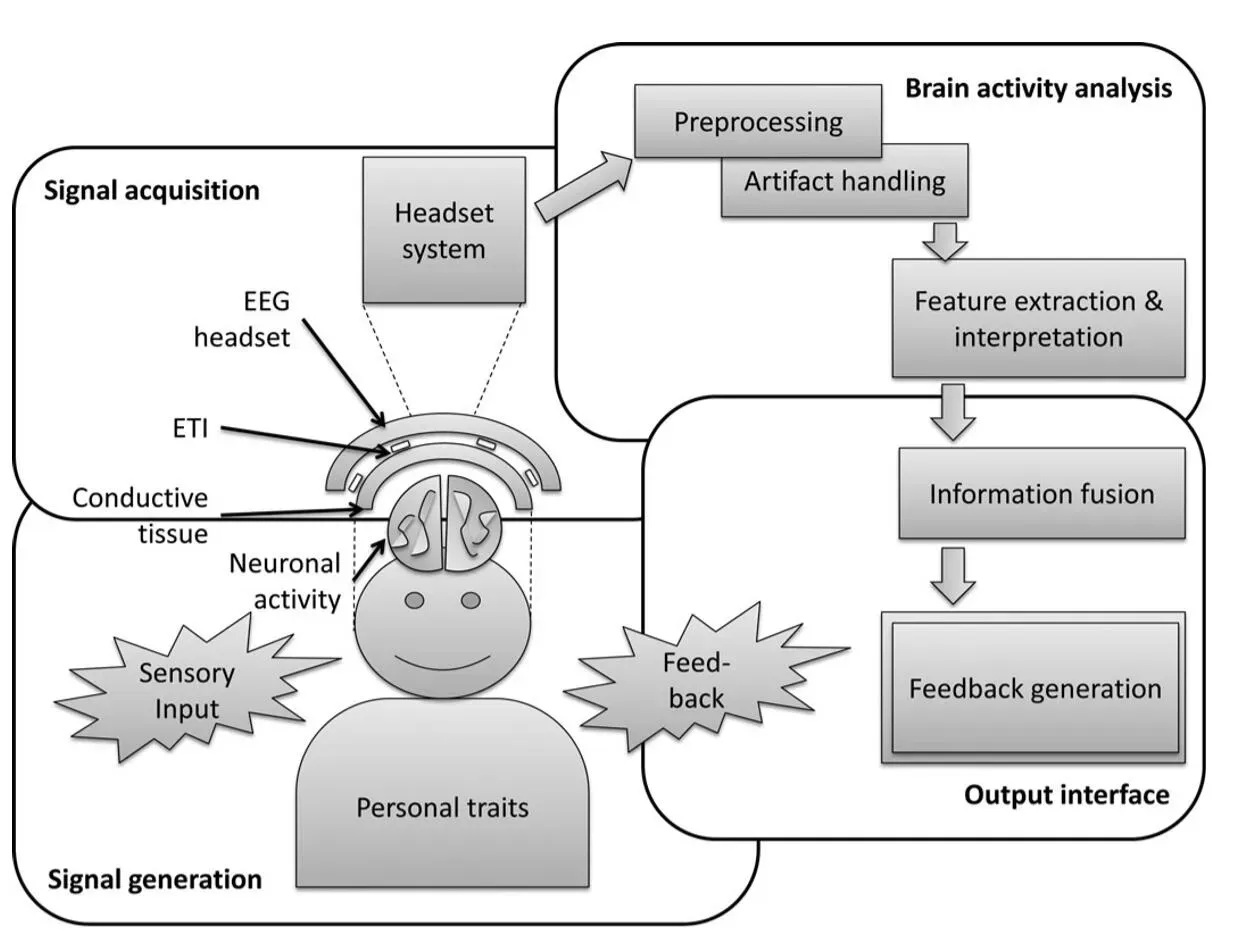
Researchers used an EEG to record writers’ brain activity across 32 regions, and found that ChatGPT users had the lowest brain engagement and consistently underperformed at neural, linguistic, and behavioral levels in a study from MIT Lab scholars measuring brain activity of subjects writing essays with and without ChatGPT. Here’s the thing: when you hand over your thinking to an algorithm, your brain essentially shifts into neutral.
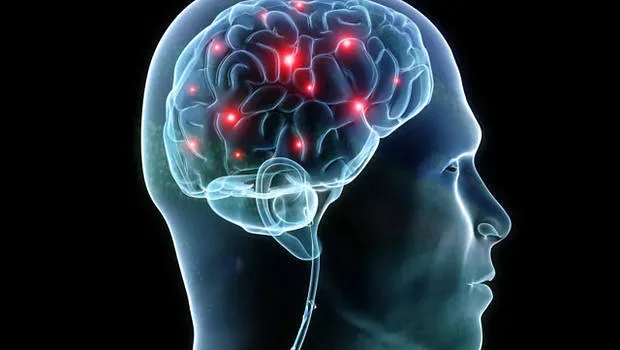
The Brain-only group showed the strongest and most widespread brain network activity, the search engine group showed intermediate levels of engagement, and the ChatGPT group showed the weakest overall brain connectivity. This isn’t just about being lazy. Your brain is literally forming weaker neural connections when AI does the heavy lifting. It’s almost like watching a muscle atrophy when you stop using it. What worries me most is how quickly this happens. We’re not talking years of decline. Over the course of several months, ChatGPT users got lazier with each subsequent essay, often resorting to copy-and-paste by the end of the study.
The Cognitive Debt You’re Accumulating
Scientists have a term for what’s happening here, and honestly, it sounds like something straight out of your credit card statement. Using ChatGPT to help write essays can lead to cognitive debt and a likely decrease in learning skills. Think about it like this: every time you offload a thinking task to AI, you’re borrowing against your future cognitive abilities.
Like muscles, our cognitive skills weaken when unused, and offloading entire tasks to AI may reduce problem-solving and critical reasoning abilities. The truly alarming part? Students using ChatGPT to solve math problems initially outperformed their peers by 48 percent during practice sessions, but when tested without AI, their scores dropped 17 percent below their unassisted counterparts. So you might look brilliant in the moment, but you’re essentially mortgaging your brain’s ability to function independently. That’s a steep price to pay.
The Memory Problem You Didn’t See Coming
Have you ever written something with AI assistance and then struggled to remember what you actually said? Turns out, that’s not just you being forgetful. Volunteers who used the LLM felt less ownership over their essays compared to other groups, and ChatGPT users also struggled to recall or quote from their own essays shortly after writing them.
This makes sense when you think about it. When you’re actively wrestling with ideas, organizing thoughts, choosing words, your brain is encoding that information deeply. Those who had originally used ChatGPT in the first three sessions showed weaker neural connectivity months later, while those from the previous Brain-only group demonstrated higher memory recall. Your brain remembers what it processes, not what it witnesses. If ChatGPT is doing the processing, you’re basically a spectator in your own thinking process. That’s unsettling if you stop to consider the implications.
The Paradox of Productivity Without Purpose

Let’s be honest about something that sounds really good on paper but feels hollow in practice. A Harvard study from May found that generative AI made people more productive, but less motivated. You’re getting more done, ticking off boxes faster than ever before, yet something feels off. That gnawing sense that you’re not really accomplishing anything meaningful? It’s real.
ChatGPT is the best and worst group project partner in history – it does all the work and never complains, but the group member who never shows up for meetings also doesn’t learn anything, and students are using ChatGPT as an AI co-worker to do all of the work and have no ownership of the result. There’s something deeply human about struggle, about working through challenges and emerging on the other side changed by the experience. When AI removes that struggle, it also removes the growth that comes with it.
When Convenience Becomes a Cognitive Crutch

With ChatGPT, you ask a question and receive a couple of paragraphs with the answer, and this answer may or may not be correct, though it certainly looks like it. The problem is way more subtle than just getting wrong information. It’s about what happens when you stop questioning, stop verifying, stop thinking critically about the information presented to you.
If people will accept Google’s word uncritically, imagine the response to ChatGPT – the answer to your search may be 100 percent nonsense, but for many people, it’s hard, reliable truth. You see the danger here? The steady erosion of exposes us to reliance on a tool that can easily be used to manipulate us. When you stop exercising your ability to evaluate, analyze, and question, you become vulnerable to accepting whatever sounds good or appears authoritative.
The Volcano of Cognitive Processes: Understanding Your Brain’s Power
Here’s where things get interesting. Your brain is a lot like one of Earth’s most powerful geological forces: a volcano. Just as deep within the Earth it is so hot that some rocks slowly melt and become magma, and since it is lighter than the solid rock around it, magma rises and collects in magma chambers, your thoughts and ideas need to bubble up from deep processing, collecting and organizing before they erupt into conscious understanding.
Heat from a mantle plume causes melting and thinning of the crust, which leads to volcanic activity at the surface. Similarly, when you engage in deep thinking, you’re creating the pressure and heat necessary for genuine insights to break through. The explosivity of an eruption depends on the composition of the magma – if magma is thick and sticky, gases cannot escape easily, and pressure builds up until the gases escape violently and explode. Your most powerful thoughts work the same way: they need time, pressure, and struggle to develop their full force.
Tectonic Shifts in How You Learn
Consider how volcanoes form at the boundaries where Earth’s tectonic plates meet. Earth’s lithosphere is broken into plates that move continuously at a slow pace, and most volcanic activity takes place along plate boundaries, where plates are converging or diverging. Your learning happens at similar boundaries, where new information meets existing knowledge, where confusion meets clarity, where struggle meets understanding.
A subducting plate creates volcanoes, and locations with converging plates in which at least one plate is oceanic have volcanoes. When you force yourself to work through difficult problems without AI assistance, you’re creating those productive collisions that generate new understanding. AI-generated content raises concerns related to plagiarism, the potential erosion of skills, and a potential reduction in creativity within academic writing. You’re essentially preventing those tectonic collisions from happening, smoothing over the very friction that creates learning.
The Explosive Truth About Problem-Solving

Not all volcanic eruptions are the same, and neither are all thinking processes. Hawaiian volcanoes provide a good example of eruptions where lava flows rarely kill people because they move slowly enough for people to get out of their way. Some problems you can solve gradually, methodically. Others require more explosive cognitive effort.
On one extreme there are effusive Hawaiian eruptions, which are typically not very dangerous, while on the other extreme, Plinian eruptions are large, violent, and highly dangerous explosive events. Your brain needs practice with both types of problem-solving. AI-supported participants achieved stronger outcomes in logical reasoning, structuring, and problem definition, but showed weaknesses in novel idea generation, multidisciplinary integration, and critical rejection of unsupported conclusions. You’re getting better at the easy flows but losing your capacity for those explosive breakthroughs that come from sustained mental effort.
Building Your Cognitive Shield Volcano
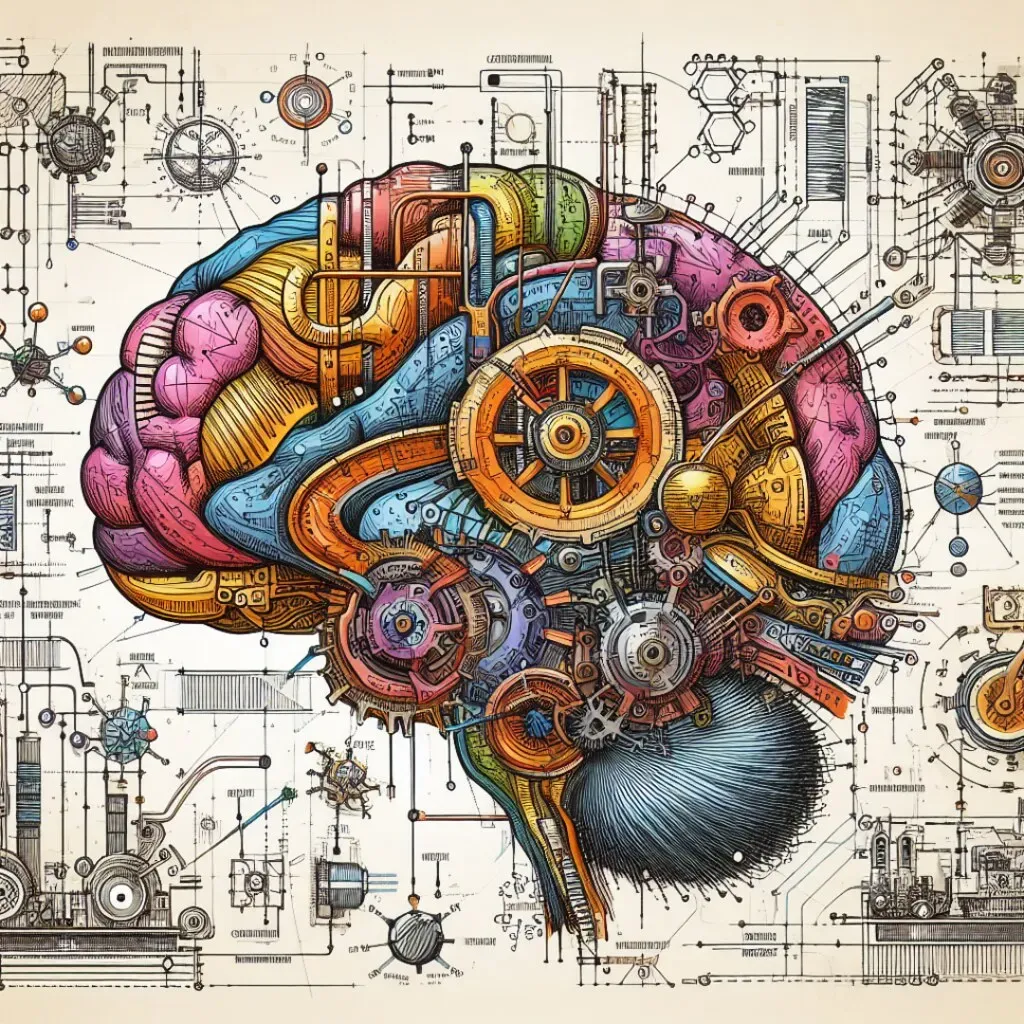
The good news? You can rebuild what’s been eroded. The most direct path to preserving your intellectual faculties is to declare certain periods AI-free zones – this can be one hour, one day, even entire projects. Think of it like strengthening a volcano’s foundation. You need to give your brain regular workouts where it carries the full load.
Workers with stronger metacognitive skills become more creative when using ChatGPT, and students trained to ask reflective questions demonstrated higher levels of . The key is using AI as a tool you control, not a crutch you depend on. Some researchers fear that in months, there will be policymakers who decide to implement widespread AI use in early education, which they think would be absolutely bad and detrimental, especially for developing brains. Your cognitive muscles need resistance to grow stronger, not convenience to grow weaker.
The Future Eruption You Need to Prevent

AI-induced cognitive atrophy may disproportionately affect the younger generation, particularly those prioritizing convenient access to information over deep reflection, and is particularly relevant in educational settings among younger individuals who may prioritize convenience over in-depth comprehension. This isn’t just about you. It’s about an entire generation potentially losing the ability to think deeply, critically, and independently.
Companies investing heavily in AI productivity tools may inadvertently be undermining their workforce’s long-term capabilities, and for educators, unrestricted access may erode the very abilities education aims to build. We’re standing at the edge of something significant here. The convenience of AI is undeniable, almost intoxicating. Yet the cost might be the very thing that makes us uniquely human: our ability to think, reason, create, and solve problems independently. What kind of thinker do you want to be tomorrow? That choice starts with how you use AI today.