

Every night, without a single conscious effort on your part, your brain engineers something that no supercomputer on the planet can replicate. It builds entire worlds. Populated with people, places, emotions, sounds, and stories. All of it constructed from scratch while your body lies perfectly still in the dark.
It’s honestly one of the most astonishing things the human mind does, and most of us take it completely for granted. You close your eyes, and somewhere between slipping under and waking up again, your brain becomes an architect, a storyteller, and a film director all at once. How? That’s the question researchers have been chasing for decades, and the answers they’re finding are stranger and more beautiful than you might expect. Let’s dive in.
Your Brain Doesn’t Actually “Switch Off” When You Sleep

Here’s a misconception worth killing right away. Most people assume the brain quiets down during sleep, like a city going dark after midnight. The reality is almost the opposite. Dreaming primarily occurs during the REM (Rapid Eye Movement) stage of sleep, and during REM, brain activity increases dramatically, often resembling the activity levels seen during wakefulness. Think about that. Your brain, at its most dream-active, is essentially running at daytime speed.
Up until the invention of the electroencephalogram (EEG), researchers were unable to access or measure electrical activity that occurs in the brain during all states of consciousness. It was once assumed that the brain simply “shut off” at night, but we now know that’s far from true. There are varying levels of brain activity that occur during different stages of sleep. The discovery of REM sleep in 1953 completely changed the way science looked at the sleeping mind. What was once thought of as passive rest turned out to be one of the most energetically active states the human brain can enter.
The Stage That Builds Your Dream World: What REM Sleep Actually Does

Dreams occur across different stages of sleep, but they are most prominent and vivid during Rapid Eye Movement (REM) sleep, a unique phase characterized by increased brain activity, rapid eye movements behind closed eyelids, and temporary muscle paralysis that prevents us from acting out our dreams. That last part is worth pausing on. Your body is essentially frozen while your mind runs free. It’s a remarkable biological safety mechanism that keeps you from physically acting out whatever drama your sleeping brain has staged.
Subjects awakened from REM sleep recall elaborate, vivid, hallucinogenic and emotional dreams, whereas subjects awakened during non-REM sleep report fewer dreams, which, when they occur, are more conceptual, less vivid and less emotion-laden. This tells us something important: the quality and intensity of a dream isn’t random. It’s deeply tied to the specific biological stage your brain has entered. As the night progresses, sleep is punctuated by episodes of REM that become longer and more frequent toward morning, and conscious-like dreams are a reliable component of the REM state in which the dreamer is an active mental observer or agent in the dream.
The Brain Regions Lighting Up Behind Your Closed Eyes
Dreams show that our brain, disconnected from the environment, can generate by itself an entire world of conscious experiences. That generation process involves a very specific team of brain regions, all working together. REM sleep activates areas like the amygdala, hippocampus, and visual cortex, while deactivating the prefrontal cortex, which explains why dreams often feel illogical. You get vivid sensory experience, strong emotion, and drawn memories, all without the rational filter that keeps you grounded while awake.
Positron emission tomography (PET) studies have shown that global brain metabolism is comparable between wakefulness and REM sleep. Such studies have also revealed a strong activation of high-order occipito-temporal visual cortex in REM sleep, consistent with the vivid visual imagery during dreams. Meanwhile, research shows that the default mode network (DMN), a system linked to spontaneous thought and imagination, remains active during REM sleep and may help construct the narrative flow of dreams. In other words, your brain is not firing randomly. It’s coordinating multiple specialized systems to build you a full-sensory experience, every single night.
The Chemical Cocktail That Makes It All Possible
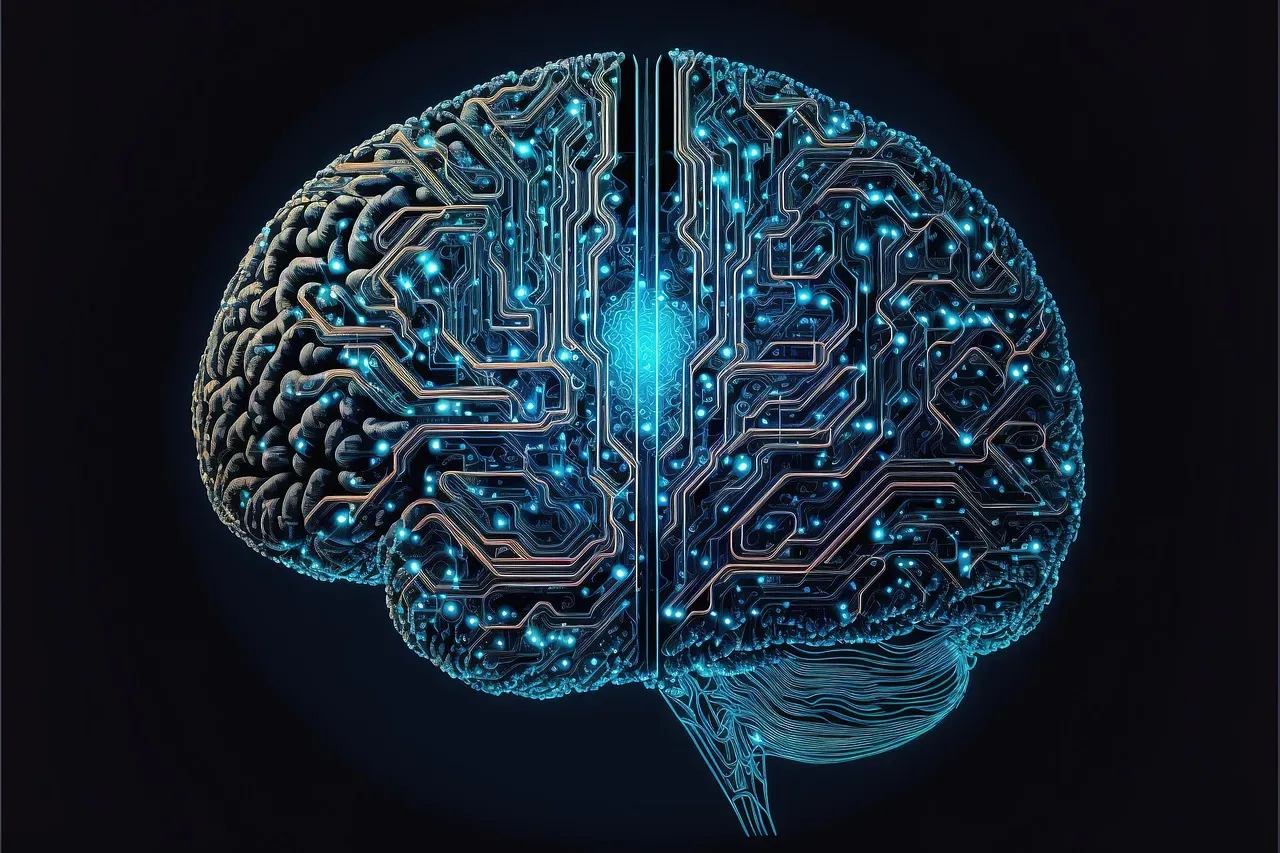
If brain regions are the cast of this nightly production, neurotransmitters are the directors calling the shots. The dreaming brain operates under a unique neurochemical environment. Acetylcholine dominates during REM sleep, combined with a near-complete absence of norepinephrine, serotonin, and histamine. This specific neurochemical cocktail contributes to the vivid, emotionally charged, and often bizarre nature of dreams while also facilitating the memory processing that may represent one of dreaming’s primary functions.
Dopamine, known for its role in reward and motivation, can influence the vividness of dreams and potentially affect the intensity of nightmares. Elevated levels of dopamine during REM sleep are associated with the heightened emotional tone of dreams. This explains a lot about why some dreams feel utterly cinematic while others feel like a quiet haze. The precise mix of chemicals flooding your brain in any given moment of REM sleep essentially dials up or down the drama and color of what you experience. It’s like a neurochemical mixing board, and your brain is running the sliders on autopilot.
Why Do Dreams Feel So Real? The Logic of Sensory Hallucination

Let’s be real: the most bewildering thing about dreaming isn’t that it happens at all. It’s that it feels so absolutely, convincingly real while it’s happening. Subjects report vivid, sensorimotor hallucinatory experiences that follow a narrative structure. The dreamer is highly conscious, is disconnected from the environment while asleep, yet somehow the brain is creating a story, filling it with actors and scenarios, and generating hallucinatory images.
The visual cortex creates brain movies during REM sleep with patterns remarkably similar to those seen when viewing complex visual scenes while awake, providing neurological evidence for the vivid visual nature of many dreams. Your brain simply cannot tell the difference between what it’s generating internally and what would otherwise come in from your eyes. During REM sleep, your prefrontal cortex is less active. This is the part of the brain responsible for planning and logic. Since activity in the prefrontal cortex is lower during REM sleep, we often don’t recognize the strangeness or implausibility of a dream until we wake up. This is why your ability to fly or the appearance of monsters seems so realistic until you wake up.
Dreams as Memory and Emotion Labs: What Your Brain Is Really Processing
Here’s where things get genuinely fascinating. Your dreams aren’t just entertainment. They appear to be doing actual work. Dreams incorporate recent experiences, and memory-related brain activity is reactivated during sleep, suggesting that dreaming, memory consolidation, and reactivation are tightly linked. Think of dreaming as your brain’s nightly filing system, sorting through the day’s events, deciding what to keep, what to integrate, and what to quietly let go.
A night spent dreaming can help you forget the mundane and better process the extreme, according to research from the University of California, Irvine. Novel work by researchers in the UC Irvine Sleep and Cognition Lab examined how dream recall and mood affected next-day memory consolidation and emotion regulation. The findings indicate a trade-off in which emotionally charged memories are prioritized, but their severity is diminished. There’s also research showing that participants who dreamed about a three-dimensional maze they had been trained to navigate showed dramatic improvements in their ability to find the exit the next day. So you might just be solving tomorrow’s problems tonight, without even knowing it.
Lucid Dreaming and the Frontier of Dream Science
Most dreams happen to you. You’re along for the ride, with no say in the narrative. Lucid dreaming flips that dynamic on its head entirely. In lucid dreams, the dreamer becomes aware that they are dreaming and may even gain some control over the narrative. Neuroscientific studies using brain imaging have shown that lucid dreaming involves increased activation in the dorsolateral prefrontal cortex, the very area typically “asleep” during REM. This suggests a unique hybrid state of consciousness that blurs the line between dreaming and waking awareness.
Research has found that lucid dreaming is associated with widespread communication across different brain regions. It’s a kind of biological paradox: the critical, reasoning brain waking up inside a dream while the rest of the sleep process carries on. Scientists are now exploring lucid dreaming not just as a curiosity but as a potential tool. Innovations like fMRI-based dream decoding and cross-cultural studies reveal conserved neurophysiology beneath sociocultural variations. We may one day be able to use dream states therapeutically, guiding people through healing experiences while they sleep.
Conclusion: A Nightly Miracle You’ve Been Ignoring

Every night, while you’re entirely unaware of it, your brain is putting on one of the most elaborate shows in all of nature. It recruits visual processing regions, emotional memory systems, imaginative networks, and neurochemical signals, all choreographed into something that feels as real as the chair you’re sitting in right now. Dreams are a most remarkable experiment in psychology and neuroscience, conducted every night in every sleeping person. They show that our brain, disconnected from the environment, can generate by itself an entire world of conscious experiences.
I think what makes this whole subject so profound is that the sleeping brain isn’t broken or aimless. It’s working. Processing. Healing. Creating. Dreaming has been framed as a structured, adaptive process that facilitates memory abstraction, emotional integration, and creative problem-solving through associative expansion in the absence of executive inhibition. Contrary to views of dreams as mere epiphenomena, dreaming may function as an evolved, multifunctional simulation space, enhancing emotional resilience, cognitive flexibility, and adaptive foresight. The next time you wake up from a dream so real it takes a few seconds to remember where you are, maybe take a moment to be genuinely amazed. Your brain just built an entire world from nothing. What would you have guessed it was doing?