
Tens of thousands of years ago, two very different species of humans crossed paths in ancient Eurasia. They hunted, they sheltered, and it turns out they also had children together. We have known for a while that this happened. What nobody could quite agree on was how, or more specifically, who was pairing with whom.
A groundbreaking new study published in February 2026 in the journal Science has shed light on that question in a way that is frankly equal parts fascinating and surprising. The patterns locked inside ancient DNA are telling a very specific story about prehistoric attraction, migration, and mating. Get ready, because this one goes deep into both genetics and human prehistory. Let’s dive in.
A Discovery Written in DNA, Not Stone
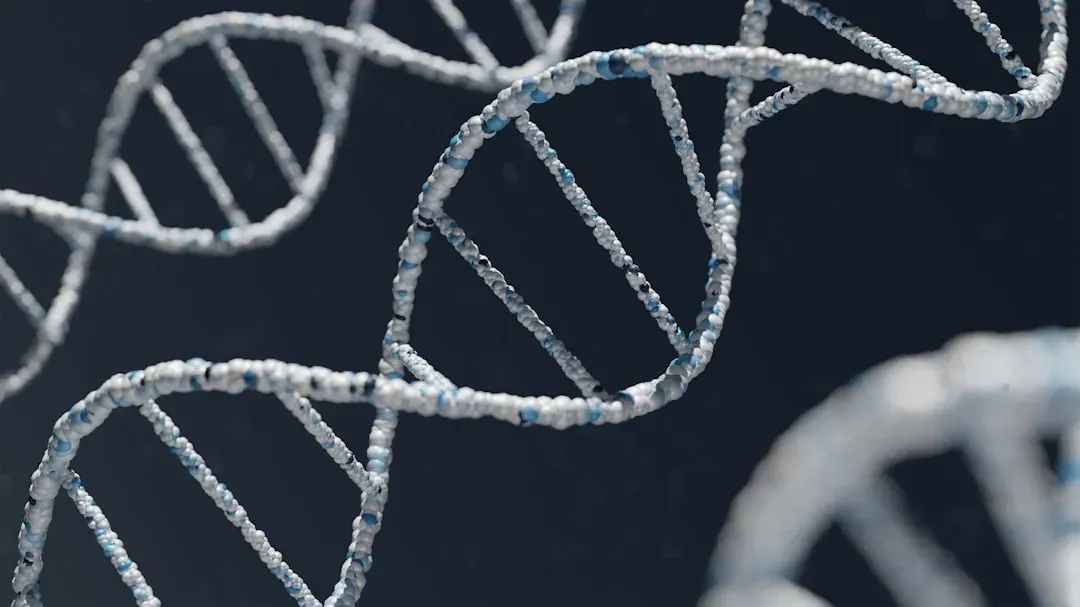
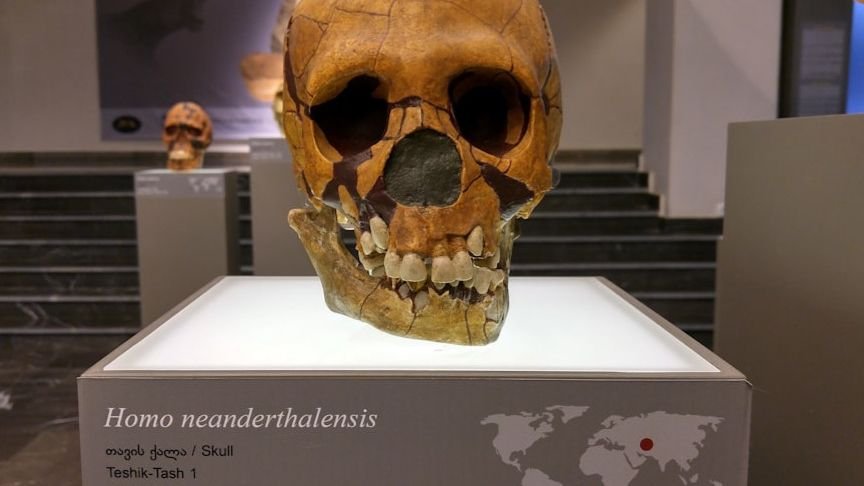
Most people assume ancient history can only be uncovered through fossils or cave paintings. Here’s the thing though: our own genome is arguably the most detailed archive of prehistory we have. Ancient encounters between humans and Neanderthals left a measurable record inside modern genomes, and patterns preserved within the X chromosome suggest that social interaction played a direct role in human evolution.
A new study published in the journal Science examined Neanderthal DNA and modern human DNA to find evidence that couplings between these species followed the same parental pattern over interbreeding events separated by roughly 200,000 years. That consistency across such a vast span of time is what makes this finding so striking. It is not a one-off event. It was a pattern.
The analysis suggests that female Homo sapiens and male Neanderthals mated more often than did male Homo sapiens and female Neanderthals. Think of it like a recurring theme in prehistory, playing on repeat across hundreds of millennia.
What We Already Knew About Neanderthal Interbreeding
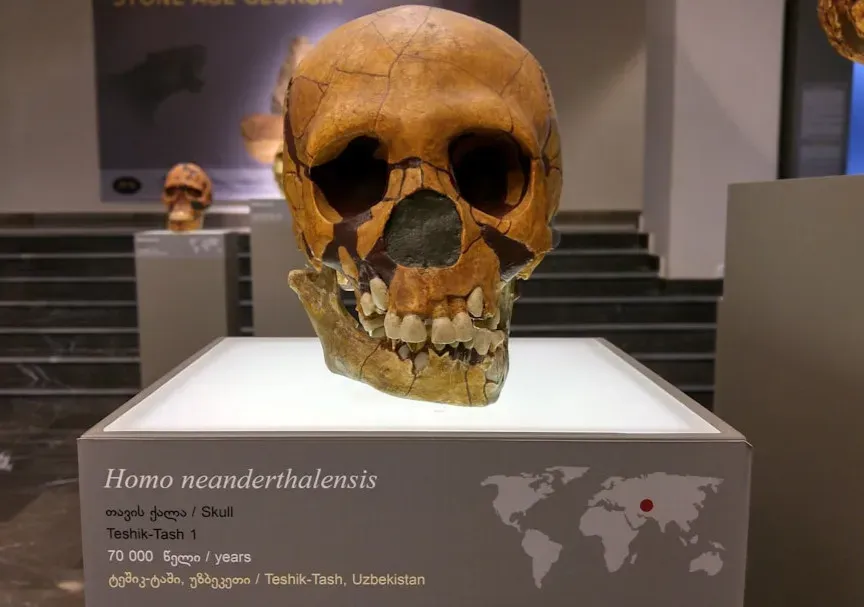
Before this study, scientists were not starting from zero. Since 2010, scientists have known that Neanderthals and our ancestors had offspring together, and those hybrid babies passed down their genes to many present-day people. That part of the story was already well established.
It has been understood that Homo sapiens interbred with Neanderthals after some of our ancestors migrated from Africa into Eurasia, and evidence indicates that these interbreeding events happened multiple times. One significant period occurred approximately 50,000 to 43,000 years ago, preceded by an earlier event that may have taken place 200,000 years or more in the past.
Today, people with non-African ancestry carry about 2 percent Neanderthal DNA. That might sound tiny, but when you consider roughly how many billions of people live outside sub-Saharan Africa, that is an enormous collective genetic inheritance from a species that went extinct around 40,000 years ago.
The X Chromosome Clue That Changed Everything
The real detective work here centers on a curious genomic puzzle that scientists had noticed for years but couldn’t fully explain. There are “Neanderthal deserts” in the human genome, which are areas that have less-than-expected amounts of Neanderthal DNA. One particularly well-known Neanderthal desert is on the X chromosome, one of the sex chromosomes.
Earlier explanations focused on biology. Scientists proposed that Neanderthal genes harmed fertility or health when mixed with modern human DNA, and natural selection would then remove those segments over thousands of generations. Reasonable enough, on the surface. But the new study points in a very different direction.
The team analysed the genomes of three female Neanderthals who lived 122,000, 80,000 and 52,000 years ago. All had distant human ancestry. The team found human DNA deserts across most of the genome, with one glaring exception: the Neanderthal X chromosome had, on average, 62 percent more human DNA than non-sex chromosomes. That asymmetry is the smoking gun.
How Sex Chromosomes Decode Ancient Mating Habits
Now here is where biology gets genuinely clever as a detective tool. Because genetic females have two X chromosomes and genetic males have one X and one Y chromosome, two out of every three X chromosomes in a population, on average, are inherited from people’s mothers.
If more human females mated with Neanderthal males than the other way around, over thousands of years you would expect to see just what the researchers found: more human DNA in Neanderthal X chromosomes and less Neanderthal DNA in human X chromosomes. That is precisely the mirror-image pattern the data revealed. It is almost like the chromosomes left a receipt.
There was much more anatomically modern human ancestry present on Neanderthal X chromosomes than the researchers had expected, including on regions that had nothing to do with fitness. This suggested that the conspicuous absence of Neanderthal DNA in parts of the genomes of humans today is likely a result of a strong sex bias in mating long ago.
So Why Did It Happen This Way?
Honestly, this is where things get wonderfully speculative. The science points to the pattern clearly, but explaining the “why” is a different beast altogether. The simplest explanation, according to the study, was “mate preference.” Male Neanderthals, female Homo sapiens, and Neanderthal females with greater human ancestry might have been more attractive as mates for some unknown reason. Equally, female Homo sapiens who encountered Neanderthal males may have viewed them as more alluring partners.
Societal structures vary in how the sexes migrate. In some groups, females leave their natal group to join their partners, while in others, males relocate. The relocation of modern human women to Neanderthal communities could influence the X chromosome profile, but this alone would not account for the significant bias observed.
This process of elimination, according to the team, leaves a single remaining explanation: a mating preference. Either male Neanderthals showed a preference for female Homo sapiens over Neanderthal partners, or female Homo sapiens preferred male Neanderthals over human partners, or a combination of both scenarios was true. The ancient dating pool, it seems, had its own preferences.
Voices of Caution: What the Study Cannot Confirm
Not everyone in the scientific community is ready to fully commit to the mating preference conclusion, and that skepticism is healthy. Other geneticists caution against drawing such definitive conclusions and believe the alternative explanations are not yet fully discounted.
A major limitation of the study is that the team did not have a large amount of Neanderthal DNA to work with, as there is only a handful of high-quality Neanderthal genomes. These genomes provide just a snapshot of what mating between Neanderthals and anatomically modern humans may have looked like at a point in time.
DNA cannot spell out the context of how or why Neanderthal males had children with modern human females. The researchers put forward “mate preference” as a plausible reason, a scientific term that could encompass a wide range of scenarios, from sexual coercion or violence to peaceful voluntary couplings. The data is clear. The story behind it remains open.
What This Means for Understanding Our Own Origins
Beyond the headline, this study carries some genuinely profound implications for how we understand what it means to be human. The simplest and most likely explanation the study found is also the most interesting: it is not the result of a strictly Darwinian survival of the fittest but really the result of how we interact with each other, and what our culture and society and behavior is like.
The findings show how behaviour can shape human evolution, says study co-author Alexander Platt, an evolutionary geneticist at the University of Pennsylvania. That is a remarkable idea. Our genome was not just shaped by adaptation to disease or climate. It was shaped by desire, social structures, and ancient encounters between two very different kinds of people.
The research team plans to look at the evolution of the social structures and gender roles within Neanderthals, which could conceivably shed some light on the fuller picture. The story of who we are is still being written, one chromosome at a time.
Conclusion: Ancient Attraction, Modern Implications
I think what makes this study so genuinely captivating is that it forces us to see Neanderthals not as brutish caricatures from some dusty museum display, but as beings with preferences, desires, and social lives complex enough to leave a genomic imprint across hundreds of thousands of years. That is not a small thing.
As anthropologists work to uncover more Neanderthal DNA in the fossil record, the picture will get clearer. In a more philosophical sense, the study shows the value of looking outside of human DNA to understand our own ancestry. We are, in ways most of us never think about, the descendants of an ancient cross-species attraction that played out again and again across a prehistoric world none of us will ever see.
The genome does not forget. And maybe that is the most human thing about it. What would you have guessed about who was drawn to whom across those ancient campfires?