
Long before computer models and climate satellites, human beings tried to read the future not in spreadsheets, but in the night sky. From imperial courts in Babylon and China to temples in Mesoamerica, rulers paid specialists to track every eclipse, comet, and wandering planet, convinced that history itself moved to a cosmic rhythm. Today, scientists tend to separate astronomy from astrology, yet the story of how ancient people used celestial patterns to predict wars, famines, and royal successions is far richer – and more sophisticated – than many assume. What looks like superstition from a distance often hid careful observation, mathematics, and a surprisingly rigorous method. Understanding that story does more than correct a dusty historical footnote; it shows how our urge to find meaning in the cosmos helped give birth to science itself.
The Hidden Clues in the Night Sky

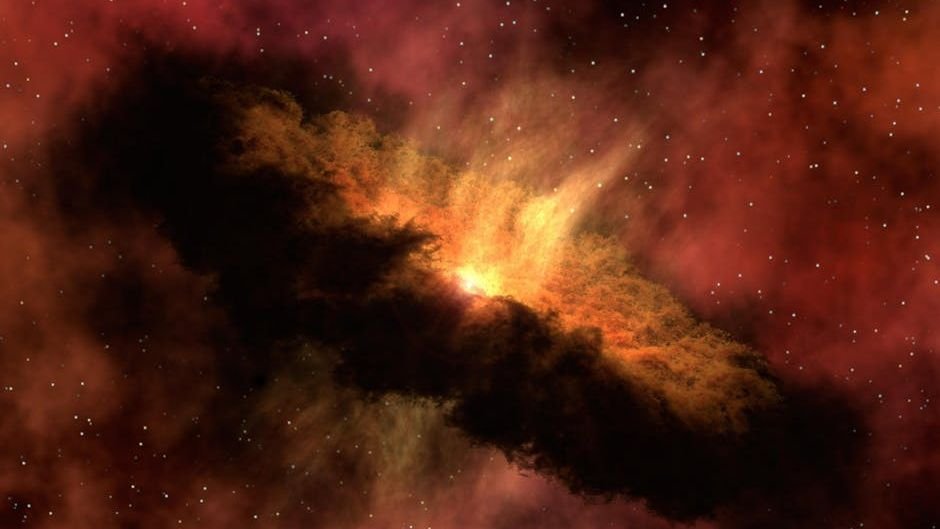
Imagine standing in a world without streetlights, your only ceiling a sky so black that the Milky Way looks like spilled salt across slate. For ancient observers, that sky wasn’t background scenery; it was a live data feed. The slow, predictable march of stars and the erratic paths of planets felt like two different languages, one stable and one volatile, and it was the second that fascinated early astrologers. When a bright planet like Mars suddenly changed direction – what we now call retrograde motion – it seemed like a celestial warning light flipping on.
Early civilizations learned to treat unusual phenomena as coded messages. A blood-red lunar eclipse might be interpreted as danger for a king, while the sudden appearance of a comet could spell disaster for an empire or victory on the battlefield. This wasn’t random panic; it was pattern-seeking over generations. If an eclipse had coincided with a bad harvest, the next eclipse became a test case: would misfortune strike again? In a way, this was a rough prototype of statistical reasoning, built from fear, awe, and careful note-taking under the stars.
Babylonian Sky Watchers: The First Data-Driven Astrologers

Of all the ancient civilizations, Babylon arguably took astrology most seriously as a state project. Starting more than two and a half millennia ago, Babylonian scholar-priests recorded nightly observations on clay tablets, tracking the rising and setting of planets, eclipses, and strange halos around the Moon. These weren’t casual sky diaries; they were systematic logs that let them spot repeating cycles, especially in the timing of lunar and solar eclipses. Over centuries, they learned that eclipses often followed a predictable rhythm lasting many years, a pattern modern astronomy recognizes as the Saros cycle.
The Babylonians plugged these celestial cycles directly into politics. If an ominous eclipse threatened the life of the king – according to their interpretive handbooks – they sometimes installed a temporary “substitute king,” a stand-in whose bad luck would, in theory, divert the cosmic blow. Armies were deployed or held back based on planetary omens, with officials scanning the sky like a risk dashboard. To modern eyes, the logic feels alien, but the methods are strangely familiar: observe, record, compare with the past, and then make a prediction that shapes real-world decisions. In a sense, Babylon ran one of the earliest long-term data projects in human history, even if the goal was to decode the moods of the gods.
Egypt, Rome, and the Politics of Cosmic Legitimacy
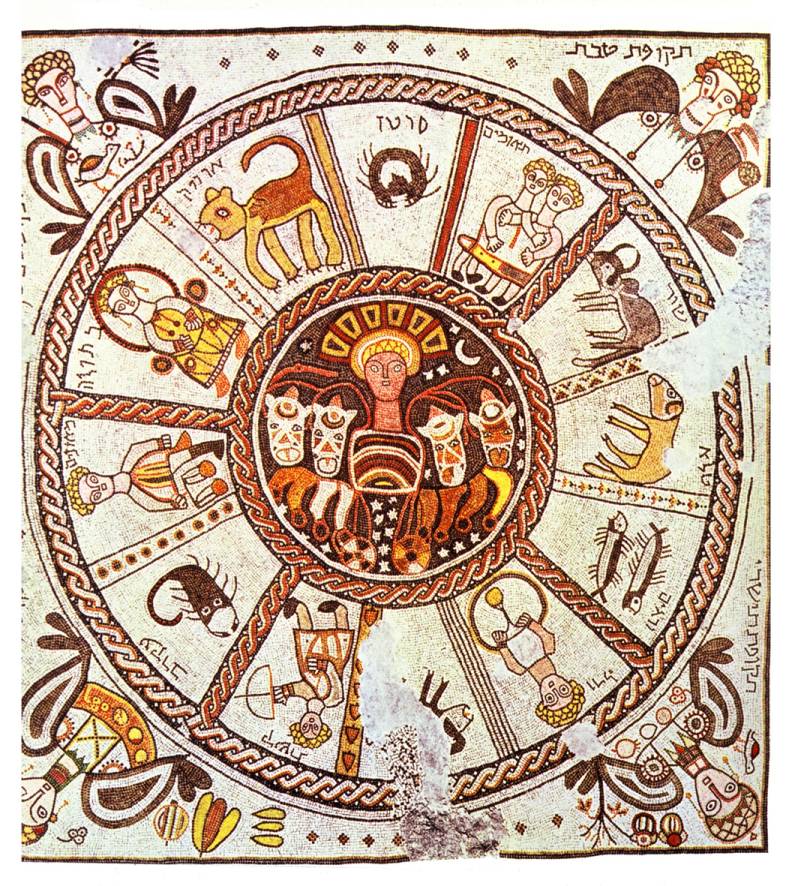
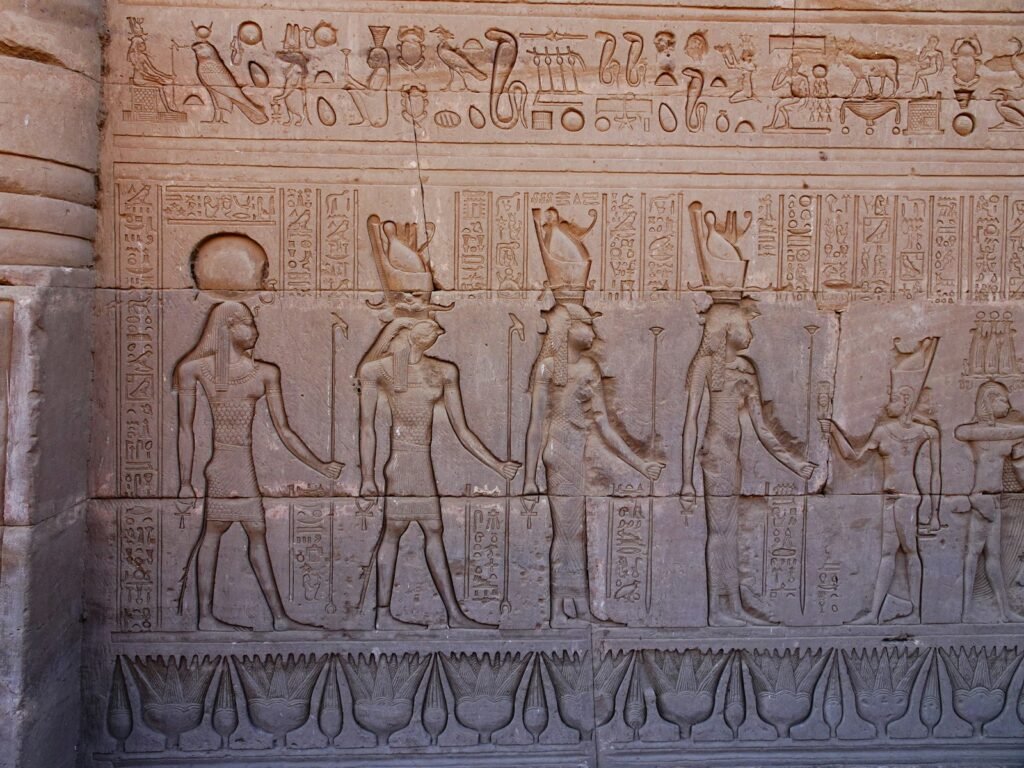
In ancient Egypt and later in Rome, astrology became less about predicting random catastrophe and more about justifying who deserved to rule. Egyptian pharaohs were framed as children of the Sun or stars, and their births, coronations, and major building projects were often timed with specific celestial events. Alignments of temples and pyramids with solstices or star risings weren’t simply architectural flourishes; they served as permanent stone arguments that the ruler and the cosmos were in sync. A building that caught the sunrise on a particular day each year effectively told the people: this leader’s power is written into the sky.
By the time astrology arrived in Rome, funneled through Greek and Hellenistic traditions, it became a double-edged political tool. Emperors consulted astrologers to pick “lucky” days for military campaigns or public announcements, hoping to ride favorable omens. At the same time, predicting an emperor’s death based on his horoscope could be treated as treason. Public attitudes were just as conflicted: some Romans mocked horoscopes as fashionable nonsense, while others secretly relied on them for everything from trading decisions to marriage plans. The sky was a battleground of legitimacy, and astrologers, for a few centuries, were uncomfortably close to the levers of power.
From Chinese Court Astrologers to Mesoamerican Calendar Keepers
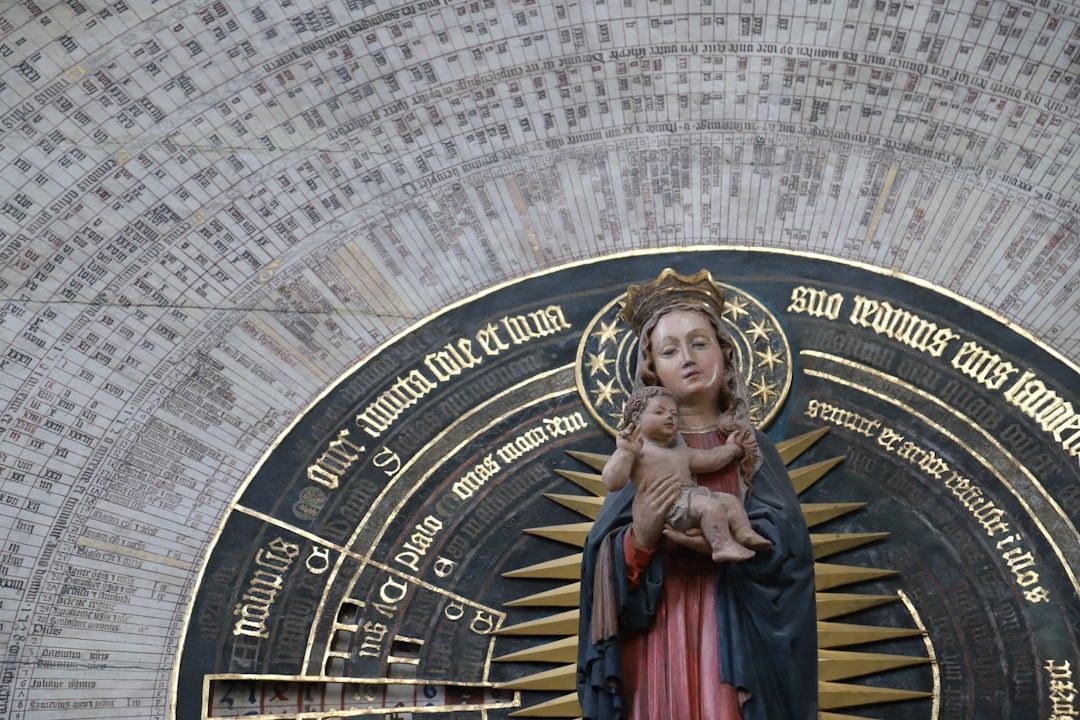
Half a world away, Chinese imperial courts turned celestial observation into a closely guarded instrument of statecraft. Official astronomer-astrologers tracked comets, eclipses, and planetary alignments, then filed reports that could make or break policies. A badly timed eclipse might be interpreted as a cosmic rebuke of the emperor’s behavior, prompting reforms or ritual apologies. Because of this, the court tightly controlled access to astronomical data; if the stars were a feedback channel from heaven, you did not want that channel in the hands of rivals. Here, astrology wasn’t just prediction – it was a moral audit of government.
In Mesoamerica, the Maya and later the Aztecs embedded celestial cycles in intricate calendar systems that guided everything from agriculture to warfare. Priests used these calendars to choose auspicious dates for coronations, sacrifices, and battles, weaving planetary and solar movements into a dense fabric of ritual time. Their calculations of Venus’s motion, recorded in codices, are impressively accurate even by modern standards, which matters because Venus’s appearance and disappearance were tied to omens of war and political upheaval. Across these regions, the pattern is clear: when you live by the sky, you schedule history by it, too.
Astrology as Proto-Science: Where Belief Met Measurement

It’s easy to dismiss ancient astrology as a wrong turn in human thinking, but that flattens a far more interesting truth. To make any kind of prediction from the sky, early astrologers had to measure with care: they needed to know when a planet would rise, where an eclipse’s shadow would fall, and how long a season lasted. That pressure to be accurate nudged them to develop better instruments, better math, and more reliable records, all of which quietly fed into what we now call astronomy. In other words, belief in cosmic omens inadvertently bankrolled some of the earliest scientific toolkits.
Several features of ancient astrology look surprisingly familiar to modern scientists, even if the interpretations are wildly different. There was an emphasis on repeatability: if a particular conjunction seemed to precede famine, astrologers looked for that sequence again and again. Some produced long tables of observations, a forerunner of datasets used to check whether a rule still held. Of course, their confirmation bias was massive – omens that “worked” were remembered, those that didn’t were explained away – but the underlying urge to link patterns to outcomes is the same habit that powers science today. The key difference is that modern science insists on systematic testing and being willing to be wrong, while ancient astrology rarely let the cosmos say no.
Why It Matters: From Star Omens to Statistical Models
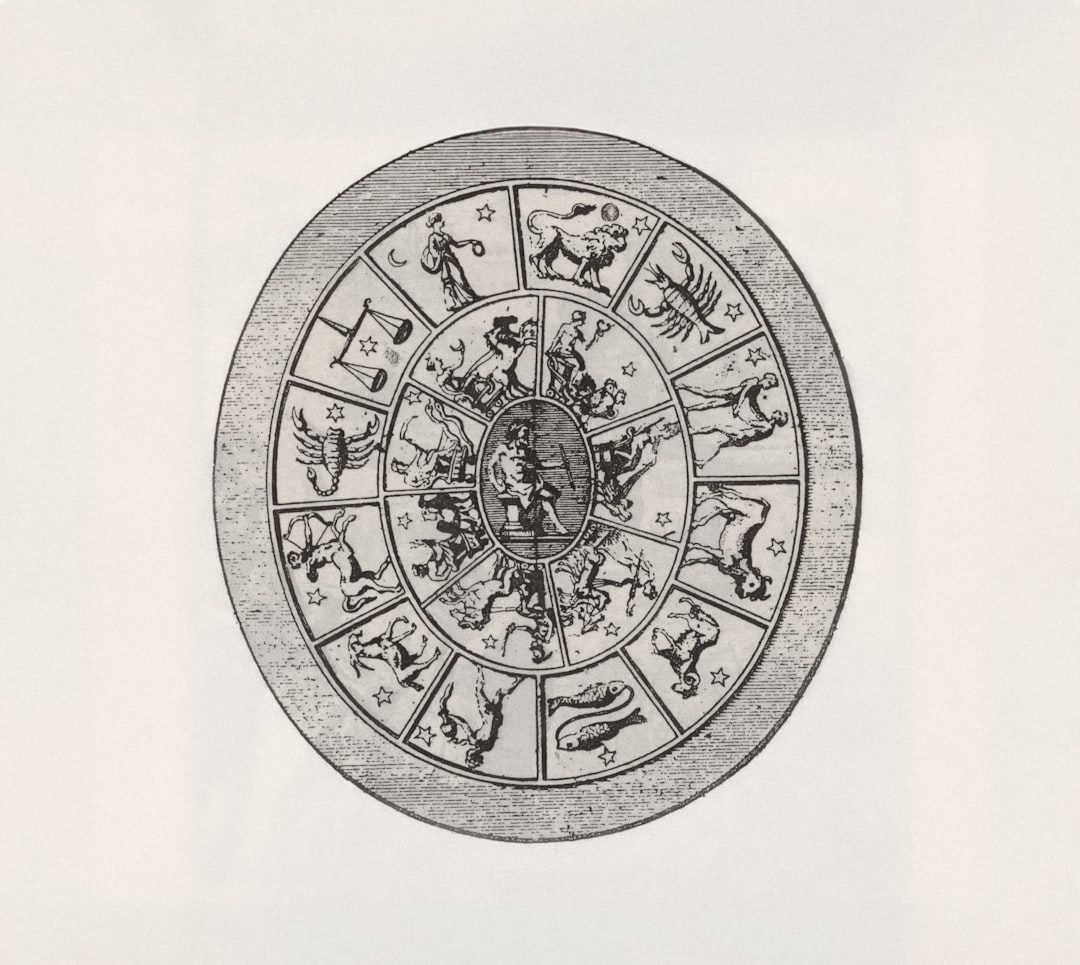
Understanding how ancient civilizations used astrology matters because it reveals how humans first tried to tame uncertainty. Faced with droughts, invasions, and plagues they couldn’t control, people reached for any tool that offered a sense of pattern, however imperfect. In our era, we might trust climate projections, market forecasts, or epidemiological models instead of Mars and Venus, but the emotional core is similar: a deep anxiety about what comes next. Realizing that connection can make the past feel less alien and our present a little more transparent.
There’s also a useful warning encoded in these stories. Ancient rulers sometimes made high-stakes decisions – going to war, executing rivals, rearranging successions – based on what astrologers told them the sky implied. Today, we risk doing something similar if we treat predictive algorithms or statistical models as oracles rather than tools. Both astrology and modern modeling can suffer from selective memory, overfitting patterns, and ignoring contradictory data. The lesson is not that prediction is futile, but that our hunger for certainty can make us overconfident in whatever system promises answers, whether that system is written in star charts or code.
Modern Science Revisits Ancient Skies

In the last few decades, historians of science, archaeologists, and astronomers have teamed up to re-analyze ancient celestial records with modern tools. Babylonian tablets once read purely for their mythical content are now mined as time-stamped data for eclipses and planetary positions, helping refine our understanding of Earth’s rotation over millennia. The alignment of temples and pyramids is checked with software that simulates historical night skies, revealing which stars or solar events ancient builders likely targeted. What started as attempts to understand “superstitious” practices often end up demonstrating a level of observational precision that is quietly impressive.
At the same time, psychologists and cognitive scientists are probing why astrology still appeals to so many people today, even in scientifically literate societies. The tendency to see connections, to latch onto a narrative that makes sense of chaos, is baked deeply into how the human brain works. In my own life, I remember reading a horoscope as a teenager that felt eerily accurate and only later realizing how my mind did most of the work, filling in details it never mentioned. Ancient people did the same, but with much higher stakes. Studying how they blended careful measurement with powerful stories helps us see where evidence ends and interpretation begins, a line we still struggle to draw cleanly.
The Future Landscape: Algorithms, Sky Lore, and New Kinds of Prediction
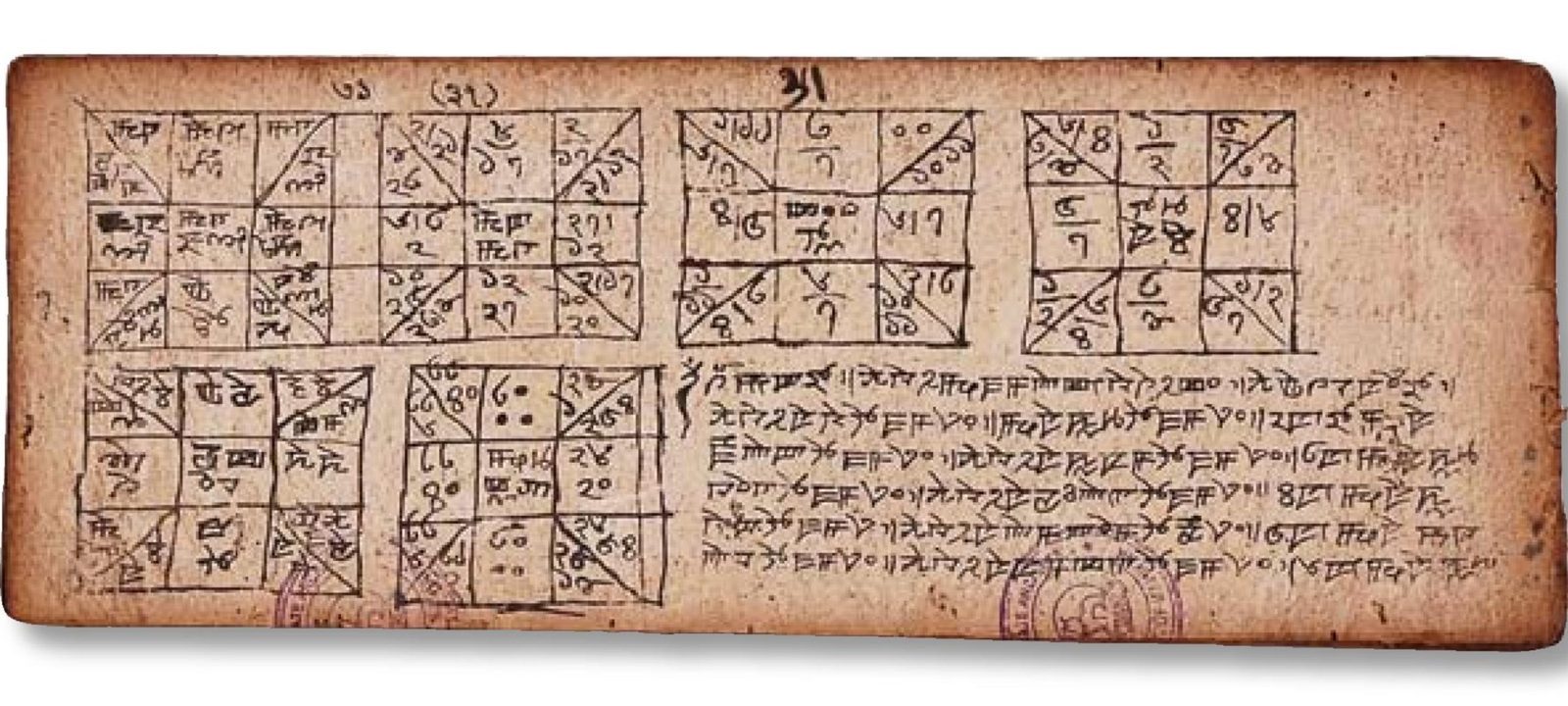
Looking ahead, our relationship with celestial patterns is changing again, this time driven by software rather than scribes. Planetarium-grade apps in our pockets can show the sky from any time in history or the future, democratizing a power once reserved for royal astrologers and court astronomers. Researchers use simulations to reconstruct famous events – like ancient eclipses visible over specific cities – to test historical accounts and even to date inscriptions with surprising accuracy. In a twist of irony, modern tools built on hard astronomy are now being used to better understand the older, astrological worldviews that helped inspire those same tools.
There are also more speculative frontiers. Some scholars wonder whether the story of humanity’s response to cosmic phenomena – meteors, comets, unusual auroras – might inform how we react to future threats, from asteroid impacts to solar storms that could cripple power grids. Others look at the enduring popularity of horoscopes and birth charts online and see a cautionary tale about how easily data-driven language can dress up feelings as facts. As predictive models based on big data become more embedded in daily life, the question becomes uncomfortably familiar: are we consulting experts, or are we quietly building new astrologies, this time written in code instead of constellations?
How Readers Can Engage With the Sky – Without Falling for Cosmic Certainty

If there’s a practical takeaway from the long marriage between astrology and history, it’s this: stay curious about the sky, but skeptical of anyone who claims it guarantees your future. You can start simply by stepping outside on a clear night and trying to trace the same constellations ancient people knew, then comparing what you see with a modern stargazing app. Visit a local planetarium, science museum, or observatory open night to hear how astronomers talk about the same planets and eclipses that once terrified royal courts. The beauty is that you don’t need to believe in omens to feel the awe that drove earlier civilizations to watch the heavens so closely.
Support the institutions that keep this story alive and honest. That might mean backing public science funding, subscribing to rigorous science journalism, or encouraging schools to teach both the wonders of ancient sky lore and the methods of modern astronomy side by side. When you encounter astrology online, treat it as cultural history or personal storytelling, not a data-backed forecast. And the next time a headline screams about a “doomsday” comet or “fated” planetary alignment, you’ll be better equipped to ask the right questions: what do we actually know, who’s measuring it, and where does the evidence stop and the story begin?
Suhail Ahmed is a passionate digital professional and nature enthusiast with over 8 years of experience in content strategy, SEO, web development, and digital operations. Alongside his freelance journey, Suhail actively contributes to nature and wildlife platforms like Discover Wildlife, where he channels his curiosity for the planet into engaging, educational storytelling.
With a strong background in managing digital ecosystems — from ecommerce stores and WordPress websites to social media and automation — Suhail merges technical precision with creative insight. His content reflects a rare balance: SEO-friendly yet deeply human, data-informed yet emotionally resonant.
Driven by a love for discovery and storytelling, Suhail believes in using digital platforms to amplify causes that matter — especially those protecting Earth’s biodiversity and inspiring sustainable living. Whether he’s managing online projects or crafting wildlife content, his goal remains the same: to inform, inspire, and leave a positive digital footprint.