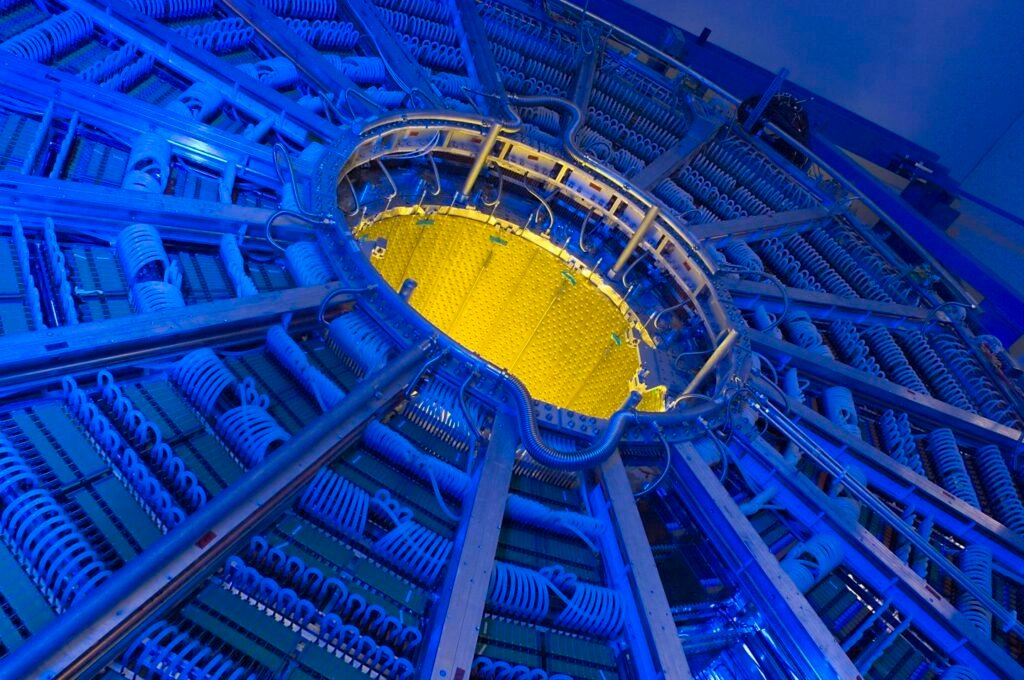

You’ve probably heard of alchemists, those medieval dreamers obsessed with turning dull lead into shimmering gold. For centuries, they tried and failed. What they didn’t know back then was that chemistry alone could never achieve their goal. Chemical reactions shuffle electrons around, but they can’t touch the core of an atom. The nucleus is where the real identity of an element lives, locked away by forces far stronger than any potion or spell could overcome.
Fast forward to 2025, and something remarkable has happened. Scientists working with a detector called ALICE at CERN’s Large Hadron Collider have actually witnessed lead transforming into gold. Not through magic or wishful thinking, but through the raw power of particle physics. It only lasts for a fraction of a second, and you won’t be making jewelry from it anytime soon. Still, the fact that it happens at all is nothing short of astonishing. Let’s dive into how this modern alchemy works, and why it tells us so much about the universe itself.
The Ancient Dream That Refused to Die
Medieval alchemists were captivated by the dream of chrysopoeia, possibly because lead and gold share similar densities despite their vastly different appearances and value. They observed that both metals felt heavy in the hand, and this similarity sparked hope. Maybe, they reasoned, lead was just sick gold waiting to be healed.
It took centuries before scientists understood that lead and gold are fundamentally distinct elements, and that chemical methods are completely powerless to convert one into the other. The difference isn’t just skin deep. Lead has 82 protons in its nucleus while gold has 79, and this atomic number is what truly defines an element. Chemical reactions can’t change that number because they only involve electrons dancing around the nucleus, never the nucleus itself.
When Particles Nearly Kiss
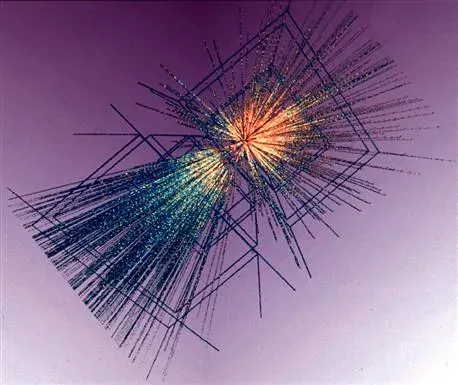
At the LHC, near-miss collisions between high-energy lead nuclei generate electromagnetic fields intense enough to knock out protons and transform lead into fleeting gold nuclei. Think of it like two speeding cars passing so close that their side mirrors touch. They don’t crash head-on, yet something still happens from the interaction.
These near-miss encounters, where nuclei just miss each other without actually touching, turn out to be far more common than direct collisions, and the intense electromagnetic fields surrounding the racing nuclei can trigger photon-photon and photon-nucleus interactions. The lead nuclei travel at nearly the speed of light, at 99.999993% to be exact, which causes their electromagnetic field lines to squash into a thin pancake shape perpendicular to their direction of motion. This compression creates a brief but incredibly powerful pulse of photons.
The Physics Behind the Magic
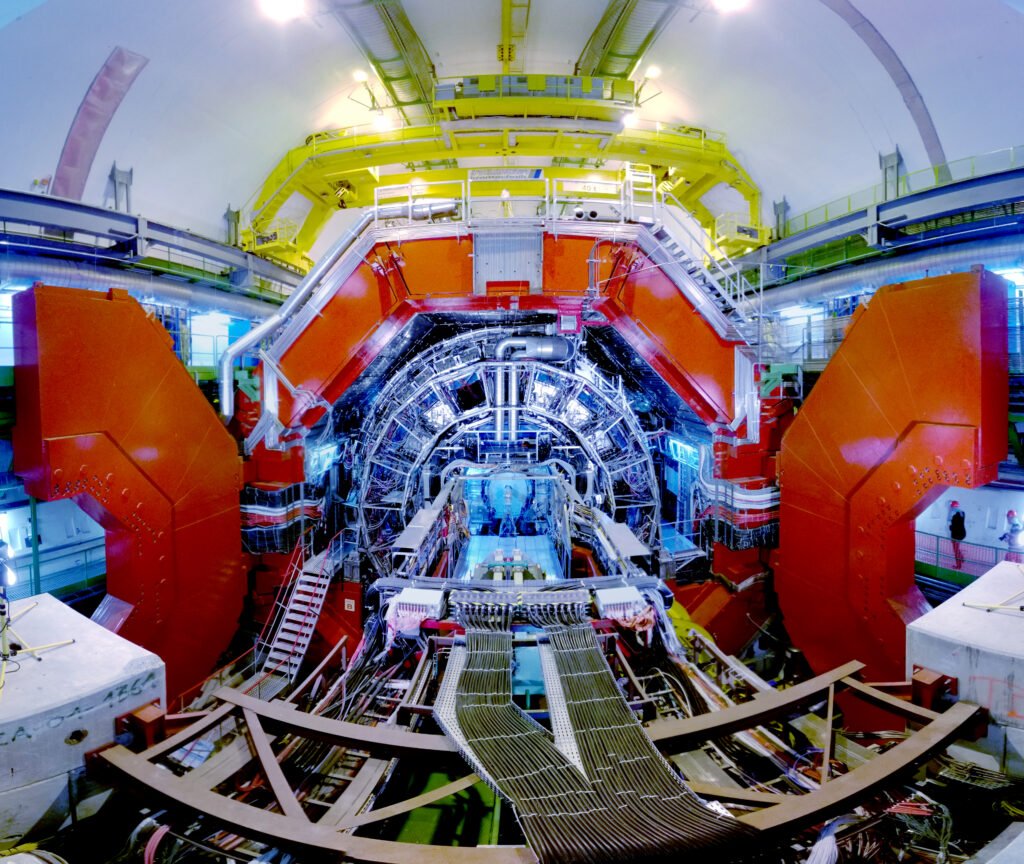
Here’s where things get truly fascinating. Lead nuclei carry particularly strong electromagnetic fields because each nucleus contains 82 protons, and each proton carries one elementary charge. When these charged particles zip past each other at nearly light speed, they don’t need to actually touch to affect one another.
This triggers electromagnetic dissociation, a process where a photon interacting with a nucleus excites oscillations in its internal structure, causing the ejection of small numbers of neutrons and protons. It’s almost like ringing a bell so loudly that pieces fly off. To create gold, which contains 79 protons, exactly three protons must be ejected from a lead nucleus. That’s the magical transformation right there, hidden in the numbers.
How ALICE Sees the Invisible

Detecting this rare transmutation requires extraordinary sensitivity. The ALICE team used specialized instruments called zero degree calorimeters to count photon-nucleus interactions that resulted in the emission of zero, one, two, or three protons accompanied by at least one neutron, which correspond to the production of lead, thallium, mercury, and gold respectively. Each combination of ejected particles creates a different element.
These detectors sit at the very edge of the collision point, catching particles that fly straight ahead. The ALICE spokesperson noted it’s impressive that their detectors can handle head-on collisions producing thousands of particles while also being sensitive to collisions where only a few particles are produced. It’s like being able to hear a whisper in a thunderstorm. The level of precision involved is mind-boggling when you really think about it.
The Fleeting Existence of Alchemical Gold
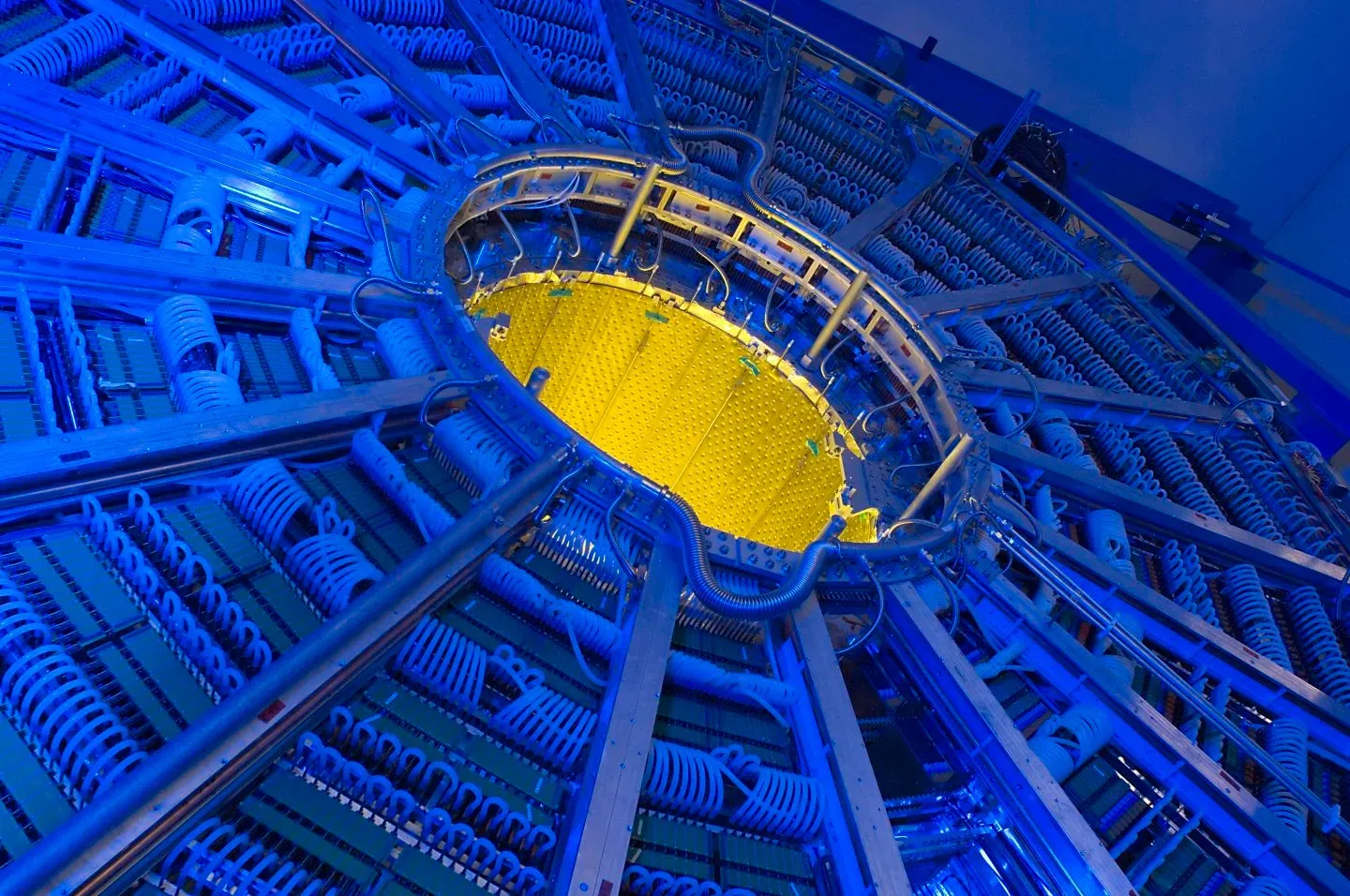
The LHC currently produces gold at a maximum rate of about 89,000 nuclei per second from lead-lead collisions at the ALICE collision point. That sounds impressive until you learn what happens next. The gold nuclei emerge with very high energy and immediately hit the LHC beam pipe or collimators, where they fragment into protons, neutrons, and other particles, existing for just a tiny fraction of a second.
Between 2015 and 2018, collisions at the LHC created about 86 billion gold nuclei, totaling around 29 trillionths of a gram, and most of these unstable, fast-moving gold atoms lasted around one microsecond. To put that in perspective, you’d need trillions of times more just to make a single wedding ring. Medieval alchemists would have been deeply disappointed by the practicality, though hopefully amazed by the science.
Why This Discovery Actually Matters

You might wonder why scientists care about creating gold that vanishes almost instantly. Honestly, it’s not about the gold at all. This research helps physicists understand electromagnetic dissociation, a fundamental process that affects how particle accelerators work. These experiments probe the conditions thought to exist immediately after the Big Bang.
When lead nuclei collide head-on at extremely high energies, they can create quark-gluon plasma, a hot and dense state of matter believed to have filled the universe around a millionth of a second after the Big Bang. The gold production is almost a side effect, a beautiful reminder that the universe’s most basic rules allow for transformations that seem magical. The research also helps predict beam losses, which are major limitations on accelerator performance.
What This Tells Us About Elements
A change in nuclear charge means the element has been changed into a different element, and only through radioactive decays or nuclear reactions can transmutation, the age-old dream of alchemists, actually occur. This is the key insight that eluded centuries of alchemical experimentation. You can’t sweet-talk atoms into changing their identity. You need forces powerful enough to rearrange the nucleus itself.
Nuclear transmutation occurs in any process where the number of protons or neutrons in an atom’s nucleus is changed, either through nuclear reactions where an outside particle interacts with a nucleus, or through radioactive decay where no outside cause is needed. Nature does this all the time through radioactive decay. Stars do it constantly through fusion. What’s special about the LHC is that it creates conditions so extreme that transmutation happens through electromagnetic forces alone, without requiring direct nuclear collisions.
The Broader Picture of Modern Physics
Gold has been artificially produced before, but the ALICE collaboration has now measured the transmutation of lead into gold through a new mechanism involving near-miss collisions between lead nuclei. This isn’t just about checking off a box on some ancient wish list. It’s about expanding our understanding of how matter behaves under extreme conditions.
While the tiny mass of gold created dashes hopes of practical use, the experiment opens a new window into how elements are formed and how electromagnetic fields can manipulate atomic nuclei, while also highlighting the extraordinary sensitivity of the ALICE detector. Every time we push the boundaries of what’s measurable, we learn something unexpected. The universe rewards curiosity with deeper mysteries, and sometimes, with a sprinkle of gold dust that exists for less time than it takes to blink.
Conclusion

The ALICE detector’s observation of lead transforming into gold represents a triumph of human curiosity and technological achievement. What medieval alchemists could only dream about has become measurable reality, though in a form they never could have imagined. The gold appears and vanishes in microseconds, produced not by mystical processes but by the fundamental physics governing our universe.
This discovery reminds us that science often achieves the impossible, just not always in the way we expect. The real treasure isn’t the gold itself but what it teaches us about electromagnetic fields, nuclear structure, and the extreme conditions present moments after the Big Bang. Each collision, each measurement, each vanishing gold nucleus adds another piece to our understanding of reality.
What do you think about modern science achieving alchemical dreams through particle physics? Does it make the universe seem more magical or less?
Hi, I’m Andrew, and I come from India. Experienced content specialist with a passion for writing. My forte includes health and wellness, Travel, Animals, and Nature. A nature nomad, I am obsessed with mountains and love high-altitude trekking. I have been on several Himalayan treks in India including the Everest Base Camp in Nepal, a profound experience.