
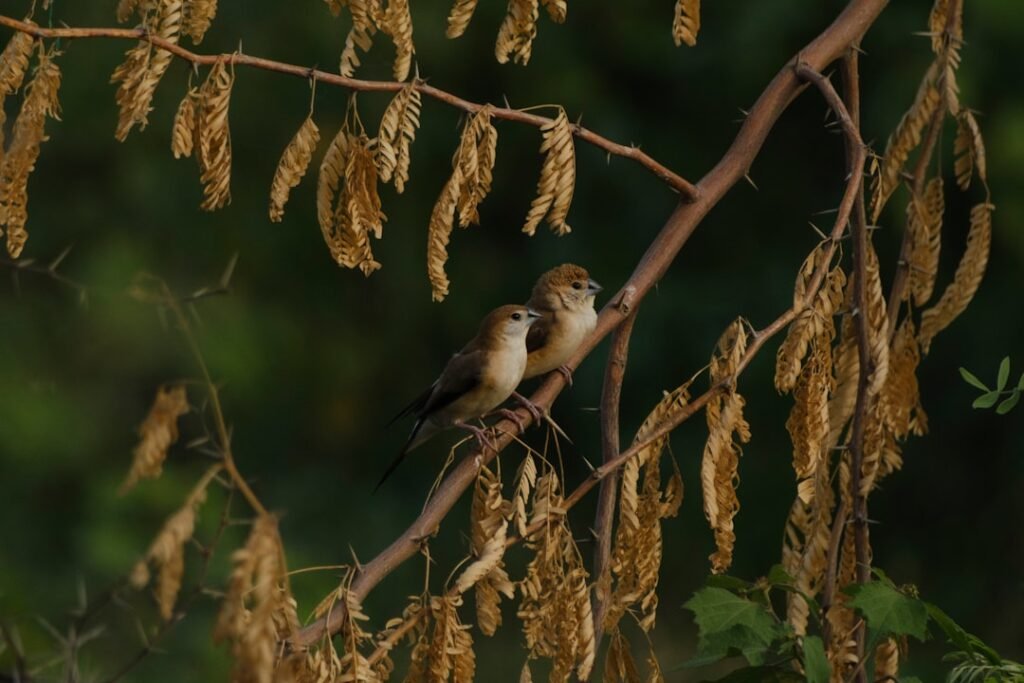


A Partnership Forged in the Wild (Image Credits: Unsplash)
Northern Mozambique – Wild greater honeyguide birds respond to regionally distinct vocal signals from local honey-hunters, adapting to subtle differences that mirror human dialects in a remarkable interspecies partnership.[1][2]
A Partnership Forged in the Wild
Greater honeyguides lead Yao honey-hunters straight to bees’ nests, fluttering ahead while chattering to signal the way. Humans then use fire and axes to smoke out the bees and harvest the honey, leaving wax and larvae for the birds. This mutualism boosts honey yields for people and provides the birds with inaccessible food sources.[1]
Researchers documented this cooperation in the Niassa Special Reserve, where communities rely heavily on wild honey. The birds, undomesticated and untrained, learn these signals naturally in the forest. Previous work showed they prefer local calls over foreign ones from distant regions like Tanzania.[2]
Dialects Emerge Across Villages
A team from the University of Cape Town recorded calls from 131 honey-hunters in 13 villages. They captured both loud recruitment calls to attract birds from afar and softer coordination calls used during the hunt. Honey-hunters produced trills, grunts, whoops, and whistles, each varying by community.[1]
Analysis revealed that differences grew with geographic distance between villages. Communities farther apart used more divergent signals. Even migrants adopted the dialects of their new homes, underscoring cultural transmission.[2]
- Recruitment calls: Long-distance summons with high-pitched trills or whoops.
- Coordination calls: Quieter grunts and whistles to stay in sync while following.
- Trills: Rapid vibrating sounds for attention.
- Grunts: Low hums for close guidance.
- Whoops and whistles: Varied pitches to cover distance.
Culture Shapes Communication, Not Habitat
Environmental factors like forest acoustics failed to explain the patterns. Instead, human social dynamics drove the dialects, much like linguistic variation in people. Lead author Jessica van der Wal noted, “These regional honey-hunting calls pattern across space in a way that looks remarkably similar to human dialects.”[1]
Senior author Claire Spottiswoode added that honeyguides likely learn these local signals, reinforcing the system. “Honeyguides are in turn probably learning and so helping to reinforce these local human dialects,” she explained. This two-way adaptation sustains cooperation across the reserve.[2]
Insights for Human-Wildlife Bonds
The study, published in People and Nature, highlights how cultural diversity influences wild animal interactions. It offers a glimpse into communication evolution between species. Conservation efforts in Niassa could draw on this knowledge to protect both honey-hunters’ traditions and honeyguide populations.
Spottiswoode reflected, “It’s been a privilege to study this rare example of cooperation between our own species and a free-living wild animal.”[1]
- Honey-hunters’ calls form dialects that vary predictably with distance, driven by culture.
- Honeyguides learn and respond to local signals, enabling effective partnerships.
- This mutualism supports livelihoods in Niassa, with no role for environmental acoustics.
This extraordinary alliance reminds us of nature’s intricate connections. As human pressures mount on wild spaces, preserving such traditions becomes vital. What do you think about this bird-human dialogue? Tell us in the comments.


