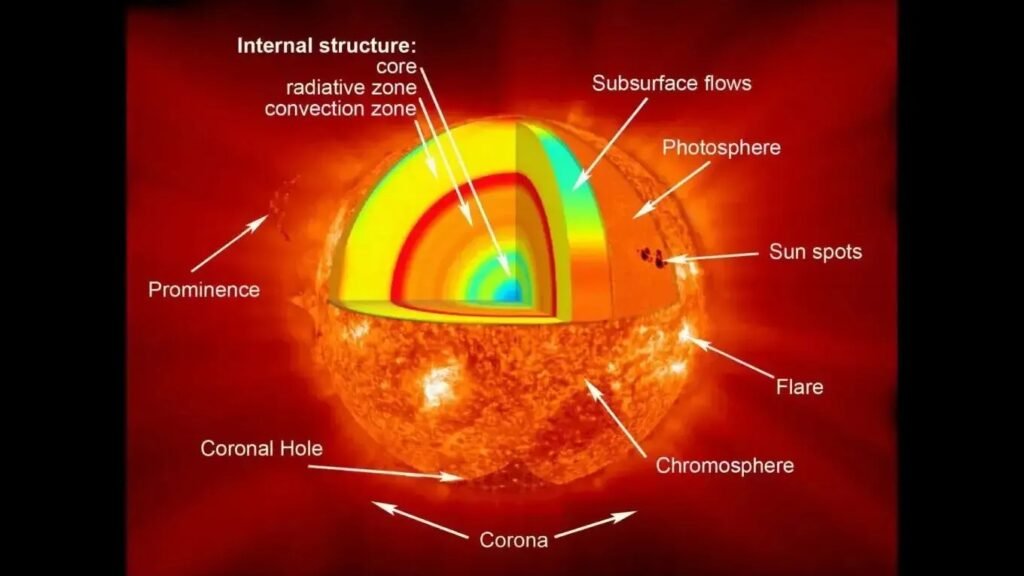

Something extraordinary is happening just beneath the surface of our Sun, and for the longest time, we had no idea it was there. Physicists have now uncovered evidence of a surprisingly strong magnetic field lurking in a shallow layer just a few kilometers below the solar surface, and the discovery is reshaping what we thought we knew about our closest star.
This isn’t a minor tweak to existing solar models. It’s the kind of finding that makes scientists go back to the drawing board. Let’s dive in.
A Discovery That Caught Physicists Off Guard
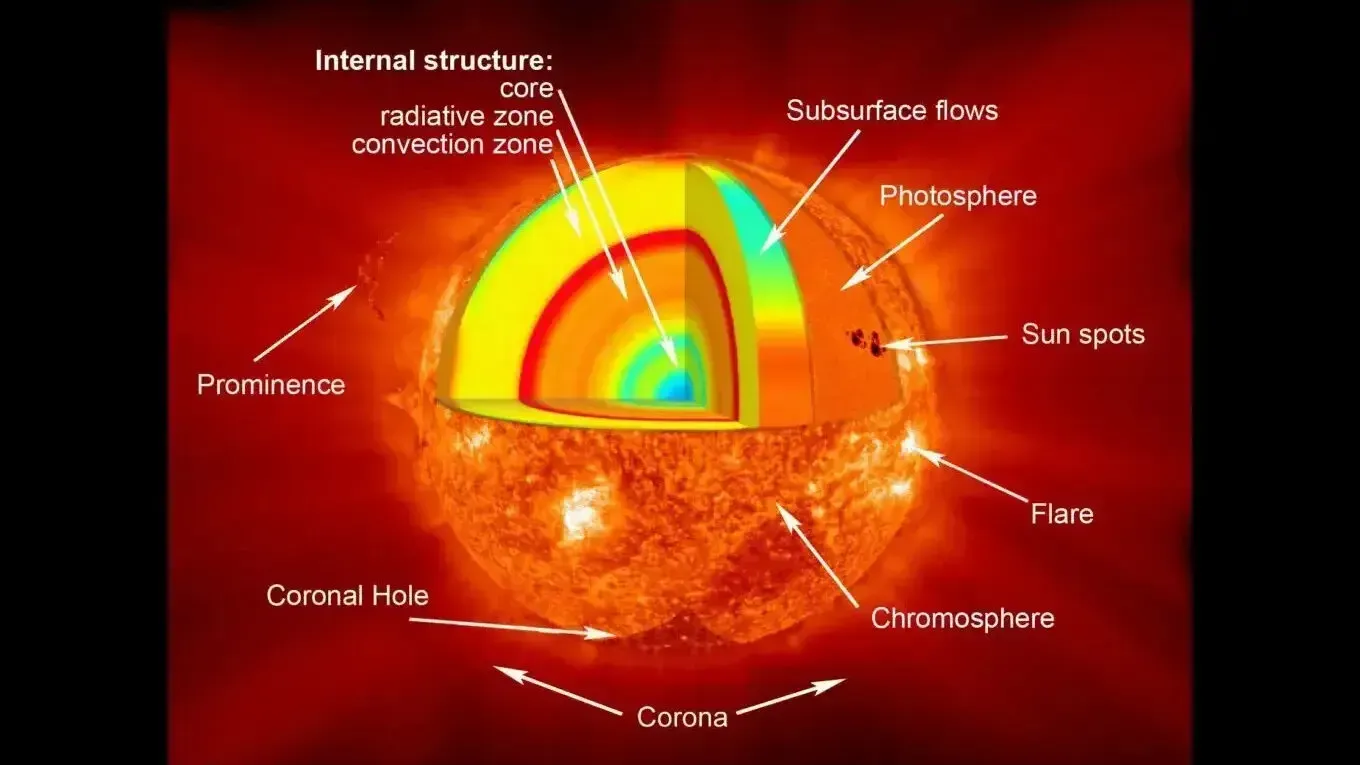
Here’s the thing about science: sometimes the most significant discoveries aren’t found in deep space or exotic laboratories. Sometimes they’re hiding in plain sight, just beneath the surface of the giant burning ball we’ve been staring at for thousands of years. Physicists recently identified a strong magnetic field existing in a very thin layer just kilometers below the Sun’s visible surface, a region known as the photosphere.
What makes this particularly surprising is how shallow this layer actually is. We’re talking about a region that is extraordinarily thin relative to the Sun’s overall size. Think of it like finding a powerful electric current running through just the outer coat of an onion while the rest of the vegetable was perfectly calm.
The detection was made possible through advances in helioseismology, which is essentially the study of sound waves that ripple through the Sun’s interior. By analyzing how these waves behave, researchers were able to infer the presence and strength of the magnetic field hidden below the visible surface.
What the Magnetic Field Actually Looks Like
The field itself is remarkably intense considering where it’s located. It sits in such a thin, near-surface layer that earlier models simply hadn’t predicted it would be that powerful there. Most prior thinking placed the strongest magnetic activity either at the solar surface itself or much deeper inside the Sun.
Estimates suggest the field strength in this layer is significantly stronger than what models had previously accounted for. It’s a bit like discovering a hidden reinforced steel beam inside a wall you assumed was just drywall. The structure was always there, it just wasn’t part of the blueprint anyone was working from.
This near-surface field appears to be fairly uniform and global, meaning it isn’t just a local quirk tied to sunspots or active regions. It seems to wrap around the Sun in a way that has broad implications for how the entire outer layer behaves.
Why This Layer Was So Hard to Detect
Honestly, it’s not all that surprising that this field was missed for so long. The near-surface region of the Sun is notoriously turbulent and complex. Convective motions, where hot plasma rises and cooler plasma sinks, create enormous noise in the data, making it incredibly difficult to isolate subtle magnetic signals buried within.
It’s like trying to hear a whispered conversation in the middle of a packed stadium during a championship game. The signal is there, but separating it from all the surrounding chaos demands exceptionally refined techniques and very precise instrumentation.
Researchers had to develop more sophisticated methods for filtering out the convective noise before the magnetic signature could be clearly identified. This breakthrough in technique is just as significant as the discovery itself, because it opens up a whole new avenue for probing the Sun’s interior with much greater precision going forward.
How This Changes Our Models of the Sun
Solar physicists have been working with models that, let’s be honest, have always had gaps. The internal dynamics of the Sun involve plasma, rotation, magnetic fields, and convection all interacting in wildly complex ways. This new discovery adds a previously underappreciated layer of magnetic complexity right near the surface.
The finding suggests that existing models of solar magnetism may need to be significantly revised. If a strong magnetic field exists in this shallow subsurface layer, it likely influences convection patterns, energy transport, and even the formation of features we see on the solar surface like granules and supergranules.
In a broader sense, this could also affect our understanding of the solar cycle itself. The 11-year cycle of solar activity, which drives phenomena like sunspots and solar flares, is still not perfectly understood. A hidden near-surface magnetic field could be one of the missing puzzle pieces that helps explain some of the cycle’s more puzzling behaviors.
The Connection to Solar Activity and Space Weather
This is where things get genuinely important for life on Earth. Solar flares and coronal mass ejections can knock out satellites, disrupt power grids, and interfere with radio communications. Understanding what drives these events is not just an academic exercise; it has real, practical consequences.
If the newly discovered subsurface magnetic field plays a role in how energy accumulates and is released at the solar surface, then it may be a key factor in triggering or amplifying space weather events. Roughly about one third of the uncertainty in space weather forecasting comes from incomplete knowledge of the Sun’s magnetic behavior near the surface, which is precisely what this research is beginning to address.
Better solar models informed by this discovery could eventually improve our ability to predict dangerous solar eruptions days or even weeks in advance. That kind of lead time could be the difference between protecting critical infrastructure and being caught completely off guard.
The Role of Helioseismology in the Breakthrough
Helioseismology deserves a real moment in the spotlight here. It’s a field that often flies under the radar despite being one of the most powerful tools we have for studying the Sun’s interior. The technique works by tracking oscillations on the solar surface that are generated by acoustic waves bouncing around inside the Sun.
By studying the frequency, direction, and behavior of these waves, physicists can essentially create a three-dimensional map of conditions deep within the solar interior. It’s strikingly similar to how geologists use seismic waves from earthquakes to understand Earth’s inner layers without ever having to drill down there.
The refinements that allowed researchers to detect this near-surface magnetic field represent years of careful algorithmic and observational work. It’s a reminder that groundbreaking discoveries often come not from brand-new instruments but from extracting more intelligence out of existing data with sharper tools and smarter methods.
What Comes Next for Solar Research
The discovery opens up a rich set of new questions. Researchers will now want to understand how this magnetic layer interacts with the solar dynamo, which is the deep internal mechanism thought to be responsible for generating the Sun’s overall magnetic field. Whether the subsurface layer is a product of the dynamo or something more independent is still unclear.
There’s also the question of whether similar near-surface magnetic layers exist in other stars. The Sun is our most studied star by a wide margin, but it’s just one of hundreds of billions in our galaxy. If this subsurface magnetism is a common feature of Sun-like stars, that changes our picture of stellar behavior in a fairly fundamental way.
Upcoming missions and continued observations with instruments like the Solar Dynamics Observatory and future space telescopes will likely be pointed at probing this newly discovered layer in greater detail. The Sun, it turns out, still has secrets it hasn’t finished sharing.
A Star That Keeps Surprising Us
After centuries of observation, it’s remarkable that the Sun can still genuinely astonish the scientific community. The discovery of a strong magnetic field hiding just kilometers below the visible surface is a testament to both the complexity of our star and the ingenuity of the researchers dedicated to understanding it.
It also serves as a humbling reminder about the limits of what we think we know. Our models, however sophisticated, are still approximations of a dynamic, living system that operates on a scale we can barely conceptualize. There’s something almost poetic about that.
The Sun has been burning for roughly four and a half billion years. We’ve been seriously studying it for barely a few centuries. Discoveries like this make it clear that we’re still very much in the early chapters of understanding it. And frankly, that’s one of the most exciting things about science.
What do you think: does it surprise you that something this significant was hiding so close to the surface of the most studied object in our solar system? Drop your thoughts in the comments.