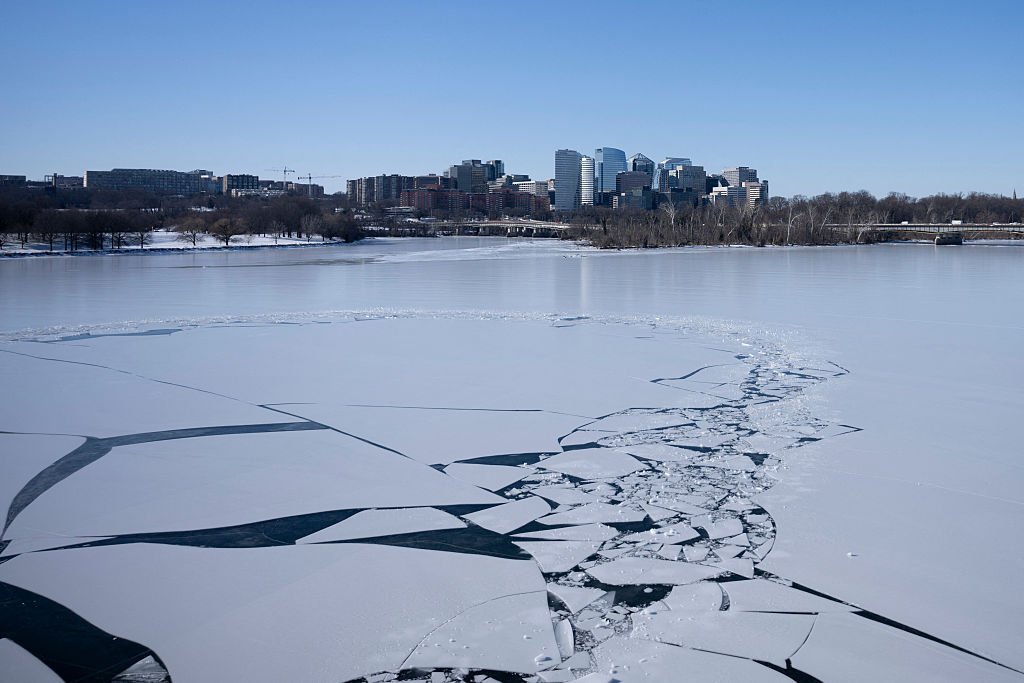
Even Thick-Looking Ice Can Collapse Without Warning (Image Credits: Wtop.com)
Washington area – Emergency personnel across the District and Montgomery County stressed the hidden perils of natural ice formations on local waters this week.
Even Thick-Looking Ice Can Collapse Without Warning
Responders highlighted a recent incident where their own airboat plunged through what seemed like sturdy ice on the Potomac River. The vessel glided across a broad sheet before hitting a thinner patch that gave way suddenly. Such variability caught even trained professionals off guard.
Pete Piringer, spokesperson for Montgomery County Fire and Rescue Service, explained that natural ice often appears uniform but hides dangerous inconsistencies.[1]
“Any kind of natural ice is problematic — it might be thick in one area and thin in another,” Piringer stated. This deception extends to backyard ponds and nearby lakes, where conditions change rapidly.
River Currents Amplify the Lethal Risk
The Potomac River presents unique threats beyond mere thin ice. Strong undertows and currents can pull victims under the surface, complicating rescues dramatically. Unlike a still pond, where a fall might allow bystanders to assist nearby, river mishaps sweep people away swiftly.
Lt. Andrew Horos of the D.C. police Harbor Patrol Unit described the scenario vividly. “Unlike a pond, where you would fall through and you would kind of stay in that area and people would be able to come and rescue you; if you fall in that area with a strong undertow, you’re going to get swept under the ice, making it very dangerous and deadly.”[1]
Cold water immersion adds another layer of peril, incapacitating swimmers in minutes. Piringer noted, “It only takes a couple of minutes before you will lose your breath, your body kind of shuts down, and you can become incapacitated and unable to get out.”[1]
Rescues Endanger Responders and Break Local Laws
Attempts to traverse frozen rivers not only jeopardize individuals but also force first responders into high-risk operations. Specialized gear and teams must deploy, often under time pressure as victims succumb to hypothermia. Officials emphasized that such calls divert resources from other emergencies.
In the District, walking on ice-covered waters violates municipal regulations outright. Prohibitions cover skating, sledding, fishing, and vehicle use on frozen surfaces. Enforcement aims to prevent tragedies before they unfold.
- Backyard ponds lure children and pets despite shallow appearances.
- Area lakes tempt anglers seeking winter bites.
- Potomac River draws adventurers for scenic views.
- All share unpredictable freeze patterns from recent cold snaps.
Stick to Rinks for Winter Fun
Authorities drew a clear line: the sole reliable ice exists in controlled rinks. Piringer reinforced this stance, declaring, “We believe the only really safe ice is in an ice rink.”[1]
Communities maintain facilities for skating and hockey, eliminating nature’s whims. Recent warnings followed sightings of people testing river edges, prompting renewed public service announcements.
Key Takeaways
- Natural ice varies unpredictably in thickness, even across short distances.
- River dynamics like currents make Potomac falls especially fatal.
- Violating D.C. rules risks fines and endangers rescue teams.
Winter beauty tempts, yet safety demands restraint from frozen waters. Heed the experts and preserve rinks for play. What steps will you take to stay safe this season? Share in the comments.