
You’ve felt it your whole life. Every stumble, every dropped cup, every time you’ve looked up at the night sky and wondered why the stars don’t just drift away – that’s gravity doing its quiet, relentless thing. You probably learned in school that it’s a force. Simple enough, right? Mass attracts mass. Apple falls from tree. Newton gets the credit.
Except – here’s where it gets genuinely thrilling – that picture might be deeply incomplete. Modern physics is tearing gravity apart and rebuilding it from scratch, and what’s emerging is stranger, more beautiful, and far more mind-bending than any textbook ever hinted at. Let’s dive in.
The Two Theories That Cannot Peacefully Coexist
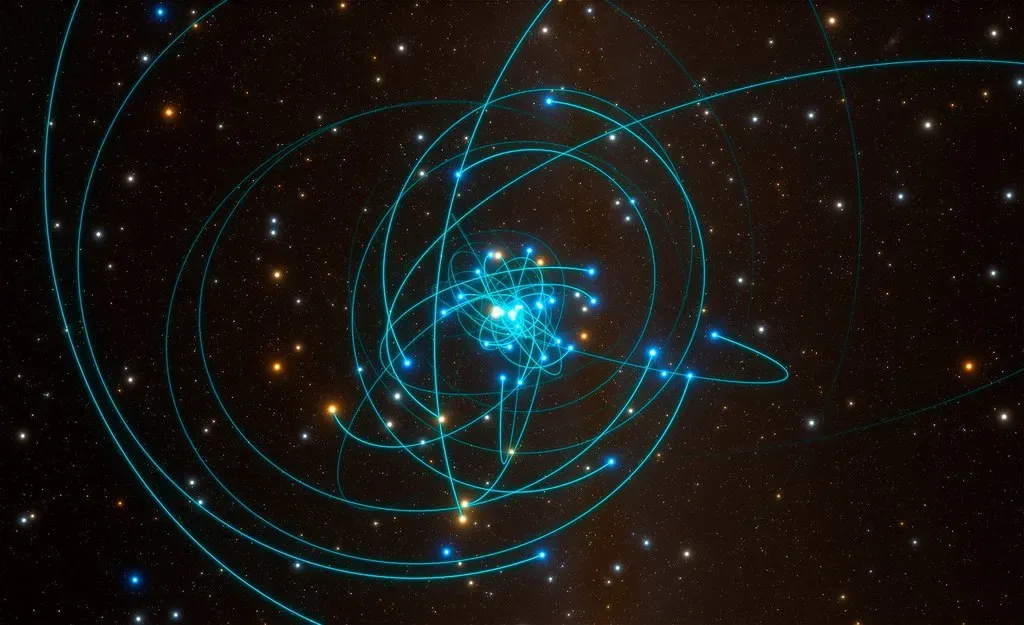
Here’s the thing that keeps physicists awake at night. Without a theory of quantum gravity, physicists cannot reconcile two of their most powerful tools: quantum field theory, which describes the world of the very small through probabilistic interactions, and general relativity, which covers the chunkier world of familiar objects and their gravitational interaction. Both theories have been confirmed to extraordinary precision, yet they are fundamentally incompatible with each other.
Despite its success in predicting the effects of gravity at large scales, general relativity is ultimately incompatible with quantum mechanics. General relativity describes gravity as a smooth, continuous distortion of spacetime, while quantum mechanics holds that all forces arise from the exchange of discrete particles known as quanta. This contradiction is especially frustrating for physicists because the other three fundamental forces, the strong force, weak force, and electromagnetism, were reconciled with a quantum framework decades ago. Imagine spending a century trying to get two brilliant colleagues to agree on anything. That’s basically where physics stands today.
Einstein’s Radical Reimagining: Gravity as Geometry
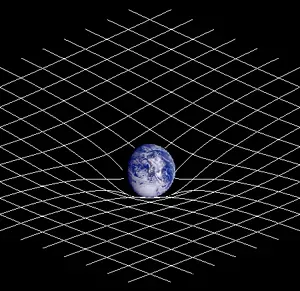
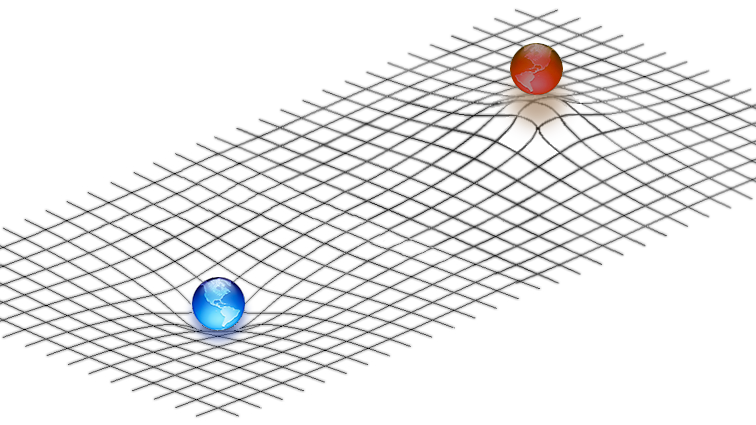
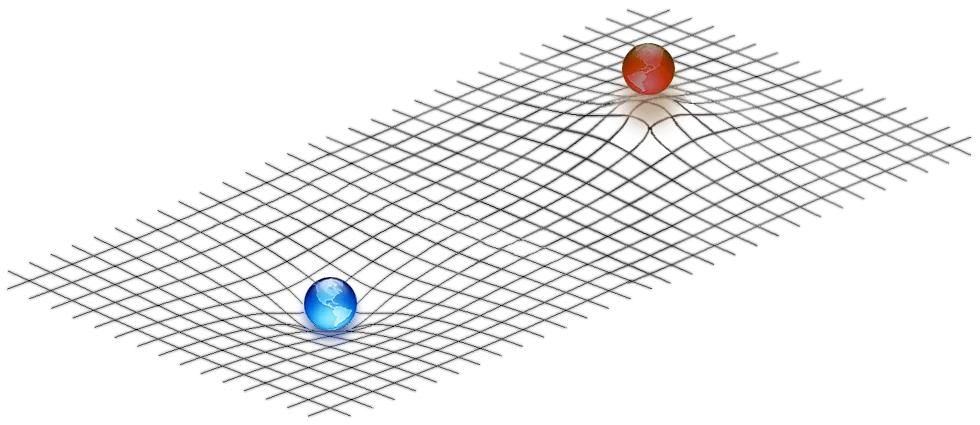
Albert Einstein’s general theory of relativity reshaped the entire view of the universe, showing that space and time can be thought of as one continuous unit, spacetime, which curves in response to matter. Gravity, the theory explains, is nothing more than the curvature of spacetime. That’s an almost poetic idea when you sit with it. You’re not being “pulled” toward the Earth – you’re following the natural curve of a warped fabric beneath you, like a marble rolling into a dip on a stretched rubber sheet.
In the elegant words of physicist John Archibald Wheeler, the philosophy of general relativity is this: “Spacetime tells matter how to move; matter tells spacetime how to curve.” General relativity correctly describes the behavior of gravity over close to thirty orders of magnitude, from submillimeter scales all the way up to cosmological distances. No other force of nature has been described with such precision and over such a variety of scales. With such a level of agreement with experiments and observations, general relativity could seem to provide the ultimate description of gravity. But it doesn’t. Not even close.
The Search for the Graviton: Gravity’s Elusive Messenger Particle
The observation that all fundamental forces except gravity have one or more known messenger particles leads researchers to believe that at least one must exist for gravity. This hypothetical particle is known as the graviton. These particles act as a force carrier similar to the photon of the electromagnetic interaction. Under mild assumptions, the structure of general relativity requires them to follow the quantum mechanical description of interacting theoretical spin-2 massless particles.
The central question of quantum gravity is this: does spacetime become a frothy sea of particles at the smallest scales, or does it remain smooth like the surface of an unbroken lake? Scientists generally believe that gravity should be “bumpy” at the smallest scales, with these bumps being hypothetical particles called gravitons. Yet when physicists use mathematical tools to describe how gravity might arise from gravitons at very tiny scales, things break down. Honestly, it’s one of the most humbling puzzles in all of science.
Could Gravity Be an Emergent Phenomenon – Not a Force at All?
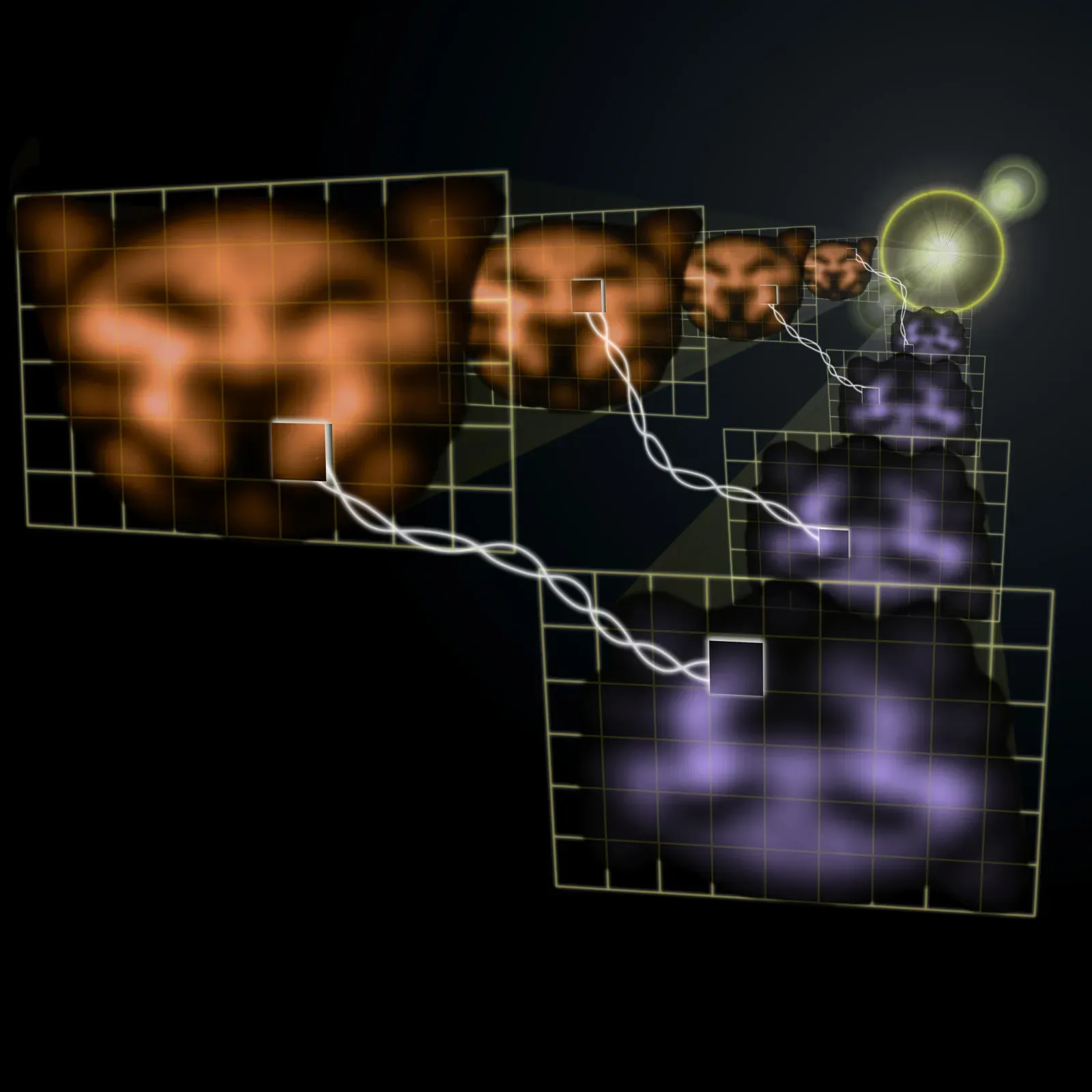
A fresh look at gravity challenges long-held assumptions about one of nature’s most familiar yet puzzling forces. In a new study, two researchers argue that gravitational attraction is not a basic force at all, but an effect that emerges from deeper quantum processes tied to electromagnetism. If confirmed, the theory could help explain mysteries that have long resisted standard models, including the origins of dark matter and the energy accelerating the universe’s expansion. The work reimagines gravity not as a force stitched into the fabric of spacetime, but as something that arises from the quantum-level behavior of ordinary matter.
This idea builds on earlier efforts to rethink gravity as an emergent phenomenon, an effect that arises from more basic physical processes rather than a force on its own. In this picture, the apparent curvature of spacetime described by Einstein’s general relativity is not a fundamental feature of the universe but a large-scale result of underlying interactions between matter and the electromagnetic field. Think of it like temperature. Temperature isn’t a fundamental thing – it’s what billions of randomly vibrating atoms look like from the outside. What if gravity is the same kind of illusion?
Entropic Gravity: When Thermodynamics Meets the Cosmos
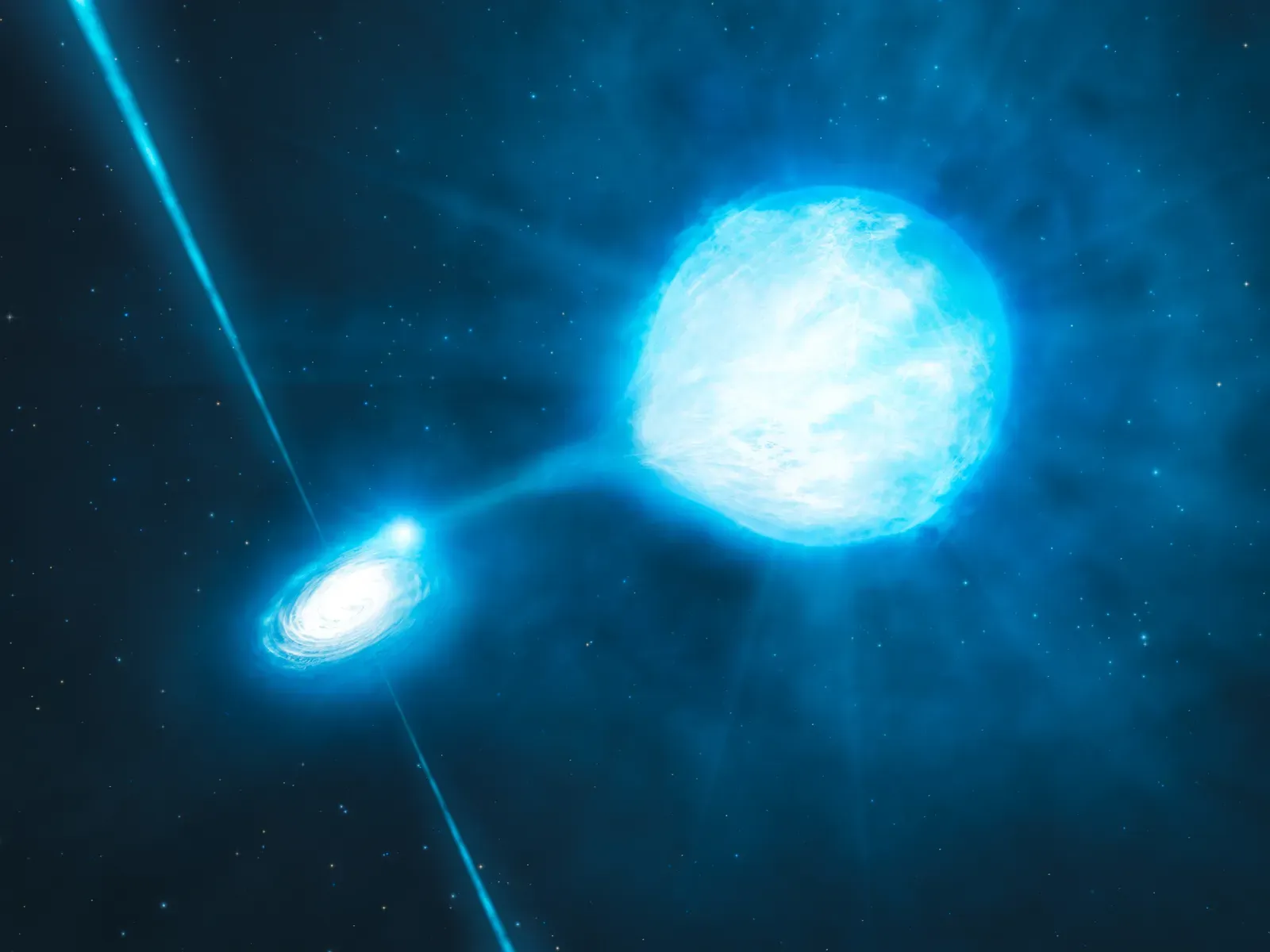
Entropic gravity, also known as emergent gravity, is a theory in modern physics that describes gravity as an entropic force – a force with macro-scale homogeneity but which is subject to quantum-level disorder – and not a fundamental interaction. The theory, based on string theory, black hole physics, and quantum information theory, describes gravity as an emergent phenomenon that springs from the quantum entanglement of small bits of spacetime information. As such, entropic gravity is said to abide by the second law of thermodynamics, under which the entropy of a physical system tends to increase over time.
In 2009, physicist Erik Verlinde proposed a conceptual model that describes gravity as an entropic force. He argues that gravity is a consequence of the “information associated with the positions of material bodies.” This model combines the thermodynamic approach to gravity with the holographic principle. It implies that gravity is not a fundamental interaction, but an emergent phenomenon which arises from the statistical behavior of microscopic degrees of freedom encoded on a holographic screen. It sounds wild, I know. But the math actually works remarkably well.
Gravity, Entanglement, and the Holographic Universe
According to some prominent researchers in emergent gravity, spacetime is built up of quantum entanglement. This implies that quantum entanglement is the fundamental property that gives rise to spacetime itself. In 1995, Theodore Jacobson showed that the Einstein field equations can be derived from the first law of thermodynamics applied at local Rindler horizons. Let that sink in for a moment. The same equations Einstein used to describe the curving of spacetime can be pulled straight out of thermodynamic laws – no gravitational force required.
Modern perspectives on quantum gravity inspired by string theory suggest that spacetime and gravity materialize out of networks of entanglement. In this way of thinking, spacetime itself is defined by how much something is entangled. Tremendous developments on this subject have shown how quantum information theory offers crucial hints to understand how gravity emerges from quantum field theories within the framework of holography. Specifically, various quantities in quantum information theory can capture emergent geometries hidden inside quantum many-body systems, which eventually become those of gravitational spacetimes.
New Theories, Gravitational Waves, and the Tests Ahead
When researchers applied Finsler gravity to the Friedmann equations, they uncovered a striking result. The modified equations, known as the Finsler-Friedmann equations, naturally predict an accelerating universe even in empty space. No extra assumptions are required, and no additional “dark energy” term needs to be added by hand. That’s potentially enormous news – the idea that gravity’s own geometry could be responsible for the universe speeding up, without needing to invoke a mysterious invisible energy we’ve never directly detected.
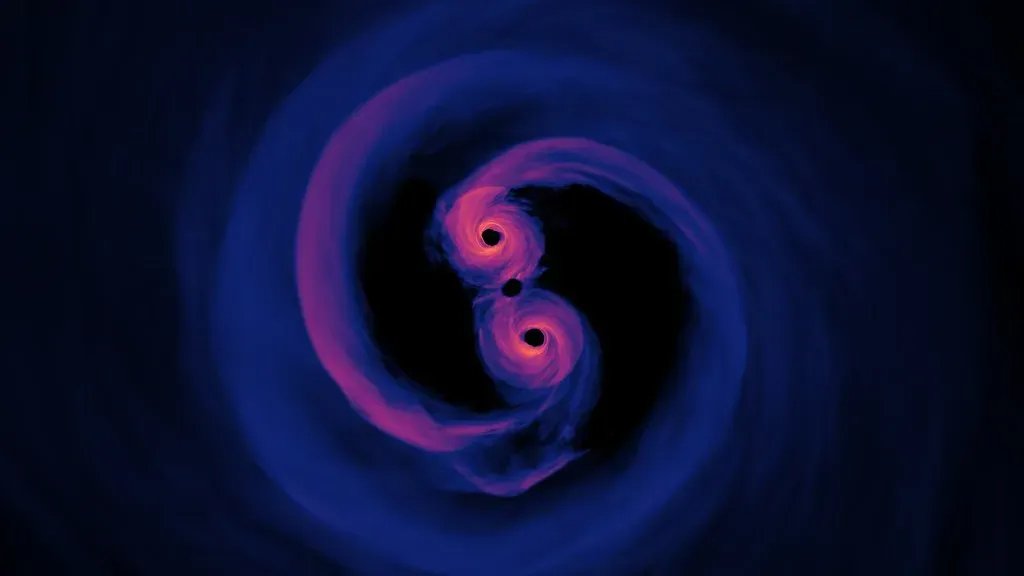
A newly detected gravitational wave, GW250114, is giving scientists their clearest look yet at a black hole collision and a powerful way to test Einstein’s theory of gravity. Its clarity allowed scientists to measure multiple “tones” from the collision, all matching Einstein’s predictions. That confirmation is exciting – but so is the possibility that future signals won’t behave so neatly. Any deviation could point to new physics beyond our current understanding of gravity. In other words, every collision between black holes somewhere in the cosmos is a live experiment – one the universe is running on our behalf.
Conclusion: The Force You Never Fully Knew
Gravity might be the most familiar phenomenon in your entire life – and yet, science is only beginning to understand what it truly is. Whether you discover it to be the curvature of spacetime, an emergent shadow of quantum entanglement, a thermodynamic trick played by information on holographic screens, or something else entirely not yet imagined, one thing is certain: gravity is far weirder and far richer than the force that makes your coffee fall from the table.
A unified theory combining gravity with the other fundamental forces, electromagnetism and the strong and weak nuclear forces, may finally be within reach. Bringing gravity into the fold has been the goal of generations of physicists, who have struggled to reconcile the incompatibility of two cornerstones of modern physics: quantum field theory and Einstein’s theory of gravity. That quest isn’t just academic. It’s a search for the deepest truth about the universe you live in.
The next time your feet touch the ground, maybe ask yourself: is something really pulling you down, or is reality itself just curving around you in ways no one has fully decoded yet? What do you think – does gravity feel different to you now? Share your thoughts in the comments.